Dealing with a landlord dispute or a debt collector can be stressful—but understanding your rights under Texas law can make all the difference. When it's about something as personal as your home, like unpaid rent or damages, that stress can feel overwhelming. The most important thing to remember is that you have rights. Both federal and state collection laws in Texas give you powerful protections, laying out exactly what collectors can and can't do.
At the heart of these protections are two key laws: the Texas Debt Collection Act (TDCA) and the federal Fair Debt Collection Practices Act (FDCPA). They aren't just suggestions; they are firm rules designed to stop harassment and ensure fairness for tenants and landlords alike.
Your Guide to Navigating Texas Debt Collection

It doesn't matter if you're a landlord trying to collect what you're rightfully owed or a tenant facing calls from a collection agency. Understanding how Texas law works is essential. The process might feel intimidating, but you are not powerless. You have a legal framework on your side.
This guide is designed to cut through the confusion. We'll walk you through the critical regulations that protect both landlords and tenants, explaining the rules in simple, plain English and using real-world scenarios you can relate to.
What You Will Learn in This Guide
Our goal is simple: to give you clear, practical knowledge so you can handle debt collection issues with confidence. We’ll empower you by covering the essentials:
- The Key Laws: We'll break down the Texas Debt Collection Act (TDCA) and show you how it works with the federal FDCPA.
- What Collectors Can't Do: You'll get a clear list of illegal tactics—like harassment, threats, and lies—so you can spot a violation the moment it happens.
- Your Rights When Contacted: We’ll provide step-by-step information on what to do when a collector calls or writes, including how to demand they prove you even owe the debt.
- Landlord and Tenant Scenarios: We'll apply these laws to common disputes like unpaid rent, security deposit issues, and claims for damages.
- How to Respond to a Lawsuit: What happens if things escalate to court? We'll explain what to do—and why ignoring a lawsuit is the worst mistake you can make.
Knowing these rules helps you protect your finances and stand up for your rights. A skilled Texas landlord tenant lawyer can make sure your rights are defended, whether you're a landlord pursuing a valid debt or a tenant fighting back against unfair collection tactics.
What the Texas Property Code Says About Collections
When you’re facing a debt collector, it feels like they hold all the cards. But they don't. You have rights, and to use them, you have to know the rules of the game. In Texas, debt collection isn’t a free-for-all; it’s governed by two key laws. Think of it as a set of national rules and a stronger, local Texas rulebook that gives you even more protection.
The national standard is the Fair Debt Collection Practices Act (FDCPA). It's a federal law that sets the baseline for what collectors can and can't do across the country. But its biggest limitation is that it typically only applies to third-party debt collectors—the agencies hired by your original creditor to chase down the debt.
That’s where Texas law steps up to give you more power.
The Texas Debt Collection Act (TDCA)
Our state has its own specific set of regulations called the Texas Debt Collection Act (TDCA), laid out in Chapter 392 of the Texas Finance Code. Here’s the crucial difference: the TDCA applies to everyone trying to collect a consumer debt. That includes third-party agencies and the original creditor.
So, if a landlord is personally trying to collect unpaid rent from you after you've moved out, they must follow the TDCA's rules. This wider net gives Texans an essential layer of defense against aggressive or unfair tactics, no matter who is on the other end of the phone. With debt collection lawsuits in Texas skyrocketing to nearly 123% of their 2019 levels by 2024, knowing these protections is more important than ever. You can dig deeper into these debt collection trends on tratta.io.
The Four-Year Statute of Limitations
One of the most powerful shields in your arsenal is the statute of limitations. In Texas, a creditor generally has just four years from the date a debt was last defaulted on to sue you for it.
Example: A tenant breaks their lease and moves out on May 1, 2024, owing three months of rent. The landlord has until May 1, 2028, to file a lawsuit to collect that rent. After that date, their legal claim expires.
This four-year clock is a hard deadline. It’s designed to stop creditors from blindsiding you with a lawsuit over an ancient debt.
Key Takeaway: Once those four years are up, a creditor loses their right to use the legal system to force you to pay. The courthouse doors are closed to them for that debt.
Understanding "Zombie Debt"
So what happens when a debt is older than four years? It becomes what’s known as a "time-barred" or "zombie debt." The debt doesn't magically disappear, but the creditor's legal ability to sue you over it does. It's a debt that's essentially dead in the eyes of the court.
But that doesn't stop some collectors. They often buy these old "zombie" debt portfolios for pennies on the dollar and then try to pressure you into paying. They might call, send intimidating letters, or make it sound like you have no choice.
Under the TDCA, it is illegal for a collector to threaten a lawsuit—or actually file one—over a time-barred debt. This is a massive violation, but it happens all the time because many people don't know their rights. Beyond the federal rules, it's vital to understand the specific Texas debt defense procedures that can protect you if you're sued.
Be extremely careful here. If you make even a tiny payment on a zombie debt, or even just acknowledge in writing that you owe it, you can accidentally reset the four-year clock. That single action can bring the debt back to life, making it legally enforceable all over again.
Texas Debt Collection Act (TDCA) vs Federal FDCPA
It's easy to get these two laws confused, but knowing the difference is key to protecting your rights. Here’s a quick rundown of how the Texas law stacks up against the federal one, especially for issues landlords and tenants face.
| Feature | Texas Debt Collection Act (TDCA) | Federal Fair Debt Collection Practices Act (FDCPA) |
|---|---|---|
| Who It Covers | Original creditors (like your landlord) and third-party collectors. | Only third-party collectors (agencies hired by the creditor). |
| Prohibited Actions | Prohibits threats, harassment, misrepresentation, and unfair practices. | Similar prohibitions on harassment, false statements, and unfair practices. |
| Damages for Violations | Allows for actual damages, statutory damages, and attorney's fees. | Allows for actual damages, up to $1,000 in statutory damages, and attorney's fees. |
| Landlord/Tenant Scope | Directly applies to landlords collecting rent or damages themselves. | Does not apply to landlords collecting their own debts. |
The bottom line is that the TDCA gives Texans a broader shield. It ensures that no matter who is trying to collect a debt—your original landlord or a collection agency they hired—they must treat you fairly and follow the law. If they don’t, you have the right to hold them accountable.
Prohibited Actions Debt Collectors Cannot Take
Knowing what a debt collector can't do is your best defense. Both the Texas Debt Collection Act (TDCA) and the federal FDCPA draw a hard line in the sand, creating clear rules to shield you from abusive, deceptive, and unfair tactics. This isn't about finding technicalities; it's about understanding the specific, illegal behavior that no collector is ever allowed to engage in.
When a debt collector breaks these rules, they aren't just being pushy—they're violating the law. Think of this section as your personal checklist for spotting illegal collection activity so you can stand up for your rights.
Harassment and Abusive Conduct
The law is very specific about what crosses the line into harassment. It's not just about getting annoying calls; it's a pattern of behavior designed to intimidate or overwhelm you.
Every collector must follow these non-negotiable rules. They are strictly forbidden from:
- Calling at all hours. The legal window for calls is between 8:00 a.m. and 9:00 p.m. your local time. They cannot call outside of these hours unless you’ve specifically given them permission.
- Calling over and over just to annoy you. The law prohibits endless, repetitive calls meant to harass or abuse.
- Using obscene or profane language. Collectors have to keep it professional. Cursing, insults, and abusive language are illegal.
- Threatening you with violence or harm. Any threat of physical harm to you, your property, or your reputation is a severe violation.
These rules exist to make sure the process stays civil and doesn't spiral into personal attacks or intimidation tactics.
Misrepresentation and Deceptive Practices
One of the most common ways collectors break the law is by lying or misleading you to trick you into paying. The law demands that they deal in facts, not fiction.
A debt collector cannot legally misrepresent who they are or what you owe. That means they can't:
- Pretend to be an attorney or a government agent. They can't use fake titles or imply they have legal powers they don't have.
- Lie about how much you owe. The amount must be accurate. They are not allowed to add bogus fees or unauthorized charges.
- Threaten to do something they can't legally do. This is a big one in Texas. For example, a collector cannot threaten to garnish your wages for unpaid rent, because Texas law generally blocks wage garnishment for consumer debts.
- Claim you've committed a crime. Failing to pay rent is a civil issue, not a criminal one. They can't threaten to have you arrested.
- Send you documents that look like official court papers when they aren't. This scare tactic is illegal.
These protections are in place so you can trust what a collector tells you. It’s also crucial to know that collectors can be in hot water for collecting on a stale claim—that is, trying to sue you for a debt that's already past the statute of limitations.
Unfair or Unconscionable Practices
Beyond obvious harassment and lies, the law also bans a whole category of actions that are considered fundamentally unfair. These rules cover the gray areas—tactics that might not be direct threats but are still out of line.
Key Insight: The entire point of these laws is to stop collectors from using their position to take advantage of you. If a tactic feels grossly unfair or exploitative, it’s probably illegal.
For instance, a collector is not allowed to:
- Collect any amount that isn't in your original agreement or permitted by law. This stops them from inflating the debt with made-up "service fees."
- Cash a post-dated check early. If you give them a check dated for the future, they must wait until that date to deposit it.
- Contact you via postcard. Your debt is a private matter. A postcard is a public form of communication and is strictly forbidden.
- Call you at work if they know (or should know) that your employer doesn't allow personal calls.
If you suspect a collector has crossed any of these lines, it's a big deal. Our team can help you figure out how Texas consumer protection laws apply to your unique situation and map out the right steps to protect yourself.
Your Rights When a Collector Contacts You
That first call or letter from a debt collector can send a jolt of anxiety through you. It's easy to feel powerless, but you have far more control than you think. The key isn't to react on impulse but to stay calm, know your rights, and have a clear plan. Your power comes from understanding the process and using the protections Texas law gives you.
The very first thing you should do is listen and take notes—not make promises or payments. Don't admit the debt is yours. Don't agree to pay a dime. Your only goal in that first conversation is to gather information. Get the collector's name, their agency's name, their address, and the name of the original creditor.
Step 1: Demand Debt Validation
Once you have those details, your next move is one of the most powerful rights you have: debt validation. The law says you can demand that the collection agency prove you actually owe the money. This isn’t just asking them to say it’s yours; it means they have to provide actual documentation.
To do this, you must send a written debt validation letter to the collection agency. It's critical you do this within 30 days of their first contact. In your letter, you simply state that you are disputing the debt and formally request they verify it.
Important Note: Once the collector gets your validation letter, they are legally required to stop all collection activities. No more calls. No more letters. They must pause everything until they send you proof.
This proof should be documentation linking you to the debt, like a copy of the original lease you signed or a final itemized bill. If they can’t provide it, they cannot legally continue to collect from you.
The entire point of these laws is to stop collectors from using unfair tactics, like the ones shown below.
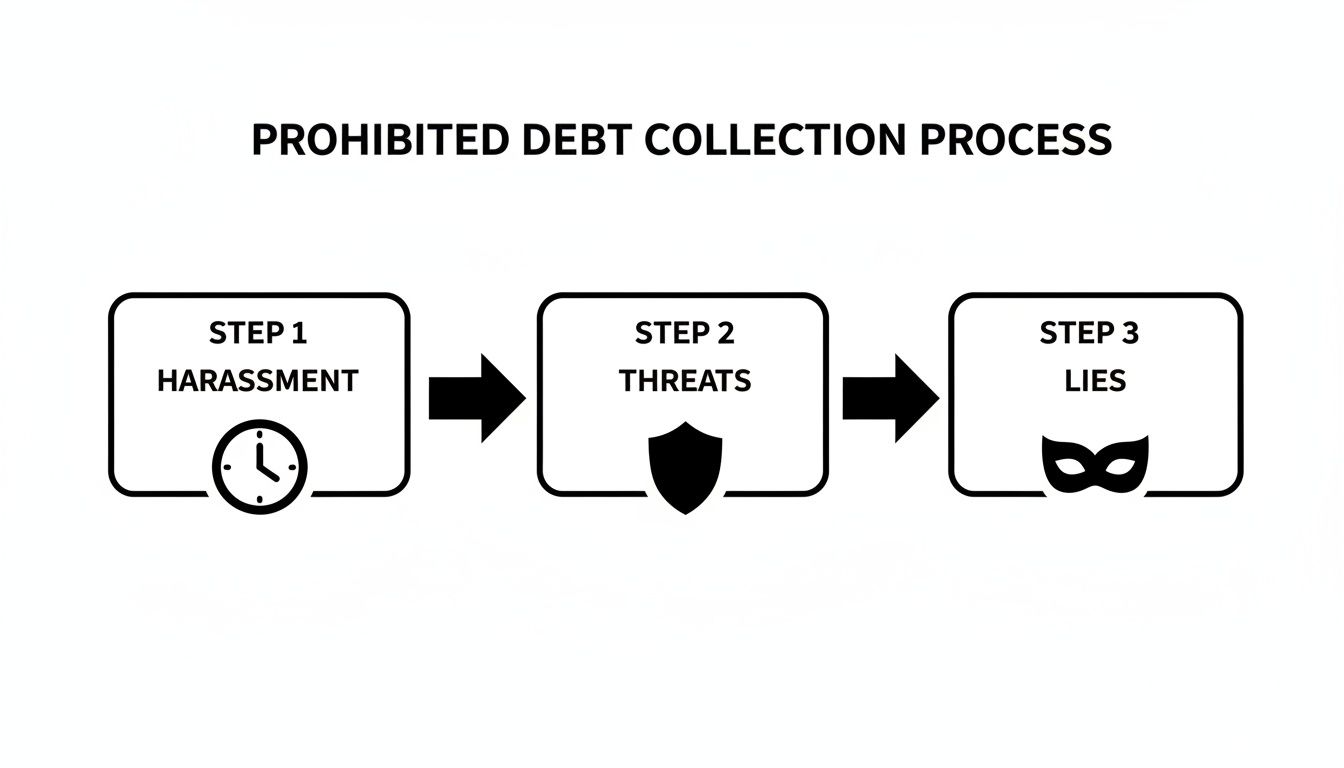
This chart breaks down the three core things a collector is never allowed to do: harass you, threaten you, or lie to you. Knowing this is the foundation of standing up for your rights.
Step 2: Use a Cease and Desist Letter
What if the debt is valid and you just want the calls to stop? You have a right to demand that, too. You can send the debt collector a written notice—often called a cease and desist letter—telling them to stop all communication.
Once they receive that letter, the law ties their hands. They can generally only contact you one last time to tell you one of two things:
- They are stopping all further collection efforts.
- They plan to take a specific action, like filing a lawsuit against you.
This right is absolute. It doesn’t make the debt disappear, but it ends the stressful cycle of constant calls and letters, giving you back control.
A Step-by-Step Plan for Responding
Facing a collector can be intimidating, but you have a clear playbook. Follow these steps to respond with confidence and protect your rights.
Your Action Plan:
- Don't Admit or Pay: In the first phone call, never admit the debt is yours or agree to a payment. Simply say you need all information sent to you in writing.
- Send a Validation Letter: Immediately draft and send a debt validation letter via certified mail with a return receipt. This creates a paper trail proving they received your request.
- Keep Meticulous Records: Log every call. Save every letter and email. Note the date, time, who you spoke with, and what was said. This evidence is invaluable if they break the law.
- Know When to Send a Cease and Desist: If the calls are overwhelming, send a cease and desist letter to shut down communication and give yourself space to plan your next move.
When you follow these steps, you completely flip the script. You're no longer just reacting to their calls—you are proactively managing the situation based on your legal rights under Texas law.
How Collection Laws Apply to Landlords and Tenants

Debt collection isn’t just about credit cards or medical bills. These rules hit close to home in the landlord-tenant world, where disagreements over money are common.
Think about it: unpaid rent after a tenant moves out or arguments over security deposit deductions are debt collection issues. This is where the Texas Property Code and the Texas Debt Collection Act (TDCA) intersect, and understanding how they work together is crucial.
For landlords, it’s about recovering what you’re rightfully owed without breaking the law. For tenants, it's about protecting yourself from unfair claims that could harm your credit and finances for years.
Common Landlord-Tenant Debt Scenarios
Most disputes arise after the lease is over and the tenant has moved out. The landlord inspects the property and determines the tenant still owes them money.
Here are the most common situations where collection laws in Texas get involved:
- Unpaid Rent: The tenant left with rent still due or broke the lease early.
- Damages Beyond the Security Deposit: The cost to repair damages exceeds the security deposit amount.
- Improper Move-Out Charges: The landlord tries to bill for normal wear and tear, which is not allowed under the Texas Property Code.
In each of these cases, the landlord becomes a creditor. And because the TDCA applies to original creditors in Texas, landlords must follow the same rules as a professional collection agency.
A Landlord’s Guide to Lawful Collection
As a landlord, you have the right to collect a legitimate debt. But you must do it by the book, or you could face a TDCA lawsuit. The moment you start trying to collect a debt yourself, Texas law considers you a "debt collector."
This means you cannot:
- Call your former tenant before 8 a.m. or after 9 p.m.
- Use abusive or profane language in calls, texts, or letters.
- Inflate the debt with unauthorized fees or misrepresent what is owed.
- Threaten to have them arrested or their wages garnished.
Your best approach is to stay professional and stick to the facts. Send a clear, itemized bill to the tenant’s last known address. If they dispute it, be prepared with proof—receipts for repairs, photos of the damage, and a copy of the lease. Many of the same principles that shield a person's home also apply to their personal property, a powerful protection you can learn more about in the Texas homestead laws.
A Tenant’s Shield Against Unfair Claims
If you're a tenant getting collection notices from a former landlord, your rights are your best defense. The biggest battleground is often the security deposit.
Legal Requirement: Under the Texas Property Code, your landlord has 30 days from the day you move out to either refund your security deposit or provide a written, itemized list of deductions. If they miss this deadline, they can be held liable for up to three times the deposit amount, plus your attorney’s fees.
Real-world scenario: A tenant moves out, and 45 days later, they receive a bill from their former landlord for "cleaning and repairs" with no refund of their $1,000 security deposit. Because the landlord missed the 30-day deadline, the tenant can sue for $3,000 plus attorney’s fees, regardless of the property's condition.
If a landlord sends you a bill or turns you over to a collection agency, don't ignore it. Send a written debt validation letter immediately. This forces them to pause collection and prove you owe the money. This is your opportunity to challenge bogus charges, like being billed for normal wear and tear.
What to Do When a Debt Collector Sues You
It’s one of the most stressful things you can find in your mailbox: official court documents. When a debt collector sues you, the natural instinct is to shove the papers in a drawer and hope the problem disappears.
That’s the single worst mistake you can make.
Ignoring a lawsuit guarantees a default judgment. This means the court automatically sides with the collector because you never showed up to defend yourself. Once they have that judgment, their power to collect grows, even though Texas law still offers some of the strongest consumer protections in the country. An experienced eviction attorney can help you navigate this process.
Don't Ignore the Paperwork: The Citation and Petition
When you’re sued, you will be "served" with two critical documents: a Citation and a Petition. The Citation is the official court summons telling you that you’re being sued. The Petition is the collector’s side of the story, explaining why they believe you owe them money.
Pay close attention to the deadlines. In Texas, you have a very specific window to respond by filing a document called an Answer. Typically, your Answer is due by 10:00 a.m. on the Monday that follows 20 days after you were served. Miss that deadline, and you’re handing the collector an easy win.
Your Answer is your official response to their claims. It must be filed with the court clerk on time to protect your rights.
You Have Rights and Defenses
Just because you’ve been sued doesn’t mean the collector will win. You may have powerful legal defenses that could get the entire lawsuit thrown out. An attorney who knows Texas debt collection law can spot these opportunities right away.
Some of the most common defenses include:
- Statute of Limitations: Did they wait more than four years to sue you? If so, the debt is "time-barred," and they’ve lost their right to sue.
- Wrong Amount: Did they add illegal fees or miscalculate the interest? You have the right to demand they prove every penny.
- Wrong Person: Collection agencies often have sloppy records and sue people with similar names for debts that aren't theirs.
- No Proof of Ownership: The collector suing you must prove they legally own your debt and have the right to collect it. If they can't produce the paperwork, their case falls apart.
Texas Law Protects Your Paycheck and Property
Even if a collector wins a judgment against you, Texas is one of the best states to be in.
For most consumer debts, including unpaid rent, a creditor cannot garnish your wages. This is a massive protection that residents of many other states do not have.
A judgment also doesn't give a creditor a free pass to start seizing your property. They can, however, try to place a lien on certain assets. To learn more about how that works, you can read about a Texas abstract of judgment and what it means for you.
The bottom line is simple: take a lawsuit seriously from the moment you’re served. Your best move is to immediately contact an attorney who lives and breathes Texas collection law. They can help you file a timely Answer and build a strong defense.
Common Questions About Texas Collection Laws
When you're dealing with debt collectors, it's easy to feel overwhelmed by the rules. Let's cut through the noise with straight answers to the questions we hear most often.
Can a Debt Collector Call My Family or My Boss?
Only for one very specific reason: to find out where you live or how to reach you. They are strictly forbidden from discussing your debt with anyone else, and they usually only get one chance to contact them. If a collector tells your employer or a family member that you owe money, they have broken federal law.
What Do I Do If a Collector Breaks the Law?
The second you think a line has been crossed, start taking notes. Document everything. Write down the date, the time, the name of the person you spoke with, and exactly what they said or did. This log is your evidence.
With that information, you can file a complaint with both the Texas Attorney General's Office and the federal Consumer Financial Protection Bureau (CFPB). More importantly, you should speak with a tenant rights attorney right away. You may have a case to sue the collector for damages.
Can a Landlord Garnish My Wages for Unpaid Rent?
In Texas, the answer is almost always no. Our state has some of the strongest laws in the nation protecting wages from being garnished for consumer debts, including rent owed on a residential lease. There are a few exceptions—like court-ordered child support, student loans, or unpaid taxes—but a standard judgment for back rent won't let them touch your paycheck.
Will Paying a Little Bit on an Old Debt Restart the Clock?
Yes, and it’s a trap that costs people dearly. If a debt is past the four-year statute of limitations, it’s often called "zombie debt" because it's legally unenforceable. But making even a tiny payment can bring it back to life, resetting the clock all over again.
Even acknowledging the debt in writing can be enough to restart the statute of limitations, turning an old debt you didn't have to pay into a brand-new legal problem. Be incredibly careful when anyone contacts you about old accounts.
If you need help with an eviction, lease issue, or rental dispute, contact The Law Office of Bryan Fagan, PLLC for a free consultation today. We'll help you understand your rights and figure out the best way forward.