Dealing with a landlord dispute or eviction can be stressful, but understanding your rights under Texas law can make all the difference.
A lot of Texans ask the same question when rent is high, space is tight, or they want a different way to live: can you rent land to live on? Maybe you want to place a manufactured home on a rural tract, park an RV on private property, or move into a tiny home community instead of a standard apartment.
The short answer is yes, you can rent land to live on in Texas. The harder truth is that living on rented land is not the same as renting an apartment or house. The lease type, zoning rules, utility setup, and the exact wording of the agreement all matter. If any one of those pieces is wrong, you can end up in a fight over repairs, a nonrenewal, or an eviction even when you thought you had permission to live there.
The Dream of Open Space and the Reality of Texas Law
A common situation looks like this. A tenant finds a quiet piece of land outside town. The owner says it's fine to bring in a manufactured home or park an RV there. The monthly payment sounds manageable. Everyone feels good about the arrangement, so they move fast.
Then the problems start.
The county says the lot doesn't allow that kind of residential use. The electric hookup was never approved. The owner insists the agreement was only for agricultural use, not long-term living. Suddenly, what looked simple becomes a legal dispute about possession, use, and who has to leave.
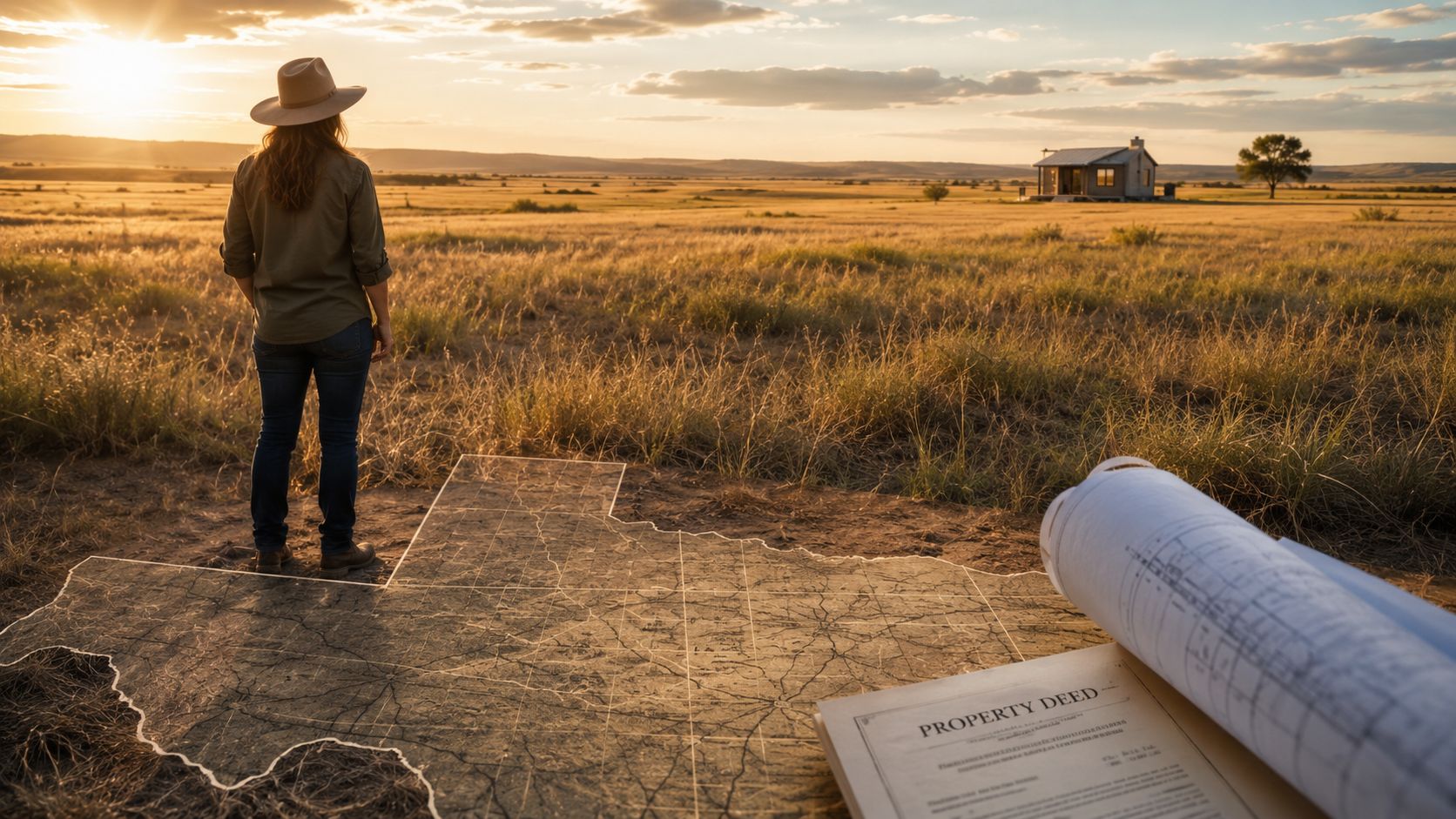
That's why this issue deserves more than generic internet advice. Land leasing is already a major part of the U.S. property sector. According to the USDA, 39% of all U.S. farmland, or 344 million acres, is rented rather than owner-operated (USDA farmland rental data). Renting land is not unusual. Living on rented land without a tight legal framework is where people get into trouble.
Why this arrangement is different
A standard apartment lease usually assumes you're renting a habitable dwelling. A land arrangement may involve only the dirt under your home. That changes major legal questions:
- Use rights: Does the lease allow residential living, or only storage, farming, parking, or temporary use?
- Repairs: Who handles septic, utility lines, fencing, access roads, and drainage?
- Removal risk: If the lease ends, can you move the home, and who pays for that?
- Enforcement: Will a court view the agreement as a residential lease, a ground lease, or something else?
Practical rule: If you're paying to occupy land in Texas, don't assume your rights match an apartment tenant's rights.
The biggest mistake I see is trusting the idea of the deal instead of the wording of the deal. In land-lease disputes, people often agree on the lifestyle but never clearly agree on the legal use.
What Is a Ground Lease
A ground lease is the basic legal tool behind many of these arrangements. In plain English, you rent the land, but you don't buy it. The landowner keeps title to the property and gives you the right to use it for a specific purpose.
A ground lease allows the lessor to keep ownership of the land while the lessee uses it for an agreed purpose, such as placing or building a residence. The lessee owns the structure, but the lessor owns the land beneath it (ground lease explanation).
Think of it like a parking space for your home
If you rent an apartment, you're renting the unit itself. If you rent land to place a manufactured home, tiny home, or RV, you may be renting only the site.
That distinction affects nearly everything:
- The home may be yours, but the land is not.
- The landlord may control the site rules, access, and duration of occupancy.
- Your move-out costs can be much higher because moving a structure is not like moving furniture.
Some people review these agreements with the same care they would use for a business lease, because use restrictions and site obligations can be detailed. A helpful starting point is this guide on how to read a commercial lease agreement, especially if your land lease is heavy on use clauses and liability terms.
Why the label matters
Calling a document a “land lease” does not settle the legal question by itself. Courts and landlords look at what the agreement allows. If the document says you can store equipment, graze animals, or use the tract for farming, that does not automatically mean you can live there.
That's why readers should pay close attention to What a Texas Lease Should Include. It covers the key terms and required disclosures in a Texas residential lease, which can help you spot what is missing when a land agreement tries to function like housing.
A lease that never clearly authorizes living on the land often becomes the center of the dispute.
What doesn't work
What usually fails is the casual deal: a short form, a text message chain, or a handshake where one side thinks “stay there as long as you want” and the other thinks “temporary permission only.” A real ground lease needs precision about purpose, term, utilities, access, and what happens when the relationship ends.
Common Arrangements for Living on Rented Land
Most Texas land-living situations fall into three buckets. The legal risk changes depending on which one you choose.
Comparing Land Rental Options in Texas
| Feature | RV Park / Manufactured Home Community | Private Land Lease | Tiny Home Community |
|---|---|---|---|
| Typical setup | You rent a designated pad or lot in an organized community | You rent a private tract or portion of someone's property | You rent a site in a community built around tiny homes |
| Rules | Usually written community rules and site standards | Often highly customized, sometimes poorly documented | Usually more structured than a private tract |
| Utilities | Often already planned or installed | May be unclear or incomplete | Often part of the community model |
| Big legal risk | Park rules, nonrenewal terms, and relocation issues | Ambiguous lease language and zoning conflicts | Use restrictions, occupancy rules, and community standards |
| Best for | People who want a managed setup | People wanting privacy or rural land | People who want a smaller-home lifestyle with shared rules |
RV parks and manufactured home communities
These are often the most predictable option because the property is already being used for site rentals. You're more likely to find written rules, assigned lots, and established utility connections. That doesn't mean risk disappears. It means the risk is easier to identify before you move in.
If you're considering full-time RV living, this practical guide to RV living gives a useful lifestyle overview that can help you ask better lease questions before you commit.
Private land leases
Private land is where many legal disputes begin. The appeal is obvious. More privacy, more space, and sometimes fewer monthly restrictions. The downside is that these leases are often drafted badly or not drafted at all.
In Texas, a ground lease or agricultural lease must explicitly permit non-farming residential use. An estimated 60-70% of disputes arise from ambiguous use clauses where the owner intended agricultural use only (Texas land-use dispute discussion).
That means a tenant can spend money moving a home onto land and still face a lease-violation argument if the document never clearly allowed residential occupancy.
Tiny home communities
These fall somewhere in the middle. They tend to have more structure than private tract deals, but they also tend to have strict site rules. A tiny home that meets one community's standards may not be allowed in another.
Before signing, ask for:
- Written use permission: The lease should say residential occupancy is allowed.
- Utility terms: It should say who provides power, water, septic, and trash service.
- Move-in standards: Confirm size, skirting, hookups, parking, and occupancy limits.
- Exit terms: Know what happens if the lease is not renewed.
If someone says, “Don't worry, we'll work it out later,” slow down. Later is when most land-lease fights begin.
Zoning Permits and Utility Hurdles
A landlord's permission is only part of the answer. You can have a signed lease and still be unable to live there legally if zoning, permits, or utility requirements don't line up.

Zoning can override your private agreement
If a tract is zoned or restricted in a way that does not allow your planned use, the lease won't fix that. The owner can't privately authorize what local rules prohibit. That matters for RV occupancy, tiny homes, manufactured homes, accessory dwellings, and even where a septic system may be placed.
A smart first check is whether the property can legally be occupied as a residence in the way you plan to use it. If you're not sure what occupancy approval involves, this explanation of understanding your CO requirements is a useful background resource.
Utilities can make or break the deal
The next trap is assuming that because water or power is nearby, service is legally available to you. Utility access can involve separate approvals, easements, meter issues, septic review, and road access problems.
Ask these questions before you sign:
- Is there legal water service? Not just a hose or informal connection.
- How will wastewater be handled? Septic issues can stop occupancy quickly.
- Who pays for installation and maintenance? The answer should be in writing.
- Can emergency vehicles and utility crews access the property?
- Is the setup approved for year-round living or only temporary occupancy?
A lease is not a permit. It's only one part of the right to live on a property.
Habitability may not protect you the way you expect
This is one of the biggest misunderstandings. People often assume that if they are paying rent, the landlord must provide the same repair protections that apply in a normal dwelling lease. That may not be true if the agreement is treated as a land-only lease.
If the document does not clearly create a residential arrangement tied to a dwelling, your ability to demand repairs can be much weaker. That includes problems involving electrical service, sewage, drainage, or unsafe site conditions. In practice, many tenants then discover too late that they rented land, not a legally protected living space.
Your Rights and Landlord Obligations Under Texas Law
Texas law still matters here. Even unusual rental arrangements don't exist outside the Texas Property Code. But the way those rules apply may depend on what exactly was leased and how the agreement was written.
What Chapter 92 may cover
Section 92.001 provides a framework by defining “landlord” and “tenant,” and landlords are generally required to provide a 21-day window to return security deposits, with potential penalties if they fail to do so (Texas Property Code discussion). For a broader overview, review Texas Property Code 92.
That matters because security deposit fights are common when a tenant leaves behind a pad site, utility damage, debris, fencing issues, or a moved structure. A landlord may claim site damage. A tenant may argue normal wear, poor drainage, or preexisting conditions.
A practical example
Suppose you rent a private lot, place a manufactured home on it, and pay a deposit. After several months, the owner says the county complained and demands that you move out. You leave, but the owner keeps the deposit for “cleanup” without documentation.
Your next steps usually look like this:
- Review the lease language: Was residential use expressly allowed?
- Gather written proof: Save texts, emails, move-in photos, and payment records.
- Request an itemized explanation: Ask why the deposit was withheld.
- Check notice issues: Was termination handled according to the lease and Texas law?
- Evaluate claims quickly: Delay makes these cases harder to fix.
Rights that may still matter
Even in a nontraditional setup, a tenant may still have arguments involving possession, notice, retaliation, or deposit handling. A landlord still needs to be careful about self-help tactics, changing locks unlawfully, or removing a tenant's property without following the law.
At the same time, some protections people expect from a standard home rental may not fit neatly if the agreement was only for land use. That's why lease classification matters so much.
When a dispute starts, the first question is often not “Who is right?” It's “What kind of lease is this?”
Drafting a Land Lease That Protects You
The best time to solve a land-lease dispute is before anyone signs. A careful lease won't remove every risk, but it can stop the most expensive misunderstandings.

Clauses you should insist on
Use a written checklist. A good place to compare basic lease terms is what to include in lease agreement.
Your document should clearly address:
- Who the parties are: Full legal names matter. If the land is owned by an LLC or trust, that should be clear.
- Exactly what land is being rented: A vague reference like “back acreage” creates problems later.
- Permitted residential use: Say whether you may place and occupy a manufactured home, RV, tiny home, or other dwelling.
- Lease term and renewal: Month-to-month and fixed-term arrangements carry different risks.
- Utilities and access: Spell out power, water, septic, road use, and maintenance duties.
- Removal and end-of-lease rights: State what happens to the home and improvements if the lease ends.
Red flags that deserve attention
Some clauses are technically common but still dangerous if you don't understand them.
Watch for terms that:
- Shift all liability to you: Fire, theft, weather damage, and structural loss often become the tenant's problem.
- Allow quick termination: Short notice periods can leave you scrambling to move a home.
- Make you pay owner-side costs: Some leases try to push taxes, major infrastructure, or broad indemnity obligations onto the tenant.
- Ban residential use indirectly: A lease may say “storage,” “agricultural use,” or “temporary use only” even while everyone talks about living there.
A critical hidden cost in land-only leases is liability. Many standard agreements place all liability for fire, theft, or structural damage on the tenant, and the landlord's insurance offers no coverage for the tenant's dwelling.
This short video gives a useful visual overview of lease drafting issues to think through before signing.
What works in practice
The most workable land leases are boring. They are detailed, specific, and written for the actual use of the property. They don't rely on verbal promises. They deal with utilities, maintenance, notice, and move-out before emotions get involved.
If you want legal review, one available option is The Law Office of Bryan Fagan, PLLC, which assists Texas landlords and tenants with lease drafting, review, enforcement, and disputes involving the Texas Property Code.
Need Help with a Land Lease Issue in Texas
Renting land to live on can work in Texas. But it only works safely when the paperwork matches the actual plan. That means the lease must allow residential use, local rules must permit the setup, and the utility arrangement must be legal and usable.
Too many people focus on the monthly payment and ignore the exit risk. If the lease ends, if zoning fails, or if the owner changes position, your home may be sitting on land you no longer have the right to occupy. That's why these cases can become urgent fast.
When to get legal help
You should talk to a Texas landlord tenant lawyer or eviction attorney if:
- You're about to sign a land lease: Review is cheaper than litigation.
- The owner says you violated the lease by living there: This usually turns on use language.
- You're dealing with utility or repair problems: Especially where the landlord denies responsibility.
- Your deposit is being withheld: Documentation and timing matter.
- You're a landlord with a nonstandard site rental: A custom lease is usually necessary.
Land leases can sit in a gray area between property use and housing law. That gray area is exactly where expensive mistakes happen. Clear advice early can protect your money, your housing, and your advantage if the deal falls apart.
If you need help with an eviction, lease issue, or rental dispute, contact The Law Office of Bryan Fagan, PLLC for a free consultation today.
If you need help with a land lease, eviction, deposit dispute, or questions about your tenant rights under the Texas Property Code, contact The Law Office of Bryan Fagan, PLLC for a free consultation today.