Texas landlords can require first and last month's rent, and in urban markets that practice was reported by 42% of landlords in 2023, up from 31% in 2018 according to the Texas Association of REALTORS® survey summarized by LeaseRunner. What matters most, though, is that last month's rent is prepaid rent, not a security deposit, and that legal difference affects how the money can be collected, held, applied, and disputed under the Texas Property Code.
If you're about to sign a lease, already paid a large move-in amount, or you're a landlord trying to draft a lease that will hold up in a dispute, this issue matters more than is commonly understood. A tenant may assume, “I already paid enough up front, so I can just stop paying at the end.” A landlord may assume, “If the unit is damaged, I'll just use the last month's rent money.” Both assumptions can create expensive problems.
That's why the question isn't only, “Does Texas do first and last month rent?” The essential question is whether the lease clearly separates prepaid rent from the security deposit, and whether both sides understand what each payment is for.
The High Cost of Moving In Understanding Your Upfront Payments
A tenant in Houston finds a unit listed at $1,800 a month and assumes move-in will take one rent payment plus a deposit. Then the lease requires first month's rent, prepaid last month's rent, and a separate security deposit before the keys are released. That is often the point where a manageable monthly budget turns into a much larger cash problem.
For landlords, the request usually serves a practical purpose. Collecting money up front can reduce the risk of a missed final payment and give the landlord some protection if the tenant leaves owing rent. The legal problem is not usually the size of the move-in bill by itself. The primary problem is poor labeling and poor drafting.
I see this in disputes often. A tenant pays a large lump sum, the receipt says only “move-in funds,” and months later neither side agrees on what part was rent and what part was deposit. That confusion matters because Texas treats those payments differently. If you want a plain-language explanation of the deposit rules, this guide to Texas security deposit law is a good starting point.
Here is the practical breakdown:
- First month's rent covers the opening rental period.
- Last month's rent is prepaid rent for a future month if the lease says so clearly.
- Security deposit is separate money held for lawful deductions or return at the end of the tenancy.
That distinction affects real dollars.
If a tenant assumes the prepaid last month amount can be taken back at move-out, trouble starts. If a landlord assumes that prepaid rent can be applied to repairs the way a deposit can, trouble starts there too. The Texas Property Code puts security deposits under specific rules. Prepaid rent raises a different set of questions, especially if the lease is vague.
A short lease clause can decide the whole dispute. If the contract clearly identifies one payment as prepaid last month's rent and another as the security deposit, both sides usually have a cleaner path. If the lease blends them together, the accounting gets messy fast, and the fight often becomes more expensive than the amount in dispute.
Readers comparing other jurisdictions sometimes see different deposit rules, such as these Brookside Property Management insights, but Texas turns heavily on the wording of the lease and on whether the payment was rent or a deposit. That is why the move-in total is only half the story. The classification of each dollar is what usually decides who is right later.
Prepaid Rent vs Security Deposit The Critical Difference in Texas
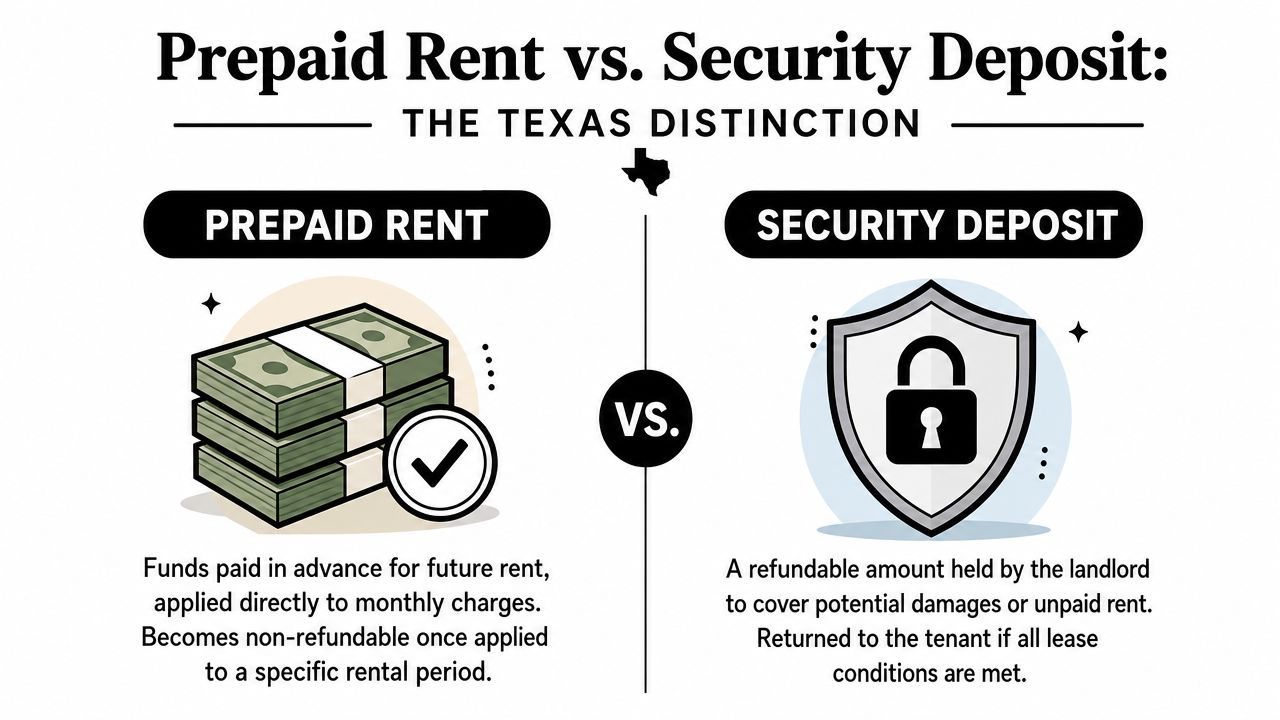
The most important legal distinction is this. Prepaid last month's rent is rent. A security deposit is not rent. Under Texas law, they serve different purposes, and they follow different rules.
What prepaid rent means
Think of prepaid rent like paying in advance for a reserved future month of housing. The money is earmarked for that last rental period. It isn't a damage fund, and it isn't money the tenant gets back due to the lease ending.
Texas law does not cap prepaid rent the way it caps security deposits, according to Hemlane's Texas security deposit law summary. That same source explains that security deposits are typically capped at one month's rent for unfurnished units and two months' rent for furnished units, but those caps don't apply to prepaid rent.
What a security deposit means
A security deposit is a separate pot of money. Under the Texas Property Code, it can be applied only in legally permitted ways, such as unpaid rent, damages beyond normal wear and tear, and certain lawful charges if the lease allows them. It is not a substitute for scheduled rent payments.
If you need the broader legal framework, this overview of Texas security deposit law is a useful starting point. For the timing side of move-out, Security Deposit Rules in Texas explains the 30-day return rule and what both parties must know under Chapter 92.
Why this distinction matters in practice
Here's the analogy I give clients. Prepaid last month's rent is like prepaying for the last class in a series. The security deposit is more like a refundable hold in case you damage the equipment or fail to meet the agreement. They may be collected at the same time, but they are not the same money.
Landlords can't freely swap the purposes of these funds. A landlord should not treat prepaid last month's rent as a cleanup fund, and a tenant should not treat the security deposit as a coupon for the final rent payment.
A clean ledger solves half these cases before they start. Label the money correctly at the beginning, and the move-out fight often never happens.
For a broader perspective on how careful fund labeling helps avoid disputes, these Brookside Property Management insights are useful reading, even though Texas law controls Texas leases.
Prepaid Last Month's Rent vs. Security Deposit in Texas
| Attribute | Prepaid Last Month's Rent | Security Deposit |
|---|---|---|
| Primary purpose | Pays the final month of rent in advance | Covers permitted deductions under Texas law |
| Legal character | Prepaid rent | Refundable deposit fund |
| Can it cover property damage | No, not unless the lease and law separately allow an offset in a lawful way | Yes, for damages beyond normal wear and tear and other lawful deductions |
| Subject to deposit cap | No | Yes, typically capped based on whether the unit is furnished |
| Returned as cash at move-out | Usually no, because it is applied to the final rental month | It may be returned, minus lawful deductions |
| Should it be tracked separately | Yes | Yes |
Reading the Fine Print Lease Clauses for First and Last Month Rent
Most disputes about first and last month rent aren't caused by the law. They're caused by sloppy lease drafting.
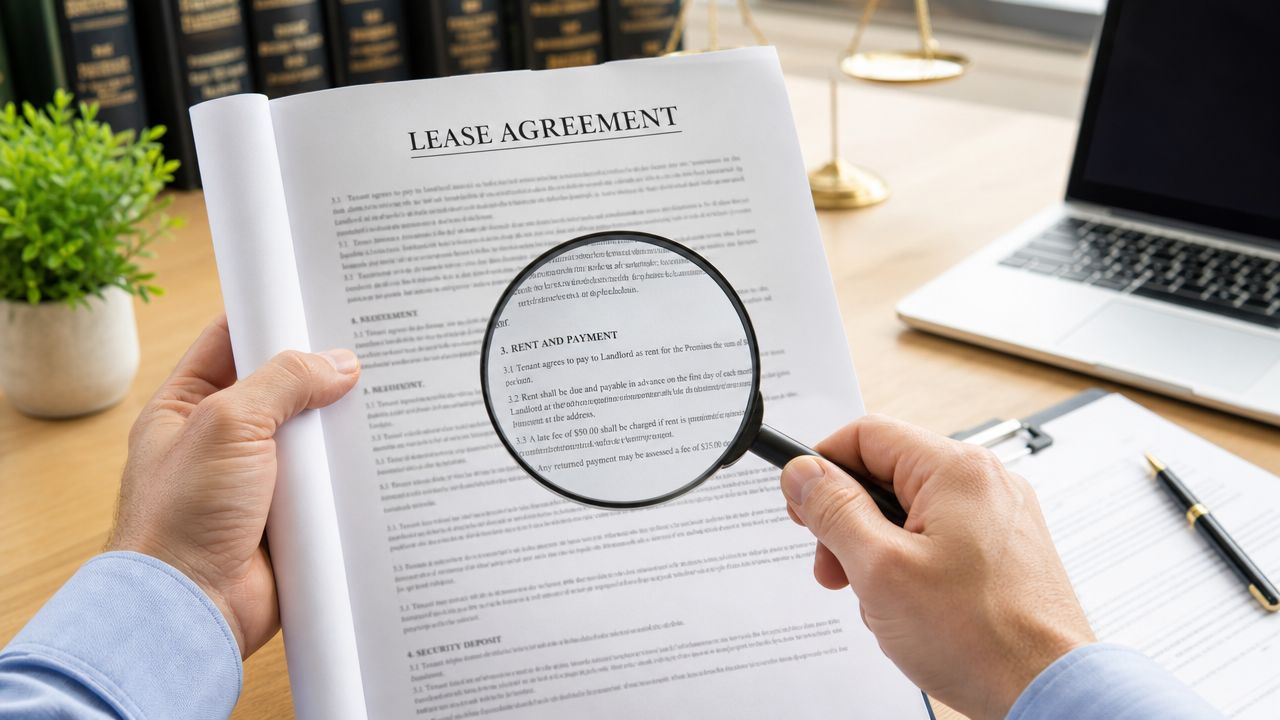
If you're reviewing a lease, look for language that clearly identifies the last month's rent as prepaid rent for the final month of the lease term. It should also separately identify the security deposit and describe what it may be used for under the Texas Property Code. If the lease blurs those two categories, trouble usually follows.
A practical checklist for drafting and review appears in this guide on what to include in a lease agreement.
What good lease language does
A strong clause usually does three things:
- Labels the payment clearly so everyone knows the last month's amount is prepaid rent.
- States when it applies so there is no argument about which month is already covered.
- Separates the deposit rules so damages, cleaning issues, and unpaid charges are handled through the deposit framework, not through prepaid rent.
Here's the kind of wording that tends to reduce conflict: the tenant pays a stated amount as prepaid rent to be applied only to the final month of the lease term, and a separate stated amount as a security deposit subject to the Texas Property Code.
What weak lease language looks like
Bad clauses are usually vague. They say something like “move-in funds include deposit and final rent” without defining the terms. Or they say the landlord may use any upfront payment for “damages, unpaid rent, or other costs” without separating prepaid rent from the security deposit.
That kind of wording creates two risks:
- The tenant may not understand ongoing monthly rent obligations.
- The landlord may have trouble defending deductions later.
If you can't tell from the lease what each dollar is for, a judge may have the same problem.
This video gives a helpful overview of lease drafting issues that often lead to disputes:
What tenants and landlords should ask before signing
Tenants should ask, “Is my last month already paid, and if so, what month counts as the last month?” Landlords should ask, “Does the lease make clear that the security deposit cannot be used as ordinary rent?”
If either answer is fuzzy, fix the lease before signing. That step is cheaper than hiring an eviction attorney or fighting over a deposit after move-out.
Your Rights and Obligations Under Texas Law
The Texas Property Code draws real lines here, and both sides need to respect them.
For tenants, the key point is simple. If you prepaid the actual last month's rent, that payment is for the final month only. It does not let you skip some earlier month because money is already sitting with the landlord. Rent is still due when the lease says it is due unless and until the prepaid month arrives.
For landlords, the rule is just as important. If you collected prepaid last month's rent, you should treat it as rent reserved for that purpose. It is not a substitute damage fund. The security deposit is the fund that usually handles lawful deductions under the Texas Property Code.
What tenants cannot do
Texas law is especially clear on one point. A tenant cannot decide to apply the security deposit to the final month's rent.
According to McCourt Real Estate's summary of Texas security deposit law, a tenant who wrongfully withholds the last month's rent and tries to use the security deposit instead can be sued for up to three times the rent owed plus attorney's fees under the Texas Property Code.
That's why “I thought my deposit covered it” is a dangerous position in court.
What landlords should do instead of improvising
A careful landlord should do the following:
- Keep roles separate. Use the prepaid last month's rent for the final month of occupancy, not for dents, stains, or cleaning.
- Apply the deposit lawfully. Use the security deposit only for categories the lease and Texas law permit.
- Give written explanations. If there's a dispute, clear records and written notices matter.
A common end-of-lease problem
Suppose a tenant in Houston paid first month's rent, last month's rent, and a deposit at move-in. Near the end of the lease, the tenant decides not to pay rent for the second-to-last month because they believe “the landlord already has enough money.” That can trigger a notice to vacate, an eviction filing, or a money claim, even if the tenant planned to move out soon.
Now flip it around. A landlord sees wall damage at move-out and tries to use the prepaid last month's rent to cover repairs. That creates a different problem, because the legal purpose of that payment was rent, not damages.
Respecting the legal boundaries of each fund protects everyone. Ignoring them usually creates a claim neither side expected.
If your dispute also involves timing of rent demands or nonpayment issues, guidance on late charges and payment rules often matters too. Many landlords and tenants benefit from reviewing related rent rules before they take the next step.
Resolving Disputes Over Prepaid Rent and Security Deposits
A dispute usually starts with one sentence: “I already paid that.” In Texas, the answer depends on what the payment was. If the money was prepaid rent, the argument is different from a fight over a security deposit, and the lease ledger needs to reflect that difference from the start.
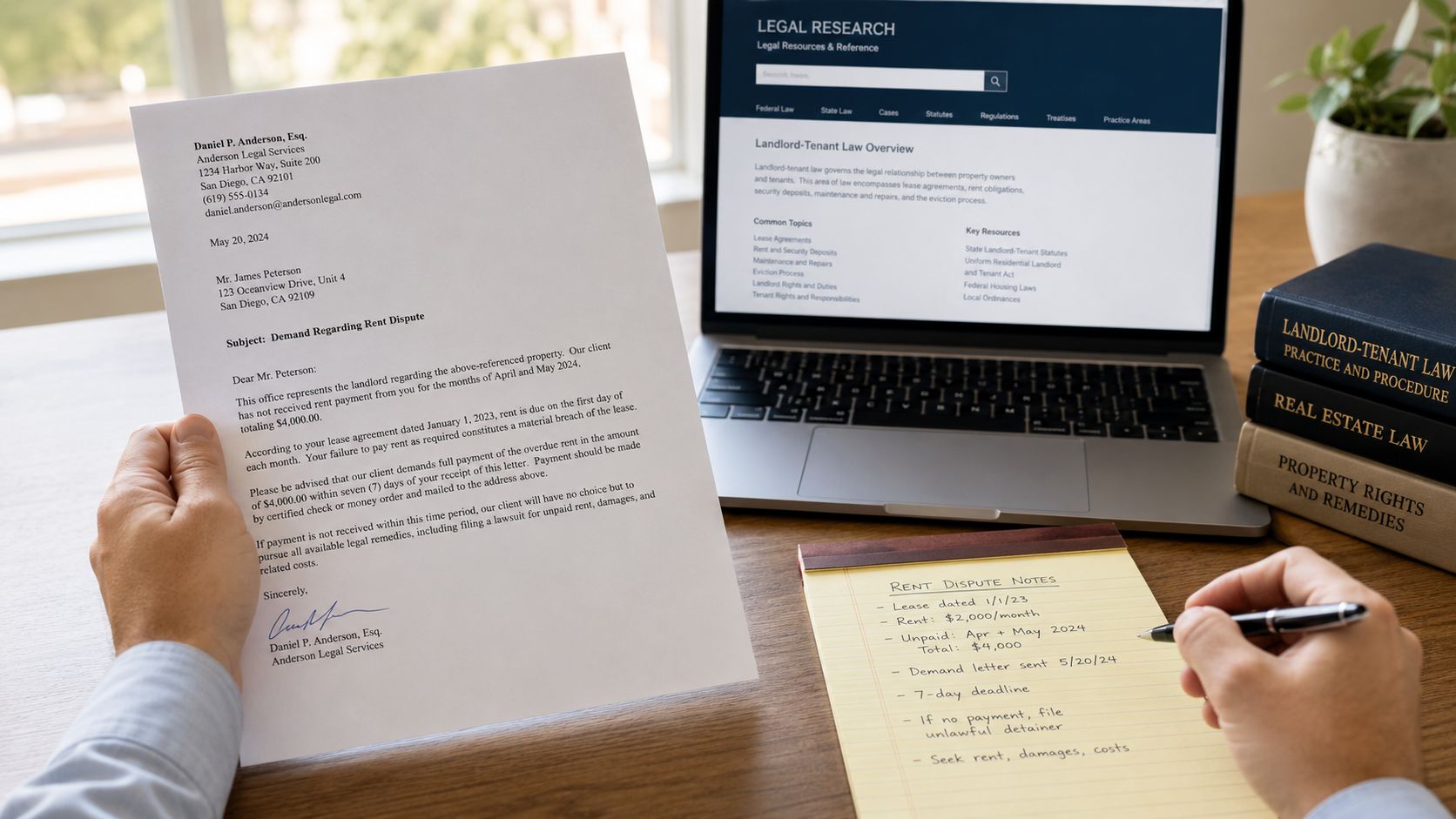
Good records matter because these cases often turn on labels, timing, and written notices. Rollingwood Management's discussion of Texas deposit rules explains why clear accounting for deposit funds matters, and the same practical rule applies to prepaid rent. Keep them tracked separately, or a simple ledger mistake can become a legal dispute.
Step 1 Put the dispute in writing
Start with a dated letter or email. State the lease address, the names of the parties, and the exact payment in dispute. Call it what it is: prepaid rent or security deposit.
Then explain the problem in plain language. For example, say that the landlord failed to apply prepaid last month's rent to the final month, or that a deposit was withheld without a proper itemized accounting. End by stating the fix you want, such as a corrected ledger, return of money, or a written explanation by a specific date.
If you need a model, this guide on how to write a demand letter to landlord in Texas is a useful starting point.
Step 2 Gather documents that show the purpose of the money
Do not stop with the lease. Pull the payment receipt, ledger, screenshots from the tenant portal, emails, text messages, move-in and move-out photos, inspection reports, and any notice about deductions or unpaid rent.
Many cases are decided based on these distinctions. If a receipt says “security deposit,” a landlord may have deposit-law duties tied to that money. If the lease and ledger show “last month's rent,” the money should be applied to rent, not repair charges. Courts often focus less on what one side meant and more on what the documents show.
Step 3 Give the other side a fair chance to correct it
Send the demand in a way that creates a record. Email is useful. Certified mail can also help. Keep copies of everything.
A short response deadline is not always wise. A reasonable deadline gives the other side room to review the file and fix an accounting error without forcing everyone into court. In practice, some disputes come from sloppy bookkeeping, not bad intent.
Step 4 Frame the claim correctly if the dispute continues
This is the part many simple articles miss. A tenant who says, “my landlord kept my deposit,” may be describing a prepaid rent problem. A landlord who says, “I applied the last month payment to damages,” may have treated prepaid rent like a security deposit. Those are different claims with different rules, and mixing them together weakens the case.
If the other side refuses to fix a clear error, the next step may be Texas Justice Court. Keep the claim tight. Identify the payment, its legal function under the lease, what the Texas Property Code required, and how the other side failed to handle that money correctly.
Some people file on their own. In disputes involving both unpaid rent and deposit deductions, counsel can help sort out the categories before the case gets more expensive. The Law Office of Bryan Fagan, PLLC handles lease review, eviction disputes, deposit issues, and related Texas Property Code claims.
Protect Your Rights with an Experienced Texas Attorney
Yes, Texas does allow first and last month rent. But the payment labeled as the last month's rent is not just another deposit. It is prepaid rent, and that difference controls how the money should be treated from move-in through move-out.
For tenants, that means you should read the lease carefully before paying a large upfront sum and never assume your security deposit can stand in for rent. For landlords, it means your lease language and accounting practices need to be clean, specific, and consistent with the Texas Property Code.
A lot of conflict can be prevented with three habits: clear lease drafting, separate tracking of funds, and prompt written communication when a problem appears. When those steps are missing, a small misunderstanding can become a nonpayment case, a deposit dispute, or an avoidable court claim.
If you're dealing with a lease dispute, trying to understand your tenant rights, or deciding whether you need an eviction attorney, legal advice early in the process can save time and money.
If you need help with an eviction, lease issue, or rental dispute, contact The Law Office of Bryan Fagan, PLLC for a free consultation today.