Dealing with a landlord dispute or eviction can be stressful, but understanding your rights under Texas law can make all the difference.
If you own a manufactured home in a Texas park, you may be staring at a notice taped to your door, a monthly statement with unfamiliar utility charges, or a new community rule that suddenly requires changes to your skirting or exterior. That situation feels different from a typical apartment dispute because it is different. You may own the home, but you're still renting the ground under it.
That dual role creates confusion for both tenants and landlords. A resident may think, “I own this place, so why does the park have this much control?” A park owner may think, “I only own the land, so why is this dispute so complicated?” The answer usually sits in Texas Property Code Chapter 94, the lease, and the park's written rules.
An Introduction to Mobile Home Park Living in Texas
A common Texas scenario goes like this. A family buys a manufactured home because it offers a path to ownership that feels more reachable than buying a site-built house. A few months later, they receive a notice about revised rules, a separate sewer charge, or a warning about a lease issue. The home is theirs, but the land is not. That's where the tension starts.
In a manufactured home community, your rights and duties don't work exactly like they would in an apartment complex. You're not just a renter. You're often a property owner and a tenant at the same time. That means your monthly housing costs, your risk exposure, and your legal options can look very different from those of a standard renter.
Practical rule: If you own the home but lease the lot, treat every notice from the park like it affects both your housing and your property value.
For landlords, the stakes are also high. A poorly drafted lease, unclear utility billing, or an improper notice can turn a manageable issue into a court fight. For tenants, waiting too long to review a notice can put the home itself at risk.
That's why the right first step is usually simple. Pull together your lease, your rules packet, your latest statement, and every written notice you've received. Once you know which documents control the relationship, the problem usually becomes much easier to evaluate.
The Dual Role Understanding Home Ownership and Lot Rent
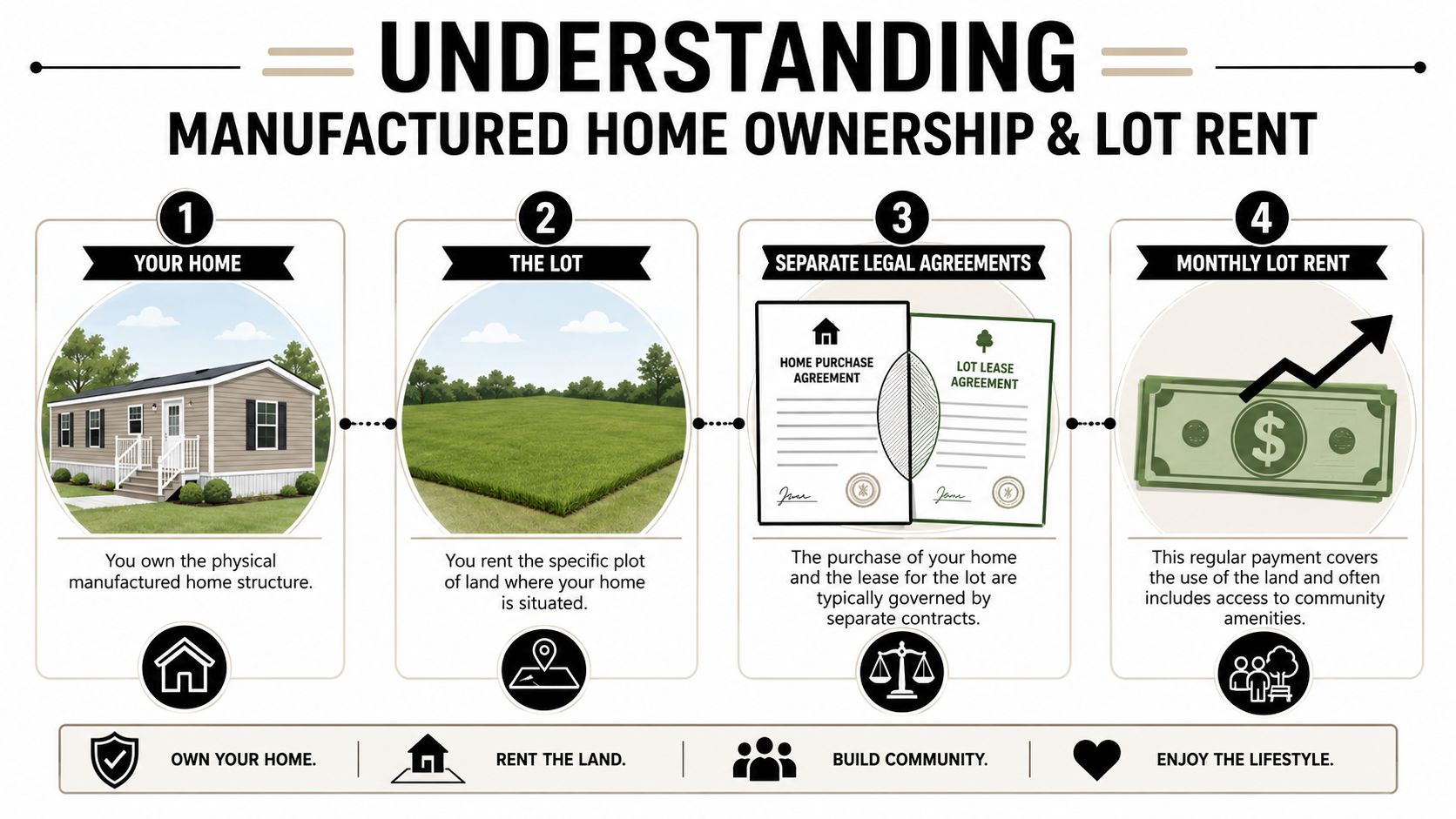
The short answer to how does trailer park rent work is this: you may own the manufactured home, but you pay lot rent for the right to keep that home on a specific piece of land inside the community.
Owning a boat and renting the slip at a marina provides a good comparison. The boat may belong to you. The water access, location, and community infrastructure do not. In a Texas manufactured home park, your home and your lot are usually tied together in daily life but separated in legal terms.
What lot rent usually means
In Texas land-lease communities, the resident typically pays two different housing costs. One may be the home payment, if the home is financed. The other is lot rent paid to the park owner for the land. Lot rent isn't standardized, and it often excludes utilities unless the written fee schedule says otherwise, so residents should ask for the community's rules and regulations packet to see whether water, sewer, or trash are metered, submetered, or separately allocated, as explained in this Texas explanation of lot rent for mobile homes.
That distinction matters because many disputes start with assumptions. A tenant assumes trash is included. The park assumes the resident understands it's billed separately. The written documents usually decide the issue.
Here's a quick way to think about the monthly bill:
| Charge | Usually tied to | Key question |
|---|---|---|
| Home payment | The home itself | Do you own it outright or finance it? |
| Lot rent | The land under the home | What does the lease say is included? |
| Utility charges | Services to the lot or home | Are they included, metered, or allocated? |
| Rule-based fees | Community compliance | Are they listed in writing? |
What lot rent may cover and what it may not
In the broader market, lot rent often functions as a monthly fee for the land and may also support infrastructure and common-area upkeep. Reported U.S. averages for 2026 place lot rent between $350 and $700+ per month, with some high-demand markets reaching up to $1,000 monthly, while some Midwest and Southern communities may average closer to $250 to $400, according to this overview of lot rent and park-owned homes. The same source notes that communities may bundle services like water, sewer, trash, roads, lighting, and amenity upkeep into that payment.
In practice, what works is simple documentation. Don't rely on verbal explanations from the sales office or manager. Compare your lease, fee sheet, and rules packet line by line.
A smart companion step is keeping a current list of what's inside your home, especially if a dispute later affects possession, damage claims, or move-out issues. A solid renters' guide to home inventory can help you document what you own before a conflict starts.
If you're also trying to sort out late charges on top of lot rent, Late Fees and Rent Rules in Texas gives a useful overview of what Texas law allows regarding late fees and rent collection.
Your Lease and Community Rules Under Texas Law
A common Texas park dispute starts the same way. The resident says, "I own this home, so they cannot tell me what color to paint the skirting." Management says, "You signed the rules." Under Chapter 94, both sides usually have part of the picture.
That is the feature many general rental guides miss. A manufactured home owner in a Texas community is often living in two legal roles at once. The resident owns the home but rents the lot. That means the home is private property, while the right to keep it in that space depends on a written lot lease and the community rules that go with it.
Texas treats these communities differently from ordinary apartment rentals. Chapter 94 controls many park-specific issues, while broader landlord-tenant principles still matter in the background. For a general reference point, review this overview of Texas Property Code landlord-tenant rules.
Why the written rules matter
In practice, the rules packet can matter almost as much as the lease itself. It often covers parking, pets, guests, exterior condition, lawn care, storage, and repair duties. In many disputes, the first question is not whether a rule sounds reasonable. The first question is whether the rule was delivered, acknowledged, and tied to the lease.
That matters for both sides.
Residents should keep the full lease packet, not just the signature page. Park owners and managers should keep clean records showing when each rule was given and whether later updates were delivered the right way. I have seen avoidable cases turn on a missing addendum, an undated rules sheet, or a manager relying on office custom instead of the signed documents.
Changing community rules
Park owners can change rules, but Chapter 94 imposes notice requirements. Under the Texas Law Help guide for manufactured home communities, a rule change generally does not take effect until 30 days after each tenant receives it in writing. If compliance will cost the tenant more than $25, the landlord must generally give at least 90 days' written notice before enforcing that change.
That timing issue comes up often with skirting, roofing, sheds, steps, or exterior appearance standards. A posted notice at the office may not be enough. A text message from management may not be enough either if the lease and statute require written notice delivered to each tenant.
Use a simple review process before a dispute hardens:
- Check whether the rule was given to each tenant in writing.
- Confirm the date the tenant received it.
- Ask what compliance will cost.
- Compare the lease, addenda, and rules for conflicts.
- Keep copies of every notice and every response.
Those details decide real cases. In a manufactured home park, the resident is not just a renter and not just an owner. Chapter 94 works because it addresses both roles at the same time, and your paperwork needs to reflect that reality.
Navigating Utilities Fees and Rent Increases
Money disputes in mobile home parks usually aren't just about base rent. They often involve utility billing, pass-through charges, and timing.
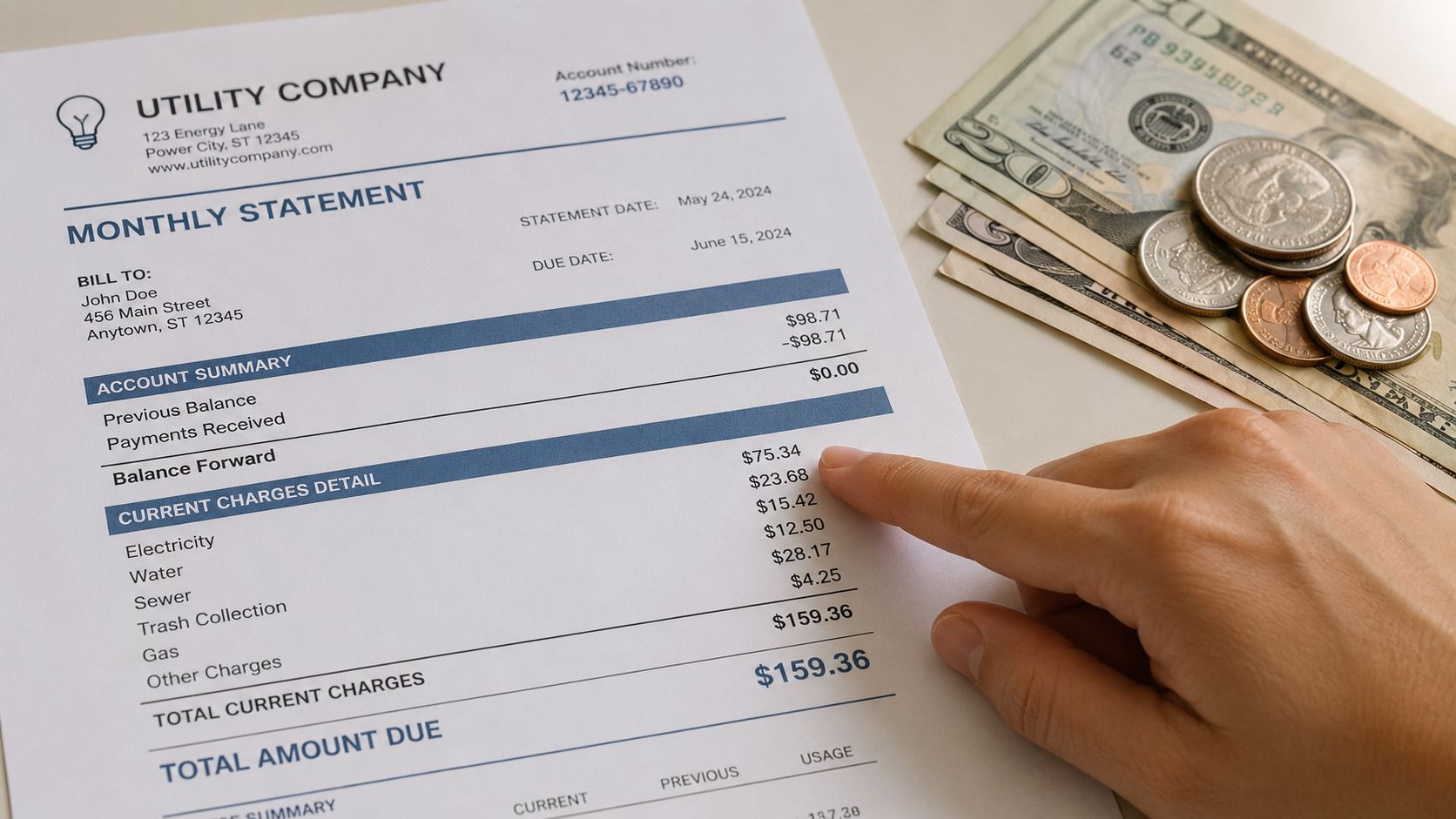
A resident may get a statement showing lot rent, water, sewer, trash, and a late charge. The key question isn't whether the bill feels fair. The key question is whether the charge is authorized by the written lease and the community's fee structure.
How utility charges usually appear
In these communities, utility billing often shows up in one of three ways:
- Included in lot rent: The monthly lot rent covers certain services.
- Submetered: The park measures usage tied to the lot or home.
- Allocated separately: The park assigns a share of a master bill under its written system.
The point is not that one method is always right and another is wrong. The point is that the method should be clear in writing. If your statement suddenly includes a charge you've never seen before, compare it against your lease packet before you assume the park can collect it.
Rent increases and late charges
Rent increases also create friction because many residents budget tightly around both a home payment and lot rent. If the lease is ending or renewing, the notice process matters. So does the exact wording of the lease term.
For a practical look at this issue, review this guide to Texas rent increase laws. It helps tenants and landlords frame the first question correctly: not “Can rent ever go up?” but “When, under what lease terms, and with what notice?”
When a resident owns the home but rents the land, even a moderate billing dispute can create major pressure because moving the home is expensive and sometimes unrealistic.
What doesn't work is handling utility confusion informally. Text messages and hallway conversations rarely solve recurring billing problems. Ask for an itemized statement, review the written fee schedule, and respond in writing if you believe the charge is inconsistent with the lease.
The Texas Eviction Process for Manufactured Homes
A resident in a Texas manufactured home park can be in two legal positions at once. The resident may own the home, sometimes free and clear, while still being a tenant on the lot. That split matters the moment an eviction notice arrives, because the case is usually about the right to occupy the land, but the practical pressure falls on the home owner who may have no realistic way to move the home quickly.
Step one depends on why the park is trying to evict
Under Texas Property Code Chapter 94, a rent default case does not start the same way as a rules violation case. If the dispute is over unpaid lot rent, the park must first send a written delinquent payment notice before it can move to a notice to vacate. If the dispute is a non-rent breach, such as a rule violation or another lease default, the park generally starts with the notice to vacate.
That distinction gets missed often. I see park owners use apartment forms that skip the earlier rent-delinquency step, and I see residents ignore the first letter because it does not look like a court paper. Both mistakes can shape the outcome.
What the timeline usually looks like
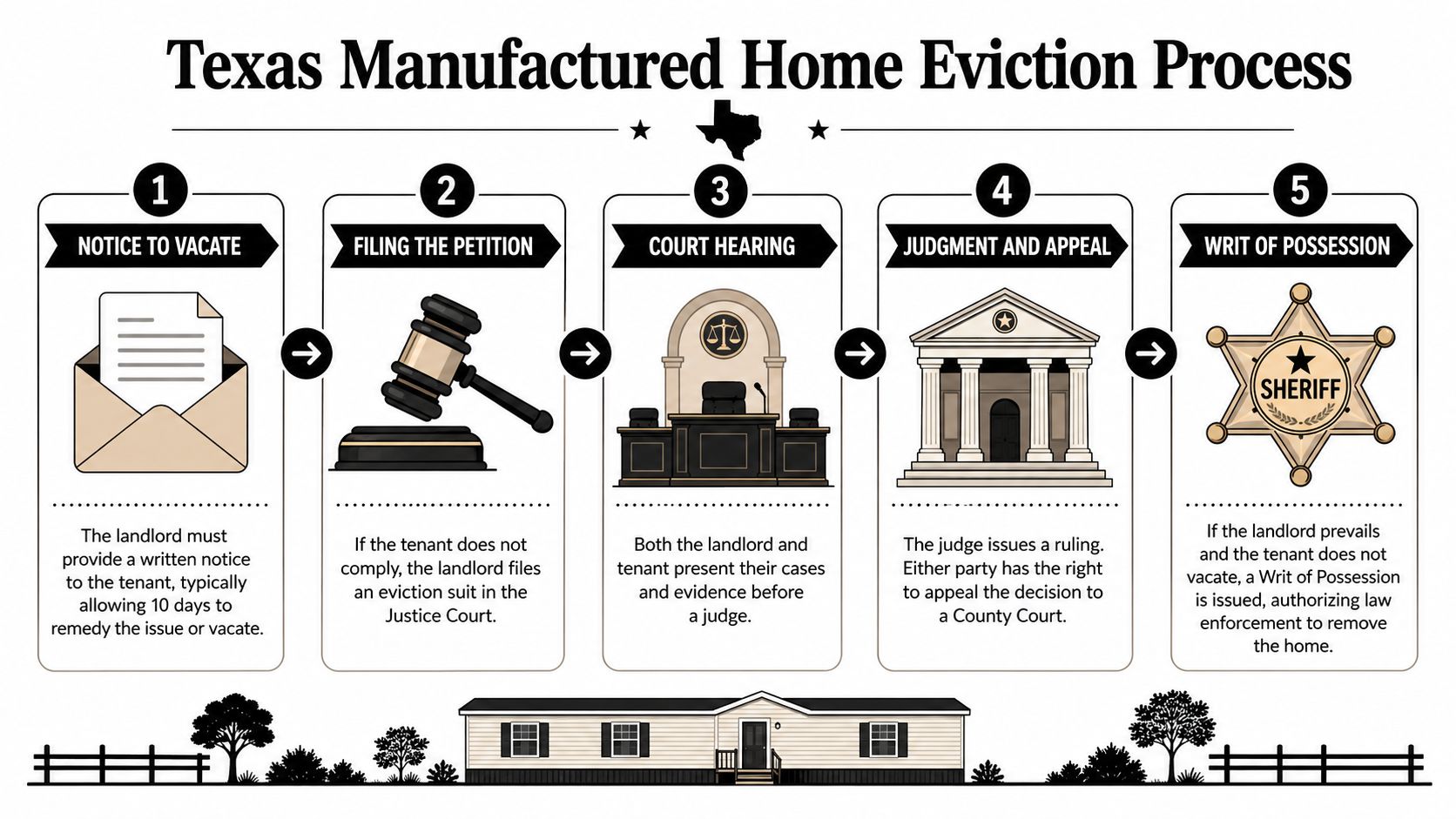
In a typical Chapter 94 case, the sequence is straightforward but unforgiving:
- The park serves the required written notice. The correct notice depends on whether the issue is unpaid rent or another alleged breach.
- The resident decides whether to cure, dispute, negotiate, or do nothing. For a home owner renting only the lot, this is usually the last good chance to protect both occupancy and the value of the home.
- The park files an eviction case in Justice Court.
- The court holds a hearing. Notices, lease documents, payment records, photos, and witness testimony usually matter more than arguments made from memory.
- If the park wins, it can continue toward possession through the court process.
A notice is serious. It is not the same as an immediate lockout.
For manufactured home owners, timing creates confusion because many assume they must move the home as soon as the first notice arrives. Usually, that is not how it works. The park still has to file suit, obtain a judgment, and complete the possession process through court. Even so, waiting to deal with the notice is expensive, because delay can reduce the resident's options and increase the risk that the home becomes stranded on the lot.
Early mistakes cost both sides
Residents should check the paper trail first. In a rent case, was the required delinquency notice sent before the notice to vacate? Do the amounts claimed match the ledger, late fees, and utility charges allowed by the lease? Is the alleged rule violation described in the lease or community rules?
Landlords need the same discipline. Use the Chapter 94 notice sequence that fits the claim. Keep proof of delivery. Separate rent-default allegations from non-rent allegations instead of blending everything into one vague notice. In court, sloppiness in the notice file can undercut a case that might otherwise have been valid.
A closer look at arguments that can matter in Justice Court appears in this guide to Texas eviction court defenses that may apply in lot-rent cases.
In manufactured home park cases, the fight is rarely just about a missed payment. It is often about whether the resident can keep control of a home they own while losing the lot they rent.
Selling Your Home or Facing Removal After Eviction
Owning the home changes everything when a dispute turns serious. An apartment tenant can usually move personal property and leave the unit behind. A manufactured home owner may be trying to protect the largest asset they have while also losing the right to keep it on the lot.
Selling is rarely as simple as listing the home
In many communities, a resident can't assume that finding a buyer ends the problem. Park rules may require approval of the buyer, compliance with community standards, or satisfaction of unpaid charges before a sale can close smoothly. If the home needs repairs to meet park rules, the seller may face pressure to spend more money before transfer.
This is one reason low lot rent can sometimes hide a more complicated business model. Some operators view each lot as a long-term income stream and may absorb major replacement or rehabilitation risk when a lot goes vacant. One industry discussion notes that landlords may face $40,000 to $50,000 in costs per vacant lot to bring in a new HUD-code home, which helps explain why lease terms and park control can be structured around protecting occupancy and reducing vacancy risk, as discussed in this Mobile Home University forum thread on low-rent economics.
After eviction, Texas can be unforgiving
Some states give displaced manufactured home owners meaningful time or relocation help. Texas does not provide the kind of on-site storage protection that some other states do. Oregon requires 6+ months of on-site storage in certain situations, and Washington offers relocation assistance, but Texas law provides no comparable legal storage right. That leaves many evicted residents choosing between abandoning the home, selling for very little, or paying off-site storage and moving costs that can exceed $10,000, according to Oregon Law Help's discussion of abandoned manufactured dwellings.
That's why fighting a defective eviction notice matters so much in these cases. The dispute isn't only about possession for the month. It may determine whether the homeowner preserves any equity at all.
Protect Your Rights with a Texas Landlord-Tenant Lawyer
When you're dealing with a manufactured home park dispute, the usual rental advice often falls short. You may be balancing a lease, community rules, utility disputes, eviction notices, and the risk of losing access to a home you own.

That's where experienced legal review can change the outcome. A lawyer can compare the notice against Chapter 94, review whether a rule change was properly delivered, evaluate utility billing language, and identify whether a landlord or tenant has missed a required step. In the right case, early intervention prevents a court filing. In other cases, it helps frame the strongest possible response once a suit is already pending.
When legal help makes the biggest difference
The Law Office of Bryan Fagan, PLLC handles Texas landlord-tenant disputes involving leases, evictions, notices, and property conflicts. For people in manufactured home communities, that kind of review can be especially useful because these cases involve both tenant rights and property ownership concerns under the Texas Property Code.
If you're unsure whether a notice is valid, don't guess. If you're a landlord trying to enforce park rules, don't rely on apartment forms that may not fit Chapter 94. If you're a tenant facing removal, don't wait until the writ stage to ask questions.
A short video overview may help if you want a quick starting point before gathering your documents.
The strongest position usually comes from acting early, staying organized, and getting the lease and notice sequence reviewed before the dispute hardens. That applies whether you need a Texas landlord tenant lawyer to protect your home or an eviction attorney to enforce a lawful lease.
If you need help with an eviction, lease issue, or rental dispute, contact The Law Office of Bryan Fagan, PLLC for a free consultation today.