Dealing with a commercial lease can be stressful—but understanding your rights under Texas law can make all the difference. Signing a lease isn't just about getting a key to a new space. It’s a massive financial commitment that can make or break your business. A poorly written lease can become a financial anchor, dragging your company down with hidden costs and restrictive terms.
That's why an experienced commercial lease lawyer isn't just another expense—they're a critical investment in your company's future.
Why Your Business Can't Afford A Bad Commercial Lease
When you're handed a commercial lease in Texas, it feels like a major milestone. But let's be honest, the dense legal jargon can be completely overwhelming. This document is a long-term financial contract that will either empower your business or saddle it with crippling obligations. A bad lease often leads to ugly disputes, surprise expenses, and even lawsuits that drain your time, money, and focus.
Imagine a startup owner in Houston, thrilled to finally open her first brick-and-mortar shop. She finds the perfect spot, gets the lease from the landlord, and is ready to sign on the dotted line. But then she spots it: a vague, confusing clause about "Common Area Maintenance" (CAM) charges.
This is precisely where a sharp commercial lease lawyer becomes your most valuable player. They don't just review the contract; they protect your bottom line.
In that scenario, an attorney would immediately flag the CAM clause as a major red flag. Without clear limits, it could expose the startup to thousands of dollars in uncapped expenses for building upkeep every single year. The lawyer's next move? Renegotiate that clause to put a firm cap on those charges, saving the business a small fortune over the life of the lease.
What the Texas Property Code Says About Your Lease
A good Texas attorney does way more than just mark up a document. They ensure your lease is airtight and respects state-specific laws designed to protect your rights as a commercial tenant.
One of the most important protections is the implied warranty of suitability, a concept rooted in the Texas Property Code. This legal principle means the landlord guarantees the property is fit for your intended business use when the lease begins. If there's a major hidden issue—like a faulty HVAC system in a restaurant space that makes it unusable—you have legal options.
An attorney ensures this crucial right isn't quietly signed away in the fine print. They'll also help you understand what steps to take if the landlord fails to provide a suitable space, protecting your ability to operate your business.
Navigating A Competitive Market
The Texas commercial real estate market is always in motion. Keeping an eye on broader commercial real estate trends isn't just for investors; it directly impacts your ability to secure a good lease.
Believe it or not, the legal sector is one of the biggest forces shaping the market right now.
Recent data shows law firms have more than doubled their slice of the U.S. office market, leasing a jaw-dropping 18.8 million square feet nationwide in 2025. This boom, driven by new hybrid work models and firm growth, is ramping up competition for prime commercial spaces in hubs like Houston and Dallas.
More competition often means higher rents and landlords who are less willing to negotiate. In this kind of environment, having an expert negotiator on your team is absolutely essential to level the playing field.
When It’s Time to Call in a Commercial Lease Lawyer
Knowing when to get a commercial lease attorney involved is just as crucial as knowing why. Many business owners only think about lawyers when they’re signing on the dotted line for the first time. But a commercial lease isn’t a one-and-done deal; it’s a living document that has to bend and flex with your business over time.
Think of your attorney less as a last-resort firefighter and more as a strategic partner. Bringing them in at these key moments can stop a minor headache from turning into a full-blown, business-threatening migraine.
Your Lease is Up for Renewal
A lease renewal feels routine, but it's a huge opportunity. The market might be completely different than it was five years ago. Your own business needs have probably changed. Plus, as a reliable tenant, you now have leverage you didn't have before. Simply signing the renewal notice your landlord slides across the table is a massive missed opportunity.
Here’s a real-world example: A popular Austin coffee shop has been a model tenant for five years. When renewal time comes, the landlord proposes a standard 5% rent increase. But a Texas landlord tenant lawyer familiar with the area would immediately look at current market rates, which may have softened. They could negotiate a much lower increase, or even get the landlord to throw in concessions like a new HVAC system or updated outdoor seating—all paid for by the landlord. That's how a simple renewal becomes a smart financial move.
You're Facing a Lease Dispute or Default Notice
Disagreements happen. It's an unfortunate but common part of commercial leasing. These conflicts can be anything from a small argument over a leaky faucet to a major contract breach that threatens your ability to even open your doors.
The smartest way to handle a dispute is to tackle it head-on, armed with a clear understanding of your rights under the Texas Property Code. If you wait, your options shrink and the stakes get much, much higher.
An eviction attorney is absolutely essential in common disputes like these:
- Failure to Repair: The landlord won't fix the broken air conditioning in the middle of a Texas summer, and it's driving customers away.
- CAM Charge Conflicts: You get a bill for Common Area Maintenance (CAM) charges that seems outrageously high or includes fees not covered in your lease.
- Alleged Default: A formal notice arrives from your landlord claiming you've violated the lease, putting you on the fast track to eviction.
In these cases, a strongly worded letter from a lawyer citing specific lease clauses and Texas law gets a much faster, more serious response than a dozen phone calls ever will.
Before we move on, it's helpful to see these moments laid out. There are specific points in the lease lifecycle where legal review isn't just a good idea—it's critical protection for your business.
Key Lease Milestones Requiring Legal Review
This table highlights the critical points in a commercial lease lifecycle where legal consultation is highly recommended, highlighting the potential risks of proceeding without it.
| Lease Stage | Common Business Goal | Potential Legal Risk Without Counsel | How An Attorney Helps |
|---|---|---|---|
| Initial Negotiation | Secure favorable terms and a fair rental rate. | Agreeing to hidden costs, restrictive clauses, or an unfavorable personal guarantee. | Identifies red flags, negotiates better terms, and clarifies long-term obligations. |
| Lease Renewal | Update terms to reflect current market and business needs. | Missing the chance to lower rent, get property upgrades, or remove outdated clauses. | Provides market data for leverage, negotiates concessions, and improves the lease. |
| Expansion/Downsizing | Adjust physical space to match business growth or contraction. | Violating the lease or paying for unused space while struggling to sublease. | Structures lease amendments or negotiates sublease/assignment rights. |
| Lease Dispute | Resolve conflicts with the landlord over repairs, charges, or use of space. | Escalating the issue, facing eviction, or incurring unexpected financial penalties. | Interprets the lease, sends formal demand letters, and negotiates a resolution. |
| Early Termination | Exit the lease before the term ends due to business closure or relocation. | Facing a lawsuit for all remaining rent and significant damage to credit. | Negotiates a buyout, finds legal grounds for termination, and minimizes liability. |
Having a legal expert on your side during these stages ensures your lease remains an asset, not a liability.
You're Thinking About Subleasing or Assigning
Business is unpredictable. Maybe you need to downsize, relocate to a better spot, or even close one location. But you're still on the hook for a long-term lease. That’s where subleasing (letting another business use your space while you remain the primary tenant) or assignment (transferring the entire lease to someone new) comes in.
Don't be fooled—these are legally tricky maneuvers. Most commercial leases have very strict clauses that require the landlord’s approval, and some landlords will try to withhold that approval for reasons that aren't exactly fair.
Imagine a Dallas retail business needs to downsize. They find a fantastic, financially stable subtenant ready to sign. But the landlord says no, without giving a good reason. An attorney can step in, review the assignment clause, and build a case that the landlord's refusal is unreasonable under both the lease and Texas law. This can force the landlord's hand, saving the original tenant from paying rent on an empty storefront.
You Absolutely Must Terminate the Lease Early
Breaking a lease is the last thing anyone wants to do, but sometimes, it's unavoidable. Trying to just walk away from a commercial lease without legal help is a recipe for disaster. You could be sued for every single penny of the remaining rent on the term.
A skilled commercial lease lawyer knows how to explore every possible exit ramp. They can negotiate a buyout with the landlord or find a specific clause in your lease that actually allows for termination under your specific circumstances. Their job is to negotiate a clean break that minimizes the financial damage and protects your business from a long, expensive court battle.
How To Find The Right Texas Lease Lawyer For Your Business
Googling "commercial lease lawyers near me" is a great way to get overwhelmed. You’ll get a massive list of names but no real sense of who can actually protect your Texas business. A great lawyer does more than just skim a document; they understand the local market, guard your bottom line, and act as a true partner.
Your search needs to go beyond a generic keyword. You're looking for an attorney with a proven, specific track record in Texas commercial real estate, not just a general business lawyer.
Starting Your Search Smartly
The best place to start is with the people who are already in your corner. Who understands your business and the local landscape?
- Ask Your Commercial Real Estate Broker: They're in the trenches with lease lawyers every single day. They know who can negotiate effectively and who understands the nuances of markets like Houston, Austin, or Dallas.
- Consult the State Bar of Texas: Their official directory is a solid, reliable resource. You can filter by practice area (look for "Real Estate Law") and location to build a shortlist of qualified candidates.
- Seek Referrals from Other Business Owners: Talk to other entrepreneurs in your area. Find out who they trusted with their lease. Hearing about their firsthand experience is invaluable.
When you're trying to figure out what kind of expertise you need, it helps to understand what a local real estate attorney actually does.
What to Look For on a Law Firm's Website
Once you have a few names, it’s time to do some digging online. A law firm's website is their digital handshake, and it can tell you a lot about their focus.
You're looking for concrete proof that they live and breathe commercial leases. Vague promises won't cut it. Look for:
- Dedicated Service Pages: Do they have specific pages for commercial lease review, negotiation, or landlord-tenant disputes?
- Relevant Blog Posts or Articles: A firm that consistently writes about Texas commercial real estate law is showing you their deep-seated knowledge and commitment.
- Clear Case Studies or Testimonials: Do they share real-world examples of how they’ve helped businesses like yours navigate tricky lease situations?
This quick check helps you weed out the generalists and zero in on the specialists. The Law Office of Bryan Fagan, PLLC, for instance, provides extensive resources that show our deep focus on protecting Texas businesses and property owners.
The infographic below breaks down the key moments when a commercial lease lawyer is essential for your business's health.
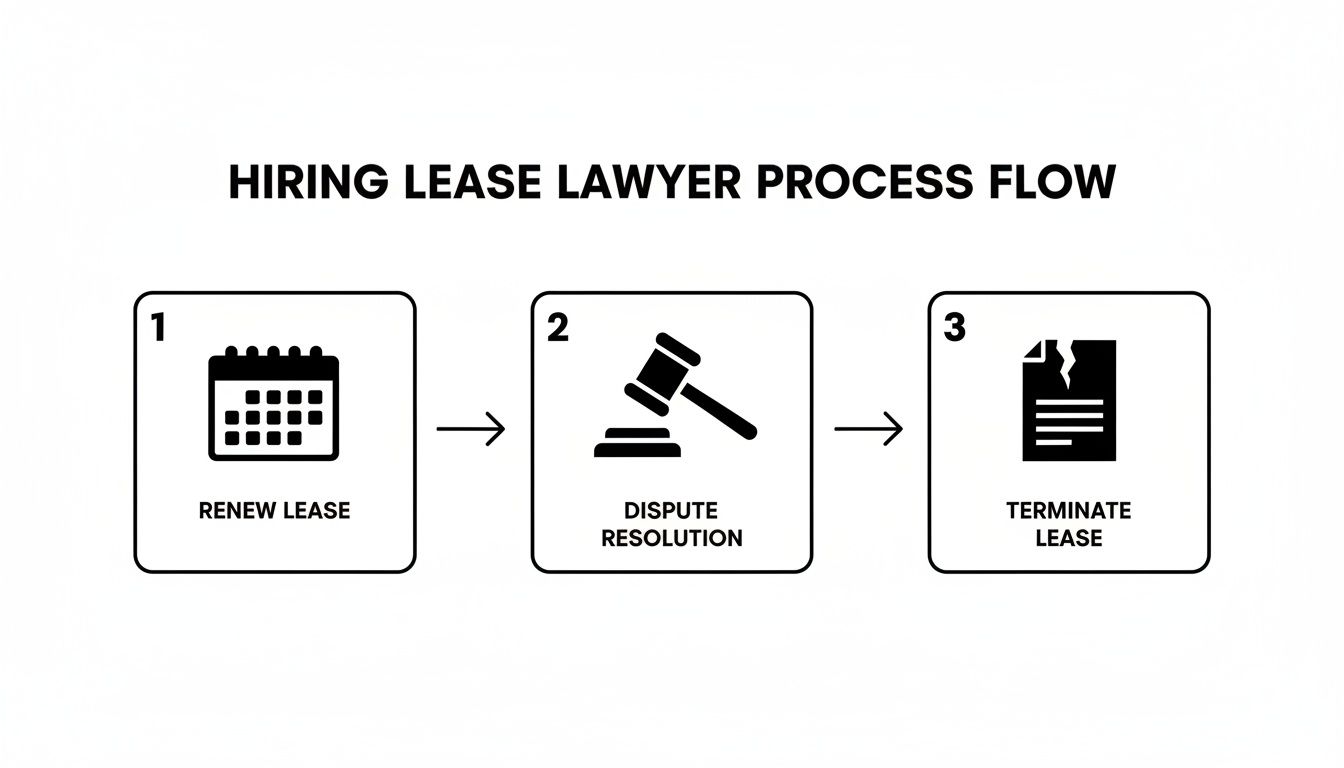
As you can see, good legal counsel isn't just for signing the initial lease—it's critical throughout the entire lifecycle of your tenancy.
A local lawyer’s knowledge is a non-negotiable advantage. An attorney in Houston understands the nuances of the Energy Corridor market, while a Dallas lawyer will have insights into the trends in Uptown or the Arts District. This local expertise translates into better negotiation leverage for you.
The current market only makes specialized legal help more crucial. Interestingly, the legal sector itself is driving a massive surge in commercial leasing. According to Cushman & Wakefield, law firms leased 4.6 million square feet in the first quarter of 2025 alone. That’s a 25% year-over-year increase and the strongest Q1 on record.
This boom is tightening the market in Texas hubs like Houston, making expert negotiation more critical than ever for both tenants and landlords trying to secure prime spaces. You can get more insights on this trend and how it's shaping real estate at CommercialSearch.
Making Your Initial Consultation Count
That first meeting with a potential lawyer isn't just a friendly chat. It's your one shot to find the right strategic partner for your business, and walking in prepared can make all the difference. A productive consultation sets the stage for a successful negotiation and helps you size up their expertise and communication style from the get-go.
At The Law Office of Bryan Fagan, PLLC, we offer a free consultation because we believe every Texas business owner deserves to understand their legal options without any upfront risk. To really get the most out of that meeting, let's talk about what to bring and, just as importantly, what to ask.
What to Bring to Your First Meeting
Walking into a consultation with the right documents in hand is the fastest way to get specific, actionable advice instead of vague legal theories. It immediately shifts the conversation from a "what if" scenario to a "here's what we can do" strategy session.
Try to gather these key items before you come in:
- The Draft Lease or Existing Lease: This is non-negotiable. The attorney needs to see the exact language you're up against.
- Letter of Intent (LOI): If one was signed, bring it. The LOI lays out the basic terms agreed upon before the formal lease was drafted and gives crucial context.
- Any Correspondence with the Landlord: This means all relevant emails, letters, or even text messages. You'd be surprised how often this paper trail reveals the true story, especially if a dispute is brewing.
- A List of Your Business Needs and Goals: Seriously, write this down. What are your absolute must-haves for the space? What are your biggest worries or red flags?
Having these documents ready shows you’re serious and allows the attorney to dive right into the heart of the matter. It makes for a much more productive use of everyone’s time.
Smart Questions to Ask a Potential Lawyer
The questions you ask need to go way beyond, "So, what's your fee?" You're trying to get a feel for their real-world experience, how they communicate, and their strategic thinking. A good lawyer will welcome these detailed questions—it shows you’re an engaged client.
Think of it as an interview, because that's exactly what it is. You are hiring them for a critical role. Here are a few powerful questions to get you started:
- "Can you share an experience negotiating a difficult repair clause for a business like mine here in the Houston/Dallas/Austin area?" This gets straight to the point. It tests for specific, relevant experience and shows whether they grasp the unique challenges your type of business faces.
- "What's your process for keeping clients in the loop during negotiations?" This is all about communication. Do they send weekly emails? Prefer quick phone calls? Their answer will tell you if their style fits with what you need.
- "Based on a quick glance at my draft lease, what are two or three clauses that immediately jump out to you as potential risks?" This is a direct test of their expertise. An experienced commercial lease attorney can spot poison pills and problematic language almost instantly.
- "How do you typically approach a landlord who is being unresponsive or unreasonable?" Their answer here reveals their negotiation philosophy. Are they aggressive from day one, or do they prefer a more collaborative approach before turning up the heat?
Choosing the right attorney is about finding someone who not only knows the law but also understands your business goals. They should be a clear communicator who you trust to represent your best interests at the negotiating table.
By asking these kinds of in-depth questions, you can cut through the sales pitch and get a genuine feel for how they operate. This process empowers you to pick an attorney who will be a true asset to your business. As you prepare, understanding the fundamentals of lease review and negotiation can give you even more confidence walking into that first meeting.
How Much Does a Commercial Lease Lawyer Cost?
Let's be honest: one of the first questions on any business owner's mind is, "What's this going to cost me?" Worries about legal bills shouldn't prevent you from protecting your company. Getting a clear picture of the costs and timelines for commercial lease services in Texas isn't just about budgeting—it's about making a smart, confident business decision.
When you understand how attorneys charge for their work, the uncertainty disappears. You start to see legal guidance not as a burdensome expense, but as a critical investment in your business’s long-term health and stability.
Common Ways Lawyers Bill for Lease Services
When you start looking for "commercial lease lawyers near me," you'll find a few standard ways they structure their fees. Each model is designed for different scenarios, from a quick document review to a drawn-out dispute.
- Flat Fees: This is often the best option for straightforward tasks. You pay one fixed price for a specific service, like a standard lease review and negotiation. You know the cost right from the start, making it incredibly easy to budget for.
- Hourly Rates: For situations where the timeline is less predictable—think litigation, dispute resolution, or a messy eviction—lawyers typically bill by the hour. An attorney’s rate will usually reflect their experience and the complexity of your case.
- Retainers: Think of a retainer as a down payment for legal services. You pay an upfront amount to the law firm, and the attorney deducts their hourly fees from that balance as they work. This is common for ongoing legal support or more involved litigation.
Here at The Law Office of Bryan Fagan, PLLC, we believe in being completely upfront. During your free consultation, we’ll lay out a clear cost breakdown. You'll understand exactly what you're paying for, why it's necessary, and how it adds value to your business—no confusing legal jargon, guaranteed.
What's a Realistic Budget for Legal Help?
The cost of hiring a commercial lease lawyer in Texas really depends on what you need done. But having some ballpark figures can help you plan.
A standard lease review and negotiation is often handled on a flat-fee basis, which might run anywhere from $1,500 to $5,000. The final price tag hinges on the lease’s complexity and length. A simple lease for a small retail boutique will be on the lower end, whereas a 50-page lease for a large industrial facility with tons of custom clauses will naturally cost more.
If you’re already in a dispute or facing eviction, the costs will likely be hourly. A simple demand letter might just take a couple of hours of an attorney's time. A full-blown eviction lawsuit, on the other hand, will require a much more significant time investment. This is precisely why getting proactive legal advice before you sign can save you thousands of dollars down the road.
It's easy to get fixated on the price tag, but the real focus should be on value. Spending a few thousand dollars on an expert negotiation can easily save you tens of thousands in hidden fees, unfair rent hikes, or unexpected repair obligations over the life of your lease.
What to Expect for Timelines
In business, time is money. Knowing how long these legal processes typically take is crucial for your planning.
- Lease Review & Negotiation: This is usually a pretty quick process. Depending on how fast the landlord's side responds, we can often get it wrapped up within one to two weeks.
- Dispute Resolution: For a minor disagreement, sending a formal demand letter and negotiating a solution might take two to four weeks.
- Eviction Proceedings: A commercial eviction in Texas can move faster than a residential one. From filing the initial paperwork to regaining possession of the property, the process could take anywhere from four to eight weeks, provided there aren't any major legal roadblocks.
Of course, these are just general estimates. Your situation is unique, and a good lawyer will give you a more tailored timeline based on the specifics of your case. The legal market itself is incredibly active, with Thomson Reuters reporting that average law firms saw 13.0% profit growth in 2025. This drives more commercial real estate activity and makes having an expert on your side more important than ever. You can read the full report on the state of the legal market to see these trends for yourself.
Common Questions About Texas Commercial Leases
Navigating a commercial lease can feel like trying to read a foreign language, and it's only natural to have a lot of questions. We see Texas business owners wrestle with these same issues all the time. Getting clear, straightforward answers is the first step toward protecting your business and your bottom line.
Can I Use a Standard Lease Template Instead of Hiring a Lawyer?
This is one of the most common—and riskiest—shortcuts business owners take. While grabbing a generic template online seems quick and cheap, it often creates incredibly expensive problems down the road. A one-size-fits-all form isn’t designed for Texas law, and it certainly won't protect the unique needs of your business.
These templates are often littered with hidden traps that a trained legal eye would spot in a second. Think about clauses that allow for uncapped rent hikes or place severe restrictions on how you can even use your own space.
The upfront cost of having a lawyer review your lease is a small investment compared to the potential cost of a dispute that could put your entire business on the line.
How Much Does a Commercial Lease Lawyer Cost in Texas?
The cost really depends on how complex your lease is and the level of support you need. For a standard lease review and negotiation, many Texas attorneys offer a flat fee, which typically falls in the $1,500 to $5,000 range.
For more complicated situations, like an ongoing landlord dispute or an eviction proceeding, lawyers usually charge an hourly rate. In major Texas cities, this can be anywhere from $250 to over $500 per hour.
At The Law Office of Bryan Fagan, PLLC, we believe in total transparency. We’ll give you a clear, detailed breakdown of all potential costs during your free consultation so you can make an informed decision with absolutely no surprises.
What Is the Most Important Clause in a Commercial Lease?
While every clause serves a purpose, a few carry enormous weight because they directly impact your daily operations and your finances.
The "Repairs and Maintenance" and "Default and Remedies" sections are two of the most critical areas in any commercial lease. An unfavorable term in either of these can create huge financial and operational liabilities for your business.
For example, a poorly written repairs clause could stick you with a five-figure bill to replace the building's HVAC system. The default clause dictates exactly what happens if you or the landlord breach the agreement. A good attorney will fight for protections like a "notice and cure" period, which gives you a reasonable chance to fix a minor violation before facing eviction. A deep understanding of Texas lease agreement laws is crucial to make sure these clauses are fair.
Is It Too Late to Hire a Lawyer If I Already Have a Dispute?
Absolutely not. In fact, this is one of the most critical times to get a lawyer involved. If you're dealing with a landlord who refuses to make essential repairs, facing an eviction notice, or stuck in a conflict over property damages, an experienced attorney is your best ally.
It's never too late to get professional legal advice. An attorney can immediately review the contract you signed, explain your rights under the Texas Property Code, and build a clear strategy to resolve the dispute.
The sooner you act, the more options you'll have. Don't wait for the problem to get worse—getting help early can save you a massive amount of time, money, and stress.
If you need help with an eviction, lease issue, or rental dispute, contact The Law Office of Bryan Fagan, PLLC for a free consultation today.