It is not normal to pay to view an apartment, and when someone asks for money just to schedule or gain access to a showing, that is almost always a serious red flag. Legitimate fees like application fees, usually about $30 to $50 per person, are typically paid only after you've seen the unit and decided to apply.
If you're apartment hunting in Texas right now, you may be dealing with pressure, tight deadlines, and a flood of online listings that all look urgent. A supposed landlord may say other renters are lined up, the unit will be gone tonight, and you need to send a “refundable” fee before they'll show it. That kind of message rattles people because housing decisions already feel personal and time-sensitive.
Texas renters need a clear answer here. You have a right to be cautious. You also have a right to understand the difference between a legitimate screening charge and a scam dressed up as a “tour fee,” “reservation fee,” or “pre-screen deposit.” Under the Texas Property Code, there are rules about when a landlord can collect an application fee and what they must tell you first.
An Introduction to Safe Apartment Hunting in Texas
A common Texas scenario looks like this. You find a rental online, the photos seem real, the rent seems possible, and the contact person replies fast. Then, before they'll let you step inside, they ask for a payment to “hold your spot” for a tour.
That's where many renters start wondering, is it normal to pay to view an apartment? The answer is no. In ordinary rental practice, you tour first, ask questions, and decide whether the place is even worth applying for.
A real landlord or licensed property manager wants qualified renters to see the property. Charging an upfront fee just to open the door works against that. It also creates an easy way for scammers to collect money from multiple people without ever giving a lawful showing.
Practical rule: If you haven't seen the unit in person, you shouldn't be paying a tour fee.
Texas law also matters before money changes hands. A landlord may later request an application fee for screening, but that is a different step in the process. It is not the same as charging for access to a showing. If you're sorting through a move and trying to make a small apartment work, practical planning helps too. Some renters also benefit from outside resources like this advice for optimizing small flat space while they compare units and avoid rushed decisions.
What renters and landlords should keep in mind
- Renters need proof: Confirm the unit exists, the person advertising it has authority to lease it, and the showing is real.
- Landlords need clean process: If you want to screen applicants, separate screening from showing and follow Texas notice rules.
- Everyone needs paperwork: Verbal promises about refunds, holds, or “priority access” create disputes fast.
Why You Should Never Pay a Fee Just to Tour an Apartment
The rental industry treats tours as free. According to Ori's overview of apartment tour practices, apartment tours are universally free in the industry, and any building asking for a fee to tour is extremely unusual and may signal a scam.
That makes sense in real life. You wouldn't pay a fee just to walk into a grocery store and see what's on the shelves. You also wouldn't expect to pay a “preview charge” before visiting a used car lot. A rental is a product and a legal relationship. You need to inspect the property before deciding whether you want it.
Why scammers ask for a viewing fee
Scammers use pre-tour payments for a simple reason. It helps them identify people who are stressed, rushed, or afraid of losing the apartment.
Once a renter sends money for the first made-up fee, more requests often follow. Suddenly there's a “key deposit,” a “refundable hold,” or a demand for identification and sensitive data before any showing happens. At that point, the scammer has either your money, your information, or both.
A person who won't show you the property before asking for money usually isn't trying to rent you a home. They're trying to test whether you'll comply.
What legitimate operators usually do instead
A legitimate landlord, broker, or property manager usually does three things:
- Schedules a tour first: They show the actual unit or a lawful substitute if the unit is occupied.
- Answers basic questions: They'll discuss rent, lease term, deposits, and screening standards.
- Collects money later in the process: Fees come after the showing, when the renter chooses to apply or reserve the unit.
For a broader legal framework, Texas Landlord-Tenant Law: An Overview explains how Texas Property Code Chapters 91 through 94 and Chapter 24 govern the rental relationship. Those chapters matter because rental disputes often start before move-in, then turn into larger fights about fees, possession, and written terms.
Understanding Legitimate Rental Fees in Texas
Not every rental fee is improper. The key is knowing what the fee is for, when it is due, and whether the landlord handled it correctly.
Application fees
A true application fee covers screening costs such as background checks, credit checks, and employment verification. According to Apartments.com's explanation of rental application fees, the typical rental application fee is about $30 to $50 per person, and it is due when the application is formally submitted, not before a property tour.
That timing matters. If someone says, “Pay this first and then maybe we'll let you see it,” they are not acting like a landlord who is merely processing an application in the ordinary way.
Holding deposits and security deposits
A holding deposit is different. It is generally used to reserve a unit after a renter decides to move forward. A security deposit is money held against damage, unpaid rent, or other lease-related obligations, and it's typically handled at lease signing or move-in.
The details of security deposit handling matter under Texas law. For a focused discussion, Security Deposit Rules in Texas addresses the 30-day return rule and what both parties must know under Chapter 92.
Common Texas rental fees explained
| Fee Type | Purpose | When It's Paid | Typical Amount (in Texas) |
|---|---|---|---|
| Application fee | Screening, such as credit and background review | When the application is submitted | About $30 to $50 per person |
| Holding deposit | Reserving a unit after the renter chooses to move forward | After the renter decides to secure the unit | Often $100 to $500 |
| Security deposit | Protection against damages or lease-related losses | Usually at lease signing or move-in | Varies by property and lease terms |
If you want a clearer picture of improper charges, this discussion of illegal landlord fees in Texas is useful because it helps renters separate standard charges from fees that raise legal concerns.
A simple way to judge a fee
Ask three questions before you pay anything:
- What exact service does this fee cover?
- Has the landlord shown me the property yet?
- Did I receive the required written information first?
If the answers are vague, rushed, or inconsistent, stop there.
What the Texas Property Code Says About Application Fees
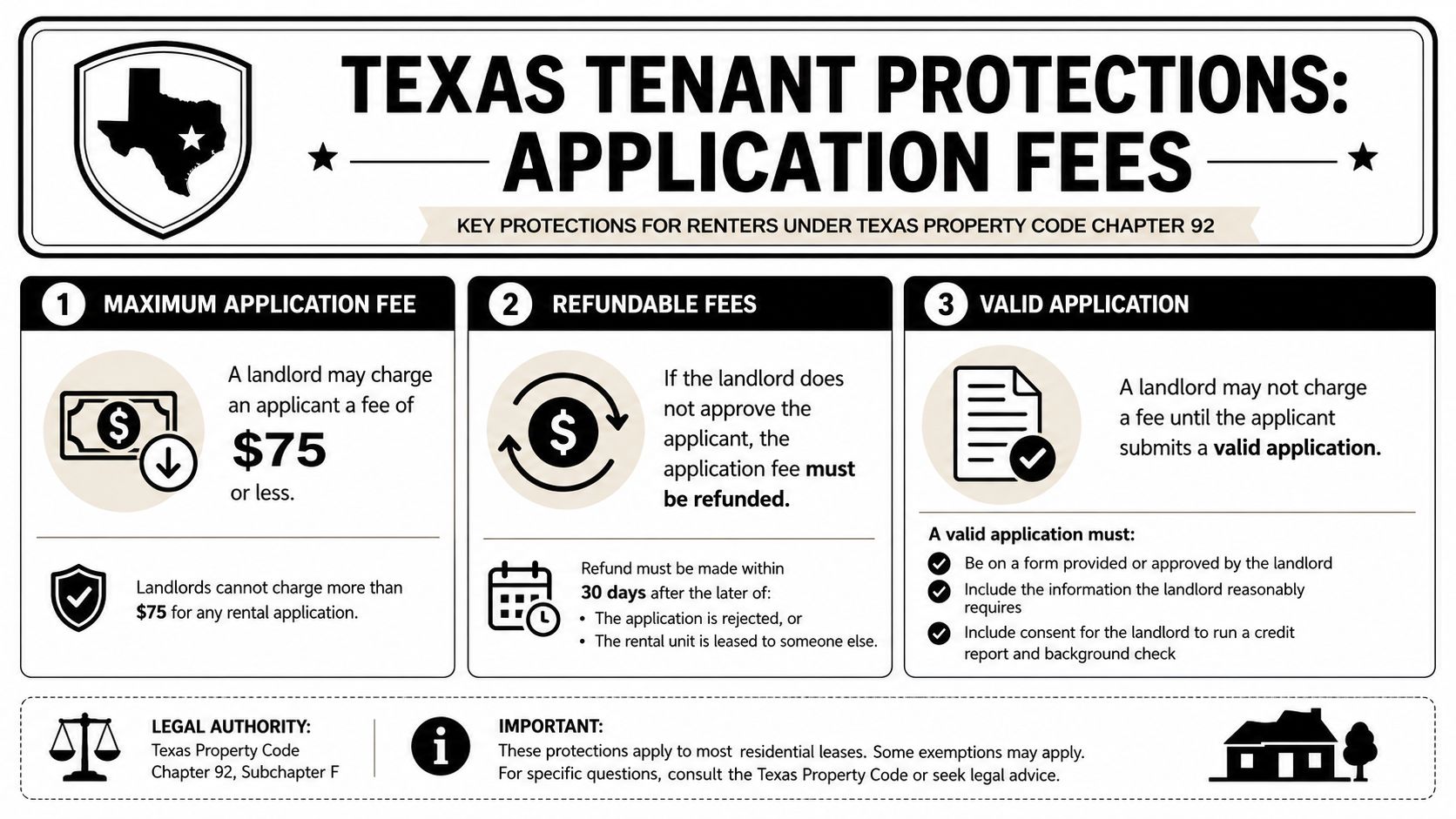
Texas gives renters an important protection that many people don't know about. Under Texas Law Help's explanation of rental application fees, Texas Property Code Section 92.3515 requires landlords to provide prospective tenants with written notice of the tenant selection criteria and the grounds for rejection before collecting any application fee or deposit. If the landlord fails to provide that notice first, they must refund the entire fee and deposit. If they do provide it properly, the application fee is generally nonrefundable.
What Section 92.3515 means in plain English
This statute doesn't say a landlord can charge you for a tour. It addresses application fees and deposits. The law requires disclosure first, money second.
That means a Texas landlord should tell you the standards they use before taking your fee. Those standards might involve income, rental history, criminal background, or credit issues. If they reject you based on criteria they never gave you in writing first, they may have a refund problem.
A real-world example
Suppose a Houston renter sees a listing and likes the neighborhood. The advertiser says, “Send the application fee now. I'll send qualifications later.” That's backward under Section 92.3515.
The proper sequence is:
- First: Written tenant selection criteria
- Second: Application fee or deposit
- Third: Screening and decision
If the landlord skips step one, Texas law may require a refund of the fee and deposit.
Important distinction: A lawful application fee is not the same thing as a pay-to-tour demand.
If you want a more focused review of this issue, Texas law on application fees for rentals gives additional context on how these fees work under state law. For readers comparing fee rules in other places, this Tenant Fees Act 2019 cleaning guide is also a useful example of how fee regulation can differ by jurisdiction.
Red Flags and Safe Practices for Your Apartment Search
The safest renters are not the ones who trust no one. They're the ones who verify everything before they pay or disclose personal information.
Red flags that should stop you
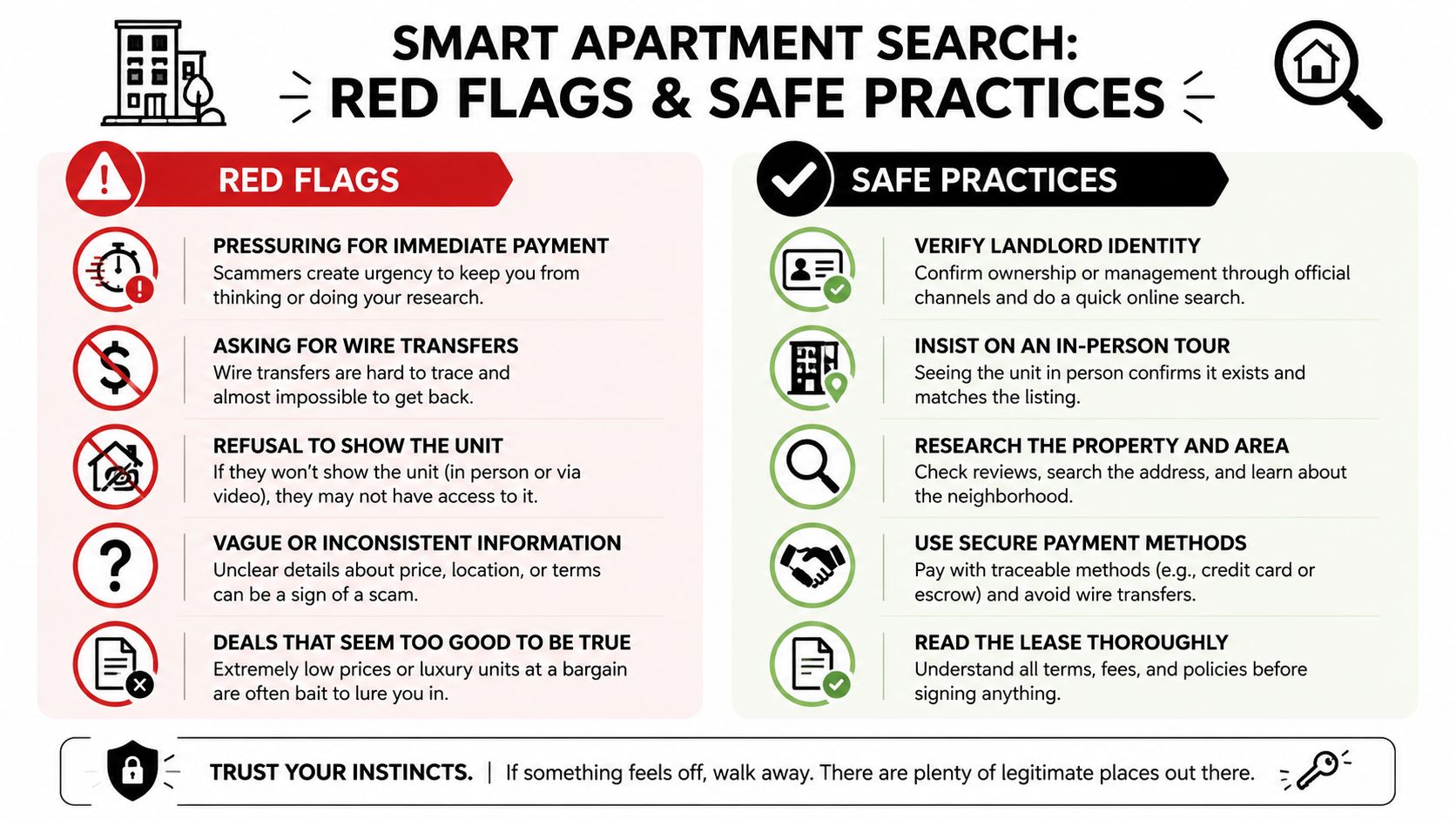
According to RentSpree's discussion of pre-viewing fees, tenants should never pay, wire money, or provide sensitive personal data such as Social Security numbers before physically verifying that the apartment exists.
Watch for these warning signs:
- Payment before access: They want money before you see the unit.
- No in-person tour: They claim they're traveling, unavailable, or “out of state” and can only mail keys after payment.
- Pressure tactics: They insist you must act immediately or lose the apartment.
- Sensitive data too early: They ask for your Social Security number before you've confirmed the property is real.
- Refusal to document terms: They won't put fees, refund terms, or lease details in writing.
Safe practices that protect you
Use a checklist instead of relying on instinct alone.
- Verify the property: Confirm the address exists and matches the listing details.
- Verify the person: Ask for the name of the landlord, management company, or broker and confirm they are tied to the property.
- Insist on a lawful showing: See the apartment before paying a tour-related fee.
- Read every document: Review application paperwork, fee notices, and lease terms before signing.
- Use a move-in checklist: A written record helps if disputes arise later. This tenant move-in checklist template can help you document the condition of the property once you do move forward.
If a listing looks real but the payment process feels secretive or rushed, trust the paperwork, not the sales pitch.
What to Do If You Encounter a Rental Scam
A renter usually realizes something is wrong right after the money leaves their account. The “landlord” stops answering, the address turns out to be someone else's home, or the showing keeps getting delayed until after another payment is sent. If that happens, treat it as a fraud problem immediately, not a misunderstanding you can fix with one more text.
The first five steps
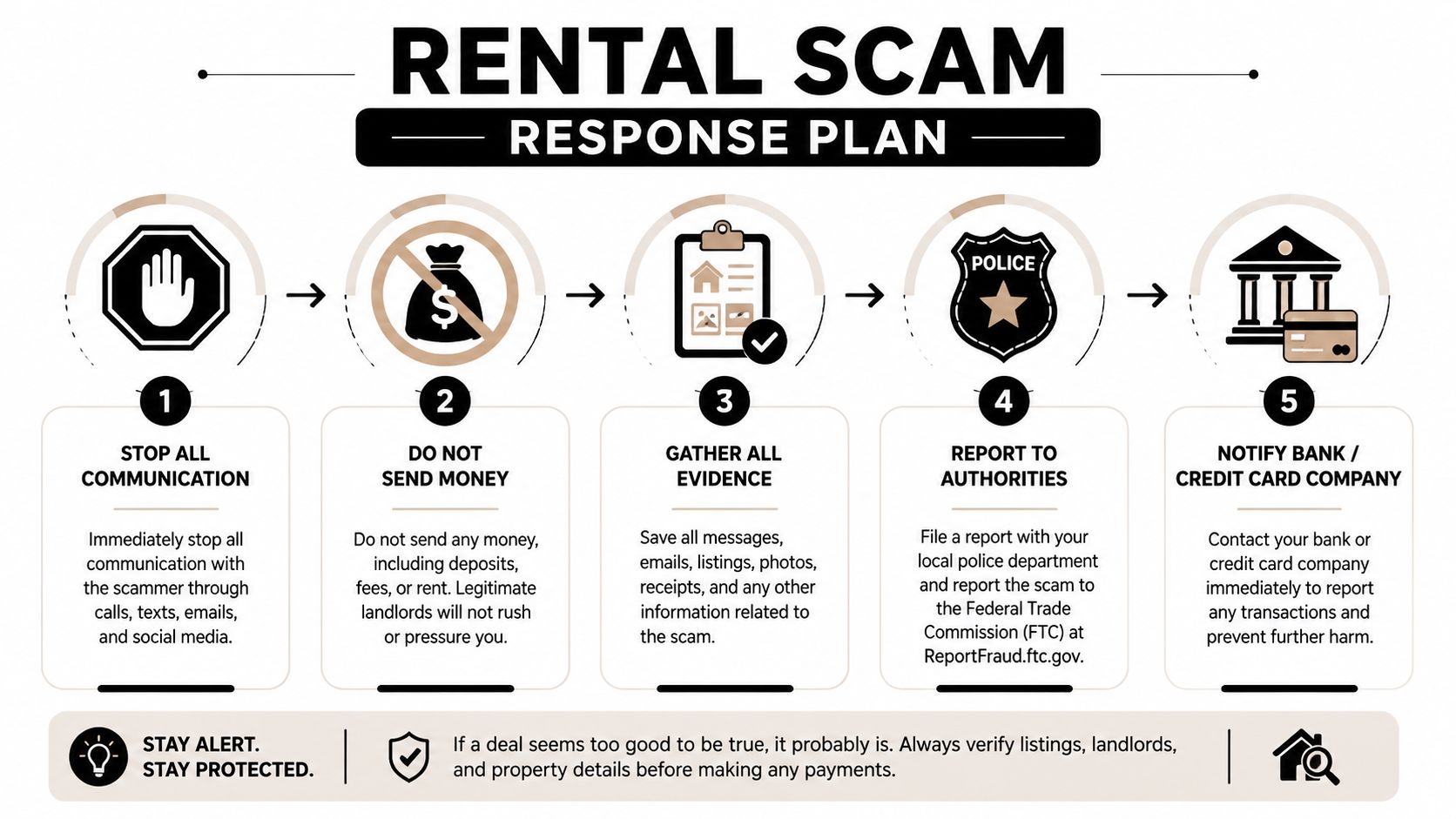
Stop communication
Cut off the conversation once you suspect fraud. Scammers often try to keep you engaged long enough to get another payment, more personal information, or access to your accounts.
Preserve evidence
Save the listing, screenshots, emails, texts, payment instructions, receipts, and transaction records. Download copies if you can. Listings and profiles often disappear once a scammer realizes they have been reported.
Report the listing platform
Report the ad to the marketplace, app, or listing site where you found it. That may not get your money back, but it can help remove the listing before someone else pays.
Contact your bank or card issuer
Ask about fraud claims, chargebacks, transfer disputes, and any deadline that applies to your payment method. Timing matters here. The sooner you report the transaction, the better your chance of limiting the loss.
File reports with law enforcement and consumer agencies
Make a report with your local police department and the Federal Trade Commission. If the scam involved a real estate license holder or someone claiming to be a property manager, a report to the Texas Real Estate Commission may also be appropriate.
This short video gives a helpful overview of common rental scam patterns and response steps.
When an attorney can help
Some cases are pure fraud. The person never owned the property, had no authority to lease it, and disappeared after collecting money. Those cases can be hard to recover, but quick legal advice can still help you preserve records, assess civil claims, and avoid mistakes with chargebacks or identity theft issues.
Other cases involve a real landlord, broker, or property manager who collected money in a way that does not match Texas law. That distinction matters. In Texas, the legal question is often not just whether the conduct felt suspicious. It is whether the person took an application fee, deposit, or other payment without giving the disclosures and documentation the Texas Property Code requires before collecting that money. That is where a small leasing dispute can become a statutory claim.
Other states also treat these practices seriously. Brick Underground's discussion of New York broker conduct notes that in New York State, demanding a deposit to view an apartment could be illegal and could expose a broker to disciplinary action by the Department of State. That does not control Texas law, but it shows how regulators view pre-showing payment demands.
If your issue involves a disputed application fee, misleading leasing conduct, or a landlord who may have violated the Texas Property Code, getting legal guidance early can help you protect your money and your records. One option for Texas renters and landlords dealing with lease and fee disputes is The Law Office of Bryan Fagan, PLLC, which handles landlord-tenant matters across Texas.