For most reserved apartments, the typical lease is a 12-month fixed term, and the typical security deposit is one month's rent. That's the standard setup in most Texas apartment rentals, even when a property is marketed as “reserved,” “premium,” or “exclusive.”
Dealing with a lease can feel stressful when you're staring at pages of legal language, trying to figure out what you're really agreeing to. If you're a tenant, you want stability and clear rules. If you're a landlord, you want enforceable terms that reduce disputes. Under the Texas Property Code, both sides have rights, but those rights depend heavily on what the lease says.
A “reserved apartment” usually isn't a special legal category in Texas. It's usually a marketing term. That matters because many renters assume “reserved” means added protection, while many landlords assume standard lease forms will cover every issue. Neither assumption is safe. What controls is the written lease, the addenda attached to it, and the Texas statutes that fill in the gaps.
Decoding Your Texas Lease Agreement
When clients ask, “What are the typical lease terms for reserved apartments?” the first thing I clarify is that “reserved apartment” is usually a business label, not a defined term in the Texas Property Code. In practice, that means the lease matters more than the label. If the unit was “held” for you, “preleased,” or marketed as a premium floor plan, the legal analysis still starts with the contract.
Most reserved units use the same backbone as other apartment leases: a fixed term, stated rent, deposit terms, repair obligations, rules for occupancy, and move-out requirements. This arrangement is much like booking a seat for a full season instead of buying a single ticket. The tenant gets predictability. The landlord gets occupancy and income stability.
Texas law doesn't require a lease to use fancy language to be enforceable. It needs clear terms. Dates matter. Payment rules matter. Notice provisions matter. Small clauses often decide big disputes.
Practical rule: If a clause changes your money, your move-out date, your right to stay, or your right to recover a deposit, read it twice before you sign.
Landlords reviewing lease forms can learn from how investors read transaction documents. The same attention to detail that matters in key clauses for investors also matters in residential leasing, especially with default provisions, notice language, and financial obligations.
Lease Length The 12-Month Standard in Texas
The market standard for reserved apartments is straightforward. The most typical lease term for reserved apartments is a fixed-term lease lasting 12 months, and most apartment rentals default to a one-year commitment because that gives landlords predictable rental income and reduces vacancy risk, as explained by Rent.com's overview of standard apartment lease terms.
That fixed term has practical legal consequences in Texas. During that term, the tenant is obligated to pay rent and comply with the lease. The landlord is obligated to provide possession of the unit and honor the agreed rental arrangement. A fixed-term lease usually means the rent doesn't change mid-term unless the lease itself allows it.
Why 12 months works for both sides
For tenants, a one-year lease usually offers housing stability. You know where you'll live, what the monthly rent is, and what rules apply. That matters in fast-moving Texas markets where availability can shift quickly.
For landlords, a 12-month lease reduces turnover. Every turnover brings cleaning, marketing, screening, vacancy exposure, and administrative time. A stable term makes budgeting and planning easier.
Here's the trade-off in plain English:
- Tenant benefit: You get predictability and usually more security than a rolling tenancy.
- Tenant burden: If life changes unexpectedly, leaving early can trigger penalties.
- Landlord benefit: You reduce vacancy and keep a known resident in place.
- Landlord burden: You're also locked into the lease terms unless the contract gives you another option.
Other lease lengths you may see
Shorter and longer terms do exist. Some landlords offer shorter terms for flexibility or longer terms for retention. The key issue isn't whether a different term is “good” or “bad.” It's whether the lease clearly explains what changes with that term, including renewal timing and early exit rules.
A fixed term should answer these questions:
- When does the lease start and end?
- Does it renew automatically or require a new signature?
- What happens if the tenant stays after expiration?
- Can the landlord increase rent only after the term ends?
If the lease rolls into a periodic tenancy after expiration, the rules change. If you need a plain-language explanation of that setup, see what a month-to-month tenancy means in Texas.
For readers comparing forms, What a Texas Lease Should Include outlines the key terms and required disclosures in a Texas residential lease.
A lease term isn't just a calendar entry. It decides when notice is due, when rent can change, and whether moving early becomes expensive.
Financial Obligations Rent Deposits and Fees
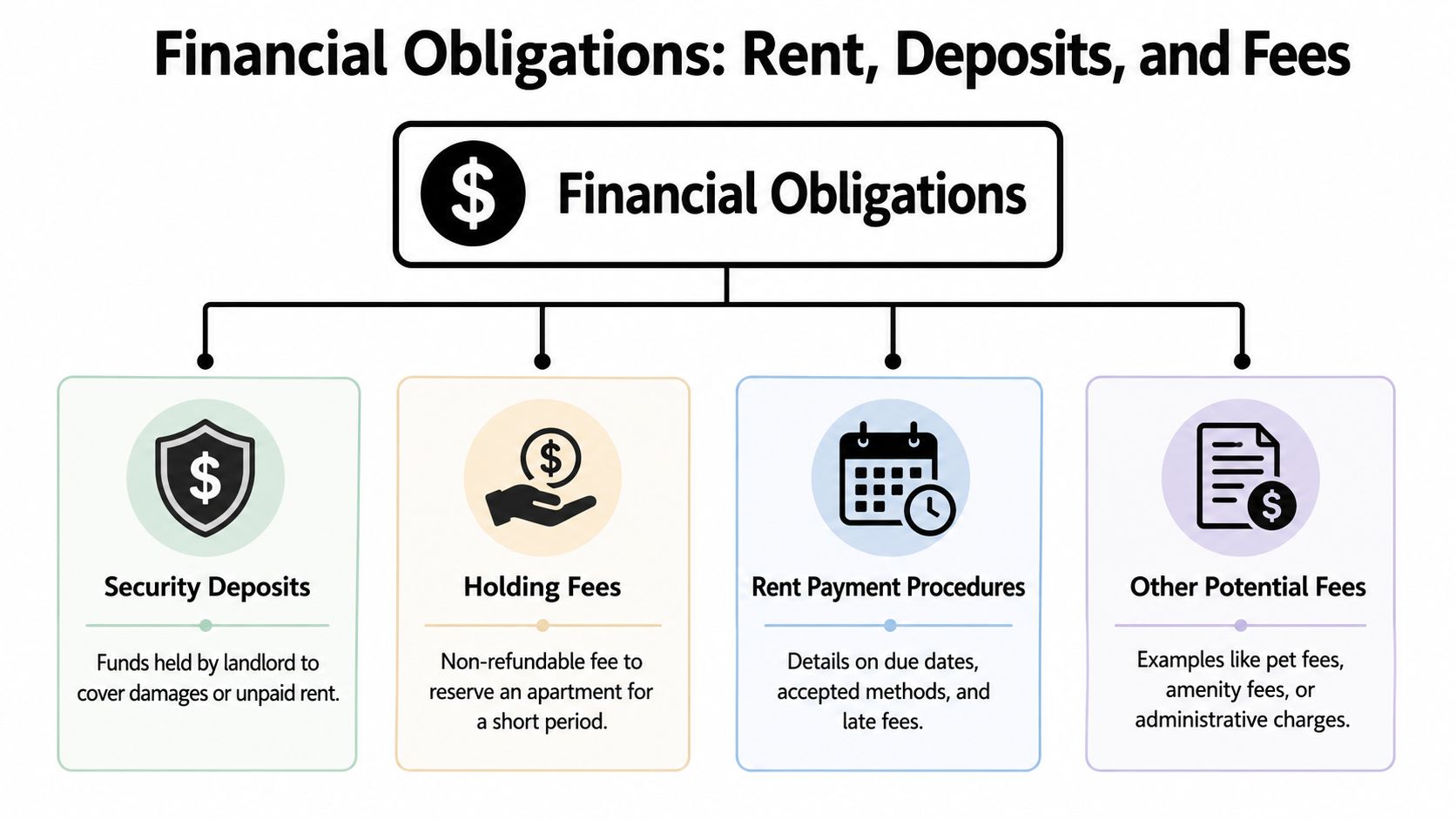
Money disputes cause more landlord-tenant conflict than almost anything else. In a reserved apartment lease, tenants often focus on monthly rent and miss the clauses that control deposits, payment methods, grace periods, and move-out deductions.
Security deposits and Texas rules
A common starting point is the deposit. A standard security deposit is typically equivalent to one month's rent and must be released by the landlord within 30 to 60 days after the tenant vacates, assuming all obligations are met. Failure to do so can lead to legal remedies for the tenant, as summarized by Northwestern Mutual's lease agreement guide.
Under the Texas Property Code, security deposit disputes usually turn on three questions:
- Did the tenant fully surrender the premises?
- Did the tenant leave unpaid rent or actual damage beyond normal wear and tear?
- Did the landlord provide the required accounting and return process?
Texas law also draws a practical line between ordinary wear and actual damage. Faded paint, minor carpet wear, or routine aging usually aren't treated the same as holes in walls, broken fixtures, or unpaid rent balances.
Rent procedures and fee clauses
Your lease should state how rent must be paid, where it must be paid, and what happens if it's late. Many leases also include a grace period before late fees apply, though the details vary. That's why tenants should never rely on verbal statements from a leasing agent when the written lease says something different.
A few trouble spots show up often:
- Payment method changes: Online portal only, certified funds after a bounced payment, or restrictions on cash.
- Late fee language: The lease should be specific, not vague.
- Move-in charges: Administrative fees, amenity charges, parking fees, or pet-related costs may appear outside the base rent.
- Holding versus security money: A fee used to take a unit off the market may not be treated the same way as a refundable security deposit.
If you're sorting out move-in costs, this discussion of first and last month rent in Texas helps distinguish what landlords commonly ask for versus what tenants often assume is required.
A simple move-out checklist
For tenants, the best way to protect your deposit is to create a paper trail.
- Document condition at move-in with photos and written notes.
- Give proper notice exactly the way the lease requires.
- Pay all amounts due through the final day of possession.
- Return keys and access devices so there's no argument about surrender.
- Provide a forwarding address in writing.
For landlords, clear records are just as important. If you withhold deposit funds, support the deduction with dates, invoices, photos, and lease language. Vague deductions tend to create avoidable disputes.
Your Rights and Responsibilities During Tenancy
A lease isn't only about rent. It controls daily life inside the unit. Noise complaints, repair requests, access to the apartment, utility responsibility, and occupancy rules all live here. These specifics often trigger many “reserved apartment” problems, because tenants often expect premium treatment while landlords rely on standard form language.
Repairs and habitability under Texas law
Texas law gives landlords an important duty on serious repair issues. Leases explicitly define repair obligations. In Texas, landlords have a duty to fix issues that affect the physical health or safety of an ordinary tenant, but the tenant must provide proper notice for this obligation to be triggered, as noted in UMoveFree's discussion of key lease terms for renters.
That rule lines up with Texas Property Code Section 92.052, which is one of the most important repair statutes in residential cases. The right exists, but procedure matters. A tenant usually can't just complain casually in person and expect legal protection to attach. Proper notice is critical.
How tenants should handle repair problems
If the air conditioning stops during extreme heat, a pipe leaks into the wall, or the heater fails in winter, don't rely on a phone call alone. Use the lease-required notice method and keep proof.
A practical repair process looks like this:
- Report the issue in writing: Use the portal, email, or notice method required by the lease.
- Describe the health or safety impact: Be specific about leaks, mold concerns, heat, sewage, electrical danger, or lack of hot water.
- Keep copies: Save screenshots, photos, and maintenance confirmations.
- Stay current on rent unless legal advice tells you otherwise: Many tenants create bigger problems by withholding rent without understanding Texas law.
Put the landlord on written notice early. In court, the party with records usually has the stronger position.
Landlord entry and quiet enjoyment
Texas leases often give landlords a contractual right to enter for repairs, inspections, showings, or emergencies. The lease should say when entry is allowed and whether notice is required. Tenants still have a right to occupy the property without harassment, repeated unnecessary intrusions, or conduct that interferes with ordinary use of the home.
A common scenario looks like this: a landlord needs to inspect a suspected leak in a neighboring unit, but the tenant works nights and is asleep during the day. That isn't just a customer service problem. It's a lease-management problem. The answer is usually to follow the lease, communicate in writing, and keep access limited to legitimate purposes.
Utilities and community rules also belong in this category. If the lease says the tenant pays electricity, follows pool rules, or limits long-term guests, those terms usually matter just as much as the rent clause. A tenant who pays on time can still face trouble for violating occupancy or conduct rules. A landlord who ignores a repair issue can still face liability even if the tenant is difficult.
Lease Renewal and Early Termination in Texas
When the end of the lease gets close, stress rises fast. Tenants want to know whether they can stay, whether rent will change, and what happens if they need to move. Landlords want a clear answer so they can plan occupancy, staffing, and turnover work.
A lot of leases require a renewal decision before the end date. Some require the tenant to give notice if they plan to leave. Others offer a renewal and convert to month-to-month if no one signs a new term. Read that clause carefully because missed notice deadlines create real costs.
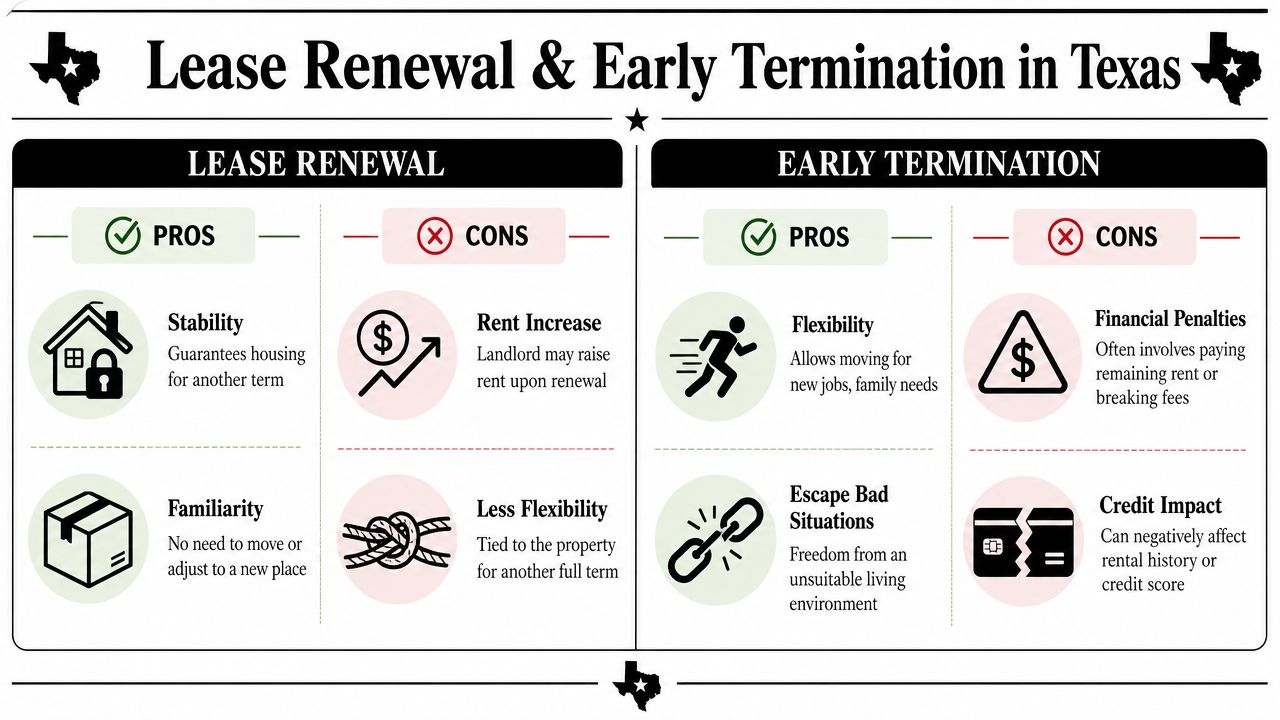
Here's a visual summary of the decision most renters face.
Renewal notice and end-of-term decisions
Some leases require 30 to 90 days' notice before expiration if the tenant intends to renew or vacate. That kind of clause gives the landlord time to prepare for re-listing or continued occupancy. For tenants, it means waiting too long can weaken your bargaining power.
A simple example: a tenant likes the apartment, assumes renewal will be automatic, and ignores the notice clause. The landlord treats the lease as ending, begins marketing, and offers different renewal terms. That dispute usually turns on the written lease, not what the tenant assumed would happen.
This short video gives a helpful overview of the bigger picture around lease endings and tenant options.
Early termination and reserved apartment risk
Breaking a lease early in Texas can be expensive unless a legal exception applies. Some protected situations may allow early termination rights under Texas law, including certain circumstances involving military service or family violence. Outside those situations, the lease and the Texas Property Code usually control the result.
“Reserved apartment” leases can feature more aggressive terms. These may embed stricter early exit terms, such as requiring 60-90 days' notice or charging 2-3 months' rent as a termination fee, according to Apartment Guide's discussion of lease term structures.
That clause is not a footnote. It can be the most expensive line in the whole lease.
If you're facing a move for work, family, safety, or financial reasons, review what happens if you break a lease early in Texas before you make assumptions about your options.
If you need to leave early, don't disappear and hand back the keys. Give formal notice, review the termination clause, and document every communication.
Three everyday examples
- A tenant gets a new job in another city. The lease requires written notice and an early termination charge. Negotiation may still reduce the damage if the tenant communicates early and cooperates with reletting.
- A landlord discovers an unauthorized subtenant. The issue may become both a lease violation and a screening problem.
- A tenant keeps a pet that wasn't approved under the addendum. If the lease treats that as a material violation, the landlord may start enforcement even when rent is current.
Navigating Special Clauses Pets Subletting and HOAs
Many lease fights don't start with rent. They start with addenda. A tenant brings in a dog that wasn't approved, lets a cousin move in “temporarily,” or ignores community rules because they seem minor. Then a notice arrives, and the problem suddenly feels much bigger.
Pets are never a side issue
If the property allows pets, the lease usually doesn't stop at “pets permitted.” It often adds a separate pet addendum with breed rules, size rules, cleanup duties, noise restrictions, and financial terms. For landlords, vague pet language creates enforcement problems. For tenants, a casual conversation with leasing staff doesn't override the written addendum.
A common dispute looks like this: the tenant says management knew about the pet from day one. The file says the pet screening was never completed, the addendum was never signed, and the animal violated the building rules. That becomes an evidence issue, not just a misunderstanding.
Subletting usually requires written consent
Most Texas apartment leases prohibit subletting or assignment without the landlord's written approval. That matters when a tenant wants someone else to “take over” after a job transfer or breakup. Without permission, the original tenant often remains responsible for the lease, and the occupant may have no secure legal footing at all.
For landlords, this is one area where consistency matters. If you enforce unauthorized occupancy selectively, you create unnecessary arguments later. For tenants, the safest route is simple: ask first, get the answer in writing, and don't rely on text messages that never got a formal response.
HOA rules can become lease violations
Some apartment-style units, condos, or planned communities are governed by a homeowners association. When that happens, the lease may require the tenant to follow separate community rules on parking, balconies, trash, noise, and use of common areas. A tenant can pay rent on time and still face enforcement trouble for repeated HOA-related violations.
A fair lease gives both sides something valuable. It gives tenants clear boundaries and landlords clear enforcement tools. If a clause is buried, vague, or hard to apply in real life, it usually creates conflict later.
Lease Red Flags and Negotiation Tips
A lease problem usually starts long before anyone talks about eviction or withholding a deposit. It starts at the application desk, when a tenant is told a unit is “reserved,” “held,” or “guaranteed,” but the actual lease says something broader, harsher, or less definite. In Texas, those marketing labels do not carry a settled legal meaning by themselves. The signed lease, the addenda, and the written policies usually control.
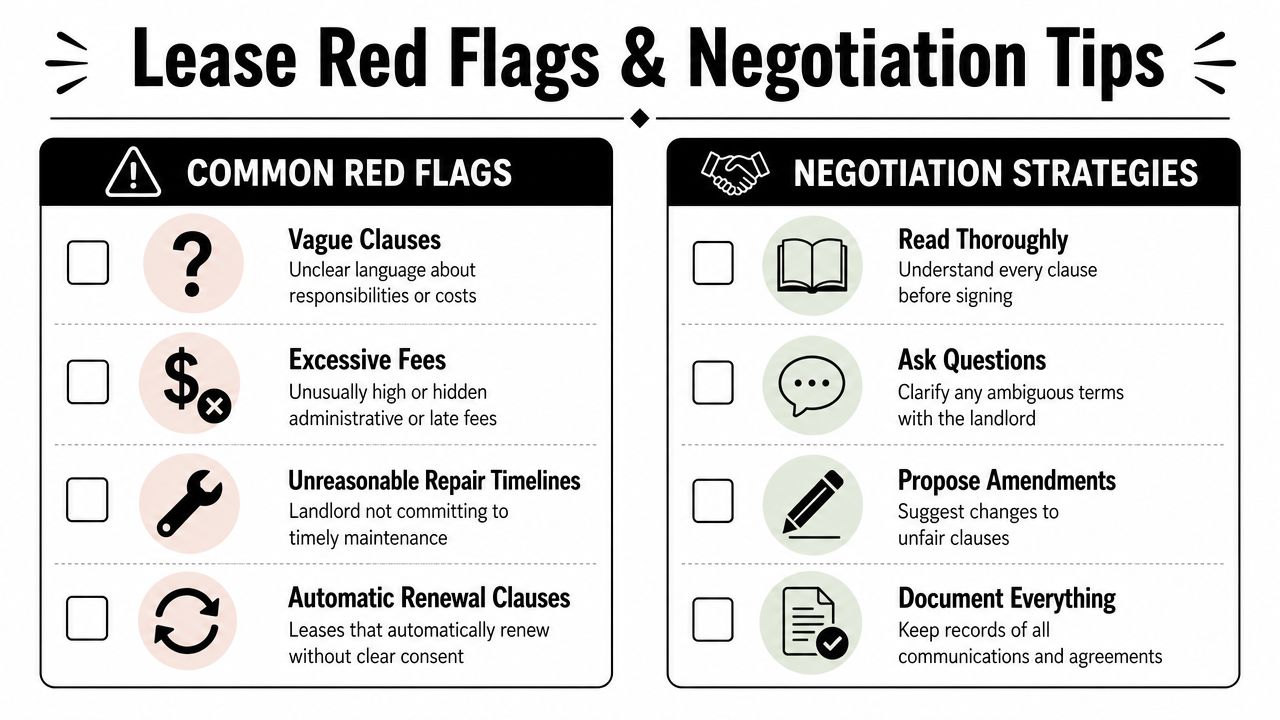
For tenants, the practical question is simple. Does the paperwork match what was promised? For landlords, the risk runs the other way. If your staff uses “reserved apartment” loosely, but your forms do not explain what that means, you invite avoidable disputes over pricing, possession dates, fees, and cancellation rights.
Red flags tenants should catch early
A “reserved” label can create false confidence. The lease may still give the landlord broad discretion after the initial term, especially if it converts to month-to-month. As noted earlier, month-to-month arrangements can expose tenants to faster rent changes and easier termination than many renters expect.
Read with a pencil in hand. These clauses deserve close attention:
- Vague fee language: If the lease mentions administrative fees, utility setup charges, pest control, package fees, or move-out charges in different sections, ask for one clear explanation of when each fee applies.
- Automatic renewal or conversion terms: Confirm whether the lease renews for another fixed term, rolls into month-to-month, or ends unless one side gives notice.
- Broad repair disclaimers: A Texas lease cannot erase duties imposed by law, and vague repair language often becomes a fight after a maintenance problem.
- Overbroad entry clauses: The lease should explain why entry is allowed and how notice is handled, especially for non-emergency access.
- Catch-all default provisions: Phrases like “any other rule violation” are easy to enforce unevenly and hard to defend later.
One more point matters in these “reserved apartment” deals. If the unit number, move-in date, concession, or quoted rent can change under a separate addendum, that should be stated plainly. If it is buried, tenants get surprised and landlords get accused of bait-and-switch tactics.
What can be negotiated
Large apartment operators often hold firm on base rent. That does not mean every term is fixed. Smaller owners, condo landlords, and some property managers will often adjust details that reduce friction for both sides.
| Lease Negotiation Points for Tenants and Landlords | Tenant Goal | Landlord Goal |
|---|---|---|
| Lease Term | More flexibility or longer price stability | Predictable occupancy and lower turnover |
| Notice Period | Enough time to plan a move or renewal | Enough lead time to market or re-rent |
| Pet Terms | Clear approval and reasonable restrictions | Risk control and property protection |
| Parking and Amenity Terms | Guaranteed access and clear rules | Manage limited resources consistently |
| Early Exit Language | Predictable consequences and mitigation | Enforceable recovery if tenancy ends early |
The best negotiation points are specific. A tenant asking for “better terms” usually gets nowhere. A tenant asking for a capped reletting charge, written parking rights, or a fixed renewal notice deadline has a real chance. Landlords benefit from the same specificity. Clear terms are easier to enforce and easier to explain to a judge if a dispute reaches court.
Practical negotiation tactics
Many lease fights don't start with rent. They start with addenda.
Use a disciplined approach before money changes hands:
- Read the addenda before paying nonrefundable charges. The base lease rarely tells the whole story.
- Mark anything unclear. Ask for a written answer instead of relying on a leasing agent's verbal assurance.
- Request narrow changes. A targeted revision, such as adding a notice deadline or clarifying a fee, is more realistic than rewriting the lease.
- Match the business deal to the paper. If the unit was “reserved” for a certain date or price, make sure that promise appears in writing.
- Keep every version. Save the application, receipts, emails, screening results, and final signed lease packet.
Landlords should handle negotiation with the same care. Define the fee. Attach the policy. Identify the exact unit if one has been promised. If a term matters enough to enforce, it matters enough to write clearly. That is especially true with “reserved apartment” language, because Texas courts will focus on the contract, not the sales pitch.
The Law Office of Bryan Fagan, PLLC handles lease review, drafting, enforcement, and dispute guidance for Texas landlords and tenants who need help evaluating these issues before a disagreement turns into litigation.
A strong lease is not the longest one. It is the one both sides can read, apply, and prove.