Dealing with a landlord dispute or eviction can be stressful — but understanding your rights under Texas law can make all the difference. When you're a renter in Texas, facing off against a landlord can feel like an uphill battle. A tenant rights lawyer is your legal advocate, a professional who lives and breathes landlord-tenant law. They are in your corner, representing you in disputes over everything from evictions and ignored repairs to security deposit fights.
Your strongest shield in these battles is understanding your legal protections under the Texas Property Code. It’s the official rulebook, and knowing it is the first step to defending your rights.
Navigating Your First Steps in a Landlord Dispute
Let's be honest, getting into a conflict with your landlord is incredibly stressful. Whether you just found an eviction notice taped to your door, your AC is broken in the middle of a Texas summer, or your security deposit has vanished without a trace, it’s easy to feel cornered.
But you are not powerless. The Texas Property Code wasn't written for landlords alone; it provides a solid foundation of rights for every renter in the state.

Think of this as your roadmap. The anxiety that comes with these conflicts is real, but knowledge is the best cure. Your first move is to figure out exactly what kind of problem you have and take immediate, practical steps to protect your position.
What the Texas Property Code Says About Common Tenant Issues
Most landlord-tenant fights fall into a few common buckets. Knowing what to do the moment a problem starts can completely change the outcome. You can't afford to wait for things to get worse—acting quickly and documenting everything is your best strategy.
Here’s a step-by-step guide to help you identify the challenge you’re facing and the first move you should make to protect yourself.
| Issue | Real-World Scenario | Your Recommended First Action |
|---|---|---|
| Eviction Notice | Your landlord has started the legal process to have you removed from the property. | Do not ignore it. Review the notice for errors and immediately contact a tenant rights lawyer to understand the strict legal deadlines and your defense options. |
| Unmade Repairs | The landlord is failing to fix a condition that affects your health or safety, such as a leaking roof, no hot water, or a pest infestation. | Send a formal written request for repairs via certified mail. This creates a legal record that you properly notified the landlord, which is required by law. |
| Security Deposit Not Returned | Your landlord has not returned your security deposit or provided an itemized list of deductions within 30 days of you moving out. | Send a formal demand letter via certified mail that includes your forwarding address and requests the immediate return of your deposit. |
| Illegal Entry or Harassment | Your landlord is entering your home without proper notice or is engaging in behavior that disturbs your peace and quiet. | Document every incident with dates and times. Send a formal letter to your landlord demanding the behavior stop, citing your right to quiet enjoyment. |
Taking these initial steps creates a paper trail, and that paper trail is absolutely essential if the dispute escalates. For example, if you're dealing with a landlord who just won't listen, knowing how to file a complaint against your landlord is a powerful next step to hold them accountable.
Key Takeaway: Always, always, always put your communication with your landlord in writing. Phone calls and verbal promises are nearly impossible to prove in court. Certified mail, emails, and even text messages create a clear, undeniable record of who said what and when. A strong paper trail is the backbone of a winning tenant rights case.
What the Texas Property Code Says About Your Rights
When you’re facing a dispute with your landlord, it can feel like they hold all the cards. But they don't. The law is on your side, and understanding your basic rights as a Texas tenant is the first step toward leveling the playing field.
The Texas Property Code, specifically Chapter 92, isn't just a dense legal textbook—it's your shield. Think of it as a set of built-in protections that overrule any illegal terms in your lease, guaranteeing your home is safe and your peace is respected. Knowing these rights is how you go from feeling stressed and powerless to confident and in control.
The Right to a Safe and Habitable Home
This is the big one. In Texas, you have a legal right to a habitable home. It’s not a favor your landlord does for you; it's a non-negotiable duty they owe you. Section 92.052 of the Texas Property Code requires landlords to repair any problem that "materially affects the physical health or safety of an ordinary tenant."
This is a broad protection, and it's incredibly powerful. It means your landlord can’t just shrug off serious issues.
Real-World Scenario: Let's say your air conditioning dies in the middle of a scorching Texas August. That's more than just an inconvenience—it's a genuine health and safety hazard. Under the law, your landlord is obligated to fix it in a reasonable timeframe, but only after you’ve given them proper written notice.
This same protection covers a whole host of other serious problems, like:
- Serious mold that could make you sick.
- A leaking roof causing water damage and structural risks.
- No hot water for days on end.
- A major pest infestation, like roaches, rats, or bedbugs.
To trigger this legal duty, you must be current on your rent and you absolutely must give your landlord written notice of the problem. Sending it by certified mail is always the best way to create a paper trail that can stand up in court.
The Right to Quiet Enjoyment
Your rental isn’t just a property; it's your home. And you have a right to live in it peacefully. The covenant of quiet enjoyment is a promise implied in every single Texas lease, guaranteeing that your landlord won’t interfere with your ability to live undisturbed.
This means they can't just barge in whenever they feel like it. While a landlord can enter for legitimate reasons—like emergencies, repairs, or showing the unit—your lease will almost always require them to give you reasonable advance notice first. Constant, unannounced visits could be a violation of your rights.
This right also means your landlord has a duty to deal with major disruptions they control. If another tenant in the building is throwing wild parties every night and destroying your peace, your landlord can't just ignore it. They have a responsibility to address the nuisance.
The Right to Your Security Deposit
Disputes over security deposits are one of the most frustrating issues tenants face. The good news is, the Texas Property Code has very clear, strict rules to protect your money.
Under Section 92.103 of the Texas Property Code, your landlord has exactly 30 days from the day you move out and provide a forwarding address to return your security deposit. If they keep any of it, they must send you a written, itemized list explaining every single deduction.
They can't charge you for "normal wear and tear." That means things like small scuffs on the paint, minor carpet wear, or faded blinds that happen from ordinary living. They can only deduct for actual damage you caused, like a giant hole in the wall or a pet-stained carpet.
If your landlord misses that 30-day deadline or fails to provide the itemized list, they may be acting in bad faith. If you have to take them to court and the judge agrees, you could be awarded three times the amount of the deposit they wrongfully kept, plus your attorney's fees.
How a Lawyer Can Defend You in the Texas Eviction Process
That notice taped to your door is designed to be terrifying. It feels final. But it’s crucial to understand that an eviction notice isn't the end of the road—it's just the start of a legal process. Bringing a skilled tenant rights lawyer in Texas on board can completely change the outcome, giving you a fighting chance to protect your home.
The Texas eviction process is a legal minefield, loaded with strict rules that landlords must follow to the letter. Any misstep, no matter how small, can invalidate their entire case. An experienced eviction attorney knows exactly where to look for these mistakes and how to leverage them into a strong defense for you.
Step 1: Understanding the Eviction Notice or Notice to Vacate
Everything starts with a single piece of paper: the Notice to Vacate. Under the Texas Property Code, this isn't just a friendly heads-up; it's a formal legal warning with very specific requirements. If a landlord wants to evict you for not paying rent, they are required to give you at least a 3-day notice in writing before they can even think about filing a lawsuit.
How they deliver it matters. The notice must be handed to you in person, sent by mail, or posted on the inside of your front door. A text message won't cut it. A verbal warning doesn't count. An attorney will immediately put this notice under a microscope, looking for common landlord errors that could get the case thrown out before it truly begins.
Step 2: The Forcible Detainer Lawsuit and Court Hearing
If you’re still in the home after the notice period ends, the landlord can then file a Forcible Detainer lawsuit in the local Justice of the Peace court. This is when things get serious. You’ll be served with official court papers, and the clock starts ticking—fast. Your court hearing could be scheduled in as little as 10 days.
This is the moment where a lawyer's expertise goes from helpful to absolutely essential. Without one, you’re left to argue your case alone against a landlord who has likely been through this process dozens of times. Research shows how stacked the deck can be. A 2023 study found that when Texas tenants had legal representation, their odds of winning an eviction case improved dramatically. You can read the full report on how legal aid impacts Texas eviction outcomes on texastribune.org.
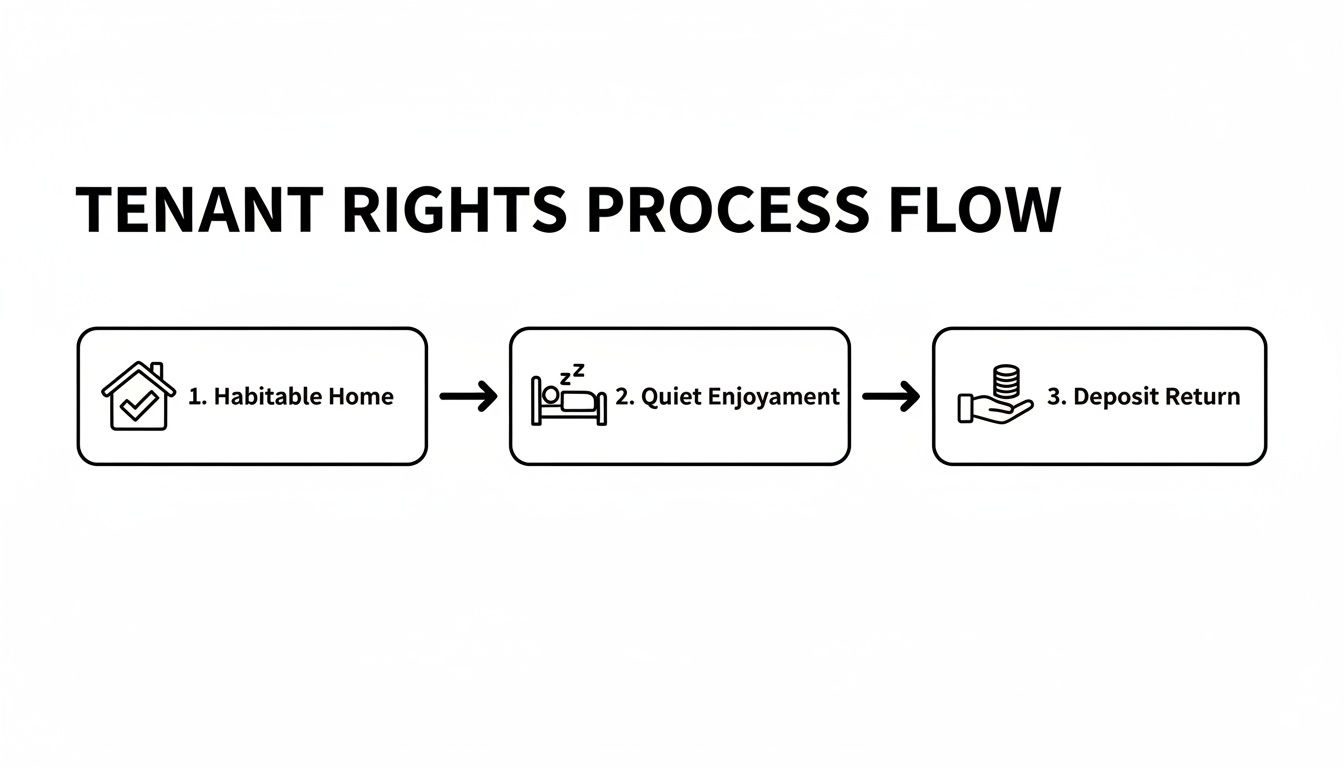
These fundamental rights—to a safe home, peace and quiet, and fair financial treatment—are exactly the kinds of protections a lawyer can use to build a case and challenge an eviction.
An eviction attorney can raise several defenses on your behalf, including:
- Improper Notice: The landlord failed to follow the strict legal rules for the Notice to Vacate.
- Landlord Retaliation: The landlord is trying to evict you as punishment because you requested a necessary repair or reported them to a housing authority.
- Breach of Warranty of Habitability: You withheld rent, but only because the landlord refused to fix a major problem affecting your health and safety after you gave them proper written notice.
Having an expert make these arguments in court dramatically shifts the odds in your favor. You can find a complete breakdown of the legal timeline in our guide on the eviction process in Texas.
Step 3: The Writ of Possession and Its Consequences
If the judge does rule for the landlord, they can’t just throw you out on the street that same day. You have five days to file an appeal. If you don't, the landlord can then ask the court for a Writ of Possession. This is the final court order that authorizes a constable to physically remove you and your belongings from the property.
An eviction on your record is a devastating blow. It can make finding a new place to live almost impossible for up to seven years, as most landlords will automatically reject any applicant with a recent eviction. Your best strategy is always to fight the case from the very beginning with a lawyer by your side to prevent this long-term damage.
How to Resolve Common Tenant Problems with Legal Help
Fighting an eviction is a big deal, but a tenant rights lawyer's job doesn't stop there. Many of the most frustrating rental situations happen long before an eviction notice appears—the kind of problems that can make your home feel unsafe or unlivable. When your landlord ignores your calls and refuses to do the right thing, a knowledgeable attorney can step in and force the issue.
From a leaky roof that won't get fixed to an illegal lockout, Texas law gives you specific tools to fight back. Having a legal professional in your corner ensures you use those tools correctly, leaving your landlord with no choice but to follow the law.

This is more important now than ever. In fiscal year 2023, Texas saw a record 297,557 new landlord-tenant cases filed in its courts. This trend highlights the immense pressure renters are under, making it critical to know your rights and how to defend them. You can dig into the numbers yourself in the Texas Judiciary's Annual Statistical Report on statewide landlord/tenant case trends.
Step-by-Step: Forcing Landlords to Make Essential Repairs
Real-World Scenario: A pipe burst in your apartment, leading to a serious mold problem. You’ve sent emails and left voicemails, but your landlord is ghosting you.
Here's how to resolve it:
- Send a Certified Letter: Your first official step is to send a repair request via certified mail. This creates a legal record that you notified the landlord, as required by Section 92.056 of the Texas Property Code.
- Contact an Attorney: If there's no response, a lawyer can send a formal demand letter. This letter reminds the landlord of their legal duties and the threat of a lawsuit, often prompting immediate action.
- File a Lawsuit: If they still won't budge, your attorney can take them to court to get an order forcing the repairs. They can also advise if you can legally terminate the lease or use the "repair and deduct" remedy.
Step-by-Step: Getting Your Security Deposit Back
This is one of the most common fights. You’ve moved out, given your landlord your forwarding address in writing, and waited the legally required 30 days. But your security deposit is nowhere in sight.
- Send a Demand Letter: A lawyer can draft a sharp, formal demand letter citing Section 92.109 of the Texas Property Code. This law is powerful—it says that if a landlord keeps your deposit in bad faith, they could owe you three times the deposit amount, a $100 penalty, and your attorney’s fees.
- File in Small Claims Court: Often, a letter from a law firm is enough to make that check appear. If not, your lawyer can help you file a lawsuit to recover what you're owed.
Responding to Illegal Landlord Actions
Some things a landlord does aren't just unfair; they're flat-out illegal. A lawyer can give you immediate help if you're dealing with any of these nightmares:
- Illegal Lockouts: Your landlord can't just change the locks on you, except for a legitimate repair, and even then, they must give you a new key immediately.
- Utility Shutoffs: It is completely illegal for a landlord to have your water, electricity, or gas turned off just to get you to move out.
- Landlord Retaliation: Did your landlord suddenly try to evict you or raise your rent right after you asked for a necessary repair? That's illegal retaliation.
In these situations, an attorney can help you sue the landlord for damages. The rules can also get more complex depending on where you live. For instance, if you're in a condo, understanding the landlord's legal considerations for renting out a condo can add another layer to their responsibilities.
Knowing When and How to Hire a Tenant Rights Lawyer
Deciding to call an attorney can feel like a huge step. But when you're up against a landlord who holds the power, it’s often the only way to protect your home and your rights. If you're wondering whether your problem is serious enough for a lawyer, these are clear signals that it's time to get help.
You should seek legal advice right away if:
- You’ve received a formal Notice to Vacate or have been served eviction papers. The clock is ticking.
- Your landlord is harassing you, showing up unannounced, or has illegally locked you out.
- There's a major repair issue that affects your health—like a collapsing roof or serious mold—and your landlord is ignoring your written requests.
- It's been more than 30 days since you moved out, and your security deposit is nowhere to be seen.
Don't underestimate the stakes. An eviction on your record isn't just a temporary problem; it can follow you for years. These filings can stay on tenant screening reports for up to seven years, making it incredibly difficult to find future housing. This is a harsh reality confirmed by reports on tenant screening biases in Texas from texashousers.org.
What to Expect During a Free Consultation
Hiring a lawyer shouldn’t be a mysterious process. Most reputable tenant rights attorneys, including The Law Office of Bryan Fagan, PLLC, offer a free initial consultation. This is your opportunity to tell your story and get a professional's honest take on your situation without spending a dime.
In that meeting, the attorney will listen, look over any documents you bring—like your lease or eviction notice—and walk you through your options under the Texas Property Code. Think of it as a two-way conversation to determine the best path forward.
Key Tip: Get specific. Don't be shy about asking about their actual experience. Inquiring about their track record with cases just like yours, how well they know the local Justice of the Peace courts, and how their fees work will give you the clarity and confidence you need to decide.
Questions to Ask a Potential Tenant Rights Lawyer
When you speak with an attorney, remember: you are interviewing them for a critical role in protecting your future. It's your right to ask tough questions to make sure they have the expertise and approach you need.
Consider asking things like:
- What is your specific experience with landlord-tenant law in Texas? You need a specialist who lives and breathes this stuff, not a generalist.
- Based on what I've told you, what are my strongest legal arguments? This question cuts to the chase and shows you how they think.
- How does your fee structure work? Find out if they charge by the hour, a flat fee, or on contingency. In some Texas cases, like a bad-faith security deposit dispute, you might be able to recover your attorney's fees from the landlord.
- What’s a realistic outcome for my case? A respectable attorney won't sell you a fantasy. They’ll give you an honest assessment of what's possible.
If you're facing an eviction, finding a qualified eviction attorney near you is one of the single most important things you can do to protect your rights and your home.
Your Top Questions About Texas Tenant Rights, Answered
Going head-to-head with a landlord can feel overwhelming, and it's easy to get buried in questions. We've been there with countless Texas tenants, and we know what's on your mind. Getting clear, straight answers is the first step to feeling in control.
What Does It Cost to Hire a Tenant Lawyer in Texas?
The cost of hiring a tenant rights lawyer in Texas isn't one-size-fits-all, but it's often more accessible than you think. Many firms, ours included, start with a free consultation to hear you out, look over your lease and notices, and explain what to expect financially.
Your case might be handled at an hourly rate or for a flat fee. But here’s where Texas law gives you real leverage.
For example, if you're fighting over a security deposit your landlord refuses to return, Section 92.109 of the Texas Property Code is a game-changer. It says if you win and the court agrees the landlord acted in bad faith, they have to pay your attorney's fees. This makes it possible for tenants to stand up for their rights without being buried in legal bills.
How Fast Do I Need to Act on an Eviction Notice?
Immediately. There is no time to waste. The timelines for the Texas eviction process are incredibly fast and unforgiving.
Once you’re served with the official court papers for a forcible detainer (the legal term for an eviction lawsuit), your hearing could be just 10 days away. That's a tiny window to build a defense. You absolutely must contact an eviction attorney the moment you get a 'Notice to Vacate.' It's the only way to have enough time to explore your options and fight back effectively.
Can a Lawyer Really Help Get My Security Deposit Back?
Absolutely. Bringing a lawyer into the picture shows your landlord you're not backing down. It adds serious weight to your claim and signals that you know your rights.
After you've given your landlord your forwarding address in writing, an attorney can fire off a formal demand letter. More often than not, this official communication is all it takes to get your deposit back without ever stepping inside a courtroom.
But if your landlord still won't budge? Your lawyer can file a lawsuit. And if a judge finds they acted in bad faith, you could be awarded up to three times the deposit amount plus your attorney's fees. Suddenly, holding onto your money becomes a very expensive mistake for them.
What Evidence Is Important for My Tenant Case?
Documentation is everything. In any landlord-tenant dispute, a solid paper trail is your most powerful weapon—it can make or break your entire case. Start gathering these items right now:
- Your Lease Agreement: This is the contract that spells out everyone's responsibilities.
- Written Communication: Save every single email, text, and formal letter between you and your landlord or the property manager.
- Photo and Video Evidence: Take clear, dated pictures and videos of broken appliances, leaks, unsafe conditions, or any other problem.
- Proof of Delivery: Always keep your certified mail receipts. They are undeniable proof that the landlord received your official notices.
- A Detailed Log: Keep a simple journal. Write down dates, times, and a quick summary of every phone call, conversation, and event related to the issue.
A well-documented timeline tells a clear, convincing story. It gives a Texas landlord tenant lawyer the ammunition they need to fight for you effectively.
Ready to Protect Your Rights? Take the Next Step.
We've walked through the ins and outs of Texas tenant law, from dealing with unfair evictions and repair nightmares to getting your security deposit back. It's a lot to take in. But the most important thing to remember is this: you don't have to face these complex, stressful situations alone.
Taking that first step and reaching out for legal advice isn't admitting defeat—it's a powerful move to protect your home, your money, and your future. A tenant rights lawyer in Texas can look at the specifics of your case and give you a clear, actionable plan.
Your Rights Are Worth Fighting For
The Texas Property Code is your shield, but it's only effective if you have someone who knows exactly how to use it. Whether you're staring down a wrongful eviction notice, begging your landlord to fix a critical problem, or fighting to get a security deposit that's rightfully yours, sometimes legal action is the only way to get results. An experienced attorney can turn your frustration into a powerful legal argument.
Don't wait for a small problem to become a full-blown crisis. The sooner you get professional advice, the more options you'll have. An early consultation can stop a minor dispute from turning into a legal battle that puts your housing at risk.
Ignoring a notice from your landlord or just hoping the problem goes away is a gamble you can't afford to take. The consequences can be severe and long-lasting, including an eviction on your record that makes it incredibly difficult to find a new place to live for years to come. It’s time to be proactive. It's time to stand up for yourself.
If you’re caught in a dispute with your landlord, trying to understand your lease, or facing a potential eviction, the time to act is now. You have rights, and having a dedicated advocate in your corner can make all the difference.
If you need help with an eviction, lease issue, or rental dispute, contact The Law Office of Bryan Fagan, PLLC for a free consultation today.