A deed problem usually shows up at the worst time. You buy a rental house, line up a tenant, collect the deposit, and then a title issue surfaces. Or you're a tenant who suddenly learns the property changed hands after a foreclosure and now the new owner says your lease is a problem. At that point, the deed isn't a dry closing document. It's the reason you're either protected or exposed.
That is why trustee deed vs warranty deed matters so much in Texas. If you're a landlord, the deed affects whether you got clean ownership, whether old claims can follow the property, and whether you can enforce a lease without surprise litigation. If you're a tenant, the deed behind your landlord's ownership can affect repair disputes, habitability concerns, and even the stability of your housing.
Many individuals often focus on price, interest rate, and move-in date. They should also focus on the deed. A bad deed choice can create expensive title fights, delayed evictions, repair disputes, and an advantage for the opposing party in court. If you want a plain-English overview of the overall deed environment, this guide to property deeds in Texas is a useful starting point.
Understanding Your Property Deed Can Prevent Costly Disputes
A new landlord buys a home at what looks like a great deal. The closing moves fast. The seller isn't a typical homeowner. The deed is a trustee's deed because the property came out of foreclosure. Months later, the landlord tries to refinance and learns an old title problem is still haunting the property. Now the landlord has a tenant in place, repairs to make, and a cloud over title.
A tenant can end up in the same storm from the other side. The tenant pays rent on time, reports a serious repair issue, and then hears that ownership of the property is being challenged. Suddenly, the basic question isn't just who fixes the plumbing. It's who legally owns the property and has authority to act as landlord.
Those are real Texas problems, not technical law-school hypotheticals. Under the Texas Property Code, ownership and possession issues often spill into lease enforcement, repairs, notices, and eviction strategy. If title is messy, everything gets harder.
Why the deed matters in daily Texas life
A deed tells you more than who signed the paper. It tells you what legal promises came with the transfer, and those promises decide who bears the risk when something goes wrong.
For a homebuyer or landlord, the practical questions are simple:
- Did the seller promise clear title: If yes, you may have recourse when an old problem appears.
- Was the property acquired through foreclosure: If yes, you need to assume extra risk until proven otherwise.
- Can you trace ownership cleanly: If you can't, a tenant dispute or sale can become more complicated than it should be.
The wrong deed doesn't always cause a problem right away. It often waits until you try to sell, refinance, evict, or defend a claim.
The Texas angle
Texas uses deeds of trust as the standard way to secure many home loans. That means trustee sales and trustee deeds aren't rare side issues here. They're part of the foreclosure system. By contrast, ordinary home sales usually rely on broader deed protections because buyers want clean title and a clear path forward.
If you're buying to live in the property, buying to rent it out, or renting from someone who acquired through foreclosure, you need to know which deed sits in the chain of title. That single document can change your advantage in a dispute.
The Gold Standard of Protection The General Warranty Deed
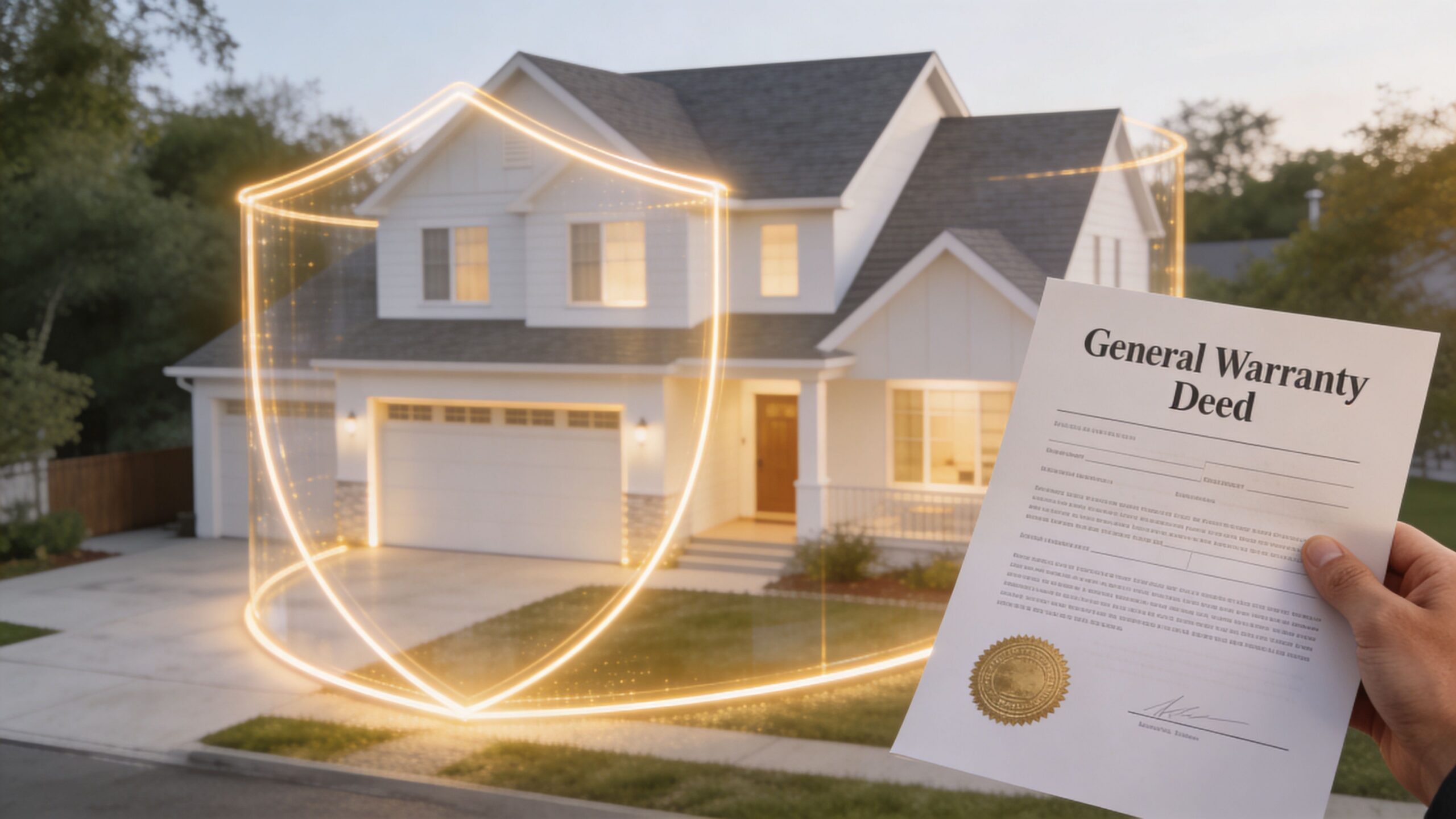
A general warranty deed is the best protection most Texas buyers can get. It's akin to a bumper-to-bumper title warranty. The seller isn't just transferring the property. The seller is making strong legal promises that the title is good, the seller has the right to transfer it, and the buyer will be defended if an old claim appears.
In Texas, a general warranty deed provides the highest level of buyer protection by covering title defects from the property's entire ownership history, including problems created before the current seller ever owned it. It is the dominant deed in ordinary residential sales, preferred in 80-90% of arms-length transactions under the broad covenants implied by Texas Property Code § 5.023 when words like “grant” or “convey” are used, according to Vastine Law's discussion of Texas deed types.
If you want a deeper look at this deed by itself, review this guide to a warranty deed in Texas.
What the seller is really promising
These promises are often called covenants. You don't need to memorize the Latin. You do need to understand what they mean in practice.
| Covenant | Plain-English meaning | Why it matters |
|---|---|---|
| Seisin | The seller actually owns the property | You're not buying from someone without real ownership |
| Right to convey | The seller has authority to transfer it | The deal isn't invalid because of lack of authority |
| Against encumbrances | The property isn't burdened by undisclosed liens or claims | You reduce the risk of hidden financial baggage |
| Warranty or quiet enjoyment | The seller will defend your title against lawful claims | You have recourse if someone challenges ownership |
| Further assurances | The seller must help fix title issues if needed | You aren't left alone to clean up defects |
Why Texas buyers should insist on it
If you're buying a home in a standard sale, there is no good reason to accept less protection without a very specific, strategic reason. A general warranty deed gives you a cleaner foundation for everything that follows, including leasing, refinancing, selling, and estate planning.
This matters even more for landlords. A landlord with clean title is in a stronger position to:
- Enforce leases without ownership challenges muddying the case
- Handle evictions without giving the tenant extra defenses tied to authority or title
- Address repairs without disputes over who is responsible for inherited property problems
- Sell or refinance later without title defects derailing the transaction
Practical rule: In a normal Texas purchase, start from the assumption that you should receive a general warranty deed. If someone asks you to take less, ask why and get legal advice before closing.
Texas Property Code § 5.023 in plain English
Texas Property Code § 5.023 matters because certain deed language can imply warranties even if the deed doesn't spell them all out word for word. In plain English, when a deed uses language like “grant” or “convey,” Texas law can attach important protections.
That section becomes especially important when a third party later claims an interest in the property. If you received a true warranty deed, you may be able to force the seller to stand behind the transfer. That's exactly the kind of backup buyers need when an old title issue suddenly turns into a current lawsuit.
Understanding the Trustee Deed and Its Common Uses
A trustee's deed usually enters the picture after a foreclosure, not in a regular sale between a homeowner and a buyer. That difference is the whole story. When you see a trustee's deed, you should immediately ask what happened before this transfer and what risks came with it.
In Texas, many loans are secured by a deed of trust. That arrangement involves three parties:
- Trustor: the borrower
- Beneficiary: the lender
- Trustee: the neutral party named to carry out the power of sale if default happens
When the borrower defaults, the trustee may sell the property under the deed of trust. After that sale, the trustee issues a trustee's deed to transfer whatever interest was sold.
Why this deed raises different concerns
A trustee isn't a normal seller with personal knowledge of the property's full history. The trustee is acting in a specific fiduciary role under a deed of trust or similar authority. That means the transfer often comes with much less comfort than a standard seller-backed deed.
The biggest practical issue is this: a foreclosure history changes your risk profile. Even when a trustee's deed contains language that sounds protective, the transaction itself comes from a distress sale context. That alone should make buyers slow down.
In Texas, foreclosure activity is significant. The verified data provided here states that Texas recorded over 10,000 foreclosure filings in 2022 and that many resulted in trustee's deeds to winning bidders at public auctions, as summarized in the earlier-cited Vastine Law reference. That matters because these are not isolated transactions. Landlords, investors, and tenants run into them all the time.
Common situations where you see trustee deeds
You are most likely to see a trustee's deed in these settings:
Foreclosure auction purchases
An investor buys at the courthouse steps or through a foreclosure sale process.REO transitions
A lender or institutional owner takes title after foreclosure and then moves the property through resale channels.Trust administration or fiduciary transfers
In some contexts outside foreclosure, a trustee may transfer property held in trust, though the protection level can vary depending on the instrument used.
What a buyer should assume
Do not treat a trustee's deed like a routine deed. Treat it like a warning label that tells you to investigate further. You need to know whether there are occupancy issues, title defects, procedural defects in the foreclosure, unpaid obligations tied to the property, or practical problems that could become landlord-tenant disputes after closing.
Buying under a trustee's deed can still make business sense. It just doesn't make sense to buy one casually.
That is why experienced buyers order a full title review, confirm possession status, and plan for cleanup work before they ever market the property for rent.
Warranty Deed vs Trustee Deed A Side-by-Side Comparison
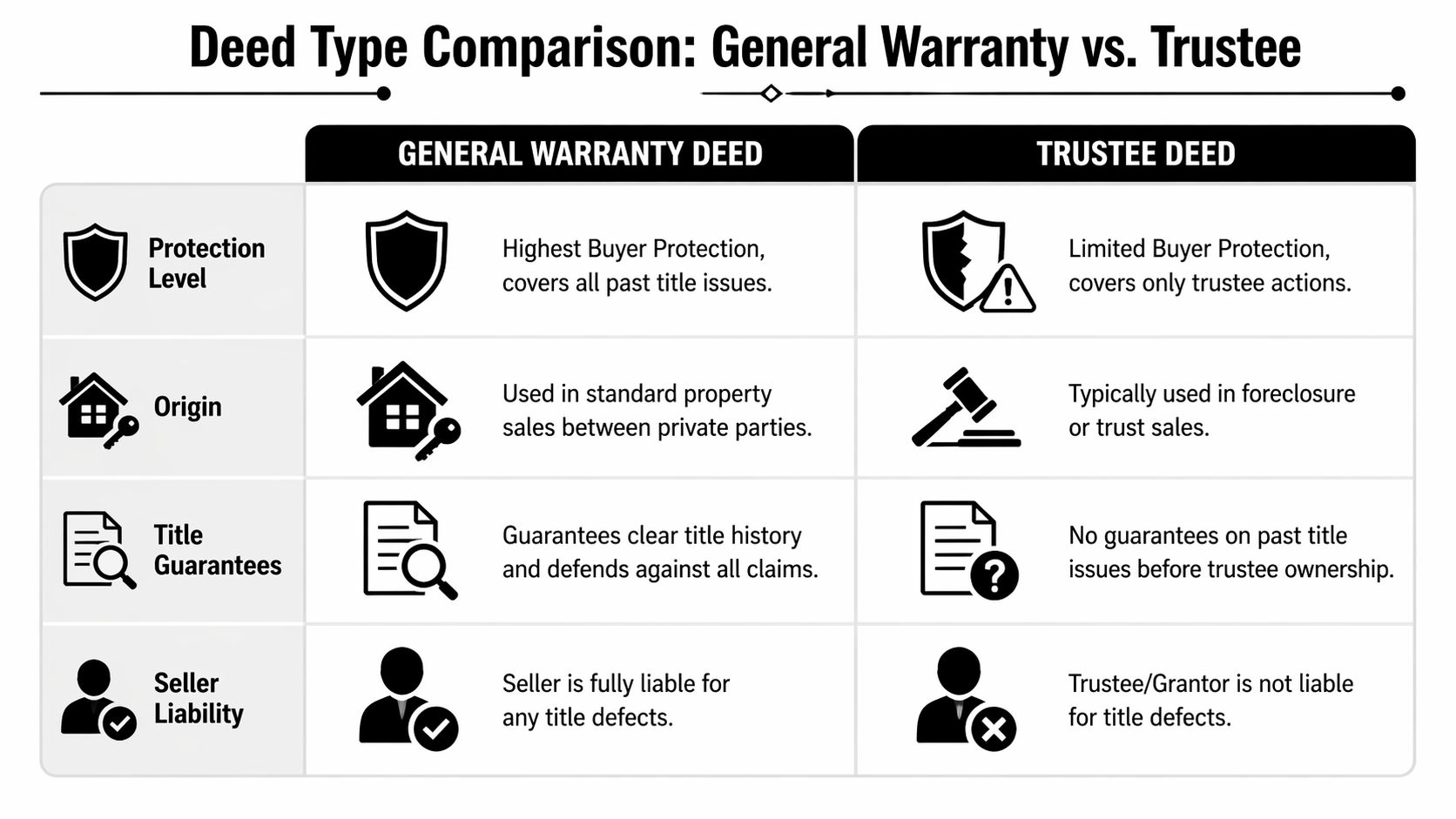
If you only remember one point, remember this one. A general warranty deed puts title risk on the seller. A trustee's deed often leaves much more of that risk on the buyer.
That difference affects your legal options when trouble shows up later. It also affects how aggressively you should inspect, insure, and document the transaction before you close.
| Issue | General warranty deed | Trustee's deed |
|---|---|---|
| Typical setting | Standard residential sale | Foreclosure or fiduciary transfer context |
| Buyer protection | Broad protection tied to full title history | More limited practical protection in many deals |
| Past title defects | Seller generally stands behind them | Buyer often bears more risk |
| Recourse if a claim appears | Stronger claim against the grantor | Often far less recourse |
| Best fit | Ordinary homebuyers and landlords wanting clean title | Experienced buyers who understand distress-sale risk |
Liability and legal backup
Under Texas Property Code § 5.023, warranty deeds can support claims against the grantor when a third party challenges title. The verified data here states that in Texas property disputes, warranty deeds defend against third-party claims and can allow buyers to seek indemnity from grantors, while trustee's deeds offer no such recourse, as described in SmartAsset's comparison of warranty deeds and deeds of trust.
That is the practical dividing line.
With a warranty deed, your question is often, “Can I make the seller fix this or pay for it?” With a trustee's deed, your question is often, “How much will this cost me to clean up on my own?”
A warranty deed gives you a person to pursue. A trustee's deed often gives you a problem to absorb.
Scope of title promises
A general warranty deed covers defects from the property's entire ownership history. That means if a prior owner created the issue, the current seller may still be on the hook because the deed's warranty reaches back beyond the seller's own period of ownership.
A trustee's deed doesn't give you that same comfort in a practical Texas transaction. Even where the wording looks favorable, the transfer still comes out of a foreclosure or trustee-sale setting, and buyers should expect tighter limitations and more risk.
Why this matters to landlords
Landlords sometimes think title issues only matter when buying or selling. That's wrong. Title issues become landlord-tenant issues fast.
Here is how that happens:
Lease enforcement problems
If ownership is challenged, the tenant may question whether the person collecting rent has authority.Repair disputes under Chapter 92 principles
If the property's condition is poor and title is clouded, you may face confusion over who must act and pay.Eviction complications
An eviction case becomes harder when the opposing side raises questions about standing, notice authority, or competing ownership claims.
Why this matters to tenants
Tenants don't sign deeds, but they live with the consequences. If a landlord acquired through a troubled title chain, tenants can get stuck in the middle of:
- Conflicting rent demands
- Delayed repairs
- Threats of lockout or rushed move-out demands
- Confusion over whether the lease survives a change in ownership
For tenants, Texas Property Code § 92.001 matters because it frames core landlord-tenant obligations around residential tenancies. If a landlord's ownership issues are bleeding into habitability or possession disputes, the tenant shouldn't ignore it.
If title trouble affects repairs, access, or the right to stay in the home, it has become a tenant-rights issue, not just a real estate issue.
My recommendation
For a standard home purchase, insist on a general warranty deed. For a foreclosure or distressed acquisition involving a trustee's deed, proceed only if you are prepared for a more intensive review and a higher chance of cleanup work.
A cheap price can be wiped out by title litigation, delayed possession, insurance complications, and tenant disputes. That's especially true for first-time landlords who underestimate how quickly title defects can turn into operational problems.
Your Rights and Risks Landlord and Tenant Scenarios
The deed type becomes real when something breaks. Not just the plumbing. The legal position.
Scenario one the landlord with a foreclosure purchase
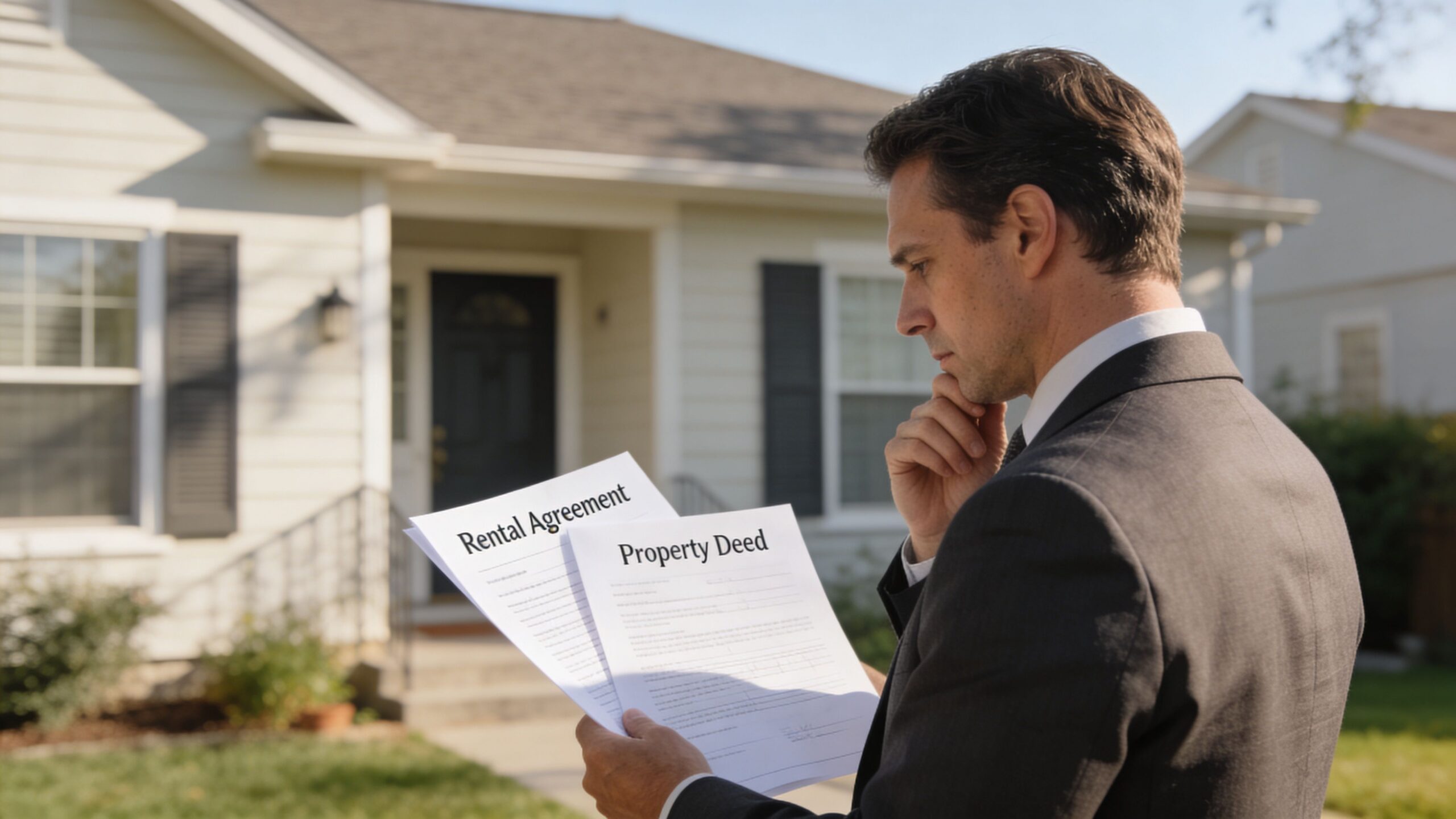
A Houston-area investor buys a single-family property after foreclosure using a trustee's deed. The price looks attractive. The investor makes cosmetic improvements and leases it quickly.
Then the investor gets hit with a title challenge tied to an earlier defect in the foreclosure process. At the same time, the tenant reports serious repair issues. The landlord now has three problems at once: uncertain title, ongoing property obligations, and a tenant who is losing patience.
Buyers can face serious complications. They assume that once the deed records, the hard part is over. It isn't. If you bought through a trustee's deed, you need to act like hidden issues may still be alive.
What the landlord should do
- Review the title file immediately: Don't rely on memory from closing.
- Notify title insurance if a policy exists: Waiting can create a worse coverage fight.
- Separate title defense from tenant duties: Ownership questions do not excuse basic repair obligations to the tenant.
- Document every repair communication: If litigation expands, that paper trail matters.
If the property has conditions that affect health or safety, the tenant may still raise habitability concerns under Texas landlord-tenant law. Ownership confusion does not give a landlord a free pass on maintaining a rentable property.
Scenario two the tenant caught in the middle
A tenant learns the property changed hands after foreclosure. The new owner claims the old lease terms no longer matter. Repairs slow down. A notice to vacate appears before the tenant can even figure out who is in charge.
Tenants need to stay calm and get organized.
Start with the basics:
- Ask for proof of ownership or management authority
- Keep copies of the lease, payment records, and notices
- Send repair requests in writing
- Do not stop paying rent without getting legal advice
A tenant's core rights don't vanish because the ownership history is messy. If a person is acting as landlord, taking rent, and controlling the premises, that person may still face duties under the Texas Property Code, including duties tied to repairs and lawful possession practices.
Tenants should never assume a title dispute means they have no rights. Often, it means they need better documentation and faster legal guidance.
Why title insurance matters so much here
For properties acquired through trustee's deeds, owner's title insurance is not a luxury. It is a practical shield. The verified data provided for this article states that buyers should conduct thorough title searches and secure an owner's title insurance policy because no automatic policy is issued in these transactions.
That matters for landlords because one unresolved title defect can disrupt:
- Rent collection
- Refinancing
- Future sale plans
- Eviction proceedings
- Repair budgeting
For tenants, title insurance usually isn't their policy to buy, but its existence often affects whether a landlord can resolve ownership disputes quickly or stay stuck in a prolonged fight.
The repair and habitability connection
Under Texas law, habitability disputes often become urgent when essential systems fail. If title is clouded and the landlord delays action, the tenant may face the practical burden of living in a home that isn't being properly maintained while the adults argue over ownership.
That is why deed review belongs in the due diligence stage, not after move-in. Landlords should solve title issues before leasing. Tenants should pay attention to sudden ownership changes, especially when they coincide with ignored repair requests or pressure to leave.
A Practical Checklist for Buyers Landlords and Agents
The safest deed strategy is simple. If it's a regular sale, push for a general warranty deed. If it's a trustee's deed transaction, increase your diligence and slow the deal down until your questions are answered.
Checklist for buyers and future landlords
Use this before you close:
- Confirm the exact deed type: Don't assume. Read the draft deed before signing anything.
- Ask why a non-standard deed is being used: If the answer is vague, that is a problem.
- Order a title review: You want a real examination of the chain of title, not verbal reassurance.
- Buy owner's title insurance: Especially important when the property comes through foreclosure or a trustee sale.
- Check occupancy before closing: A vacant property and an occupied property create very different legal risks.
- Review lease plans early: If you intend to rent the property, make sure title is stable before marketing it.
Checklist for current landlords
If you already own the property and later discover a trustee's deed in the chain:
- Pull your closing file
- Review your title insurance policy
- Verify who signed each transfer document
- Check for pending claims or notices affecting the property
- Do not ignore tenant complaints while title questions are pending
A title issue does not pause your role as landlord. You still have to manage notices, repairs, accounting, and possession lawfully.
Checklist for real estate agents and property managers
Agents and managers can reduce future disputes by being blunt with clients.
- Flag deed type early: This should happen before the client gets emotionally committed.
- Explain operational risk, not just legal theory: Investors care about delay, vacancy, repair exposure, and resale headaches.
- Avoid casual statements about title safety: If the deed is a trustee's deed, the client needs proper legal and title review.
- Coordinate with closing professionals: Make sure everyone is looking at the same chain-of-title issues.
Checklist for tenants
Tenants are not powerless here. They just need a focused approach.
- Keep every lease document: You may need to prove the terms if ownership changes.
- Track who collects rent: Save receipts, screenshots, and email confirmations.
- Send repair requests in writing: That protects your tenant rights if the landlord later denies notice.
- Question sudden changes in management: Ask who owns the property and who is authorized to act.
- Get advice before moving out voluntarily: A demand from a new owner is not always the final word.
The best time to deal with a deed problem is before closing. The second-best time is before it spreads into a lease, eviction, or repair dispute.
Frequently Asked Questions About Texas Property Deeds
Is a trustee's deed the same as a special warranty deed
No. They are not the same thing.
A special warranty deed usually gives limited warranties tied only to the period when the seller owned the property. A trustee's deed usually arises from a trustee's authority to transfer property after foreclosure or in another fiduciary role. The source of authority and the practical risk profile are different.
If you're comparing deed types, don't lump them together. Ask exactly what warranties are being made and who is standing behind them.
Can you get title insurance on property bought with a trustee's deed
Yes, and you should take that seriously. A trustee's deed transaction is exactly the kind of deal where title insurance can be especially important because the property often comes with a more complicated history.
Do not assume coverage is automatic. Ask what policy is being issued, what exceptions are listed, and whether any known issues are excluded from coverage.
If my landlord's ownership is challenged, do I still have tenant rights
In many situations, yes. If you're living in the property under a lease and someone is acting as your landlord, accepting rent, or asserting control, your tenant rights under the Texas Property Code don't just disappear because ownership becomes disputed.
That said, title fights can create confusion over notices, repairs, and possession. Keep records, continue documenting repair issues, and get legal advice quickly if the dispute starts affecting your housing.
Should a first-time landlord ever buy with a trustee's deed
Only if the landlord understands the added risk and has done real due diligence. A trustee's deed isn't automatically bad. But it is rarely beginner-friendly.
If you're new to rental property ownership, the safer move is usually a standard purchase with a general warranty deed, clear title review, and owner's title insurance. First-time landlords already have enough to learn about leases, repairs, security deposits, and eviction procedure. They don't need avoidable title chaos on top of that.
Protect Your Property Rights with an Experienced Texas Lawyer
The deed is not a minor closing detail. It sets the legal ground rules for what happens when someone challenges ownership, when repairs become urgent, or when a lease dispute lands in court. In the trustee deed vs warranty deed debate, my view is straightforward. For ordinary Texas buyers and landlords, the general warranty deed is the safer choice. A trustee's deed can work, but only with sharper due diligence and a clear plan for risk.
If title is already disputed, you may also need to understand tools like a quiet title action in Texas. And if you're trying to confirm that the lawyer advising you is properly credentialed, a practical consumer resource on attorney licensing requirements can help you understand the bigger licensing picture.
If you're a landlord, don't lease first and ask questions later. If you're a tenant, don't assume an ownership dispute wipes out your rights. The smarter move is to get the deed reviewed before the problem gets expensive.
If you need help with a deed dispute, eviction, lease issue, repair problem, or rental conflict, contact The Law Office of Bryan Fagan, PLLC for a free consultation today.