Dealing with a leak, a shifting foundation, or windows that never sealed right is stressful enough. It gets worse when the property is occupied, rent is on the line, and nobody will give you a straight answer about who has to fix what.
For Texas landlords, construction defects can turn into habitability disputes, tenant complaints, lease conflicts, and expensive repair fights. For tenants, the problem feels more personal. You’re the one living with the water intrusion, mold smell, or unsafe flooring. Either way, the issue isn’t just a maintenance headache. It may be a legal claim.
Texas law gives property owners real tools, but it also imposes hard deadlines and strict pre-suit requirements. If you wait, improvise, or rely on verbal promises from a builder, you can lose your advantage fast. A Texas landlord tenant lawyer or eviction attorney often gets involved only after the situation has already spiraled. That’s backward. The better move is early action, careful documentation, and a clear strategy under the Texas Property Code.
Discovering a Defect Your Property Rights Are on the Line
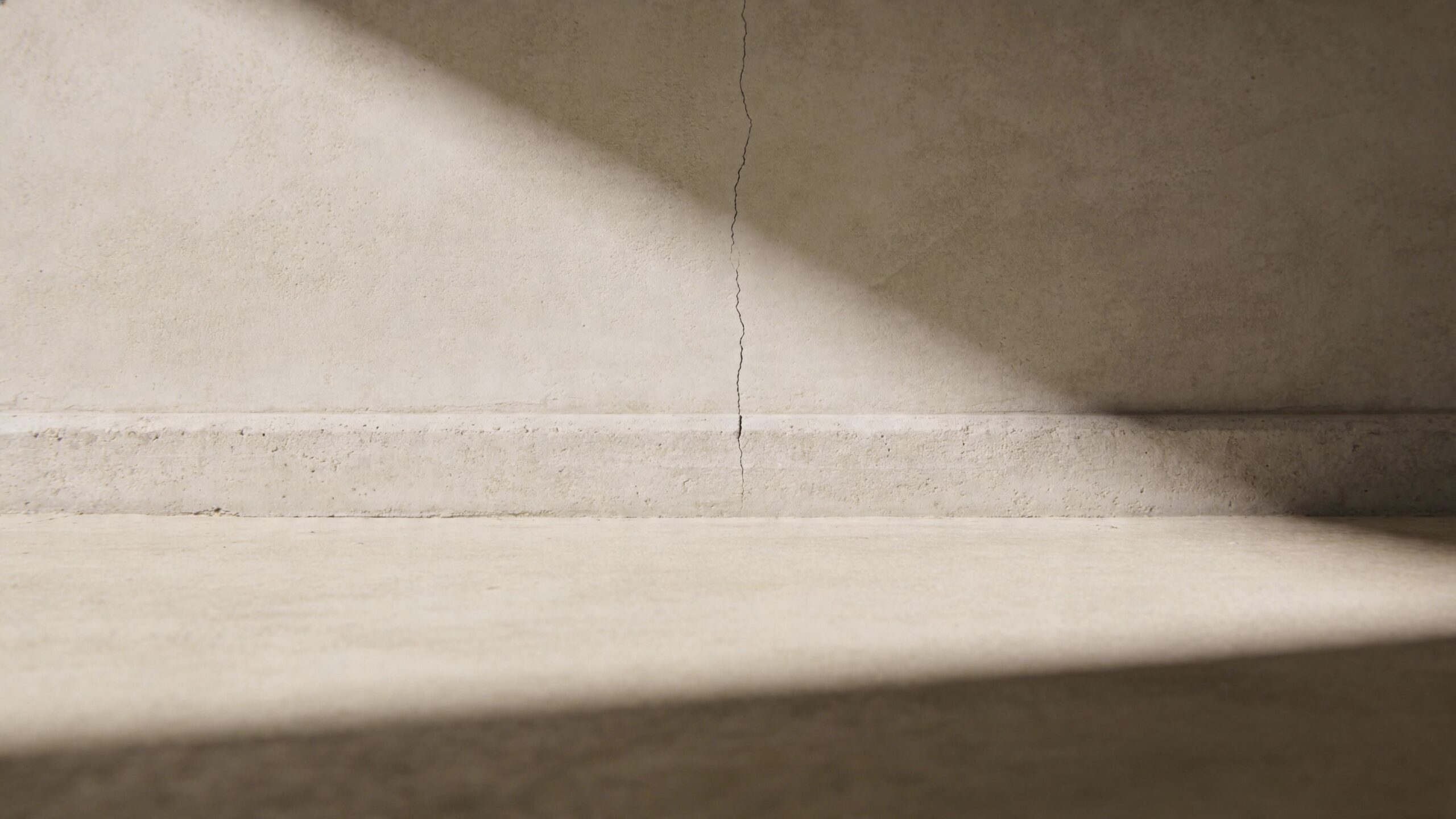
A landlord in Houston notices a hairline crack near a baseboard after a tenant complains that the bedroom door won’t close. A month later, the crack is wider. Then a window starts leaking during a storm. The tenant wants repairs. The property manager blames normal settling. The builder stops returning calls.
That’s how many construction defect claims start. Not with a dramatic collapse. With a “small” issue that keeps getting worse.
For tenants, these defects can make a home unhealthy or unsafe. For landlords, they can trigger repair obligations, tenant rights disputes, vacancy losses, and fights with builders and insurers. Under the Texas Property Code, landlords generally must address conditions that materially affect a tenant’s health or safety. If the defect causes leaks, structural instability, moisture intrusion, or unsafe electrical conditions, the issue can quickly shift from construction quality to legal exposure.
Small problems rarely stay small
A crack may mean movement below the slab. A stain on the ceiling may point to bad flashing, poor roof installation, or improperly sealed penetrations. If you’re trying to figure out whether movement in the structure looks ordinary or more serious, this practical guide to foundation issues can help you spot warning signs before the damage spreads.
Texas has seen major defect disputes as development has accelerated. One example often cited is the $3.35 million settlement involving defects at the San Antonio Tribute at the Rim property, discussed in reporting on major Texas construction defect disputes. That number matters for one reason. These cases get expensive fast.
Practical rule: If a tenant reports recurring leaks, sticking doors, wall cracks, or persistent moisture, treat it as evidence. Don’t dismiss it as cosmetic until someone qualified says it is.
Why landlords and tenants both need to act early
Landlords need to protect the property and preserve a claim against the builder or contractor. Tenants need to create a record, especially if the condition affects health, safety, or basic use of the unit.
A smart first response looks like this:
- Photograph the condition: Take wide shots and close-ups.
- Create a timeline: Note when the issue was first seen and what changed.
- Put complaints in writing: Email beats a phone call every time.
- Avoid casual assumptions: Don’t label it “normal settling” or “tenant damage” without support.
If you own the property, your investment is on the line. If you rent it, your living conditions are on the line. Either way, construction defect claims deserve immediate attention.
What Is a Construction Defect Claim in Texas
A construction defect claim is a legal claim based on faulty design, bad materials, poor workmanship, or some combination of all three. In plain English, the building wasn’t put together the way it should’ve been, and the failure caused real problems.
That doesn’t mean every blemish is a lawsuit. A paint smudge is one thing. A window system that lets in water, a roof that fails in ordinary weather, or a slab that shifts enough to damage the structure is something else.
The three defect categories that matter
Most construction defect claims fall into three practical buckets.
| Type of defect | What it means | Simple example |
|---|---|---|
| Design defect | The plans were flawed from the start | A drainage design that directs water toward the building |
| Material defect | The product used was defective or unsuitable | Components that fail too early under normal use |
| Workmanship defect | The installation was done wrong | Windows, flashing, or stucco installed incorrectly |
For many owners, the most frustrating part is that these categories overlap. A roof leak may involve bad design, poor installation, and a finger-pointing contest between the general contractor and subcontractors. That’s common, not unusual.
What makes a defect legally significant
A legally meaningful defect usually involves one or more of these issues:
- Code violations: The work doesn’t meet required building standards.
- Contract breaches: The builder didn’t deliver what the contract required.
- Unsafe conditions: The defect causes physical damage or creates danger.
- Habitability problems: The defect affects a tenant’s health or safety.
Texas law matters here in two directions. Construction law may give the owner a claim against a builder or contractor. Landlord-tenant law may also require the landlord to repair the condition for the tenant, regardless of whether the builder is still fighting responsibility.
A landlord can’t simply tell a tenant, “I’m waiting on the builder.” If the property condition affects health or safety, the landlord still has duties under the Texas Property Code.
How this connects to tenant rights
Many property owners frequently get caught flat-footed. They focus only on the contractor dispute and forget the lease side of the problem.
If bad construction causes recurring water intrusion, dangerous wiring, or structural instability, the tenant may have a repair complaint tied to tenant rights and habitability. Texas Property Code provisions concerning repairs and health-and-safety conditions often become part of the dispute long before any builder lawsuit gets filed.
A common scenario looks like this:
- The tenant reports a ceiling leak.
- The landlord patches drywall.
- The stain returns because the flashing was installed wrong.
- The tenant complains again, now mentioning mold smell and damaged belongings.
- The builder says it’s maintenance, not defective construction.
That is no longer a simple maintenance request. It may be both a lease dispute and a construction defect claim.
Who may bring the claim
In practice, the owner of the property is usually the party pursuing the builder, developer, or contractor. For landlords, that means you may be the one carrying both burdens at once. You must deal with the tenant’s immediate repair issues while also preserving your rights against the parties responsible for the defective work.
Tenants usually don’t sue the builder directly. Their legal recourse is usually against the landlord under the lease and the Texas Property Code, especially when the defect affects habitability.
That distinction matters. Owners pursue recovery. Tenants pursue livable conditions. A good legal strategy keeps both tracks moving.
Common Construction Flaws in Texas Properties
Texas properties get hit hard by heat, storms, and shifting soil. Those conditions expose weak design and sloppy work quickly. What looks like routine wear often isn’t wear at all. It’s defective construction finally becoming visible.
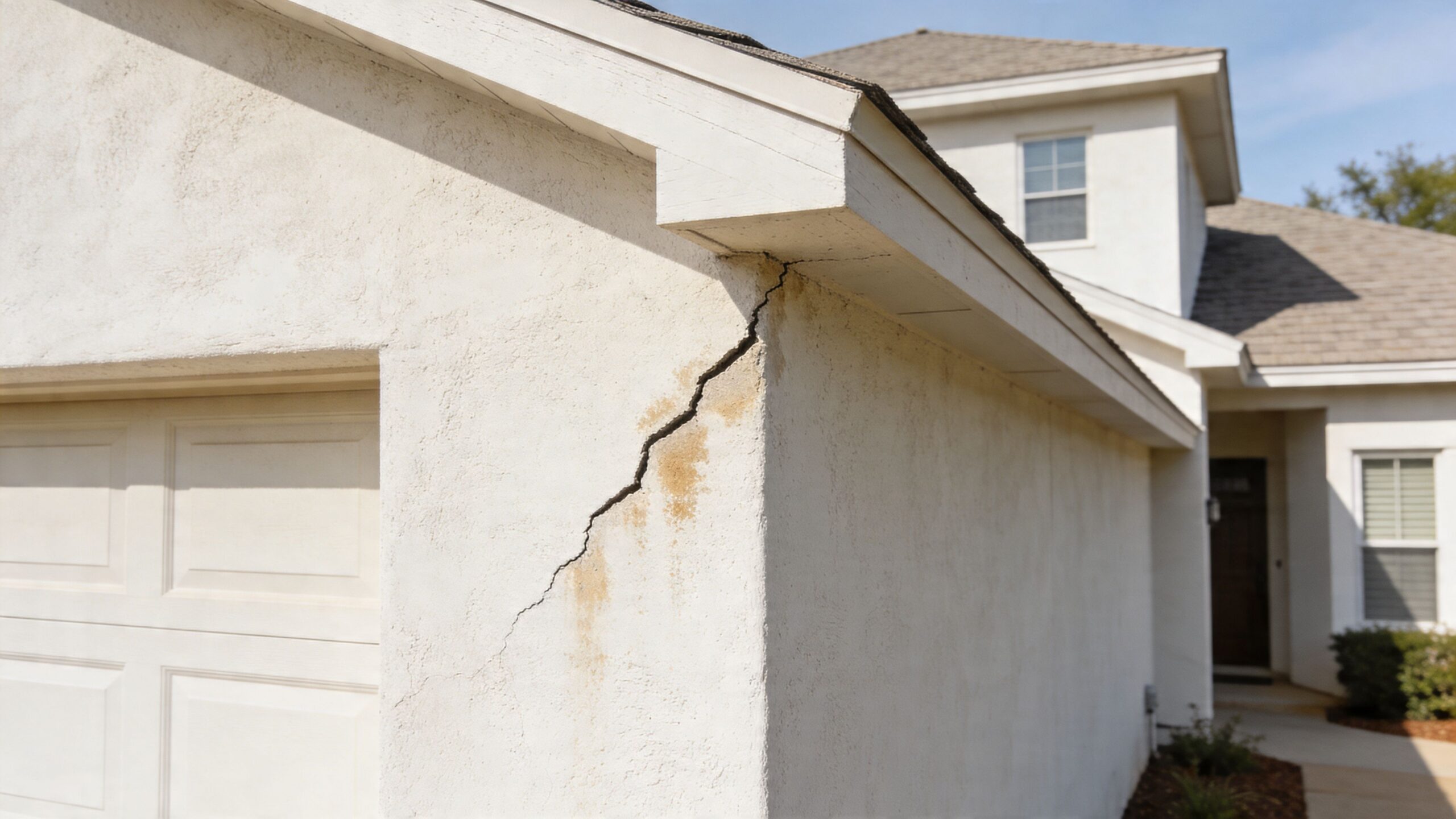
Foundation movement and subsurface failures
Foundation trouble is one of the biggest issues in Texas. According to analysis discussed by Mastt on subsurface construction defect claims, up to 30-40% of major construction litigation involves subsurface issues, and those claims are often tied to Texas expansive clay soils.
For landlords, this often shows up as:
- interior wall cracks
- doors that drag or won’t latch
- sloping floors
- separated trim
- recurring plumbing strain from shifting lines
For tenants, the complaint usually starts with symptoms, not engineering language. They’ll say, “The bathroom door won’t close,” or “There’s a crack running across the bedroom wall.” Don’t ignore those reports. Foundation movement can affect safety, water intrusion, and long-term structural stability.
Water intrusion from roofs, windows, and walls
Texas storms expose bad workmanship fast. Improper flashing, poorly sealed windows, and defective stucco or cladding systems often lead to repeated interior leaks.
Often, landlords make costly mistakes. Many patch the ceiling, repaint, and move on. Then the next storm hits, and the tenant reports the same leak. At that point, the issue is no longer cosmetic. It may involve hidden moisture, rot, or mold. Under the Texas Property Code, a condition that materially affects health or safety puts repair duties front and center.
Repeated leaks usually mean the source wasn’t fixed. Surface repairs don’t solve a construction defect.
Electrical and HVAC defects that create habitability problems
Some defects don’t announce themselves with a visible crack. Faulty wiring, overloaded circuits, or improperly installed HVAC components can show up through tripping breakers, inconsistent cooling, burning smells, or persistent indoor humidity.
For a landlord, those complaints should trigger urgency. In Texas heat, a broken or deficient cooling system can quickly become a serious habitability dispute. If moisture also builds up because of poor airflow or bad installation, tenant complaints can multiply. One issue becomes several.
Exterior envelope failures
The “building envelope” is the shell that keeps water and air where they belong. When that shell fails, everything behind it is at risk.
A few examples landlords and property managers see often:
- Bad stucco work: Cracks, staining, and trapped moisture
- Improper window installation: Drafts, leaks, and damaged drywall
- Roof edge failures: Water entering at flashing, valleys, or penetrations
- Balcony and exterior trim problems: Rot, movement, and unsafe surfaces
These defects matter in lease disputes because tenants don’t care whether the problem came from design, product choice, or installation error. They care that rain enters the unit, the wall is damp, and the landlord hasn’t fixed it.
A practical red-flag list
If you own or manage rental property, treat these signs seriously:
- Recurring repairs in the same spot: The first fix didn’t address the root cause.
- Worsening cracks: A crack that spreads or reopens needs evaluation.
- Musty odors after rain: Hidden moisture is often behind the wall.
- Tenant reports that cluster together: Leak, sticking window, stained trim, and warped flooring often point to one larger defect.
Construction defect claims usually begin with these clues, not a dramatic expert report. The people who act early preserve options. The people who wait usually inherit a larger bill and a harder case.
The Legal Clock Is Ticking on Your Claim
Texas gives property owners rights in construction defect claims, but those rights expire. The deadlines are strict, and courts won’t rescue you because the defect was serious or the builder made promises over the phone.
The short version is simple. If you wait too long, your claim can die even if the defect is real.
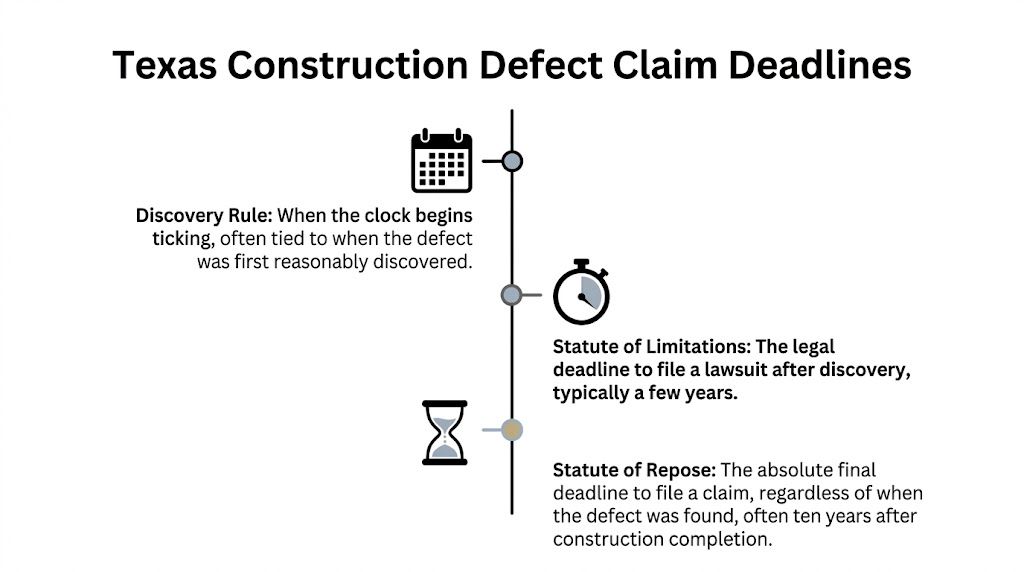
The deadlines you need to know
Texas law imposes a 2-year statute of limitations for negligence, a 4-year limit for breach of contract, and a hard 10-year statute of repose, with the Residential Construction Liability Act requiring 60 days’ written notice before suit as explained in this discussion of Texas construction defect lawsuit deadlines.
Those aren’t flexible suggestions. They are case-defining deadlines.
Here’s the clean breakdown:
| Deadline | What it applies to | Why it matters |
|---|---|---|
| 2 years | Negligence claims | Often tied to when the defect was or should’ve been discovered |
| 4 years | Breach of contract claims | Common when the builder failed to meet contract obligations |
| 10 years | Statute of repose | Cuts off claims after completion, even if the defect is discovered later |
| 60 days | RCLA notice period | Written notice to the builder before filing suit |
Discovery matters, but don’t overestimate it
Owners often hear about the “discovery rule” and assume it saves them. Sometimes it helps. Sometimes it doesn’t.
If a defect was hidden and couldn’t reasonably be found earlier, the discovery rule may affect when the limitations period starts. But that rule does not erase the statute of repose. The 10-year outside deadline is still the wall most owners can’t get around.
That’s why delay is dangerous. If you spend months debating whether the issue is serious enough, or let the builder stall with empty reassurances, you may run out the clock.
Critical point: The date you first notice symptoms can become a major fight later. Write it down now, not from memory later.
What the RCLA requires before suit
The Residential Construction Liability Act, often called the RCLA, applies to many residential defect disputes in Texas. One of its most important rules is the pre-suit notice requirement. Before filing suit, the homeowner must give the builder written notice of the defects at least 60 days in advance.
That notice requirement exists for a reason. Texas law gives the builder a chance to inspect and make an offer to repair or settle before litigation begins.
For landlords, this creates a practical problem. Your tenant may need action immediately, but your claim against the builder requires a formal process. You can’t ignore either side. You may need to stabilize conditions for the tenant while still preserving the defect claim properly.
How this affects landlords and tenants differently
Landlords need to think on two tracks at once:
- Tenant-facing obligations under the Texas Property Code, especially when the condition affects health or safety.
- Builder-facing deadlines under construction defect law.
Tenants should understand something too. Your landlord may have a valid defect claim against the builder, but that doesn’t automatically pause your rights. If the leak, structural issue, or safety hazard affects habitability, you still need to give clear written notice and preserve your own record.
The mistake I see most often
Owners delay because they want certainty. They wait for one more storm, one more contractor opinion, one more promised callback.
That’s the wrong instinct.
If you suspect a real defect, calculate dates immediately, preserve records, and send proper written notice. You can refine the case later. You can’t revive an expired deadline.
Navigating the Claim Process Step by Step
Once you suspect a true defect, stop treating the problem like an ordinary repair ticket. Construction defect claims need structure. A landlord who improvises usually weakens the case. A tenant who only complains verbally usually weakens theirs too.
Step one starts with evidence, not repairs
Before anyone tears open a wall or replaces damaged materials, gather proof.
Take photographs and video from multiple angles. Save tenant complaints, maintenance logs, texts, emails, invoices, inspection reports, and lease documents. If water is entering after storms, track the dates and the interior damage each time.
Create one file for the whole issue. Don’t scatter records across phones, inboxes, and maintenance apps.
A useful outside example of what thorough documentation can look like appears in an expert witness building report discussion. You’re not using that report as Texas legal authority, but it shows the level of detail that often makes defect cases stronger.
Step two requires formal written notice
If the matter falls under the RCLA, the owner needs to send written notice to the builder before filing suit. Casual emails complaining that “the roof still leaks” won’t always do the job well enough.
The notice should clearly identify:
- The property address
- The defect conditions you’ve observed
- When the issue appeared or was reported
- What damage has resulted
- A demand for inspection and response
Send it in a way you can prove later. Certified mail is the practical standard because it creates a paper trail.
Send important notices like you expect to explain them to a judge later.
Step three means allowing inspection
Texas law gives builders an opportunity to inspect after proper notice. Don’t block access unreasonably. If the property is occupied, coordinate carefully with the tenant and document every proposed inspection date.
For landlords, property management discipline matters. Give written notice to the tenant. Confirm who will attend. Record what was inspected. If the builder sends someone who minimizes the issue or performs a superficial walk-through, note that too.
Step four usually requires an independent expert
Many valid claims become weak claims, as the owner assumes the defect is obvious, but obvious isn’t enough in litigation.
Proving breach of duty usually requires expert testimony showing that the work deviated from building codes or industry standards, and forensic engineering is often used to link flawed work, such as improper flashing, to the resulting damage, as explained in this overview of design and construction defect proof issues.
An expert may help answer the questions that matter most:
| Question | Why it matters |
|---|---|
| What exactly failed? | You need more than “it leaks” |
| Why did it fail? | Causation is the center of the dispute |
| Who is responsible? | Builder, subcontractor, supplier, or multiple parties |
| What will it take to fix? | Damages depend on a defensible repair scope |
Step five is evaluating the builder’s response
After notice and inspection, the builder may deny responsibility, offer repairs, offer money, or blame someone else. Don’t accept or reject anything blindly.
A low-cost repair proposal may be a trap if it doesn’t address the actual source of damage. On the other hand, refusing every proposal without analysis can make settlement harder than it needs to be.
This is also where related Texas property rights issues sometimes overlap. If payment disputes, contractors, or liens become part of the picture, it helps to understand Texas Property Code Chapter 53, which governs many lien-related construction rights and procedures.
Step six is keeping the tenant side under control
If the property is rented, don’t let the construction claim distract you from your lease duties. Keep tenants informed in writing. Schedule access properly. Address immediate safety concerns. If temporary accommodations are needed because the unit can’t be safely occupied, treat that question seriously and early.
For tenants, this is the time to stay organized, not emotional. Ask for updates in writing. Keep copies of every notice. If conditions affect health or safety, make your requests specific.
The process works best when someone owns it
Construction defect claims fall apart when no one manages the timeline. One person should track notices, inspections, reports, repairs, and communication. If you’re the owner, that may be you or your lawyer. If you’re a tenant, that may mean keeping a complete paper trail and pressing for written responses.
The law rewards organization. Builders and insurers count on disorder.
Potential Damages and Builder Defenses in Texas
A successful construction defect claim isn’t about punishment. It’s about paying for the consequences of bad work. In most cases, the core question is straightforward. What will it take to repair the defect and address the damage it caused?
But recovery is rarely as simple as one repair invoice.
What owners may try to recover
In a strong case, the owner may seek the cost to repair the defective condition and restore the property. Depending on the facts, other losses may also matter, especially when the defect affects occupancy, rental income, or related property damage.
That can include issues such as:
- Repair costs: The direct cost to fix the defective work
- Related damage: Interior finishes, flooring, drywall, or other damaged areas
- Loss of use issues: Problems caused when the unit can’t be fully used
- Market impact: Reduced value arguments in some cases
- Attorney’s fees: Sometimes available depending on the claims and contract language
For landlords, actual loss often includes more than construction work. A serious defect can mean tenant complaints, delayed leasing, vacancy, or a negotiated early move-out. Those aren’t abstract business frustrations. They’re part of the damage picture you need to document carefully.
Builders rarely admit fault cleanly
Expect defenses. Builders and contractors almost never respond by saying, “You’re right, we built it wrong.”
More often, they argue one of these points:
| Builder defense | What they are really saying |
|---|---|
| Normal wear and tear | The condition developed over time and isn’t a defect |
| Owner failed to maintain | Your upkeep, not their work, caused the problem |
| Another party is responsible | A subcontractor, designer, or product manufacturer is to blame |
| No real damage exists | The issue is cosmetic or minor |
| Tenant caused it | Occupant behavior, not construction, created the condition |
That’s why records matter so much. If the tenant reported the same leak shortly after move-in and you have dated photos showing recurring water damage, the “maintenance problem” defense gets weaker.
A builder’s first explanation is often a positioning move, not the final truth.
Insurance can change the leverage
Insurance is one of the most misunderstood parts of construction defect claims. Many owners assume the builder’s insurance will pay if the work was bad. That assumption is dangerous.
Insurance coverage for workmanship defects is complex, but recent court rulings have expanded insurers’ duty to defend, meaning contractors may now have stronger arguments for coverage where faulty work might previously have been denied, as discussed in this analysis of insurance coverage for workmanship defects.
That doesn’t mean coverage is guaranteed. It means insurance is often worth serious attention, early notice, and careful strategy.
For property owners, this overlap with broader legal protections can also connect to larger consumer-rights issues. If you’re dealing with deceptive conduct, contract problems, or unfair practices surrounding the project, review how consumer protection laws in Texas may fit into the bigger dispute.
A realistic view of outcomes
Not every defect claim becomes a courtroom battle. Some settle after inspection and expert review. Some are resolved through targeted repairs. Some become insurance-driven disputes that take longer than owners expect.
The important point is this. You need to evaluate damages and defenses at the same time. Owners who focus only on their frustration usually overstate weak parts of the case and under-document the strong parts. A disciplined claim is far more persuasive than an angry one.
Your Immediate Action Plan and Checklist
If you’re staring at a wall crack, roof leak, or warped flooring right now, don’t freeze. Start preserving the case today.
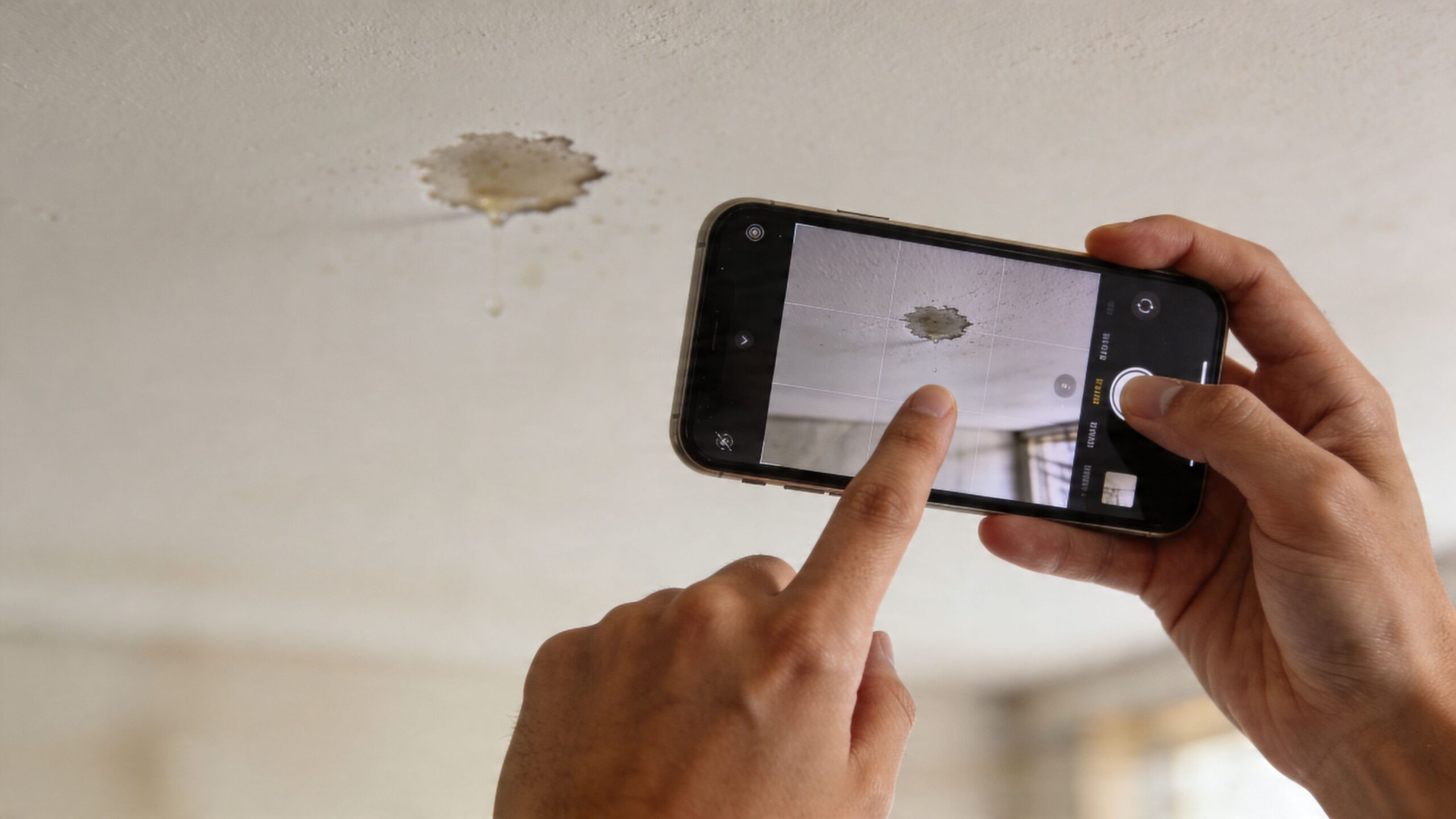
What to do in the first 48 hours
Use this checklist.
- Photograph everything: Get close-ups and wide shots. Include ceilings, walls, floors, windows, exterior areas, and any damaged personal property.
- Write down dates: Note when you first saw the problem, when tenants reported it, and what has happened since.
- Preserve documents: Save leases, repair requests, contractor agreements, warranties, invoices, inspection reports, texts, and emails.
- Limit cosmetic cover-ups: Don’t repaint, patch, or replace materials until the condition is documented.
- Give written notice: If you’re a tenant, report the issue in writing. If you’re a landlord, notify the builder or contractor in writing once you’ve confirmed the defect issue needs formal attention.
What landlords should do next
Landlords need to balance immediate repair duties with claim preservation.
That means:
- Address urgent safety concerns right away.
- Communicate with the tenant in writing.
- Avoid making permanent repairs that destroy evidence unless safety requires it.
- Bring in a qualified inspector, engineer, or contractor when the problem appears structural, recurring, or hidden.
- Review whether contractor payment, lien, or project-closeout issues are also in play, especially if you’re dealing with releases or unresolved work. A basic understanding of release of liens definition can help you avoid another preventable dispute.
What tenants should do next
Tenants often assume one maintenance request is enough. It usually isn’t.
You should:
- Send a clear written repair request
- Describe the health or safety impact
- Keep copies of every message
- Take updated photos if the condition worsens
- Track expenses if the defect affects your use of the property
If the landlord says, “We’re waiting on the builder,” keep documenting. That explanation may be true, but it doesn’t erase your rights under the Texas Property Code.
A short visual overview may also help you think about what evidence to preserve and how defect issues unfold in real property disputes:
Know when to call a lawyer
Call a lawyer sooner rather than later if:
- The defect is serious or recurring
- The builder denies responsibility
- A tenant claims the unit is unsafe
- You’re nearing a legal deadline
- An insurer, contractor, or opposing lawyer contacts you
- You’ve been offered a release or settlement you don’t understand
Construction defect claims get harder, not easier, once evidence disappears and deadlines pass. Early legal advice often saves money because it prevents avoidable mistakes.
Protect Your Property with a Texas Attorney
Construction defect claims are rarely just construction problems. In Texas, they often become lease disputes, habitability fights, payment conflicts, and deadline-driven legal battles at the same time. If you’re a landlord, tenant, or property manager, you need a plan that protects your rights under the Texas Property Code and addresses the source of the damage.
A Texas landlord tenant lawyer can help you move quickly, preserve evidence, comply with notice rules, and deal with builders, insurers, and repair disputes from a position of strength.
If you need help with a construction defect, lease issue, tenant rights dispute, or eviction matter, contact The Law Office of Bryan Fagan, PLLC for a free consultation today. The firm helps Texas landlords and tenants across Houston, Dallas-Fort Worth, Austin, San Antonio, and surrounding areas with practical, strategic guidance that cuts through confusion and protects your property rights.