Getting locked out of your home is the kind of moment that sends your mind in ten directions at once. Your phone might be inside. Your medication might be inside. Your child's things, your work laptop, your wallet, your pets, all of it may be behind a door you rented and had every right to enter yesterday.
If you're searching for landlord changed locks without notice texas, start with this: panic is normal, but you still have options. In many Texas residential cases, a landlord can't use a lock change as a shortcut around the eviction process. A sudden lockout is often a serious tenant rights violation, not just a lease dispute.
The fastest way to regain control is to treat this like an emergency with a paper trail. Stay calm. Protect yourself. Document what happened. Ask for re-entry the right way. Then decide whether you need a Texas landlord tenant lawyer or eviction attorney to push the issue into court.
Your Landlord Illegally Locked You Out What Happens Now
A common version of this starts the same way. You get home from work, try your key, and it doesn't turn. You call the property manager and get voicemail. A neighbor says maintenance was there earlier. There's no warning on your door, no email you saw, and no key waiting for you.
That isn't just upsetting. It can disrupt your safety, your job, your sleep, and your ability to care for your family.
Texas tenants often assume they must have done something wrong if a landlord changed the locks. That's not how the law works. Even if rent is late, a residential landlord usually must follow strict rules before changing locks, and a lockout still doesn't replace a lawful eviction. If the landlord is using threats, pressure, repeated entry issues, or intimidation along with the lock change, that can overlap with broader Texas landlord harassment concerns.
What this moment usually means
When a landlord changes locks without proper notice, the issue is no longer just unpaid rent or a lease disagreement. It becomes a legal compliance problem for the landlord.
First priority: Don't argue legal theory at the door. Focus on safety, access, and proof.
What not to assume
- Don't assume you've been legally evicted: A true eviction requires court process.
- Don't assume owing rent erases your rights: It doesn't automatically allow an unlawful lockout.
- Don't assume you must wait quietly: Texas law gives tenants remedies when landlords break lockout rules.
If you act carefully in the first few hours, you protect both your immediate housing situation and your future claim.
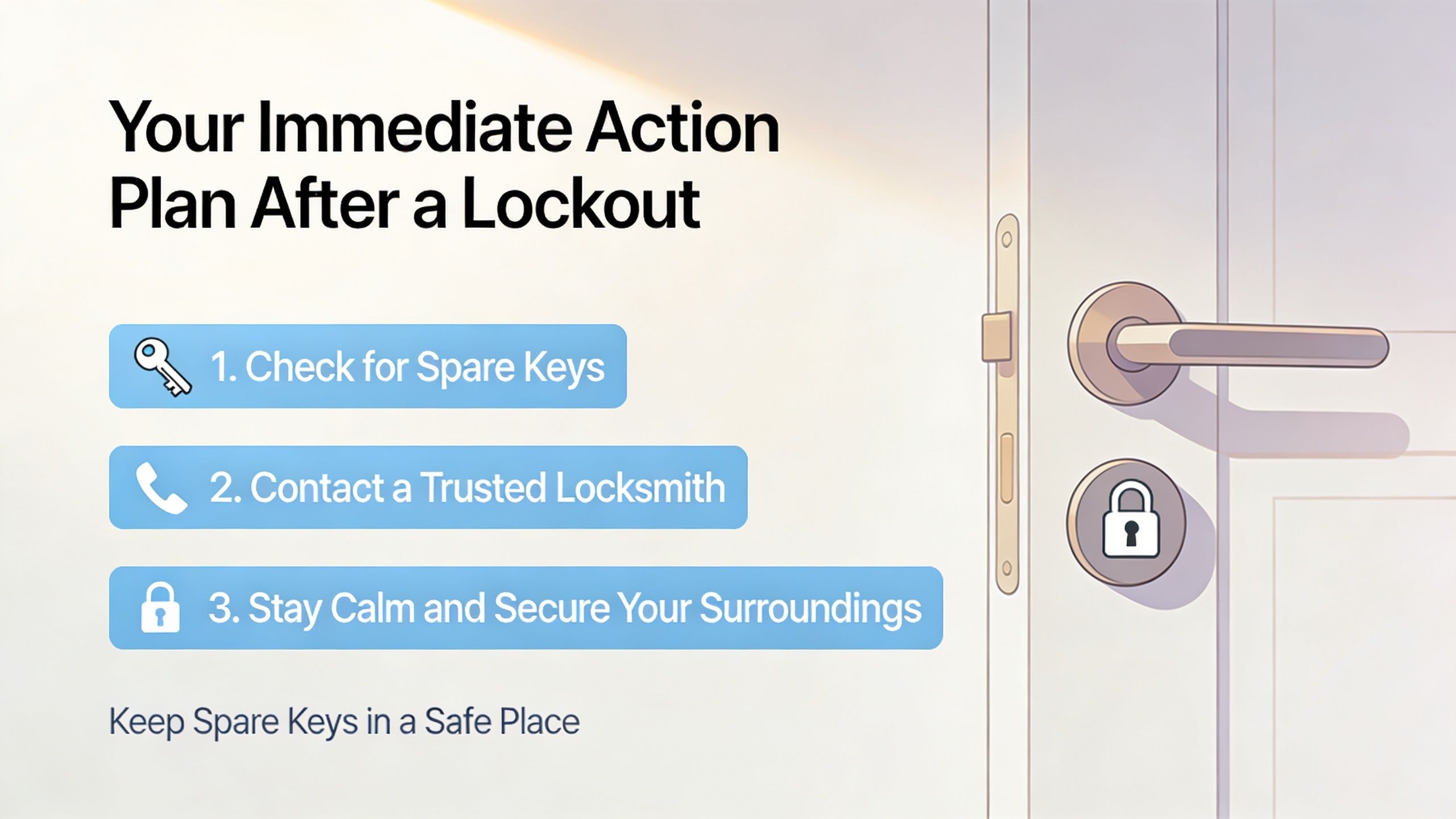
Your Immediate Action Plan After a Lockout
The first few hours matter. What you do right now can either help your case or make it harder to prove later.
Protect yourself first
If it's late, you have children with you, you need medication, or you feel unsafe, deal with that first. Go somewhere secure. Call a trusted friend or family member. If a pet is trapped inside or there is an urgent medical issue, tell law enforcement that clearly.
Do not force the door, break a window, or get into a confrontation with maintenance staff. That can create a separate dispute about property damage or alleged criminal conduct.
A locked door feels personal. Your response should still be disciplined.
Create a same-day record
Call local law enforcement on the non-emergency line unless there's an immediate danger. Ask for an officer to come out if possible. The police may say it's a civil matter, and often it is, but an incident record still helps show when you were denied entry.
Then document the scene:
- Photograph the door and lock: Include the full door, close-ups, and any missing or posted notice.
- Capture the date and time: A screenshot from your phone, photo metadata, or a time-stamped text to yourself helps.
- Record your key not working: A short video can be useful if done safely.
- Save your location evidence: If you use Google Maps or iPhone location history, preserve it.
Contact the landlord the right way
Send one calm written message by text and email if you have both. Keep it short. State that you are a current tenant, you are locked out, you did not receive proper notice, and you are requesting immediate access and a key.
A good message sounds like this:
I am locked out of my rental unit at [address]. I did not receive proper notice of any lock change. Please provide immediate access and a key now. I am documenting this matter.
Don't send ten angry messages in a row. One clean message is better evidence than a long emotional thread.
Gather the basic documents before memory fades
As soon as you can, pull together your lease, rent receipts, screenshots of prior communications, and any notice you may have received. If you're unsure whether your landlord's conduct crossed the line, it also helps to review practical complaint options such as this guide on how to file a complaint against your landlord in Texas.
Make a simple emergency list
Write down:
- When you discovered the lockout
- Who you called
- What each person said
- Where you stayed that night if you couldn't get in
- What essential items were left inside
That list becomes the backbone of your wrongful lockout claim.
Understanding Texas Law on Landlord Lockouts
Texas law does allow a narrow kind of temporary lock change for residential nonpayment situations, but only if the landlord follows strict rules. That's where many landlords get into trouble.
What Texas Property Code says
Texas Property Code Section 92.0081 was enacted in 2005 to stop self-help lockouts. If a landlord wants to change locks because of unpaid rent, the landlord must give strict written notice in advance. The rule is 5 days by mail or 3 days if hand-delivered or posted on the door, and the notice must say the landlord intends to change the locks, state the amount owed, and say where the tenant can pay it, as explained by TexasLawHelp's summary of Texas lockout law. That same source notes a 2019 study found 28% of tenants in major Texas cities had experienced or witnessed illegal lockouts.
The law exists because some landlords used lock changes as pressure tactics instead of using lawful eviction procedures. Texas decided that practice needed limits.
What makes a lockout illegal
A residential lockout is often unlawful when the landlord skips one of the required steps. Common problems include:
- No advance written notice
- Notice missing required information
- No way to get a key after the lock change
- Using the lock change as a permanent eviction
- Trying to force a move-out without court process
For many tenants, the practical question isn't whether the landlord can ever change a lock. It's whether the landlord followed the Texas Property Code exactly. If the answer is no, the lockout may be wrongful.
Why details matter
A landlord's defense often sounds simple. They may claim notice was posted, rent was unpaid, or management acted within the lease. Cases turn on specifics.
Did the notice arrive on time? Did it include what the statute requires? Was there a real method to get a key at any hour? Was this a temporary nonpayment lock change or an attempt to remove you without filing eviction?
Practical rule: In lockout cases, small paperwork errors can become major legal problems.
If you want to understand the broader framework behind these rules, review Texas Property Code Chapter 92 basics. It helps tenants and landlords see why lockouts are treated differently from ordinary rent collection disputes.
How to Gather Evidence for a Wrongful Lockout Case
Once you're safe, stop thinking like a frustrated tenant and start thinking like a case builder. Strong evidence usually comes from ordinary items people already have on their phones.
Build a timeline that a judge can follow
Open a notes app or Google Doc and create a clean timeline. Keep it factual. List the date, time, event, and any witness for each step.
Include things like:
- Your last normal entry into the unit
- The first failed attempt to open the door
- Calls, texts, and emails to management
- Any conversation with police or a constable
- When you got back inside, if you did
A timeline works because memory gets fuzzy fast. Landlords often rely on that.
Save communications and compare versions
Preserve every text, voicemail, email, resident portal message, and paper notice. Take screenshots in case anything disappears from an app later. If management sends multiple versions of a notice or changes dates in later communications, compare them carefully. For tenants or lawyers organizing those drafts, a tool like this legal document comparison software guide can help spot differences between notices, lease clauses, and follow-up letters.
If a landlord's story changes, the documents usually show it before the witnesses do.
Prove your losses, not just the lockout
A wrongful lockout case is stronger when you show how the event affected you in real life.
Keep records of:
- Hotel or short-term stay costs
- Ride-share or extra travel expenses
- Meals you had to buy because you couldn't access your kitchen
- Replacement toiletries, clothing, or medication
- Missed work documentation if you lost time dealing with the lockout
Get witness details before they disappear
Neighbors, roommates, maintenance workers, and even front office staff may have seen what happened. Ask for names and phone numbers right away. If someone won't give a statement, write down what they said and when they said it.
The goal isn't to collect everything possible. The goal is to collect the evidence that answers a judge's likely questions clearly and quickly.
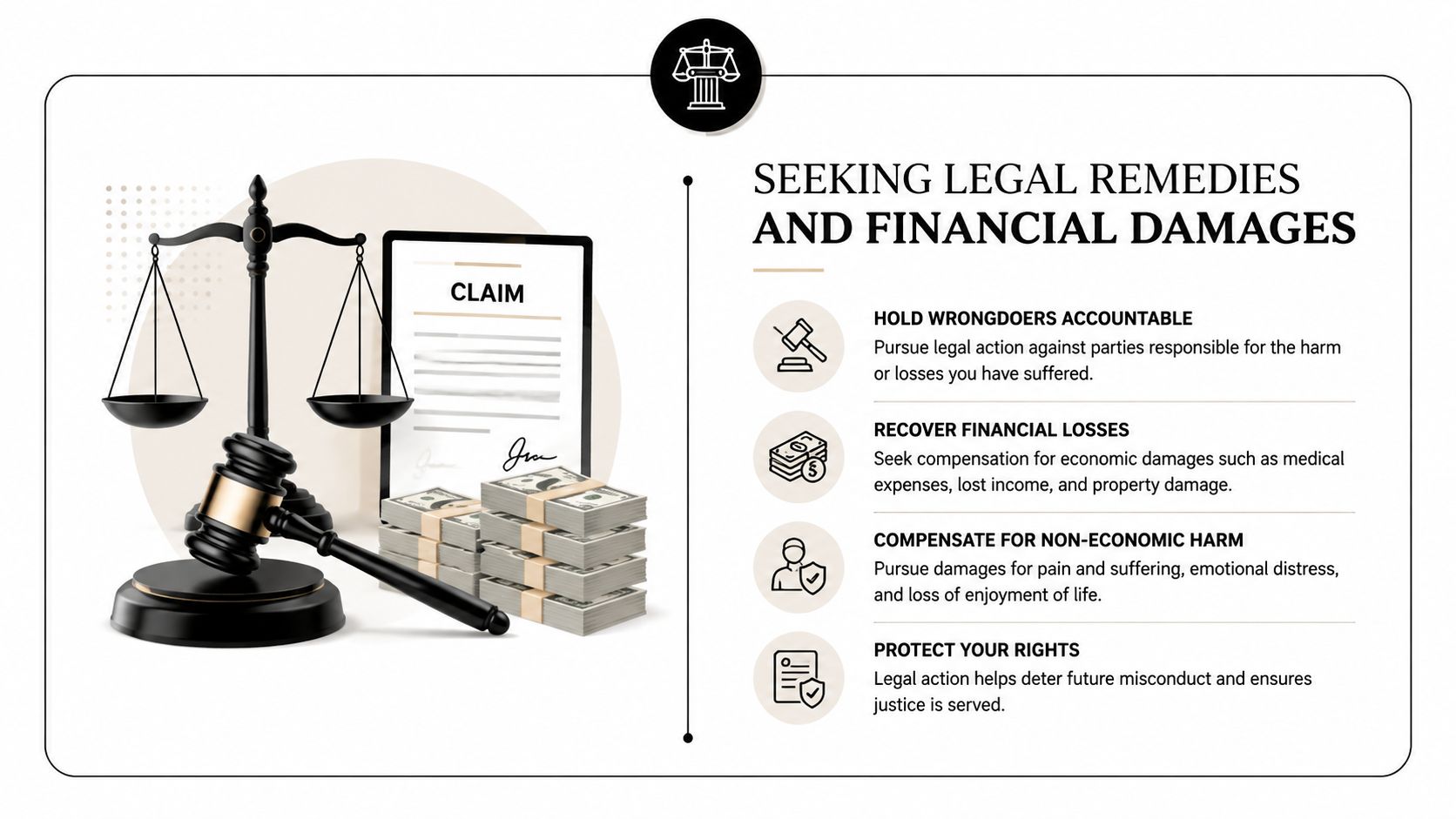
Seeking Legal Remedies and Financial Damages
Getting back into the property is the urgent problem. Holding the landlord accountable is the next one.
A tenant dealing with landlord changed locks without notice texas issues may have more than one remedy available. In many cases, the first legal target is re-entry. After that, the focus turns to damages and fees.
Re-entry can be the urgent court request
When a landlord won't voluntarily restore access, tenants often need court involvement fast. One tool can be a writ of re-entry through the justice court. That request asks the court to order the landlord to let you back into the unit.
This is where good documentation matters. Judges want a clean timeline, proof of tenancy, and proof of the lockout.
What damages may be available
Under Texas Property Code Section 92.0081(b), a tenant who was illegally locked out may recover actual damages, plus one month's rent or $500, whichever is greater, along with reasonable attorney's fees and court costs, according to the earlier-cited TexasLawHelp summary of the statute. The rent the tenant owes can be deducted from the award.
That means the case is not just about getting a new key. It can also be about recovering the costs and harm caused by the unlawful lockout.
Summary of Tenant Remedies for an Illegal Lockout in Texas
| Remedy Type | Description | Governing Statute |
|---|---|---|
| Re-entry relief | Court action can be used to seek access back to the rental unit | Texas Property Code Section 92.0081 |
| Actual damages | Compensation for proven losses caused by the lockout, such as temporary housing or related expenses | Texas Property Code Section 92.0081(b) |
| Statutory penalty | One month's rent or $500, whichever is greater | Texas Property Code Section 92.0081(b) |
| Attorney's fees | Recovery of reasonable legal fees in a proper case | Texas Property Code Section 92.0081(b) |
| Court costs | Filing and court-related costs may be recoverable | Texas Property Code Section 92.0081(b) |
What works and what usually doesn't
What works is a direct, evidence-backed claim. Lease. timeline. photos. notices. receipts. witness names. A judge can follow that.
What usually doesn't work is showing up angry but unprepared. Courts respond to facts, not outrage.
A strong lockout case connects three points: you had the right to possession, the landlord denied access unlawfully, and the denial caused measurable harm.
If your landlord also claims you were behind on rent, that doesn't automatically defeat your case. It changes the accounting. It does not erase the statute.
Why You Need a Texas Landlord Tenant Lawyer
Lockout cases look simple from the outside. In practice, they move fast, involve technical notice rules, and can turn on a few documents that landlords and tenants read very differently.
A Texas landlord tenant lawyer helps in three ways. First, the lawyer identifies whether the lockout was merely aggressive management or a clear statutory violation. Second, the lawyer pushes the right remedy fast, especially when you need re-entry. Third, the lawyer frames your damages so the court sees the full impact, not just a door that wouldn't open.
The self-representation problem
Tenants often walk into justice court with screenshots and a story but no legal theory tying the evidence together. Landlords or property managers may arrive with lease clauses, payment ledgers, notices, and a polished explanation. That gap matters.
Even support professionals can make a difference when organized correctly. If you're gathering paperwork, deadline calendars, and court forms, services involving trained paralegals for legal support tasks can help with document organization. They are not a substitute for legal advice, but they can show why professional case preparation matters.
Why an eviction attorney adds leverage
A skilled eviction attorney knows what to ask for, how to prove it, and what defenses to expect. That's often the difference between a messy argument and a result.
If you need help with an eviction, lease issue, or rental dispute, contact The Law Office of Bryan Fagan, PLLC for a free consultation today. The firm helps Texas tenants and landlords address lockouts, lease enforcement, wrongful eviction claims, and other disputes under the Texas Property Code with clear, practical guidance.