Dealing with a landlord dispute or eviction can be stressful, especially when you need an answer now. Your air conditioning stops working, a lock won’t latch, your deposit is missing, or a notice appears on your door. In those moments, texas property code 92 matters because it gives both tenants and landlords a legal framework for what happens next.
Most rental conflicts get worse when people act on assumptions. A tenant withholds rent without following the required steps. A landlord delays a repair because they think the issue is minor. Someone sends a text message that doesn’t clearly explain the problem, then later has no proof of notice. The law doesn’t reward guesswork. It rewards documentation, timing, and following the right process.
If you're looking for practical guidance, not legal jargon, this guide breaks Chapter 92 into the situations people face. You’ll see what the law generally requires, where people often make mistakes, and what steps can protect your rights before a dispute gets more expensive.
Understanding Texas Property Code Chapter 92
Texas Property Code Chapter 92 is the main set of rules for many residential landlord-tenant relationships in Texas. It covers recurring issues like repairs, security devices, security deposits, lease enforcement, and tenant remedies when a landlord doesn’t meet legal duties.

If you rent a house, apartment, duplex, or similar dwelling, Chapter 92 is often the place lawyers, judges, tenants, and landlords start. It doesn’t replace your lease. It works alongside your lease. That means your written agreement still matters, but lease terms can’t erase protections the law requires.
Why Chapter 92 matters in daily life
The easiest way to think about Chapter 92 is this. It tells each side what they must do before a dispute turns into a lawsuit or eviction case. For tenants, that often means giving proper notice, paying rent when required, and keeping records. For landlords, it often means making required repairs, maintaining security devices, returning deposits correctly, and using the court process instead of self-help.
A lot of confusion comes from the gap between what feels fair and what the law requires. For example, a tenant may believe, “If my landlord ignores me, I can just fix it and subtract the cost from rent.” Sometimes tenants hear that from friends. In practice, repair remedies under Texas law are more technical than that. The same is true for landlords who think they can remove a tenant quickly just because rent is late.
Practical rule: When a rental problem starts, assume you’ll need a paper trail. Save notices, photos, lease terms, receipts, and move-in or move-out records.
Who should learn it
You don’t need to be in a lawsuit to benefit from knowing the basics. Chapter 92 helps:
- Tenants who need repairs, want their deposit back, or are worried about retaliation
- Landlords who want to comply with the law and avoid preventable claims
- Property managers who handle maintenance, notices, and lease enforcement
- Families trying to decide whether a problem is serious enough to justify legal action
For a broader overview of how Texas rental rules work, you can review this guide to Texas property code landlord tenant law.
The Landlord's Core Responsibilities Under Texas Law
A landlord’s job under Chapter 92 is more than collecting rent and handing over keys. Texas law imposes real duties tied to safety, access, and the basic condition of the property.

Two areas create the most trouble. First, repairs that affect health or safety. Second, required security devices. These duties aren’t optional, and they shouldn’t be handled casually.
Repair duties that affect health and safety
A landlord generally must address conditions that materially affect an ordinary tenant’s physical health or safety when the legal requirements for notice and tenant eligibility are met. In plain language, the law is concerned with problems that make the home unsafe or unlivable, not every inconvenience or cosmetic complaint.
Common examples often include problems like:
- Water intrusion or sewage issues that create unsanitary conditions
- Electrical hazards such as faulty wiring or unsafe outlets
- Structural or flooring problems that create a meaningful risk of injury
- Pest conditions when they rise to a health and safety concern
What confuses many people is the difference between a real legal repair issue and a frustrating but non-urgent issue. A bedroom paint color isn’t a Chapter 92 case. A sewage backup might be.
Landlords also protect themselves by using a consistent written process for repairs. A standardized log can help track when notice came in, what was reported, who inspected the issue, and what was done. Many property owners use templates or checklists for this reason. These best practices for maintenance forms are a useful example of how to create a cleaner record.
Security devices are required by law
Texas makes security devices a core part of residential leasing. Under Texas Property Code Section 92.153(a), landlords must equip every dwelling with certain security devices without waiting for the tenant to ask. Those devices include window latches, keyed deadbolts on exterior doors, and door viewers. If a landlord fails to repair a security device after proper notice, the tenant may pursue remedies that can include a $500 civil penalty, one month’s rent, actual damages, court costs, and attorney’s fees.
That matters because lock and entry problems often get treated like simple maintenance. They aren’t. Under Texas law, they’re part of the landlord’s legal duty to provide minimum security protections.
A practical example helps. Suppose the front-door deadbolt stops working, the tenant reports it in writing, and the landlord keeps delaying. That isn’t just annoying. It can become a statutory claim with consequences beyond the repair itself.
Here’s a quick way to think about landlord priorities:
| Issue | Why it matters |
|---|---|
| Broken exterior lock | Can create security device liability |
| Unsafe wiring | May affect health and safety |
| Water leak into living area | Can become habitability problem |
| Missing door viewer | May violate required security standards |
If you’re documenting a repair issue or trying to build a proper written request, this guide on how to request repairs from a landlord can help you organize the notice clearly.
A short overview of these duties may also help if you’re sorting through a dispute:
A landlord who responds early usually spends less money than a landlord who waits for a repair issue to become a legal one.
Your Rights and Remedies as a Tenant
When a landlord won’t fix a serious problem, tenants often feel trapped between two bad options. Keep living with the issue, or take action and risk making things worse. Texas law does give tenants remedies, but the order of your steps matters.
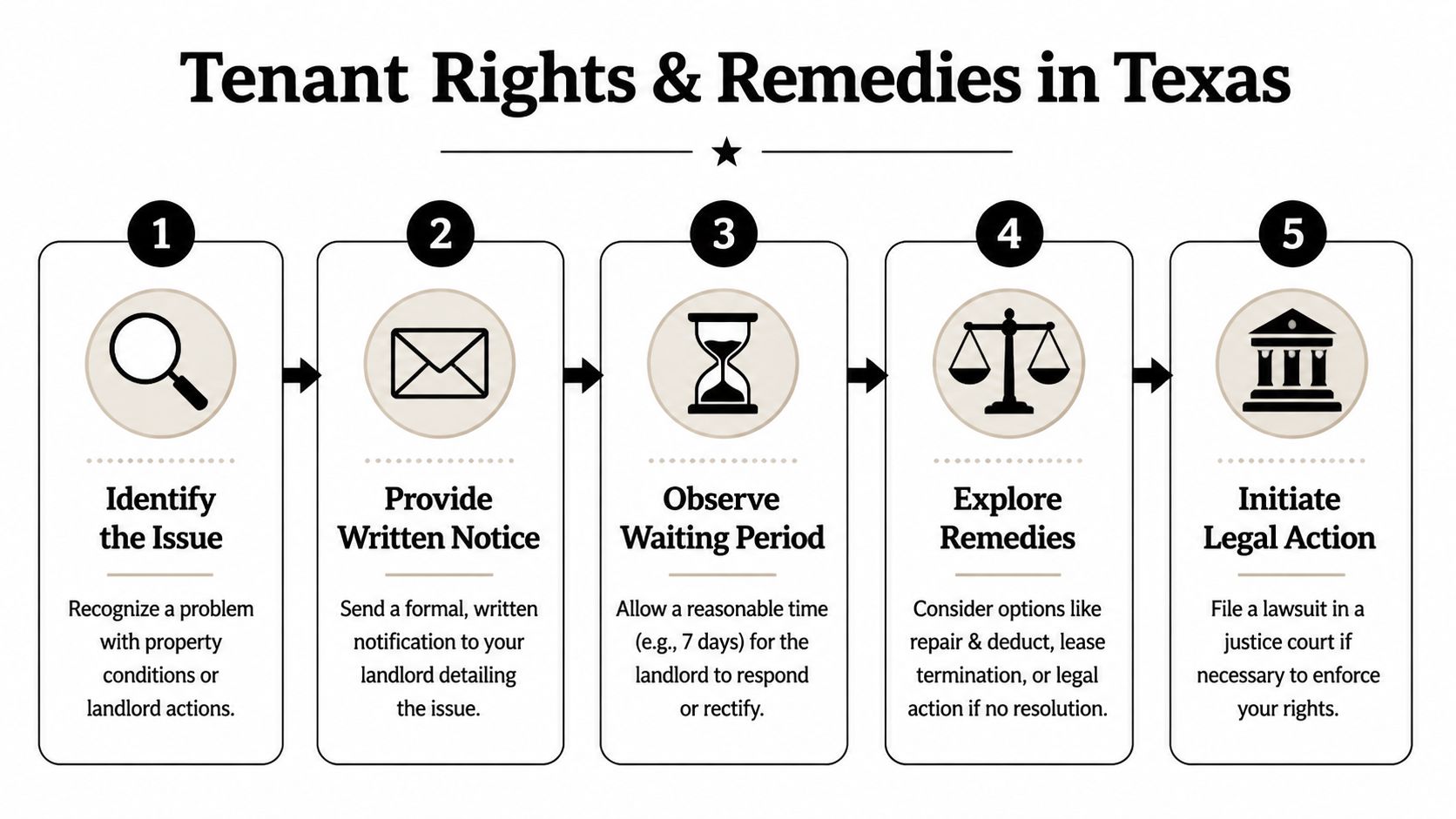
Under Texas Property Code §§ 92.052–92.061, tenants have remedies when a landlord fails to make repairs, but they must follow strict procedural steps. Many tenants try repair-and-deduct too early or without the required written notice, which can undermine the claim and expose them to eviction for nonpayment.
Start with written notice, not anger
If something serious needs repair, your first move should usually be written notice. Verbal complaints are easy to deny later. A clear written request creates a record of what the issue is, when you reported it, and how serious it appears.
Keep the notice simple and specific. Include:
- The exact problem. “The kitchen ceiling is leaking over the sink.”
- When it started. “The leak began on Monday evening.”
- Why it matters. “Water is entering the unit and affecting safe use of the kitchen.”
- A request for prompt repair. Ask for a written response and access scheduling.
A basic example might look like this:
“I’m requesting repair of the front door deadbolt and the leak under the bathroom sink. These conditions affect the safe use of the unit. Please confirm in writing when repairs will be made.”
Wait a reasonable time and document everything
Texas repair law depends heavily on timing. In many situations, the landlord must be given a reasonable opportunity to fix the problem. In some repair contexts, at least 7 days may be relevant after proper notice, depending on the circumstances described in the verified guidance linked above.
That doesn’t mean every issue gets the same timeline. A severe water leak is different from a less urgent repair. What matters most is that you document your notice, keep copies, and avoid taking shortcuts.
Use a file or folder with:
- Your lease
- Photos and videos
- Every repair request
- Texts or emails from management
- Receipts for any emergency expenses you had to pay
What tenants often get wrong
Some tenants stop paying rent the moment a landlord ignores them. Others hire a contractor first and ask permission later. Those moves can create serious problems.
Here are common mistakes to avoid:
- Skipping written notice because you already told the maintenance staff in person
- Using repair-and-deduct casually without checking whether the legal requirements are satisfied
- Withholding rent automatically because the condition feels unfair
- Failing to stay current on rent when the law requires that status for certain remedies
If your notice process is weak, even a legitimate repair complaint can become harder to enforce.
Possible remedies if the landlord still doesn’t act
Depending on the facts, a tenant may have options such as pursuing repairs through court, seeking damages, or ending the lease in a legally recognized way. Those remedies depend on whether the tenant followed the required notice procedure and whether the condition qualifies under the statute.
A useful way to think about it is an if-then approach:
- If the issue affects health or safety and you gave proper written notice, stronger legal remedies may be available.
- If the landlord still doesn’t act after a reasonable chance to repair, court action may become the safest next step.
- If you’re unsure whether your issue qualifies, pause before withholding rent or moving out.
For many tenants, the smartest move isn’t the fastest move. It’s the move that creates the clearest legal record.
Navigating Security Deposit Rules
Security deposit fights are common because both sides often remember the move-out differently. The tenant remembers leaving the unit “pretty clean.” The landlord remembers stains, trash, broken blinds, or unpaid charges. Texas law helps by setting rules for what a security deposit is for and how it should be returned.
A security deposit is money held to secure performance under the lease. That’s different from rent and different from an application fee. The deposit isn’t a landlord’s automatic repair fund, and it isn’t a tenant’s last month of rent unless the lease or law allows that treatment.
What happens after move-out
Once the tenant surrenders the premises, the landlord generally has 30 days to refund the deposit or provide a written accounting of deductions when required. The tenant should also give a forwarding address in writing, because that step often affects how and when the landlord sends the refund or itemized statement.
A smooth move-out usually looks like this:
| Stage | What helps |
|---|---|
| Before moving | Review the lease and take detailed photos |
| On move-out day | Return keys and document unit condition |
| After surrender | Provide forwarding address in writing |
| During review | Compare deductions against actual lease liability |
The most common dispute is over normal wear and tear. Texas law distinguishes between ordinary deterioration from intended use and damage caused by negligence, carelessness, accidents, or abuse. Worn carpet from ordinary use may be treated differently than a large burn mark. Faded paint may be ordinary wear. A broken door off its hinges probably isn’t.
What a landlord can and cannot deduct
A landlord may generally deduct for damages and charges the tenant is legally responsible for under the lease or because of a lease breach. But the landlord may not keep deposit money for ordinary wear and tear.
Examples can make this easier:
- Likely wear and tear might include minor scuffs, gradual fading, or age-related decline.
- Likely damage might include holes in walls, broken fixtures, missing items, or heavy filth beyond ordinary use.
The facts matter. Photos from move-in and move-out often decide these cases more than arguments do.
Move-out advice: Tenants should take date-stamped photos after cleaning and before returning keys. Landlords should keep written inspection notes and invoices tied to each deduction.
If you’re dealing with a deposit dispute, this overview of security deposit laws in Texas can help you compare your situation to the usual legal issues.
A practical way to avoid deposit disputes
Both sides benefit from doing the boring work well. Use a move-in inventory. Save photos. Put repair agreements in writing. Confirm any payment plans or cleaning expectations before move-out. Most deposit lawsuits grow out of missing records, not just bad conduct.
If you’re a tenant, don’t assume silence means approval. Ask where to return keys and where to send your forwarding address.
If you’re a landlord, don’t send a vague note that says “cleaning and damages.” Be specific enough that the deductions can be understood and defended.
Lease Termination Eviction and Retaliation
Few rental disputes create more panic than a threatened move-out. A tenant worries about losing housing. A landlord worries about lost rent and property access. Texas law treats lease termination and eviction as formal legal events, not informal pressure tactics.
Legal eviction versus illegal self-help
Start with a common scenario. A tenant falls behind on rent. The landlord gets frustrated and says, “Be out by tomorrow or I’m changing the locks and putting your things outside.” That response creates risk for the landlord because Texas eviction requires the legal process.
As noted earlier in the article’s cited authority, the legal eviction process in Texas is not instant. On average, it takes 30 to 45 days from the initial notice to the final court order, and landlords who try self-help evictions face serious consequences. Tenants also need to respond to court papers promptly so they don’t lose by default.
That matters for both sides. Landlords need patience and procedure. Tenants need urgency and attention to deadlines.
How lease termination differs from eviction
Not every lease ending is an eviction. Some leases end because the term expires. Others end by agreement. Some may end early for legally recognized reasons, depending on the facts and applicable statutes.
Eviction is different. It usually happens because the landlord claims the tenant violated the lease, often by nonpayment, a lease breach, or staying after the right to occupy has ended. The court process exists to decide whether the landlord can legally recover possession.
A simple comparison helps:
| Situation | What it usually means |
|---|---|
| Lease expires and tenant moves out | Normal end of tenancy |
| Both sides agree to end lease early | Mutual termination |
| Landlord files for possession after notice | Eviction process |
| Landlord shuts off access without court order | Likely illegal self-help |
Retaliation is a separate problem
Tenants also worry about this question: “Can my landlord evict me because I asked for repairs?” In many situations, Texas law protects tenants from retaliation after they lawfully assert certain rights, including repair requests involving health or safety issues, assuming they’re otherwise complying with the lease.
That doesn’t mean every later eviction is automatically retaliation. A landlord may still pursue a real lease violation. But timing matters, and documentation matters even more.
If you’re a tenant, keep copies of your repair requests, payment history, and any notices from management. If you’re a landlord, separate legitimate lease enforcement from emotional reactions. Don’t send angry texts. Don’t threaten shortcuts. Use written notices that match the actual legal basis for action.
A strong case often depends less on who feels wronged and more on who can show clean notice, clear records, and lawful timing.
Putting It All Together Common Landlord-Tenant Disputes
Most Chapter 92 questions don’t arrive as legal theory. They arrive as everyday conflict. Someone enters the unit unexpectedly. A neighbor keeps blasting music late at night. Roaches show up. A tenant moves out and both sides disagree about damage.
Here are a few common disputes and the practical way to think through them.
My landlord won't fix the AC
This is one of the first questions tenants ask, especially in Texas. The legal answer depends on the facts. The issue usually becomes stronger when the condition affects health or safety, the tenant is current on rent when required, and proper written notice has been given.
What should you do?
- Send a specific written notice describing the AC problem and how it affects the unit.
- Keep your rent records because repair remedies can depend on your payment status.
- Document indoor conditions and communication with management.
For landlords, the lesson is simple. Don’t treat repeated AC complaints as casual maintenance chatter. Review the notice, inspect quickly, and respond in writing.
My landlord entered without warning
Texas tenants often assume the law sets one universal notice period before entry. In reality, lease terms matter a lot here. Many disputes turn on what the lease says about entry for repairs, inspections, emergencies, or showing the property.
If you’re a tenant, read the access clause before confronting the landlord. If the entry was repeated, aggressive, or outside the lease, document dates and details in writing. If you’re a landlord, don’t rely on habit. Follow the lease and keep entry notices consistent.
My neighbors are loud and management does nothing
Noise problems usually sit at the intersection of lease enforcement and property management. Chapter 92 won’t solve every personality conflict, but a landlord may have authority under the lease to address repeated disturbances, especially if the noise violates quiet enjoyment clauses or community rules.
A practical approach:
- Report the issue in writing
- Give dates, times, and specifics
- Attach recordings or incident logs if available
- Ask what action management will take
Who pays for pests or damage
This depends on what caused the condition, what the lease says, and whether the problem rises to a health and safety issue. If a tenant’s conduct caused damage, the landlord may not be responsible for paying to fix it. If the issue is broader and affects habitability, the analysis changes.
Here’s the key difference:
- Ordinary deterioration or building-wide conditions may point back to the landlord’s repair duties.
- Damage caused by the tenant, guests, or household members may shift responsibility to the tenant.
In almost every one of these disputes, the winning habit is the same. Write it down early. Save your proof. Don’t assume a judge will reconstruct missing facts later.
When You Need a Texas Landlord-Tenant Lawyer
Some rental issues are manageable with a clear letter and good records. Others aren’t. If you’ve received an eviction notice, your landlord won’t address a serious repair, your deposit is being withheld unfairly, or you’re facing claims for property damage, legal advice can save you from making a costly mistake.
A Texas landlord tenant lawyer helps you sort out which rights are real, which remedies are available, and what step should come next. That matters because Chapter 92 can be technical. The law often turns on notice language, timing, lease terms, and whether the issue fits the statute in the first place.
You should strongly consider speaking with an eviction attorney or landlord-tenant lawyer if:
- You’re about to withhold rent and aren’t sure whether the law allows it
- You’ve been served with court papers and don’t know the deadline to respond
- A landlord or tenant is threatening a lawsuit over repairs, possession, or damages
- You suspect retaliation or illegal lockout
- A security device or habitability issue has been ignored despite written notice
The earlier you get advice, the more options you usually have. Good legal help doesn’t just explain the law. It helps you make a smart decision while your evidence is still fresh and your position can still be protected.
If you need help with an eviction, lease issue, repair dispute, security deposit problem, or other tenant rights matter under the Texas Property Code, contact The Law Office of Bryan Fagan, PLLC for a free consultation today.