You come home from work, reach for your key, and the lock won't turn. Your phone shows a text from the landlord saying you were late on rent, so the locks were changed. Or maybe the power is off, the water has stopped, or your things were moved to the curb before any judge heard your case. In that moment, most tenants feel the same mix of panic, anger, and confusion. They want back inside, they want answers, and they need to know whether this was legal.
In Texas, that reaction is justified. A home lockout is not just a rude property dispute. It can be an unlawful attempt to remove you without the court process the Texas Property Code requires. The law gives landlords a path to evict, but it does not let them skip the courthouse and take possession by force, pressure, or surprise.
That matters because eviction activity in Texas is massive. In 2023, landlords filed over 177,000 eviction cases in the Houston, Dallas, Austin, and Fort Worth metro areas, and in Harris County only 2.1% of tenants had legal representation, according to The Texas Tribune's reporting on Texas eviction filings. When that many cases are moving through the system, tenants who act slowly often lose rights they could have protected.
If you found this article because you're dealing with an illegal lockout right now, focus on one thing first. Stay calm and get strategic. The phrase illegal eviction texas what tenants should do is really about the first few hours. Safety, proof, and speed matter more than long arguments on the porch.
Introduction
A common real-world situation looks like this. A tenant is a few days behind on rent. The landlord posts a notice to vacate, then decides that waiting for court takes too long. The next day, the tenant comes home to a changed lock and a note on the door. Sometimes the landlord says, “You were warned.” Sometimes they stop answering calls. Sometimes they insist the tenant has “already been evicted,” even though no constable has shown up and no court papers were ever served.
That's where many people make their first mistake. They assume the landlord must know the rules better than they do, so they leave, sleep somewhere else, and try to sort it out later. Later is often harder.
Texas law gives tenants meaningful protection against self-help eviction. If your landlord changed the locks, cut utilities, removed your belongings, or physically excluded you without the required legal process, you may have fast remedies available. You may also have claims for possession, damages, penalties, and attorney's fees, depending on what happened and how quickly you respond.
Practical rule: Treat a lockout like a legal emergency, not a customer service problem.
A calm response works better than a loud one. Don't force entry. Don't damage property. Don't turn a civil rights issue into a criminal allegation against you. Instead, build the record, verify whether any court order exists, and move toward the correct remedy in Justice Court as fast as possible.
Understanding Illegal Evictions in Texas
An illegal eviction is usually a self-help eviction. That means the landlord tries to make you leave without completing the court process. In residential cases, Texas law does not let a landlord permanently remove a tenant by changing locks, shutting off utilities, pulling doors or appliances, or moving property out on their own.
What the Texas Property Code allows and forbids
The simplest way to understand this is to separate a lawful eviction from an illegal lockout.
| Situation | Usually lawful | Usually unlawful |
|---|---|---|
| Notice to vacate delivered | Yes, if done properly | No, if treated as final eviction by itself |
| Eviction case filed in Justice Court | Yes | No if landlord skips filing |
| Constable removes tenant after writ of possession | Yes | No if landlord removes tenant personally |
| Temporary lock change under narrow statutory rules | Sometimes | No if landlord refuses access or key |
| Utility shutoff to force move-out | No | Yes |
The key statute many tenants need to know is Texas Property Code Section 92.0081. In plain English, it places tight limits on when a landlord can change locks and what the landlord must still do to provide access. A lock change is not the same thing as a completed eviction. Even where a temporary lockout may be allowed in narrow rent-default circumstances, the landlord still cannot use that as a substitute for court.
A notice to vacate starts the process. It is not a court order, and it does not by itself give the landlord the right to put you out.
A simple example
Suppose your rent is late. The landlord posts a three-day notice to vacate. You haven't been served with a court petition, there has been no hearing, and no constable has come to the property. If the landlord then changes the locks and refuses to give you a key, that is the kind of conduct Texas law treats as unlawful.
The same concern applies if the landlord cuts off water, electricity, or another essential service to pressure you out. It also applies if the landlord removes your furniture, your medicines, or your children's belongings to force a surrender.
What tenants often misunderstand
Many tenants think, “I'm behind on rent, so maybe the landlord was allowed to do this.” Owing rent and being lawfully evicted are not the same thing. A landlord may have a valid reason to seek eviction and still violate the law by using the wrong method.
That's why tenant rights cases often turn on procedure. A landlord can have a good complaint and still lose time, money, or advantage by ignoring the rules in the Texas Property Code.
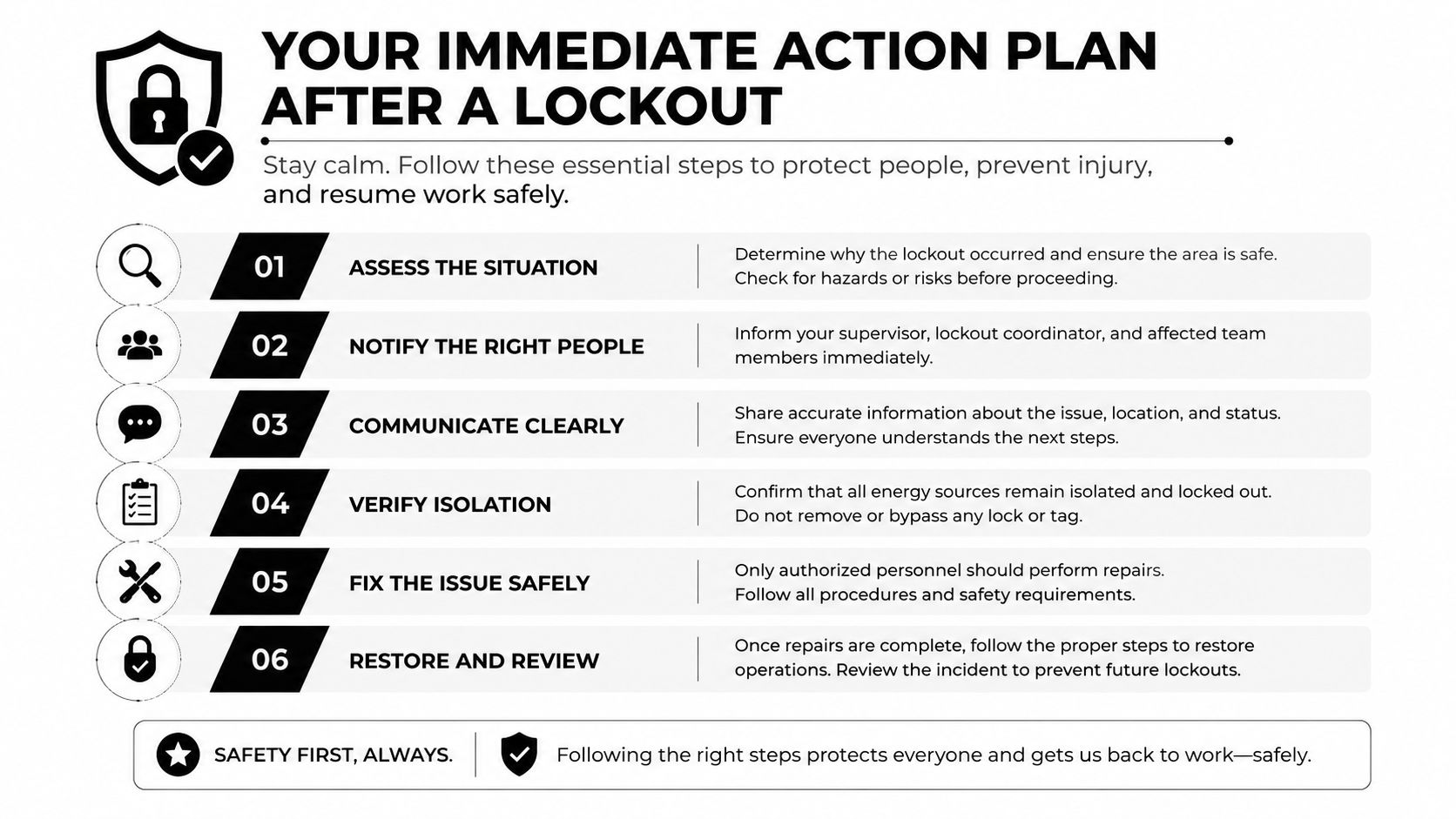
Your Immediate Action Plan After a Lockout
Your first job is not to win the whole case in one night. Your first job is to protect yourself and stop the damage from getting worse.
Start with safety and restraint
If the situation is heated, leave some physical space between you and the landlord or property manager. If children, medications, pets, or medical devices are involved, identify that problem immediately and keep records of it. If you need police or emergency assistance because there is an immediate threat, call.
Don't kick in a door, break a window, or shove past anyone. Even when the landlord is wrong, forcing your way in can create new problems that distract from the lockout itself.
Call for a neutral record
Ask local law enforcement or the constable to come to the property if you've been locked out, your belongings were removed, or utilities were intentionally cut to push you out. Be realistic about the response. An officer may tell you it is a civil matter and may not force the landlord to open the unit.
Still, that call can matter because it creates a same-day record. You want names, badge numbers if available, the time, and any incident number or report reference.
Verify whether a writ of possession exists
This is the most important technical step. Texas tenant guidance is clear that a landlord cannot complete an eviction without going to court, and the actual removal after a writ issues must be supervised by a constable. Also, a notice to vacate is not an eviction order, as explained in Texas tenant guidance on the eviction process.
Call the Justice Court for the precinct where the property is located. Ask whether an eviction case was filed, whether judgment was entered, and whether a Writ of Possession has been issued. If the clerk can't tell you everything by phone, ask what you need to request in person or online.
If no writ exists, that fact can become the center of your emergency response.
What to say and what not to say
Use short, factual language with the landlord. A message like this works:
“I have been locked out of my home at [address]. Please confirm immediately whether you claim there is a court-issued writ of possession. If there is no writ, restore my access at once.”
Don't send threats, insults, or long emotional messages. Those rarely help. Clear and professional communication does.
The first-hours checklist
Confirm your location and safety
If you need a secure place for the night, arrange it. Keep receipts for lodging, transportation, food spoilage, pet boarding, and replacement essentials.Call the court or constable
Ask one precise question first. Was a writ of possession issued for this address?Avoid self-help on your side
Don't re-enter by force and don't remove locks.Preserve the scene
Take photos before anything changes.Send one written demand
Text or email is fine if that is how you normally communicate.Get legal help quickly
If you need practical guidance on a lock-change situation, review what happens when a landlord changed locks without notice in Texas.
How to Document Everything to Protect Your Rights
Once the immediate emergency is under control, your next move is evidence. A strong wrongful lockout case usually isn't built on one dramatic fact. It's built on many small facts preserved early and organized well.
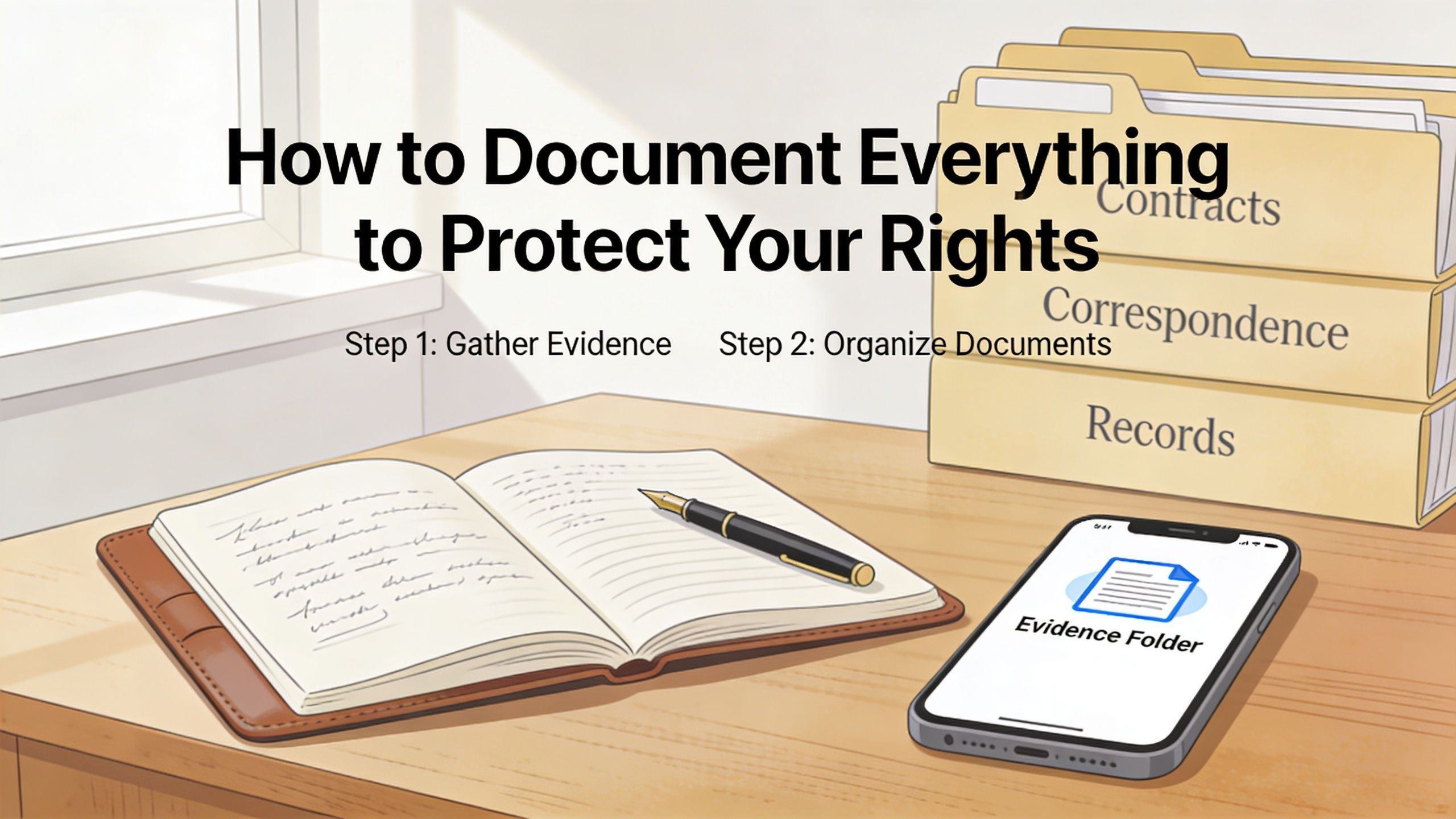
Build an evidence folder the same day
Use your phone and one cloud folder. Label it with the property address and date. Put every photo, video, screenshot, and document there.
Create a timeline in a notes app or notebook. Start with the last time you had access and write down every event after that in order.
What to capture
Door and lock condition
Photograph the lock, door frame, posted notes, and any signs that entry hardware was changed.Utilities and appliances
If power, water, or gas is off, record what isn't functioning and when you discovered it.Belongings
List what is inside, what is missing, and what you can see has been moved.Communications
Save texts, emails, voicemails, rent notices, and screenshots of missed calls.Witness information
Get names and numbers for neighbors, friends, movers, officers, or maintenance staff who saw what happened.
If you later ask a judge for possession or damages, the quality of your documentation often matters more than the volume of your anger.
Make an inventory that a court can follow
A messy list doesn't help much. Group your property by room and category. For example:
| Area | Key items to list | Why it matters |
|---|---|---|
| Bedroom | Clothes, medication, documents | Shows immediate personal impact |
| Kitchen | Food, cookware, small appliances | Supports loss and spoilage claims |
| Living room | Electronics, furniture, work tools | Helps value inaccessible property |
| Children's room | School items, uniforms, personal items | Shows urgency and disruption |
If you don't already have rent records organized, recreate them now. A clean payment history can help if the landlord later claims you had no right to possession. If you need a simple way to organize proof of past payments, an online rent receipt maker can help you create a clearer paper trail from the records you already have.
Preserve move-in condition records too
In many lockout disputes, the landlord shifts quickly from “you had to leave” to “you also caused damage.” Pull together your lease, move-in photos, inspection notes, and any condition reports. If you need help organizing those materials, this tenant move-in checklist template is a useful starting point.
Keep receipts for every forced expense
If the lockout made you pay for a hotel, meals, storage, transportation, pet care, child needs, replacement toiletries, or a locksmith consultation, save every receipt. Don't guess at the amount later. Use the actual documents.
That same rule applies to lost work time. Keep your schedule, screenshots, or messages showing the hours you missed because of the lockout.
Using Legal Tools to Regain Possession
If you are standing outside your home with your keys no longer working, the legal question is not abstract. The immediate goal is possession. In Texas, that usually means forcing the issue into court fast, before the landlord rewrites the story or claims court authority that does not exist.

Start with a short written demand
Send a brief written demand for access, unless contact would put you at risk. Keep it factual and send it in a way you can later prove, such as text, email, and a photo of a note left at the property.
“I am a residential tenant at [address]. I have been denied access to the property. Please restore possession immediately and confirm whether you contend a court has issued a writ of possession. If no writ exists, your lockout appears unlawful under the Texas Property Code.”
This step matters for two reasons. First, it may get you back inside without waiting on a hearing. Second, if the landlord refuses, the message helps show the judge exactly when you demanded access and how the landlord responded.
Use a Writ of Re-Entry when possession is the urgent problem
For many illegal lockouts, the main court tool is a Writ of Re-Entry. This is a sworn request filed in Justice Court asking the judge to order the landlord to give you back possession after an unlawful exclusion. The remedy comes from Texas Property Code Section 92.009.
File in the precinct where the property is located. Ask the clerk what the court requires for a tenant lockout filing, and bring your lease, ID, proof of address, screenshots, photos of the changed locks or shutoff conditions, and your written demand.
Specific facts matter here. Include the date and time you were locked out, whether the locks were changed, whether utilities were interrupted, whether your belongings are still inside, whether children, medication, work equipment, or pets are affected, and whether you checked for any actual court order authorizing removal.
Confirm whether a real writ exists
Landlords sometimes use legal-sounding terms to pressure tenants into leaving. A real writ of possession comes from a court after an eviction case. It is not a text message, a note on the door, or a statement from management.
Time pressure is built into Texas eviction law. In the formal process, a tenant generally has only five days to appeal an eviction judgment before the landlord may seek a writ of possession, as explained in the Texas State Law Library guide to the eviction process. If you want to compare your situation to a lawful court removal, this guide on understanding a writ of possession in Texas explains what that process looks like.
That distinction matters. If no court issued writ exists, the landlord has a much harder time justifying a self-help lockout.
Choose the right tool for the problem in front of you
Different facts call for different responses. Tenants lose time when they chase a damages claim before securing access, or when they assume every lockout should be handled the same way.
| Goal | Tool | Best use |
|---|---|---|
| Get back inside fast | Writ of Re-Entry | Lockout without lawful court removal |
| Challenge completed eviction steps | Appeal or emergency motion | After judgment or writ issues |
| Recover money losses | Damages suit | Hotel costs, property loss, penalties |
| Verify what the landlord is claiming | Court file and certified documents | When landlord says a judge authorized removal |
Some tenants can file the re-entry paperwork themselves and move quickly. Others should get legal help first, especially if there is already an eviction case on file, the lease terms are disputed, rent is contested, retaliation may be involved, or property is missing.
In those more complicated cases, a Texas landlord tenant lawyer or eviction attorney can help you choose between immediate re-entry, defensive court action, and a later damages case. The Law Office of Bryan Fagan, PLLC is one firm that handles Texas landlord-tenant disputes, including wrongful lockouts and eviction-related matters.
Your Right to Sue for Damages and Penalties
Getting back inside is often the first priority. It may not be the last one. If the landlord wrongfully locked you out, Texas law may let you pursue money damages and statutory remedies in addition to possession.

What recovery can include
Texas guidance recognizes that a tenant who has been wrongfully evicted may sue the landlord. A successful claim can lead to a court order for possession and recovery of actual damages, statutory penalties, and reasonable attorney's fees, as explained in this overview of Texas eviction laws and wrongful eviction remedies.
In plain English, that means a landlord may end up paying for more than just the immediate mistake.
Common categories of damages
Actual damages
These are real losses you can prove, such as temporary lodging, spoiled food, moving costs, lost or damaged belongings, storage, and similar out-of-pocket expenses.Loss tied to your property
If a landlord removed, damaged, or refused access to your possessions, other legal theories may come into play depending on the facts. In practice, that often means the case is no longer only about access to the unit.Attorney's fees and court costs
Fee-shifting matters. It changes the risk calculation for both sides.
A landlord who tries to save time by skipping the legal process can end up creating a more expensive dispute than the original rent issue.
What works and what doesn't
What works is specific proof. Judges respond to timelines, receipts, photos, witness names, and direct communications. What usually doesn't work is a broad statement that the landlord “ruined everything” without dates, records, or a clear explanation of loss.
A tenant also needs to think carefully about goals. Some cases should settle early if access is restored and losses are modest. Others should be pursued because the conduct was deliberate, repeated, or harmful in a way that needs a formal remedy.
A practical litigation view
If the landlord's conduct involved a lockout, utility shutoff, property removal, or retaliation after you asserted a legal right, your claims may be stronger than you realize. But strength on paper doesn't replace good preparation.
Bring the court a clean package:
| Item | Why it helps |
|---|---|
| Lease and amendments | Shows your right to occupy |
| Payment records | Answers default arguments |
| Lockout photos and videos | Proves exclusion |
| Written timeline | Makes events easy to follow |
| Receipts and estimates | Supports damages |
| Messages from landlord | Shows intent and notice |
That's how you turn a bad night into a case a court can act on.
Conclusion
An illegal lockout feels personal because it is personal. It disrupts your shelter, your routine, your property, and your sense of control. But the legal response should be disciplined. Stay safe, verify whether any writ exists, document everything, and use the right court tools quickly.
The most useful way to think about illegal eviction texas what tenants should do is this. Don't argue the whole case at the door. Build your proof, protect your immediate needs, and move toward re-entry or damages with a clear plan. Texas law gives landlords a process. When they bypass it, tenants have remedies.
If you're dealing with a lockout, utility shutoff, wrongful removal, or another violation of your tenant rights, don't wait for the situation to harden into a bigger loss. A prompt review by a Texas landlord tenant lawyer or eviction attorney can help you protect possession, preserve claims, and avoid mistakes that are hard to fix later.
If you need help with an eviction, lease issue, or rental dispute, contact The Law Office of Bryan Fagan, PLLC for a free consultation today.