Dealing with a landlord dispute can be stressful—but understanding your rights under Texas law can make all the difference. Yes, your security deposit is refundable in Texas. But getting it back isn't always as simple as just moving out. Your landlord can legally deduct money for specific reasons, and if you don't know the rules, you could end up in a frustrating and costly dispute.
Understanding your rights under the Texas Property Code is your first and best defense. This guide will provide clear, practical guidance on how to navigate this process.
What Are Your Rights to a Security Deposit Refund in Texas?

When you hand over that security deposit, you're trusting your landlord to hold your money and return it when you leave. But that moment of truth when you move out can be tense. Will you get your full deposit back? Will there be surprise deductions?
The good news is that Texas law doesn't leave this up to chance. It lays out a clear set of rules for both tenants and landlords, designed to make the process fair and predictable. Knowing these rules is the key to protecting your money and avoiding a fight.
At its core, a security deposit is a safety net for the landlord. It’s meant to cover their financial losses if a tenant leaves owing rent or causes damage that goes beyond normal wear and tear. It is not a slush fund for routine maintenance or a way for the landlord to pocket extra cash.
Key Rules for Tenants and Landlords
To keep things straight, it helps to see the process as a set of ground rules for ending the landlord-tenant relationship on clear terms. The Texas Property Code creates a framework that covers everything from the refund timeline to the notices you have to give.
For you as a tenant, this means knowing exactly what you need to do to ensure you get your refund. For landlords, it means understanding your legal duties to avoid serious penalties. Don't underestimate the consequences of getting this wrong.
Under Texas law, a landlord who acts in bad faith by wrongfully withholding a security deposit can be forced to pay the tenant three times the amount of the deposit, plus attorney's fees and court costs.
Here’s a quick breakdown of the essential rules every Texas tenant and landlord needs to know.
Texas Security Deposit Rules at a Glance
The table below outlines the fundamental rights and obligations for tenants and landlords regarding security deposits under the Texas Property Code. Think of it as your cheat sheet for navigating the end of your lease.
| Aspect | Your Rights & Responsibilities (Tenant) | Landlord's Rights & Responsibilities |
|---|---|---|
| Purpose of Deposit | The deposit is your money, held in trust by the landlord to cover damages beyond normal wear and tear or unpaid rent. | The deposit is held to cover actual costs for damages caused by the tenant, unpaid rent, or other specific charges listed in the lease. |
| Refund Timeline | You have the right to get your deposit back (or an itemized list of deductions) within 30 days of moving out. | The landlord must refund the deposit or provide a written, itemized list of deductions within 30 days after you move out. |
| Forwarding Address | You must give your landlord a written forwarding address. This is critical for getting your refund and any notices. | The 30-day clock to refund the deposit or send a deduction list doesn't start until the landlord receives your forwarding address in writing. |
Understanding these core responsibilities is the foundation for a smooth move-out. When both sides know and follow the law, disputes are far less likely to happen.
What the Texas Property Code Says About Security Deposits
To get to the bottom of whether your security deposit is refundable, we have to go straight to the source: Chapter 92 of the Texas Property Code. This is the official rulebook for the landlord-tenant relationship in Texas. It’s written to keep things fair and protect your rights.
Legal codes can feel like a maze, but the ideas at the heart of the security deposit rules are simple. The law gives clear answers on how your deposit must be handled, from the moment you hand it over to the day you ask for it back. Knowing these rules is the first step in protecting your money.
Here's a critical point many tenants miss: the law doesn't see your security deposit as the landlord's money. It's your money being held in trust. Your landlord has a legal duty to safeguard it. This isn't just a technicality—it shapes every obligation they have.
The 30-Day Refund Rule: Section 92.103
The most important law for any tenant waiting on a deposit is Texas Property Code Section 92.103. This statute puts a hard deadline on your landlord. Once you’ve moved out and given them a forwarding address in writing, they have just 30 days to return your security deposit.
That 30-day window isn’t a friendly suggestion; it’s a legal mandate. If day 31 rolls around and you don’t have your money or a detailed explanation of deductions, your landlord is likely breaking the law. This is often the first major red flag in a deposit dispute.
Scenario: You move out on June 30th and send your forwarding address via certified mail the same day. Your landlord receives it on July 2nd. The 30-day clock starts on July 2nd. If you haven't received your deposit or a list of deductions by August 1st, the landlord is in violation.
This firm deadline exists for a reason. It forces a clear and timely resolution so landlords can't just hold your money hostage indefinitely. It’s one of the strongest protections for tenant rights in Texas.
When Can a Landlord Legally Keep the Deposit? Section 92.104
Of course, getting your full deposit back isn't always guaranteed. Texas Property Code Section 92.104 lays out exactly when a landlord can make deductions. The law is crystal clear: they can only deduct for damages and charges you are legally responsible for under your lease agreement.
This almost always boils down to two things:
- Unpaid rent you owe.
- Repairs for damages that are more than "normal wear and tear."
That phrase—"normal wear and tear"—is where most fights start. The law defines it as the kind of deterioration that happens from simply living in a place as it was intended. It’s not damage from being negligent, careless, or abusive.
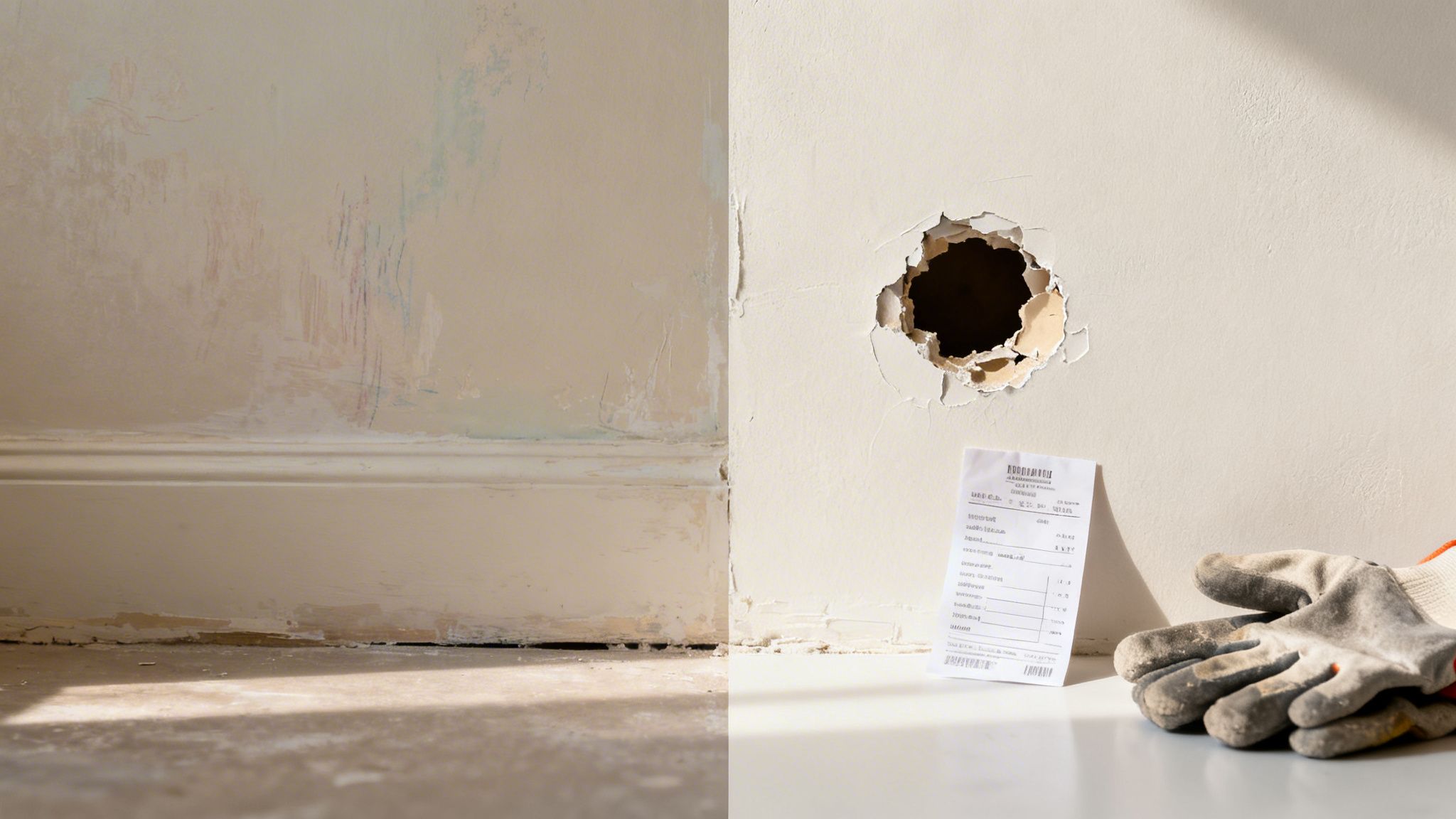
For example, a few scuffs on the wall from furniture or carpets that are slightly worn from being walked on are normal wear and tear. A landlord can't charge you for that. But a giant hole punched through the drywall or a massive wine stain on the rug? That’s damage, and you're on the hook for the repair cost. You can get more details on what's covered in our guide to the Texas Property Code and tenant rights.
If you think your landlord is ignoring these rules, a Texas landlord-tenant lawyer can help you understand your next steps.
What Landlords Can Legally Deduct from Your Deposit
The heart of almost every deposit dispute comes down to one simple question: "Was that deduction fair?quot; While your security deposit is refundable, your landlord does have the right to subtract money to cover certain costs. Knowing what’s legitimate—and what isn’t—is the key to protecting your rights and your money.
The Texas Property Code doesn't give landlords a blank check. The law draws a clear line, preventing them from using your deposit to cover their normal business expenses or to pay for property upgrades on your dime.
Unpaid Rent and Late Fees
This is the most clear-cut deduction. If you move out owing a month’s rent or have any other outstanding rental balance, your landlord can absolutely use the security deposit to cover that debt. This is one of the main reasons security deposits exist.
On top of that, if your lease includes fees for late rent payments and you never paid them, those can often be deducted, too. The key is that these charges must be spelled out clearly in the lease you signed.
Damages Beyond Normal Wear and Tear
This is where things get tricky, and where most arguments happen. A landlord can legally charge you for the cost to repair damages that go beyond "normal wear and tear." But what does that actually look like in the real world?
- Normal Wear and Tear (Not Deductible): This is the minor, unavoidable decline that happens from just living in a place. Think small scuffs on the wall from a sofa, paint that has faded a little from sunlight, or carpets that are a bit worn down in the main walkway. Landlords cannot charge you for these things.
- Actual Damages (Deductible): This is harm caused by carelessness, accidents, or outright abuse. A big hole punched in a wall, a cracked window, deep pet stains on the carpet, or a burn mark on the kitchen counter are all examples. You are responsible for fixing this kind of damage.
Think of it like this: A landlord has to expect to do routine maintenance like repainting walls and steam-cleaning carpets between tenants. They can’t make you pay for their standard turnover costs. But if you cause specific damage—like a hole that needs to be patched and painted over—the cost for that specific repair can be deducted.
The Itemized Deduction List: Your Right to an Explanation
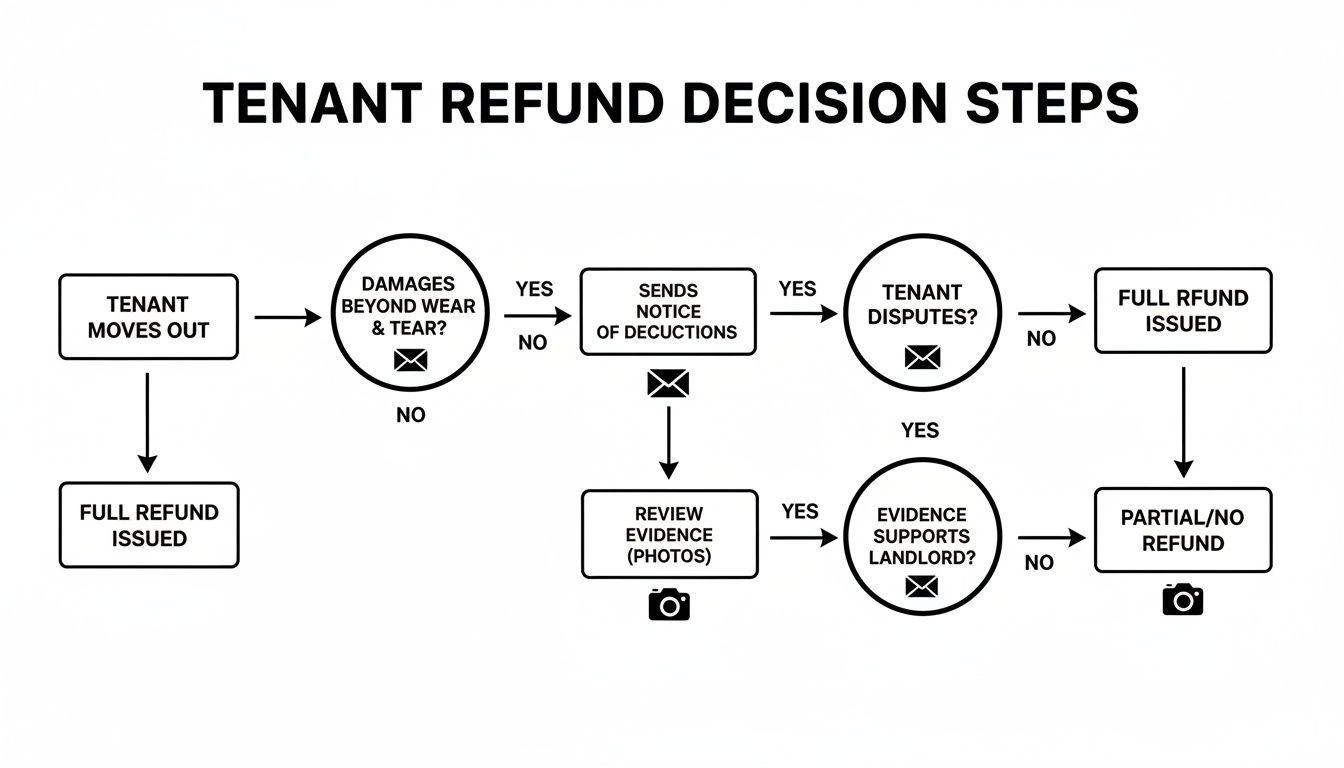
If a landlord keeps any part of your deposit, they can’t just send you a check for less and leave you guessing. Texas Property Code Section 92.104 requires them to give you a written, itemized list of all deductions.
This list isn't a suggestion; it’s the law. It must break down each repair or charge and the exact cost. Vague descriptions like "for cleaning and repairs" are not good enough and could be a red flag that your landlord is acting in bad faith.
Comparing Fair vs. Unfair Deductions
Let’s walk through a real-world scenario to see how this plays out.
Fair Deduction Example: You accidentally rolled your desk chair into the wall, leaving a deep gouge and chipping the paint. Your landlord pays a handyman $150 to patch the drywall and touch up the paint in that spot. This is a fair deduction because it’s a specific repair for damage you caused.
Unfair Deduction Example: After you lived in the unit for three years, the walls have some minor scuffs, and the carpet looks a little tired. The landlord decides it’s time for a full refresh, repainting the entire apartment and replacing all the carpeting. They deduct $2,500 from your deposit. This is improper. Routine painting and carpet replacement are maintenance costs the property owner is responsible for.
If a deduction seems more like a property upgrade than a repair for your damage, it's time to push back. An experienced eviction attorney can give you clarity on your specific situation.
How to Get Your Full Security Deposit Back: A Tenant's Checklist
Getting your full security deposit back isn’t about luck—it’s about having a clear, step-by-step plan. Being proactive and organized is what separates a smooth refund from a drawn-out, frustrating dispute. This checklist walks you through the non-negotiable steps to protect your rights and leave no room for your landlord to wrongfully keep your deposit.
Step 1: Give Proper Written Notice to Vacate
Your path to a full refund starts the moment you decide to move. Check your lease agreement. Most require you to give your landlord written notice that you’re moving out, usually 30 or 60 days ahead of time. A casual conversation or a text message won't cut it.
If you fail to give proper written notice, you're in breach of the lease. That single mistake can give your landlord a legitimate reason to make deductions or even keep your entire deposit. Always send your notice via certified mail with a return receipt. This creates a legal paper trail proving you did your part.
Step 2: Provide a Written Forwarding Address
This is, without a doubt, the most important step you can take. Under Texas Property Code Section 92.107, you are legally required to give your landlord a written forwarding address for your security deposit refund.
If you don't provide this address, the landlord’s 30-day clock to return your deposit never even starts. They are under zero legal obligation to refund your money or send an itemized list of deductions until they have that address in writing.
CRITICAL TIP: Don't just assume your landlord knows where to send the check. Send your new address in a separate, formal written notice—ideally via certified mail. This simple action is what preserves your legal right to fight back if your deposit is wrongfully withheld.
Step 3: Document Everything with Photos and Videos
In a security deposit dispute, evidence is your best weapon. Before you hand over the keys, do a final, thorough walkthrough of the empty rental and document its condition with pictures and videos. This creates a powerful visual record that shuts down false claims of damage.
Be methodical. Don't rush it.
- Take wide shots of every room to prove its overall cleanliness.
- Get close-ups of areas prone to disputes, like walls, carpets, and appliances.
- Record a video walkthrough. Narrate as you go, pointing out the condition of the property. Open closets, turn on faucets, and show that appliances are working.
- Hold up a newspaper or show your phone's lock screen in a few shots to timestamp the evidence.
This documentation is your proof of how you left the property. For more strategies on getting your money back, read our comprehensive guide on how to get your security deposit back.
Step 4: Clean the Property Thoroughly
Your lease says you have to leave the property clean, usually in a condition similar to how you found it. You're not on the hook for normal wear and tear, but you absolutely are responsible for leaving the unit free of dirt, trash, and grime.
If you leave a mess, a landlord can and will legally deduct the cost of professional cleaning.
- Scrub all appliances, inside and out.
- Deep clean the bathrooms and kitchen.
- Sweep, mop, and vacuum all the floors.
- Make sure every last personal belonging and piece of trash is gone.
Taking a few hours to clean properly eliminates one of the most common excuses for deductions and strengthens your case that your security deposit must be returned in full.
How to Recover a Wrongfully Withheld Security Deposit
So, you did everything by the book. You gave proper notice, cleaned the place top to bottom, and provided your forwarding address in writing. But the 30-day clock has run out, and your landlord has either gone silent or sent back a ridiculous list of deductions. You’re not powerless. The Texas Property Code gives you a clear path to get back the money you're owed.
Step 1: Send a Formal Demand Letter
Your first official move is to send your landlord a demand letter. This isn't just another email; it's a formal legal notice that puts them on the defensive.
You absolutely must send it via certified mail with a return receipt requested. This creates a legal paper trail, proving they received your demand and when. Often, just seeing that green certified mail slip is enough to make a landlord pay up, because it signals that you are serious.
Your letter should be firm, professional, and straight to the point. Make sure it includes:
- A clear demand for the return of your full security deposit.
- The exact dollar amount you are owed.
- A reference to your rights under Texas Property Code Chapter 92.
- Your forwarding address (yes, include it again).
- A hard deadline for them to return the money (e.g., 10 business days).
To make sure yours is effective, you can find more detailed guidance on how to write a formal demand letter in Texas.
Step 2: File a Lawsuit in Justice Court
If your landlord ignores your demand letter, it’s time to take them to court. Your next stop is typically a Justice of the Peace Court, what most people call small claims court. This system is designed for everyday people to resolve disputes without getting tangled in expensive legal battles. Understanding how to file court documents is the next critical step. You'll need to fill out a petition, file it with the correct court precinct, and then have your landlord formally "served" with the lawsuit papers.
When your court date arrives, you'll present your case to the judge. This is where all that evidence you gathered becomes gold. Be ready to show the judge everything:
- A copy of your lease agreement.
- The certified mail receipt proving you sent your forwarding address.
- The certified mail receipt for your demand letter.
- All the move-out photos and videos you took.
- Any emails or texts with the landlord about the deposit.
The judge will hear both sides and make a decision based on Texas law and the facts.
Understanding "Bad Faith" and Its Stiff Penalties
Texas law does not look kindly on landlords who knowingly and dishonestly keep a tenant's deposit. This is legally known as acting in “bad faith.”
A landlord is automatically presumed to have acted in bad faith if they don’t either return the deposit or provide a written, itemized list of deductions within 30 days of you moving out and providing a forwarding address.
If a judge finds your landlord acted in bad faith, the penalties are severe. The law allows the court to order the landlord to pay you:
- Three times the amount of the deposit that was wrongfully withheld.
- A $100 statutory penalty.
- Your reasonable attorney's fees and all court costs.
Scenario: Your landlord illegally kept your $1,500 deposit. A bad faith finding could force them to pay you $4,500 (3 x $1,500), plus the $100 penalty and your legal fees. This is how seriously the law protects tenants from being taken advantage of.
These penalties exist to stop landlords from treating your security deposit like their personal slush fund. If you even suspect your landlord is wrongfully withholding your money, it's a good time to speak with a Texas landlord-tenant lawyer.
Frequently Asked Questions About Texas Security Deposit Law
The rules around security deposits can feel confusing. Let's clear up some of the most common questions we hear from tenants and landlords so you can understand your rights and act with confidence.
Can my landlord charge me for normal wear and tear?
No. Texas law is very clear on this: landlords are forbidden from deducting money from your deposit for “normal wear and tear.” Faded paint, minor scuffs from furniture, and worn carpet in hallways are all examples of normal wear and tear. These are the costs of doing business for a landlord. They can only charge you for actual damages from negligence or abuse, like large holes in a wall or a shattered window.
What if I forgot to give my landlord a forwarding address?
This is a critical misstep. If you don't provide your landlord with a forwarding address in writing, their 30-day clock to return your deposit never starts. They have no legal duty to send you the deposit or an itemized list of deductions until you've given them that address. Forgetting this step seriously weakens your position. Send your new address by certified mail right away to create a paper trail.
Beyond the security deposit, comprehensive documentation for all financial transactions is a cornerstone of responsible property management. Landlords can find resources like these essential rent receipts sample templates for landlords to help maintain clear records.
How long does a landlord have to sue me for damages?
A landlord generally has four years to sue a tenant for damages that go beyond the security deposit—this falls under the statute of limitations for a breach of contract. But don’t mix this up with the security deposit timeline. That four-year window is completely separate from the strict 30-day deadline they have to either refund your deposit or explain why they’re keeping it.
My landlord is not responding. What is my first step?
If your landlord has gone silent and the 30-day window has closed, your first official move is to send a demand letter. This must be sent via certified mail with a return receipt requested. This creates an undeniable legal record that they received your demand and often prompts them to act. If they still ignore you, your next step is usually filing a lawsuit in a Justice of the Peace court. An experienced Texas landlord-tenant lawyer can be an invaluable guide through this process.
If you need help with an eviction, lease issue, or rental dispute, contact The Law Office of Bryan Fagan, PLLC for a free consultation today.