Dealing with a landlord dispute or eviction can be stressful—but understanding your rights under Texas law can make all the difference. If you're tangled up in a property dispute, you may have heard the term lis pendens. A notice of lis pendens is a formal, public announcement that a specific piece of real estate is part of a lawsuit.
Think of it as a legal "red flag" planted firmly on the property's title. Its job is to warn potential buyers, banks, and anyone else that a court case is in motion and could dramatically change who owns the property. The primary goal is to protect a claimant's potential interest by stopping the property from being sold or refinanced while the lawyers are still fighting it out.
Understanding What a Notice of Lis Pendens Means for You

Dealing with a property dispute is stressful enough. When unfamiliar legal notices start showing up, the anxiety can skyrocket. "Lis pendens" is Latin for "pending suit," and when it appears in real estate records, it brings serious consequences for your property rights. It’s a powerful document that can effectively freeze any transaction involving that piece of land or building.
Whether you're a landlord facing a challenge to your title or a tenant who believes you have an ownership claim, understanding how this document works is critical to protecting your rights.
The Core Purpose of a Lis Pendens
The main job of a lis pendens is to provide constructive notice. This isn't just a friendly heads-up. It’s a legal concept meaning that once the notice is filed with the county clerk, the entire world—including potential buyers, banks, and title companies—is officially considered aware of the lawsuit. It's all about protecting the integrity of the court's process.
Real-World Scenario: Let’s say a tenant has a valid purchase option in their lease. But the landlord decides to ignore it and tries selling the property to someone else. The tenant can file a lawsuit and a lis pendens. This move instantly alerts the new potential buyer that the tenant has a pre-existing claim, stopping the landlord from selling the property out from under the tenant.
Without a lis pendens, a property owner could just sell a disputed property in the middle of a lawsuit. The new buyer, completely in the dark about the legal fight, could claim they own it free and clear. This would throw a wrench into the original claimant’s case, possibly even making their legal rights worthless.
A lis pendens is absolutely critical in several situations involving real property claims:
- Protecting a Claim: It makes sure that if you win your lawsuit, the property is still there for you to actually claim.
- Preventing Fraudulent Transfers: It stops a property owner from quickly selling or "gifting" the property to a friend or relative just to dodge a judgment.
- Securing Your Place in Line: It officially establishes the priority of your claim. Any other claims or liens that pop up after your notice is filed will be behind yours.
Understanding what a notice of lis pendens is and why it's used is the first step toward protecting your property rights. It’s a legal tool designed to hold everything in place until a court can deliver a final ruling.
The Legal Power of a Lis Pendens on Property Titles

A lis pendens is far more than just a piece of paper filed away in a courthouse. Think of it as a legal roadblock, powerful enough to stop most property transactions dead in their tracks. Once it’s filed in the Texas county records where the property sits, its impact is immediate and serious. For anyone with a claim in a high-stakes property dispute, it's one of the strongest tools available.
This recorded notice creates what the law calls constructive notice. It’s a critical concept. It means that the entire world—including any potential buyers, lenders, or investors—is officially on notice about the pending lawsuit. No one gets to play dumb and later claim they were an "innocent purchaser" who had no idea a legal battle was brewing over the property.
Clouding the Property Title
The most direct effect of a lis pendens is that it “clouds” the property’s title. Imagine the title is a clear, sunny sky, representing undisputed ownership. A lis pendens is like a massive, dark storm cloud that suddenly rolls in, signaling trouble, uncertainty, and risk.
Because a clear title is the bedrock of any real estate deal, this cloud makes it nearly impossible for the current owner to sell the property, refinance it, or even transfer ownership. Title insurance companies will almost always refuse to issue a policy for a property with an active lis pendens, effectively freezing the asset until the court case is over.
This isn’t just about creating a headache for the owner; it's about fairness. The whole point is to prevent a property owner from selling the asset out from under someone who has a legitimate claim to it. It preserves the very thing the lawsuit is about. This is especially vital in cases where simple money damages just won't cut it to make the wronged party whole.
While similar in some ways, it's important not to confuse this with a Texas Abstract of Judgment. An abstract of judgment is filed after a lawsuit is won to secure a debt against someone's property, while a lis pendens is filed at the beginning of a lawsuit to protect a direct claim to the property itself.
A Common Law Tool Now Written into Law
The idea behind a lis pendens—which literally means "pending suit" in Latin—isn't some new legal invention. It has deep roots in common law, created centuries ago to solve a recurring problem: property owners selling off land to unsuspecting buyers in the middle of a lawsuit.
Today, this old doctrine has been formalized. Approximately forty states have written it into their statutes, making it one of the most widely recognized and powerful property notice tools in the entire country. Understanding these legal foundations is the first step in seeing just how much power a notice of lis pendens holds over your property rights.
What the Texas Property Code Says About Using a Lis Pendens
A lis pendens isn't a legal sledgehammer you can use for any argument with a property owner. It’s a very specific tool reserved for lawsuits that directly challenge who owns a piece of real estate or has a valid claim to it.
A huge mistake people make is trying to file one just because someone owes them money. That's a fast track to getting your lis pendens thrown out and potentially facing legal penalties for clouding the property's title improperly.
So, when is filing a lis pendens the right move? It all comes down to this: the lawsuit must be about establishing or clearing up an interest in the property itself. If your goal is simply to get a cash payment from the owner, a lis pendens isn't the way to go.
Common Scenarios for a Lis Pendens
Let's look at some real-world scenarios where a lis pendens is not only appropriate but essential for protecting your rights:
- Breach of a Sales Contract: Imagine you've signed a contract to buy your dream home. Suddenly, the seller gets a higher offer and tries to back out. You can sue them for "specific performance" (to force the sale) and immediately file a lis pendens. This stops them from selling the house to someone else while your lawsuit is pending.
- Enforcing a Purchase Option: Let's say your lease includes a clause giving you the option to buy the rental property. When you try to exercise that right, the landlord refuses to sell. By suing to enforce the option and filing a lis pendens, you put the world on notice and prevent the landlord from transferring the property to anyone else.
- Disputes Over a Will or Inheritance: After a relative passes away, family members might discover that a property they were supposed to inherit was improperly transferred to someone else. A lawsuit to contest the will or deed, combined with a lis pendens, freezes the property's status until a judge can determine the rightful owner.
- Fraudulent Deeds or Forged Signatures: This is a property owner's nightmare. Someone forges your signature on a deed and files it, effectively trying to "steal" your property on paper. You would file a lawsuit to clear the title and record a lis pendens right away to warn everyone that the deed is a fake and is being legally challenged.
- Foreclosure Proceedings: This is one of the most common uses. When a lender starts foreclosure, they file a lis pendens to inform all other potential buyers and creditors that a foreclosure action is in progress. This protects the lender's place in line to reclaim the property.
The 2008 foreclosure crisis was a stark reminder of how frequently these notices are used. In May of that year alone, a staggering 261,255 foreclosure actions were filed across the U.S. This massive spike was directly tied to a surge in lis pendens filings as lenders scrambled to secure their claims on properties. You can read about the effects of lis pendens during that period to see the historical impact.
In every one of these examples, the heart of the lawsuit isn't just about money—it's about who has the legal right to the property. That's the key distinction that makes a lis pendens a valid and powerful tool. For co-owners tangled in a dispute, this process is also critical during a legal separation of property; you can learn more about a partition action in our guide.
How to Properly File a Notice of Lis Pendens in Texas
If you have a legitimate claim on a piece of real estate, filing a lis pendens is a critical step to protect your rights while your lawsuit proceeds. But this isn't a DIY project. The process is governed by the Texas Property Code, and you must follow every step exactly.
Get it wrong, and your filing can be challenged and thrown out—leaving the property vulnerable and potentially sinking your claim before it even gets started.
It's also crucial to understand that a lis pendens isn't a standalone tool. You can't just file one because you're in a disagreement. It must be tied to an active lawsuit. You must first start a lawsuit that makes a direct claim to the property’s title.
Step-by-Step Information for Filing a Lis Pendens
The Texas Property Code § 12.007 lays out the exact requirements. While we can break down the steps, the precision demanded by the law shows why having an experienced Texas landlord-tenant lawyer in your corner is so important. One slip-up can be costly.
Here’s the step-by-step process for resolving the issue:
- File a Lawsuit: This is the non-negotiable first step. You have to file a lawsuit in the correct Texas court that directly challenges the title or ownership of the real property.
- Draft the Notice: Next, your attorney will prepare a formal written notice of lis pendens. This document must be perfect and must include the case style (who is suing whom), the case number, the court where the suit is pending, the names of everyone involved, and a complete legal description of the property.
- Sign and Notarize: You or your attorney must sign the notice. This isn't just a signature; it's a legal certification that everything in the document is true and that you aren't filing it in bad faith. The signature must be notarized.
- File with the County Clerk: The final step is taking the signed and notarized notice to the county clerk’s office in the county where the property is located. The clerk records it in the official property records, creating the public "constructive notice" that officially clouds the title.
This infographic shows a few common scenarios that might lead to someone filing a lis pendens.
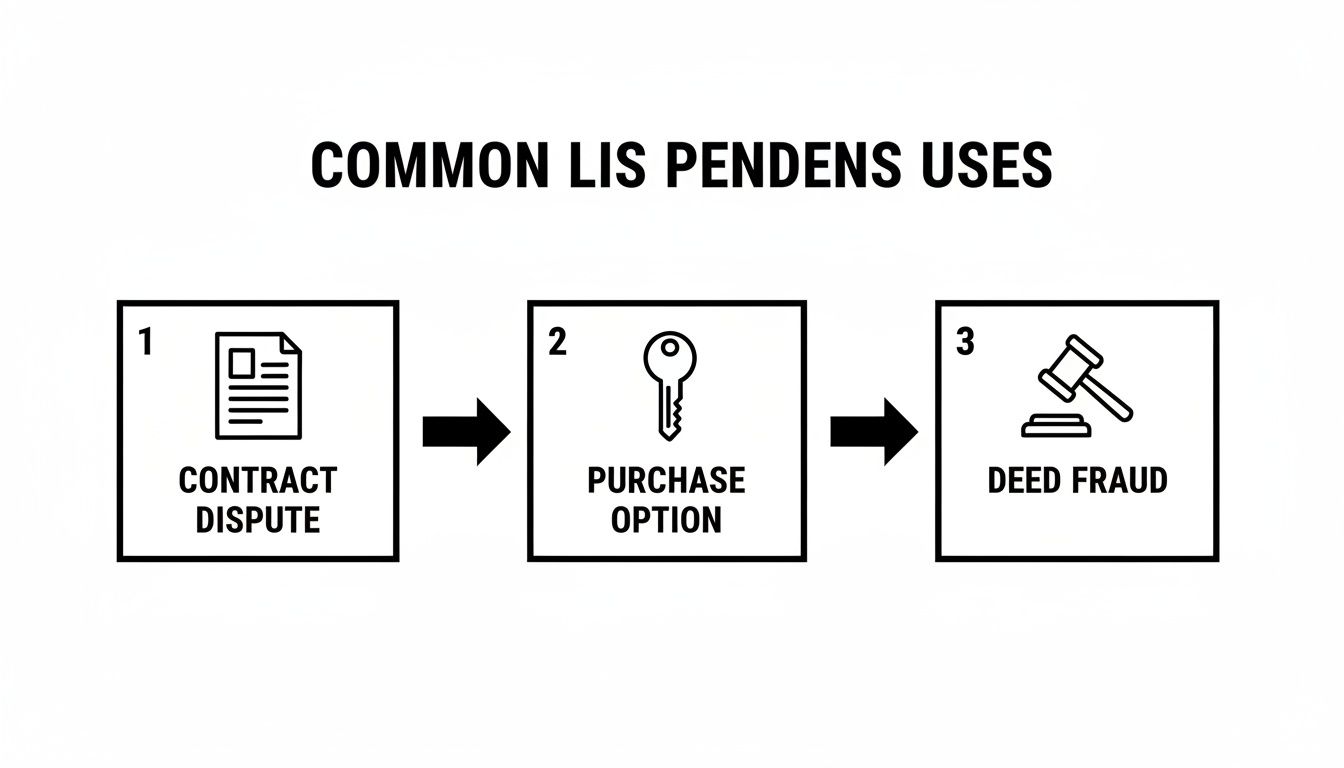
As you can see, every situation—from a purchase contract gone bad to a fight over a fraudulent deed—involves a direct legal challenge to who owns the property. That’s what makes a lis pendens the right tool for the job.
Lis Pendens Filing Checklist
To keep things clear, here’s a quick checklist summarizing the essential steps and information needed to properly file a lis pendens in Texas.
| Step | Action Required | Key Details |
|---|---|---|
| 1. Initiate Lawsuit | File a formal petition in the appropriate court. | The lawsuit must assert a claim to real property title. |
| 2. Draft the Notice | Create the written notice of lis pendens. | Include case style, case number, court, party names, and the full legal property description. |
| 3. Sign & Certify | The filer or their attorney must sign the notice. | This signature must be notarized, affirming the filing is in good faith. |
| 4. Record the Notice | File the document with the county clerk. | This must be done in the county where the property is physically located. |
Following this checklist helps ensure your filing is sound, but remember, the nuances of the law often require professional guidance to avoid missteps.
Precision Is Non-Negotiable
A simple mistake, like an incorrect legal description or forgetting to properly serve the other party, can give them grounds to have your lis pendens expunged (removed). For instance, long before you even see a courtroom, you might need to send a formal warning shot to the other side. You can learn more about structuring that initial communication by reading our guide on the Texas demand letter.
If your lis pendens is successfully challenged, you don’t just lose that protection—you could also be on the hook for damages. The stakes are too high to leave it to chance.
How to Remove a Wrongful Lis Pendens from Your Property
So, what happens when someone slaps a lis pendens on your property without a legitimate reason? This legal notice is powerful, but that power can be abused, leaving you with a cloud on your title and a halt to any plans you had for your property.
Fortunately, Texas law doesn’t leave you defenseless. You have a way to fight back and protect your property rights.
If you believe a lis pendens was filed improperly, you don’t have to wait for the lawsuit to play out. Your primary weapon is a legal action called a motion to expunge. This is a formal request you file with the court, asking a judge to step in and officially cancel the notice.
Grounds for Expunging a Lis Pendens
You can't get a lis pendens thrown out just because it's inconvenient. You need to prove to the court that it was filed improperly based on specific legal grounds. The Texas Property Code § 12.0071 lays out a clear path for property owners to challenge a wrongful filing.
Common reasons a court will grant a motion to expunge include:
- No Real Property Claim: This is a big one. The lawsuit that triggered the lis pendens has nothing to do with claiming actual ownership of the property. For example, if someone sues you for an unpaid personal loan and files a lis pendens on your home, that’s improper. A simple money dispute doesn't give them a direct claim to your property's title.
- Failure to Prove the Claim: The person who filed the notice can't convince the court that their claim has probable validity. They need to show some real evidence that their lawsuit has a reasonable chance of succeeding. If they can't, the lis pendens has to go.
- Procedural Errors: The person who filed the notice didn't follow the strict rules. Maybe they failed to serve you with the notice correctly or made other critical mistakes in the document itself. The process has to be followed to the letter.
Penalties for a Fraudulent Filing
Texas law takes the abuse of a lis pendens very seriously. If someone knowingly files a fraudulent one against your property, the consequences can be severe. This isn't just about getting the notice removed; it's about holding them accountable for the damage they caused.
Under the law, a person who files a fraudulent lis pendens can be held liable for damages. This can include your attorney's fees, court costs, and any financial losses you suffered because the cloud on your title prevented you from selling or refinancing the property.
This provision is designed to stop people from using a lis pendens as a bullying tactic to pressure property owners in disputes where it has no business being. It gives you, the wronged property owner, a powerful tool to seek justice and clear your name—and your title.
An experienced eviction attorney can help you figure out if a filing is fraudulent and walk you through the entire process of seeking damages and getting your property free and clear.
Why You Need a Texas Property Attorney for Lis Pendens Issues
Trying to handle a lis pendens on your own is a high-stakes gamble you can’t afford to lose. Whether you’re the one filing it to protect your rights or you’ve just discovered one on your property, a single misstep can spiral into a financial nightmare. This is exactly why getting an experienced Texas property lawyer involved isn't just a good idea; it's your most critical move.
An attorney makes sure every action you take is built on solid legal ground. If you're filing a lis pendens, they’ll first confirm you have a legitimate claim to the property. Then, they’ll draft and record the notice according to the Texas Property Code, shutting down any attempts to get it thrown out on a technicality.
Protecting Your Rights as a Property Owner
Finding a notice of lis pendens filed against your property can feel like a punch to the gut. Suddenly, your biggest asset is frozen. This is where a sharp Texas landlord tenant lawyer becomes your best defense. They can analyze the claim and figure out quickly if it's wrongful, fraudulent, or invalid.
Once they have the facts, your attorney can move quickly to protect you by:
- Building Your Case to Expunge: They’ll gather the evidence and craft the legal arguments needed to file a motion to expunge, showing the court exactly why the lis pendens has no business being on your title.
- Going After Damages: If someone filed the lis pendens maliciously or without a valid claim just to cause you trouble, your lawyer can help you fight back. We’re talking about pursuing them for damages, including your attorney's fees and any financial hits you took because of their actions.
The law surrounding a notice of lis pendens is a minefield of deadlines and technical rules. Having a calm, confident expert from The Law Office of Bryan Fagan, PLLC in your corner means your rights are fiercely protected, whether you’re on offense or defense.
If you’re caught in a lis pendens battle, lease dispute, or any other rental issue, don’t wait. Contact The Law Office of Bryan Fagan, PLLC for a free consultation today.
Common Questions About Lis Pendens in Texas
Property law can feel like a maze, filled with unfamiliar terms and confusing rules. When you’re dealing with a dispute, hearing a term like "lis pendens" can be intimidating. To clear things up, we've put together straightforward answers to the questions our clients ask most.
How Long Does a Lis Pendens Stay on a Property in Texas?
A lis pendens isn't forever, but it lasts as long as the lawsuit does. It remains in effect for the entire time the case is active in court. The notice only disappears once the legal battle is completely over—whether that’s through a final court judgment, a settlement agreement between the parties, or the case being dismissed.
If the person who filed the lis pendens wins, the judge's final order will sort out the property's new ownership. If they lose, the lis pendens is released, and the cloud it created on the property’s title is finally lifted.
Can I File a Lis Pendens for a Security Deposit Dispute?
Absolutely not. This is a common mistake that can get you into serious trouble. A lis pendens is only for lawsuits that directly challenge the ownership or title to a piece of real estate. A fight over a security deposit is a claim for money damages, not a claim to own the rental property itself.
Important: Filing a lis pendens in a security deposit case is wrongful and abusive. A court could order you to pay the landlord's attorney fees and other financial damages for improperly clouding their title. Don't risk it.
What Is the Difference Between a Lis Pendens and a Lien?
It’s easy to mix these up, but they serve two very different functions. Think of a lis pendens as a warning sign. It simply gives public notice that there’s a lawsuit going on that could change who owns the property. It doesn't create a debt; it just alerts everyone to a potential ownership fight.
A lien, however, is a direct legal claim against a property to secure payment of a debt. A mortgage from a bank or a mechanic's lien from an unpaid contractor are perfect examples. A lien gives a creditor the right to get paid out of the property's value. A lis pendens just signals that an ownership dispute is unresolved.
If you need help with an eviction, lease issue, or rental dispute, contact The Law Office of Bryan Fagan, PLLC for a free consultation today.