Dealing with a landlord dispute or eviction can be stressful—but understanding your rights under the Texas Property Code can make all the difference. The law, specifically Chapter 92, gives every renter in Texas a core set of protections—things like the right to a safe home, privacy from your landlord, and the freedom to stand up for yourself without fear of retaliation.
When you understand these rules, you can handle problems with confidence and protect your rights. This guide will walk you through what the Texas Property Code means for you.
Your Foundational Rights Under the Texas Property Code
Navigating your relationship with a landlord can feel overwhelming, especially when something goes wrong. But you're not on your own. Texas law provides a strong safety net of rights designed to protect you from the day you sign your lease to the day you move out.
Think of the Texas Property Code as the official rulebook for renting. Both you and your landlord have to play by these rules. Chapter 92 is the heart of it all—it's the section dedicated entirely to the landlord-tenant relationship and it lays out the basic protections every tenant deserves.
Core Protections for Every Texas Renter
Understanding these core rights is the first step toward advocating for yourself. These aren't just suggestions or "best practices"—they are non-negotiable legal requirements that your landlord is bound to follow.
Here are the fundamental rights guaranteed to you under Texas law:
- The Right to a Safe and Habitable Home: Your landlord has a legal duty to make repairs for any condition that seriously affects your physical health and safety. This is often called the "warranty of habitability," and it's one of the most important tenant rights you have.
- The Right to Quiet Enjoyment: This means you have the right to live in your home without your landlord constantly showing up unannounced or causing unreasonable disruptions. It’s your space, and you have a right to privacy.
- Protection Against Retaliation: A landlord cannot legally evict you, raise your rent, or cut off services just because you asked for a necessary repair or exercised another legal right. The law protects you from being punished for standing up for yourself.
- Security Deposit Protections: The code sets out very specific rules for handling your security deposit. The most important rule? Your landlord has a strict 30-day deadline to return it (or provide an itemized list of deductions) after you move out.
These rights are automatically part of your rental agreement, even if they aren't spelled out in the lease itself. To get a better sense of what should and shouldn't be in your contract, you can get more details on Texas lease agreement laws and what they mean for you.
To make these protections easier to understand, here's a quick breakdown:
Key Tenant Rights Under Texas Property Code Chapter 92
| Tenant Right | What It Means for You | Governing Code Section |
|---|---|---|
| Right to a Habitable Home | Your landlord must fix problems that pose a threat to your health or safety, like a leaky roof or a broken heater. | Tex. Prop. Code § 92.052 |
| Right to Quiet Enjoyment | You have a right to peace and privacy in your rental without unreasonable landlord intrusions. | Implied in Texas Leases |
| Protection from Retaliation | Your landlord cannot punish you (e.g., evict you) for requesting repairs or reporting code violations. | Tex. Prop. Code § 92.331 |
| Security Deposit Rules | Your landlord has 30 days after you move out to refund your deposit or give you a written list of damages. | Tex. Prop. Code § 92.103 |
This table gives you a bird's-eye view, but knowing these rights is the foundation for protecting yourself when things go sideways.
In essence, the Texas Property Code acts as a shield. It ensures that your home is more than just a property—it's a place where your safety, health, and privacy are legally protected.
Understanding these foundational principles helps you recognize when an issue is more than just a minor annoyance; it might be a direct violation of your rights. This guide will walk you through each of these key areas, giving you the practical, step-by-step information you need to take action.
What the Texas Property Code Says About Repairs
As a tenant, you have a fundamental right to a safe and livable home. It's not just a nice-to-have; it's a core promise baked into every Texas lease, whether it’s written down or not.
This concept is legally known as the "implied warranty of habitability." It’s a powerful protection ensuring your landlord provides a home that is safe, sanitary, and fit for human habitation.
This duty is defined in the Texas Property Code, Section 92.052. The law requires landlords to repair any condition that "materially affects the physical health or safety of an ordinary tenant." This isn't about small cosmetic flaws like a scuffed wall. It’s about serious problems that put you at risk.
What Makes a Home Uninhabitable?
So, what does this look like in the real world? While every case is different, some issues almost always trigger a landlord's legal duty to make repairs. If you're dealing with any of the following, you need to act.
- Serious Plumbing Failures: Imagine your only toilet won't flush, or you have no hot water for days. These are not minor inconveniences; they are health hazards.
- Broken HVAC Systems: A busted air conditioner in the middle of a Texas summer isn't just uncomfortable—it's dangerous. The same goes for a heater that fails during a winter freeze.
- Pest Infestations: We're not talking about a few ants. Widespread infestations of roaches, bedbugs, or rodents are the landlord's problem to solve, as long as you haven't caused the issue through poor housekeeping.
- Major Structural Problems: A leaking roof, broken windows that compromise security, or faulty electrical wiring are all clear examples of conditions the landlord must fix.
- Mold Growth: If mold appears because of a leak or other problem the landlord should have already addressed, they are responsible for fixing the source and cleaning up the mold.
Ignoring these problems isn't an option. They can jeopardize your health and safety, and Texas law provides a clear path to get them fixed.
How to Properly Request a Repair
Here’s where a lot of tenants get tripped up. Just telling your landlord about a problem over the phone isn't enough to legally protect you. You have to follow a specific process to create a paper trail and formally trigger their duty to act.
Follow these steps exactly:
- Be Current on Your Rent: This is critical. Your landlord's legal obligation to make repairs only kicks in if you're paid up on rent when you give notice.
- Give Notice in Writing: You must notify your landlord of the problem in writing. While an email or text is a decent start, the best way to protect your rights is by sending the notice via certified mail with a return receipt requested. This gives you undeniable proof that they received your complaint.
- Clearly Describe the Issue: Your letter should be specific. Detail the problem and explain exactly how it impacts your health or safety. For instance, "The broken lock on the front door creates a serious security risk for my family."
- Document Everything: Keep copies of every letter, email, text, photo, and video related to the problem. If you have a phone call, log the date, time, and a summary of what was discussed.
Under Texas Property Code § 92.056, after receiving proper notice, your landlord gets a "reasonable" amount of time to make the repair. What’s “reasonable”? It depends on the issue, but for many repairs, a landlord who fails to act within a week could be violating your rights.
If your landlord still ignores you or flat-out refuses to fix the problem, you have powerful legal options. But don't just withhold rent or try a "repair and deduct" on your own—these remedies have very strict legal requirements. A single misstep could expose you to eviction.
When you're at a stalemate, you can learn more by reading our guide on how to file a complaint against your landlord in Texas. The smartest move is to speak with a Texas landlord-tenant lawyer to understand your rights and build a strategy that works.
How to Handle Security Deposit Issues

Think of your security deposit as your money, held in trust. It's not the landlord's personal fund—it's a safety net meant to cover damages that go beyond what’s considered normal use.
Because of this, the Texas Property Code is extremely strict about how landlords must handle it. Knowing these rules is the first step to protecting your money when your lease ends.
The single most important rule is the 30-day deadline. Under Texas Property Code § 92.103, your landlord has exactly 30 days from the day you move out to either return your full security deposit or give you a written, itemized list of deductions.
But that 30-day clock doesn’t start ticking until you take one critical step.
The Forwarding Address Rule
Your landlord isn't legally required to do anything with your deposit until you provide a written forwarding address. This isn’t just a friendly suggestion; it’s a non-negotiable requirement under Texas Property Code § 92.107.
Verbally telling your landlord where you're moving isn't good enough. You have to put your new address in writing to officially trigger the 30-day countdown. The best way to do this? Send it via certified mail. This creates a paper trail and legal proof that you did your part.
Normal Wear and Tear vs. Actual Damage
This is where the real fights over security deposits usually start. A landlord can legally keep part of your deposit to pay for damages you caused, but they cannot charge you for "normal wear and tear."
So, what's the difference?
- Normal Wear and Tear: This is the natural, minor decline of a property just from being lived in. Think faded paint on the walls, lightly scuffed floors from walking, or small indentations in the carpet where your couch sat.
- Actual Damage: This is different. It’s harm caused by negligence, carelessness, or abuse. We're talking about big holes punched in the wall, deep gouges in the hardwood floors, broken appliances, or significant pet stains on the carpet.
A landlord can’t use your deposit to fund their routine maintenance or pay for upgrades. Their responsibility is to cover the costs of normal aging; yours is to pay for things you or your guests actually broke.
If a landlord keeps any portion of your deposit, they are required by law to provide a detailed, written list explaining every single deduction. Vague justifications like "cleaning fees" or "general repairs" without specific costs attached won't hold up.
Steps to Take if Your Deposit Is Wrongfully Withheld
If that 30-day deadline comes and goes without your money or an itemized list, your landlord might be acting in "bad faith." And when that happens, the law gives you some serious leverage.
Here’s exactly what you need to do to fight back:
- Send a Formal Demand Letter: Your first official move is to send a demand letter via certified mail. In the letter, state that the 30-day period has expired and demand the immediate return of your full deposit. Make sure to reference the Texas Property Code and include your forwarding address again, just in case.
- Document Everything: Keep a copy of the letter and your certified mail receipt. This paperwork is your most powerful evidence if things escalate.
- Consider Small Claims Court: If your landlord still ignores you, your next stop is Justice Court (often called small claims court). Under Texas Property Code § 92.109, a landlord who withholds a security deposit in bad faith can be on the hook for three times the amount of the deposit wrongfully withheld, plus your attorney’s fees and court costs.
That penalty is designed to be a powerful deterrent against landlords who try to illegally pocket their tenants' money. Navigating this process alone can be daunting, and having an experienced Texas landlord-tenant lawyer in your corner can change the entire outcome.
Can My Landlord Come In Whenever They Want?
Even though you don't own the property, you have a fundamental right to what the law calls "quiet enjoyment." It's a fancy term for a simple idea: you have the right to live peacefully in your home, with a reasonable expectation of privacy.
So, can your landlord just pop in unannounced? The answer is no.
What surprises many Texas tenants is that the Texas Property Code doesn’t actually set a statewide, mandatory notice period for entry. Instead, the rules for when and how your landlord can enter are almost always spelled out in your lease agreement. This is why it’s absolutely critical to read that document cover to cover before you ever sign.
When Is It Legal for a Landlord to Enter?
Most standard Texas leases have a clause titled "entry by landlord" or something similar. This section is your roadmap—it lays out the specific, legitimate reasons your landlord is allowed to come into your home.
Here are the most common reasons a landlord can legally enter your rental:
- Emergencies: If a pipe bursts, a fire breaks out, or another urgent disaster is unfolding, your landlord can enter without any advance notice. This is to protect the property and the safety of other residents.
- Repairs and Maintenance: To fix something you've requested or to handle necessary upkeep, the landlord almost always has to give you notice. How much notice? Whatever your lease says.
- Showings: If you're moving out or the owner is selling the property, the landlord can show the unit to potential renters or buyers. Again, this usually requires prior notice.
- Inspections: Your lease might give the landlord the right to conduct periodic inspections to check for damages or make sure you're not violating the lease terms.
The Bottom Line: Your lease is the rulebook. If it says your landlord must give 24-hour written notice before entering for a non-emergency reason, that’s a legally binding contract. A landlord who ignores that is breaking the lease.
What to Do When a Landlord Crosses the Line
A landlord who shows up constantly without notice or comes in for reasons not covered in the lease is overstepping their authority. This isn't just annoying—it can feel like harassment and is a serious violation of your tenant rights.
For example, a landlord texting you to say a plumber needs to fix a leak tomorrow is perfectly legal, assuming your lease allows for it. But a landlord who drops by every other day just to "check on things"? That's not a valid reason and it violates your right to quiet enjoyment.
If you feel your landlord is improperly entering your home, here’s what you need to do:
- Check Your Lease: First, double-check exactly what your lease says about landlord entry and required notice.
- Send a Formal Letter: If the landlord is violating the terms, send them a written notice via certified mail. In the letter, politely reference the specific lease clause and state that you expect them to follow it from now on.
- Document Everything: Keep a running log of every single unannounced or improper entry. Note the date, the time, and who was there. If someone else witnessed it, even better.
If the unwanted visits continue after you’ve put them on notice in writing, it’s time to get legal help. An experienced Texas landlord-tenant lawyer can step in to enforce your lease and protect your right to privacy.
Protecting Yourself from Landlord Retaliation
You should never be punished for exercising your legal rights. It’s a simple, fair idea, and the Texas Property Code backs it up completely. When you ask for essential repairs or stand up for what’s right, the law is supposed to be your shield against a landlord trying to get even.
This protection is the backbone of texas property code tenant rights. It’s what gives you the confidence to demand a safe, livable home without worrying that your landlord will turn around and try to kick you out for it.
What Is Landlord Retaliation in Texas?
In simple terms, retaliation is any negative action a landlord takes against you because you exercised a legal right. It’s a landlord’s way of punishing you for being a tenant who knows and asserts their rights.
Under Texas Property Code § 92.331, a landlord is legally forbidden from coming after you for things like:
- Requesting necessary repairs they’re already obligated to make.
- Filing a good-faith complaint with a government agency about a code violation.
- Organizing or joining a tenant union to advocate for better conditions.
- Using any other right you have under your lease or the law.
Here's where it gets powerful: if you take one of these actions and your landlord hits you with a punitive measure within six months, the law automatically presumes their move was retaliatory. This gives you a significant advantage if you have to go to court.
Common Examples of Retaliatory Behavior
Sometimes retaliation is obvious, but other times, it's more subtle. Knowing the warning signs is the first step to protecting yourself.
Watch out for these classic moves:
- Sudden Eviction: Getting an eviction notice right after you submitted a certified letter about that broken heater.
- Surprise Rent Hikes: Your rent suddenly jumps way above market rate just after you called code compliance.
- Cutting Off Services: Suddenly, your guaranteed parking spot is gone, or the landlord stops paying a utility bill they are responsible for.
- Refusing to Renew Your Lease: While landlords usually don't need a reason not to renew, doing so right after you’ve asserted your rights can be a form of retaliation.
- Harassment and Intimidation: A pattern of threats, nasty comments, or a landlord entering your apartment without notice to make you feel unsafe.
How to Build Your Case Against Retaliation
Proving your landlord’s motive is the hardest part. They’re not going to send you a text saying, "I'm evicting you because you complained." This is why documentation isn't just a good idea—it's everything.
If you even suspect retaliation, you need to build a timeline that connects their action to your protected right.
A Step-by-Step Guide to Documenting Everything
- Keep a Paper Trail: Save every single email, text, and letter. When you send formal requests, use certified mail and keep the receipt.
- Log Every Conversation: If you talk on the phone or in person, immediately write down the date, time, and a summary of what was said.
- Photos and Videos Are Your Best Friend: Take pictures of the original problem (the mold, the leaky roof) and any retaliatory actions, like that "Notice to Vacate" taped to your door.
- Find a Witness: If a neighbor saw the landlord yelling at you or can vouch for the state of the property, ask them for a short, written statement.
Strong documentation transforms a "he said, she said" argument into a solid case backed by undeniable proof. It is your single most powerful weapon.
Texas law is clear: landlords cannot punish you for asking for a safe home. But even with these strong protections, proving retaliation can be tough, especially when a landlord just decides not to renew a lease instead of filing a formal eviction. This in-depth analysis of rental property issues in Austin dives deeper into the challenges tenants face.
If you believe you're a victim of landlord retaliation, you don't have to fight this alone. An experienced eviction attorney can help you figure out your next steps, which could include suing the landlord for damages or stopping an illegal eviction in its tracks.
What Happens During the Texas Eviction Process
Getting an eviction notice is one of the most stressful things a renter can go through. The sudden fear and confusion are completely normal, but it’s critical to remember this: an eviction is a formal legal process. Your landlord can't just change the locks or throw your things out—they must follow a specific set of rules, and you have rights every step of the way.
An eviction isn’t just an angry text message. It's an actual lawsuit, and knowing how the steps work is the first step toward defending yourself effectively.
The First Step: The Notice to Vacate
Before your landlord can even think about filing an eviction lawsuit (which is officially called a "forcible detainer suit" in Texas), they are legally required to give you a formal, written "Notice to Vacate." This isn't optional; it's a mandatory first step under Texas Property Code § 24.005.
This paper has to clearly state that you need to move out and give you a deadline. If the issue is unpaid rent, the landlord must give you at least three days to leave, unless your lease specifically says otherwise. The notice has to be delivered correctly, too—either in person, by mail, or taped to the inside of your front door.
Different Types of Notices
Not all notices are the same. The reason for the eviction determines what kind of notice you'll get, and the details matter.
- 3-Day Notice to Vacate for Nonpayment: This is the most common notice. It gives you a simple choice: pay what you owe within three days, or move out.
- Notice for Lease Violations: If the landlord claims you broke a rule—like having an unauthorized pet or causing a disturbance—the notice period might be longer, depending on what your lease says.
- 30-Day Notice: This is often used to end a month-to-month lease. It doesn't necessarily mean you did anything wrong; the landlord is simply choosing not to renew the tenancy.
Read this notice carefully. Any mistake in how it was written or delivered could become a powerful defense for you if the case goes to court.
The Eviction Lawsuit and Court Appearance
If you don't move out by the time the notice period ends, the landlord's next move is to file an eviction lawsuit at the local Justice of the Peace (JP) court. After they file, you'll be "served" with a citation—an official court document that tells you exactly when and where to show up for your hearing.
You have an absolute right to go to court and tell your side of the story. The single worst thing you can do is ignore that court date. If you don't show up, the judge will almost certainly issue an automatic judgment against you.
At the hearing, both you and your landlord get to present evidence and explain the situation to the judge. This is the moment where all your documentation—emails, photos, rent receipts—becomes absolutely vital.
This visual guide shows what can happen when a tenant tries to assert their rights and a landlord responds improperly.
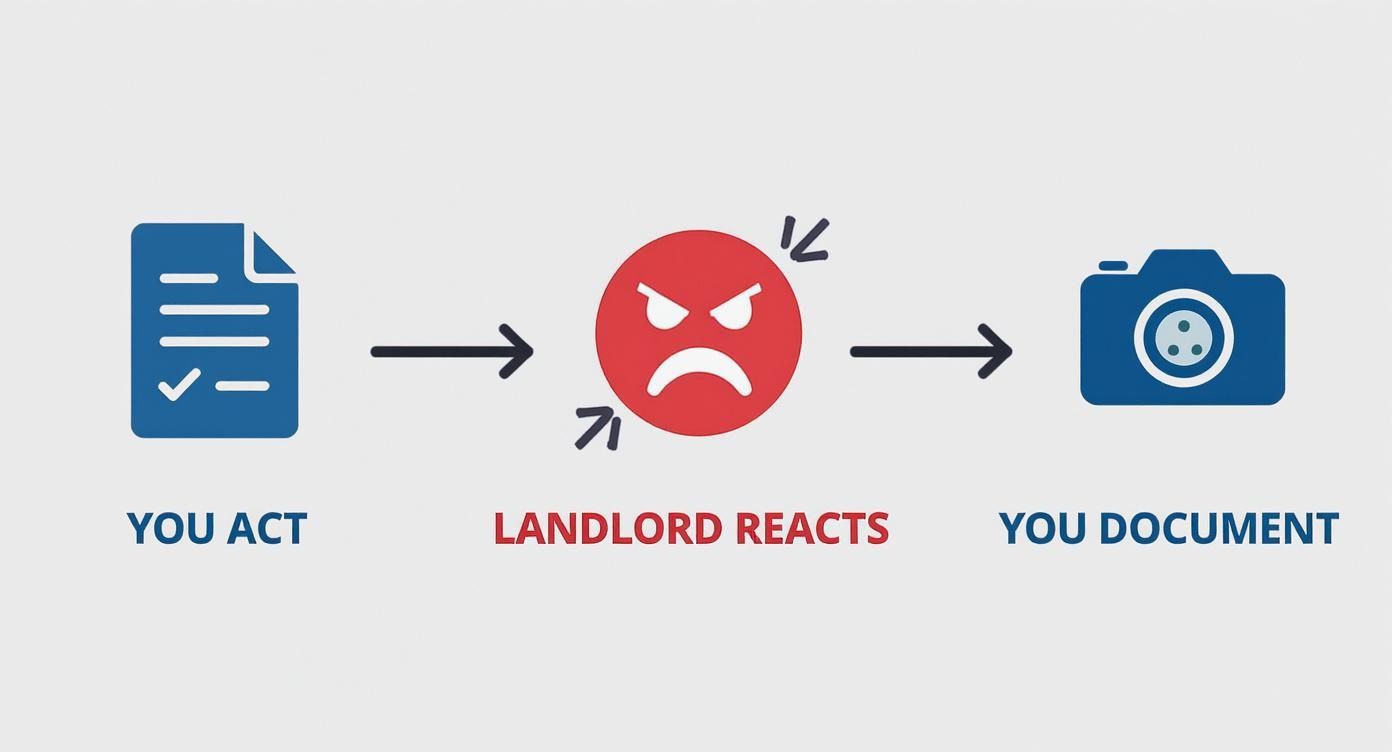
As you can see, keeping a paper trail is essential. It's often the key to proving your case and protecting your home.
Common Defenses Against Eviction
You are not without options. There are several well-established legal defenses that can stop an eviction in its tracks, including:
- Improper Notice: The landlord failed to give you a proper written notice or didn't deliver it according to the law.
- Landlord Retaliation: The eviction is payback because you exercised a legal right, like formally requesting a critical repair.
- Waiver: The landlord accepted a partial rent payment after giving you the notice, which can sometimes cancel out (or "waive") their right to proceed with that specific eviction.
Texas has a massive rental market, which means thousands of eviction cases are filed every year. Sadly, many tenants lose by default simply because they don't know their rights. The Texas Property Code has protections built-in, but fighting for them on your own is an uphill battle.
The rules are incredibly technical. Having an experienced eviction attorney on your side gives you the best possible shot at a fair outcome. To get a handle on all the moving parts, you can learn more about the eviction process in Texas in our article for a complete breakdown.
Common Questions from Texas Renters
When you're renting in Texas, specific situations pop up that can leave you wondering what your rights really are. Let's tackle a few of the most common questions we hear from tenants trying to navigate the Texas Property Code.
Can My Landlord Raise My Rent Whenever They Want?
In Texas, we don't have statewide rent control, so yes, your landlord can raise the rent—but not without rules. They can't just spring a rent hike on you in the middle of your lease unless your rental agreement specifically says they can.
For most month-to-month renters, the landlord has to give you at least 30 days' written notice before the increase takes effect.
Here’s the most important part: a rent increase can't be used as a weapon. If you just asked for a major repair, for example, your landlord can't legally turn around and punish you with a higher rent. That's called retaliation, and it's illegal.
What Happens if I Have to Break My Lease Early?
Life happens, and sometimes you have to move before your lease is up. While breaking a lease can have financial consequences, the Texas Property Code gives you a legal way out in certain situations. These include being a survivor of domestic violence, receiving military deployment orders, or if your landlord has seriously failed to provide a safe and habitable home.
What if your reason isn't covered by the law? You might still be on the hook for rent until a new tenant is found. But here's the key: your landlord can't just sit back and send you a bill. The law requires them to "mitigate damages," which is a legal way of saying they have to make a real effort to re-rent the place. Your first step should always be to give your landlord written notice and see if you can work something out.
Quick tip: Under Section 92.024 of the Texas Property Code, your landlord must give you a copy of the signed lease within three business days. Hold onto it. That document is your rulebook for understanding exactly what you and your landlord agreed to.
If you need help with an eviction, lease issue, or rental dispute, contact The Law Office of Bryan Fagan, PLLC for a free consultation today. You can reach us at https://texastenantlawyers.com.