Yes, if you have the legal right to let someone else use the space. That is the first question in Texas, and it answers more disputes than people expect.
A common problem starts small. A tenant rents out an assigned apartment space for extra cash. A condo owner lets a neighbor use a marked stall. A homeowner lists a driveway spot online for monthly income. The money may be modest, but the legal risk is not if the space is subject to a lease, condo declaration, HOA rule, or city restriction.
In Texas, the core issue is not whether parking can be rented in the abstract. The issue is the nature of your right to that particular spot. Some people have ownership. Some have exclusive use under a lease. Some have only permission to park there until the landlord, association, or property manager changes the rules. Those are different legal positions, and they lead to different answers.
That distinction matters because exclusive use is not always a transferable right. In many leases and community documents, a parking space is part of your occupancy rights, not a separate asset you can sublet or license to someone else. If a dispute becomes a lease violation notice or an eviction case, that difference will matter fast.
Property owners, landlords, and tenants should analyze this separately. Owners need to confirm title, deed restrictions, and local rules. Landlords need clear lease language, enforcement practices, and a plan for security and liability. Tenants need to read the lease closely and determine whether the assigned space is theirs to transfer, or only theirs to use personally.
Your Extra Parking Spot An Opportunity or a Legal Headache?
A common Texas scenario looks like this. A homeowner in Houston has a wide driveway and works from home. A condo owner in Dallas has a second parking space no one in the household uses. A tenant in Austin lives near a train line and hasn't owned a car in years, but their apartment still comes with one assigned spot.
All three people ask the same question. Can I rent this out?
The practical answer is that each one needs a different analysis. The homeowner may have broad control over private property, but city rules can still create problems. The condo owner may think the space is theirs, but the governing documents might treat it as a common element or limit who can use it. The tenant may have a spot on paper, but the lease might give only a personal right to use it, not a right to transfer it.
Practical rule: Before you advertise a parking space, figure out whether you own it, lease it, or merely have permission to use it.
That distinction matters because Texas landlords often treat unauthorized parking transfers as lease violations, not harmless side deals. Under Texas Property Code § 92.001, lease terms govern the landlord-tenant relationship. If a tenant rents out a spot without authority, a landlord may claim a material breach and move toward termination or eviction.
If you're a landlord, the issue isn't just income. It's control, security, written policies, and reducing avoidable disputes. If you're a tenant, the issue is simpler. Don't assume your assigned spot is yours to monetize.
The First Hurdle Who Has the Right to the Spot?
The first question isn't whether someone will pay for the space. The first question is whether you have the right to transfer it.
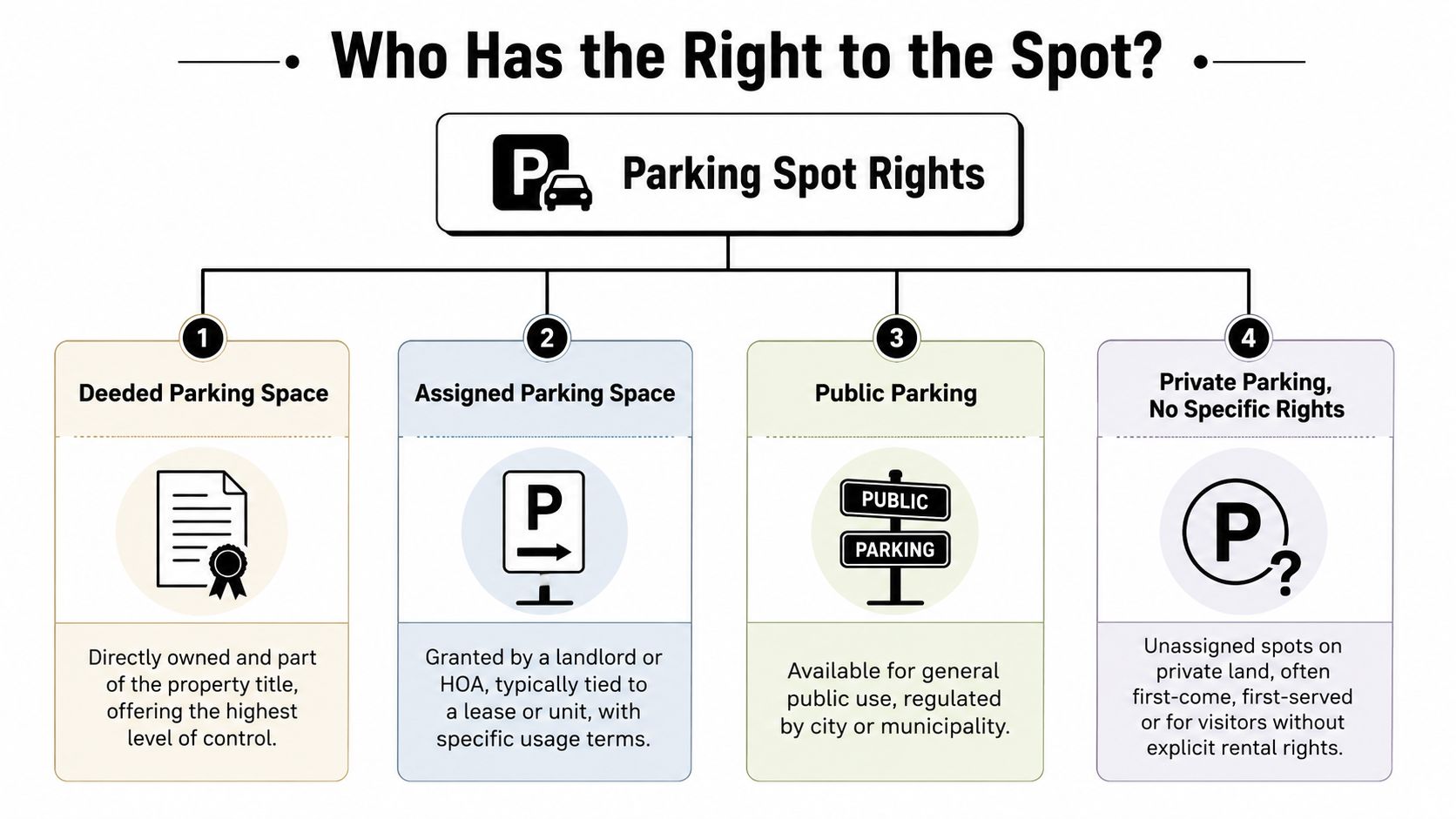
Parking rights work like a bundle. One person may own the land. Another may have a limited right to use one marked space. Someone else may only have access to whatever spot is open that day. Those are very different legal positions.
When the answer is usually yes
If you own a single-family home and the parking area is part of your private property, you usually start from the strongest position. The same is often true if you own a deeded parking space that is part of your title.
A deeded space gives you much more control than a space assigned by management. It doesn't guarantee freedom from restrictions, but it gives you a real ownership interest.
A condo rule from outside Texas captures the core principle clearly and usefully here. You can legally rent out a parking spot only if you are the legal owner of that specific parking unit. If the spot is a common element available on a first-come, first-served basis, you can't rent it out because you do not hold exclusive title, as explained in Condo Control's discussion of parking ownership.
When the answer is usually no
If the spot is first-come, first-served, visitor parking, or an unassigned common area, you generally don't have anything to rent. You have access, not control.
The same problem comes up in apartment complexes where a tenant says, “Management told me I could use spot 18.” That doesn't always mean the tenant received an assignable property right. It may only mean the landlord allowed that tenant to use the spot while the lease remains in good standing.
Here is a practical way to sort it out:
| Situation | What you likely have | Can you rent it out? |
|---|---|---|
| Deeded condo parking unit | Ownership interest | Often yes, if rules allow |
| Assigned apartment spot in lease | Contract right to use | Maybe, only if lease allows |
| Visitor or open lot parking | Shared access | Usually no |
| HOA common element parking | Limited or no personal control | Usually no |
What to review before you do anything
Start with documents, not assumptions.
- Owners should check deeds, plats, declarations, and HOA or condo rules.
- Tenants should check the lease for parking terms, subletting language, and any addendum.
- Landlords should check whether current lease forms clearly define parking as exclusive use, a license, or a revocable amenity.
If the paperwork is vague, that's where disputes begin. A Texas landlord tenant lawyer can often tell from a few clauses whether the arrangement is transferable or whether renting it out would create a lease problem.
For Landlords and Property Owners Your Rights and Duties
A Texas landlord usually gets into trouble with parking in a familiar way. The property has one extra covered space, management starts renting it informally, then a tenant complains that an outsider is coming through the gate at night, or a second tenant claims the spot was promised to them. At that point, the monthly fee is no longer the issue. Control is.
For owners and landlords, the key legal question involves more than just whether you can charge for a parking space. It is what right you are giving. If you grant exclusive use of a specific spot for a set term, you are creating something closer to a lease right. If you only allow a tenant to park there subject to your ongoing control, you are dealing with a revocable license. That distinction matters in Texas because it affects transfers, enforcement, removal, and whether a dispute turns into a lease case instead of a typical rule violation.
Income from parking is often easy to price. The harder part is setting rules that hold up when a resident stops paying, lets a friend use the spot, leaves an inoperable vehicle behind, or argues that the space is now part of the tenancy.
Draft the parking right with precision
Texas Property Code § 92.001 puts heavy weight on the lease terms in residential matters. If parking is included in the rent, say that clearly. If parking is rented separately, say that clearly too. If the right is personal to the tenant and cannot be transferred, the document should use direct language and avoid vague phrases like “assigned as available.”
That is also why a separate parking addendum often works better than a casual note in the lease. A short addendum can identify the exact space, vehicle limits, access hours, towing rules, and whether the right can be revoked for nonpayment or misuse. If you need a model for handling a transfer issue, this overview of what a sublease agreement does and does not allow helps frame the problem, even when the subject is a parking space instead of an apartment.
Written rules matter. Oral permission creates messy facts and weak proof.
Texas Property Code § 92.0131 also matters here. If you apply parking rules to tenants, provide those rules in writing when the lease is signed. In practice, that is where landlords protect themselves by stating that parking privileges cannot be assigned to non-residents without written consent. If that restriction is missing, you leave room for arguments you did not need to have.
If the property is commercial, the analysis changes. Parking rights in a retail center or office complex often tie directly to the leasehold, common-area obligations, and use clauses. Commercial Lease Disputes in Texas discusses how those fights are handled differently under Chapter 93.
What prudent landlords do
Use documents that answer the questions people fight about later:
- Which exact space is being rented
- Who may use it
- What vehicle types are allowed
- Whether the right is exclusive use or a revocable license
- Whether guests, roommates, or outside drivers are barred
- What triggers towing, suspension, or termination
The exclusive-use-versus-license distinction is the part many landlords skip, and it is the part that usually decides who wins the argument. If you want flexibility, draft a license. If you want stable recurring parking income tied to a unit, draft an exclusive-use arrangement and accept that you may need stronger termination language.
Common mistakes that create expensive disputes
Landlords create avoidable problems when they:
- Promise a spot before confirming it is available
- Let staff make side deals by text or email
- Fail to separate resident parking from visitor parking
- Rent gated-access spaces to outsiders without addressing security
- Omit remedies for abandoned, oversized, or disabled vehicles
Insurance also deserves a quick review. A parking arrangement with a non-resident increases the chance of gate damage, break-in allegations, or injury claims in common areas. Before you rent the spot, confirm your policy, your indemnity language, and your towing procedures match the arrangement you are offering.
For Tenants Can You Sublet Your Assigned Parking Space?
A common Texas problem looks like this. You do not own a car, your lease includes Space 24, and a neighbor offers to pay for it each month. That can be perfectly workable, or it can put you in default under your lease. The answer usually turns on what right you received.
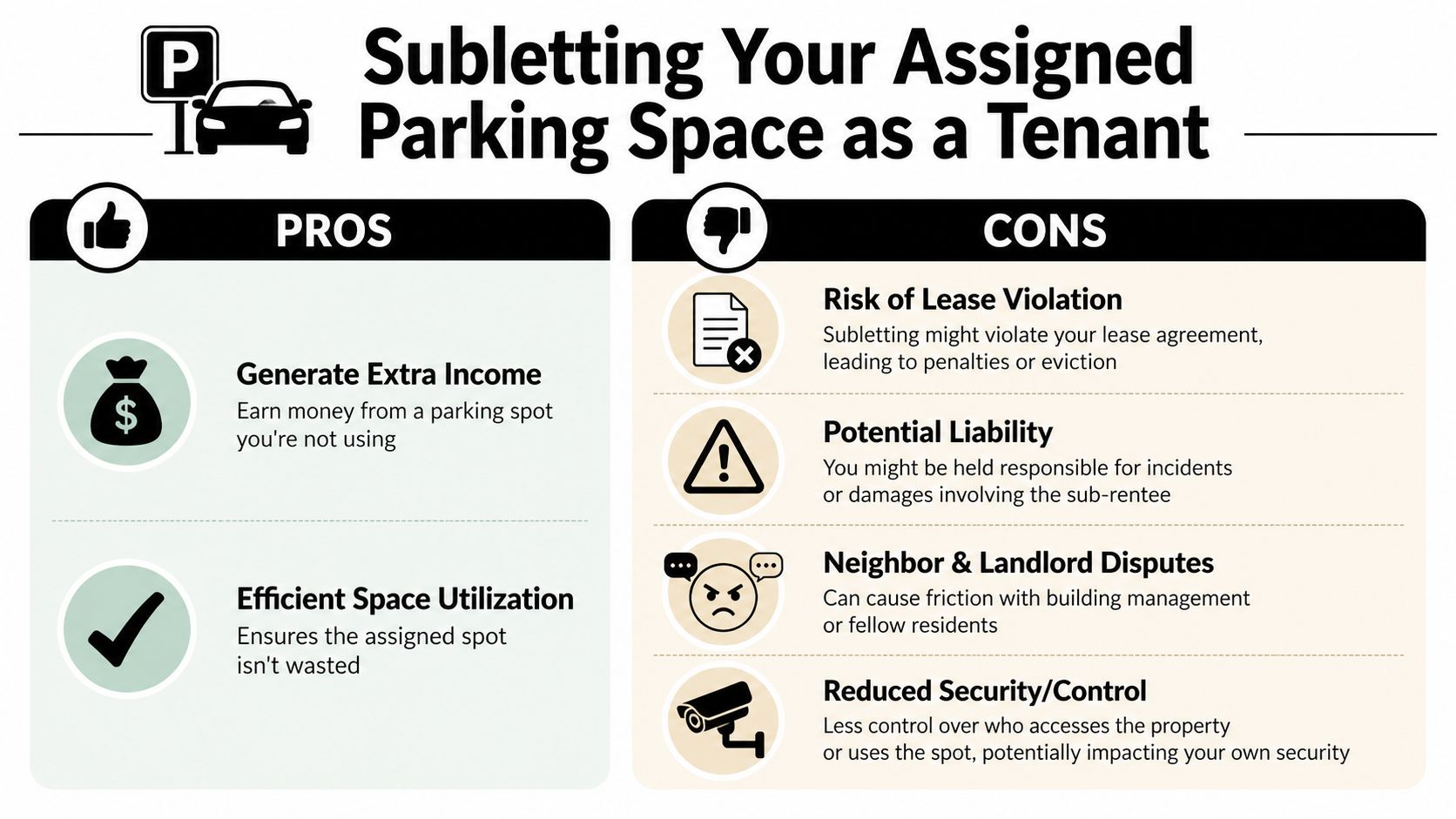
For tenants, the key question is not whether the space feels like part of the apartment. The key question is whether the lease gives you exclusive use of the space or only a personal parking privilege. Many tenants get into trouble over that distinction.
If your lease gives you a right tied to your unit that can be assigned, a parking sublet may be allowed unless the lease blocks it. If the lease treats parking as a revocable license, or says it is for resident use only, renting the spot to someone else can be a lease violation. In Texas practice, that difference matters because landlords often treat unauthorized parking transfers as an unauthorized assignment, an amenity misuse issue, or a material breach if an outside driver gains access to the property.
A line like “one assigned parking space” is not enough by itself. Read the surrounding language. If management can reassign the spot, revoke the privilege, or limit use to listed occupants, you likely have a license, not a transferable right.
How to read your lease
Focus on five places in the paperwork:
- Subletting or assignment clauses
- Parking addenda or community rules
- Amenity use restrictions
- Non-resident access rules
- Written consent requirements
Specific words matter. “Exclusive use” helps you. “License,” “privilege,” “for tenant use only,” or “non-transferable” usually helps the landlord.
Even if the space is described as exclusive, keep reading. Many residential leases still prohibit assignment of any part of the tenancy without consent. If you want a plain-English explanation of how Texas handles transfer rights, start with what a sublease agreement is under Texas law.
The safer way to ask
Do not advertise the spot first. Get permission first, in writing.
A solid request should do four things. Identify the exact space. Name the proposed driver and vehicle. State whether that person lives on the property. Ask whether management wants a signed parking addendum or proof of insurance before approving the arrangement.
Here is the Houston version of this issue. A tenant in a gated apartment building wants to rent an unused garage space to a coworker who lives elsewhere. The lease says parking is included for residents and bans assignment without consent. In that situation, the tenant should assume the deal is prohibited until management approves it in writing.
Landlords are often concerned about gate codes, towing mistakes, break-ins, and liability if a non-resident starts coming and going. Those concerns are not theoretical. In larger communities, parking enforcement has to be handled consistently or disputes pile up fast. Property managers dealing with recurring unauthorized parking problems often use Overton Security parking solutions to control access and document violations.
Why unauthorized subletting becomes expensive fast
An unapproved parking deal can trigger more than a warning. I have seen these disputes turn into a notice to cure, charges for unauthorized use, towing fights, lost gate access, and in some cases an eviction filing based on lease breach.
The practical risk is simple. You may think you rented a spare space. The landlord may think you gave a stranger access to a restricted part of the property without consent.
If the lease is unclear, do not guess. Ask for written approval, or do not do the deal. In parking disputes, the sentence tenants skip is often the sentence that decides the outcome.
Beyond Your Lease HOA and City Rules You Can't Ignore
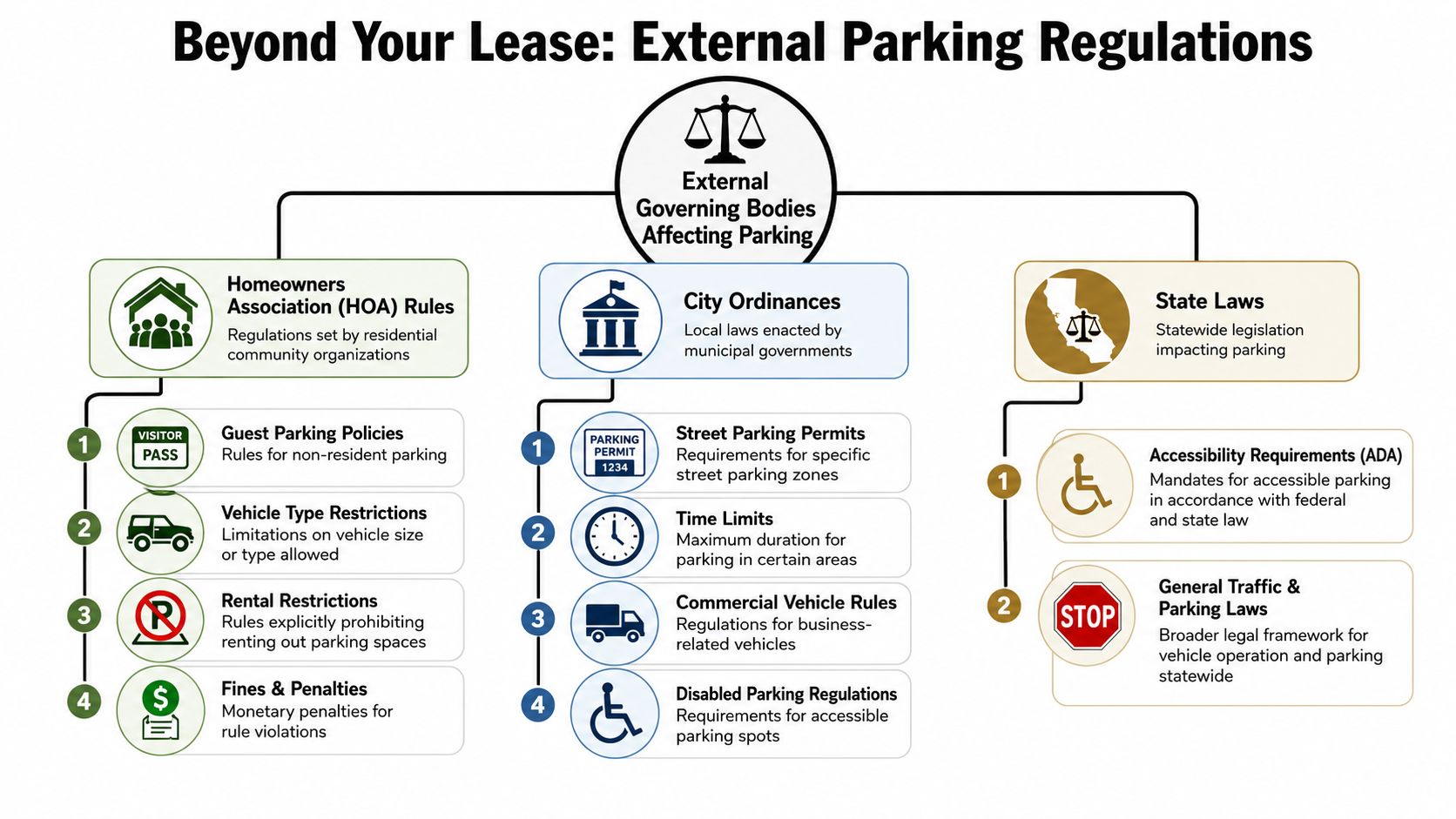
Even if your deed or lease seems to allow parking use, outside rules can still block the rental. This catches people off guard all the time.
A condo owner may have title to a parking unit, but the association may restrict rentals to residents only. A homeowner may have a broad driveway, but the city may regulate how that surface is built or used. A tenant may have landlord approval, but the complex may still be subject to community rules that limit outside access.
City rules can stop the deal
The verified rule here is broad but important. The legality of renting out a parking spot primarily depends on lease agreements and local zoning ordinances. In many cities, parking on unimproved surfaces, such as unpaved driveways without gravel, is against local building code, so landlords can't legally rent out extra parking spaces in those driveways unless the surface is properly paved, as discussed in DoorLoop's overview of tenant parking rights.
That means a “spot” isn't always a legal spot. If a homeowner in Texas plans to rent space on dirt, grass, or an unimproved side yard, local code may be the first problem, not the rental agreement.
HOA and condo restrictions matter even when you own
Associations often regulate:
- Who may park on-site
- Whether non-residents may use resident spaces
- Vehicle registration requirements
- Towing authority and fines
- Commercial-looking activity or repeated outsider traffic
A deed doesn't erase those rules. It only gives you a starting point.
If you live in a community association, review the declaration, bylaws, and parking rules before making any arrangement. For a broader look at these issues, see Texas homeowners association law.
Security and enforcement are practical issues too
Parking disputes often aren't really about rent. They're about access control. Property managers and boards worry about unknown vehicles, gate codes, towing conflicts, and resident complaints.
For readers dealing with repeated unauthorized parking or enforcement questions, Overton Security parking solutions offers a useful example of how parking enforcement systems are handled in practice. Even if you're not hiring a vendor, it helps to see how serious communities think about registration, monitoring, and compliance.
A parking arrangement can be legal on paper and still fail in practice if it creates constant security problems or violates community enforcement rules.
Crafting a Clear Parking Rental Agreement
A parking dispute usually starts with a simple sentence: "I thought that spot came with the deal."
Put the agreement in writing before the first payment is made or the first gate code is shared. In Texas, that written document does more than confirm the price. It helps define whether the user has a limited license to park there or something closer to an exclusive right to possess the space for a set time. That distinction affects how you end the arrangement, who can enter the spot, and how a missed payment turns into an enforcement problem.
What to include in the document
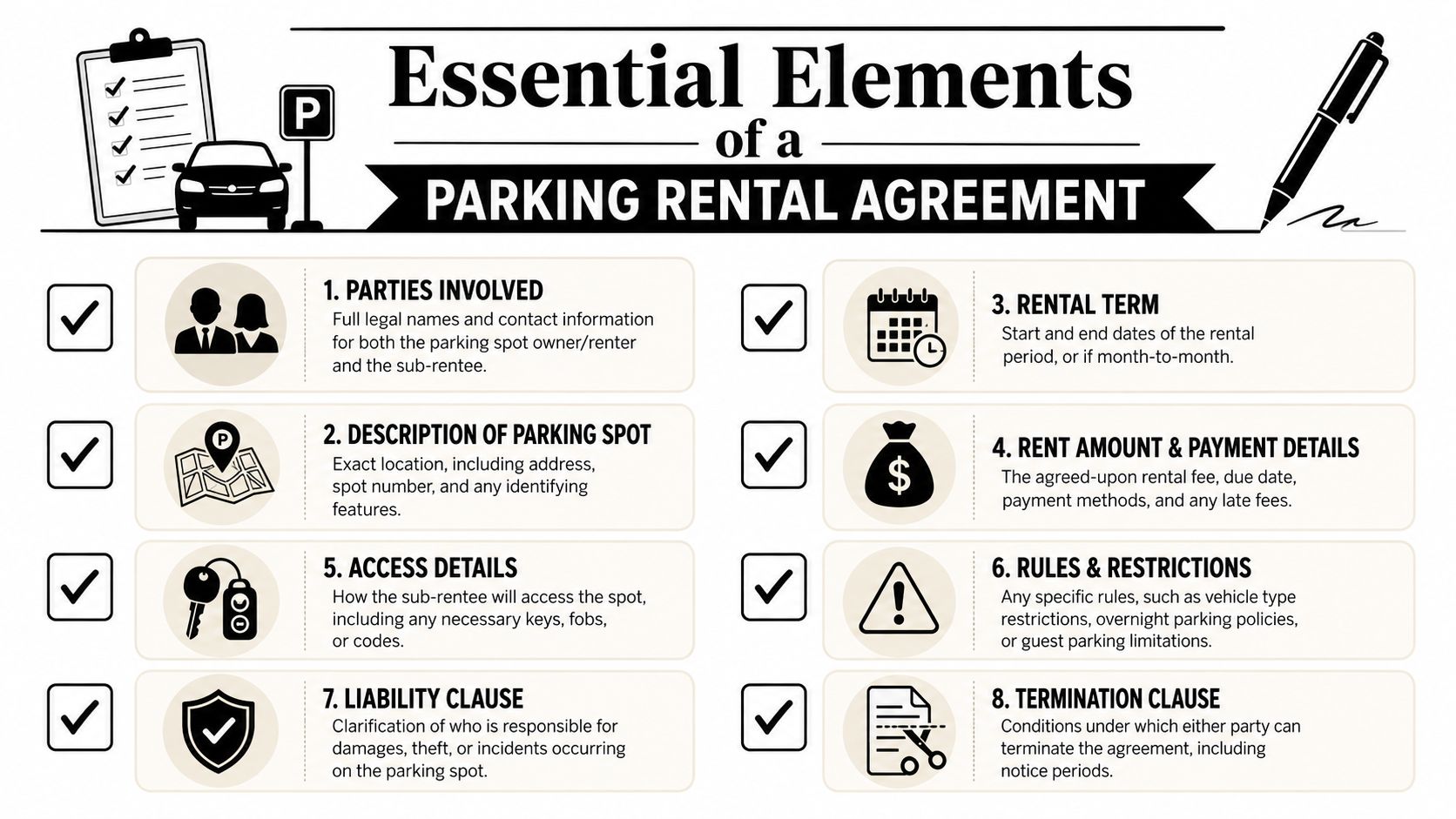
Start with the deal points, but write them with enough detail that a stranger could enforce the agreement from the page alone.
- Full names and contact information for both parties
- Exact identification of the space, including the property address, stall number, garage level, and any access device tied to it
- Whether the renter gets exclusive use or only a revocable permission to park, which is the license versus possession issue many owners skip
- Term of the agreement, such as month-to-month or a fixed period
- Rent, due date, late fee terms, and payment method
- Approved vehicles only, including plate number, make, and model if possible
Then cover the practical points that usually cause the fight.
| Clause | Why it matters |
|---|---|
| Access terms | Clarifies who gets remotes, fobs, gate codes, and replacement responsibility |
| Use restrictions | Bars storage, repairs, abandoned vehicles, business use, or letting a friend use the spot |
| Default rules | States what happens after nonpayment and whether access may be cut off |
| Termination language | Sets notice requirements and the exact date the right to park ends |
Terms people forget, and later regret
The short form agreement is often where trouble starts. Owners write down the monthly price and the stall number, then leave out the rules that matter once the relationship goes bad.
State whether the user may back in, whether oversized pickups or trailers are barred, and whether the vehicle must remain operable and registered. If the space sits inside an apartment complex, condo garage, or controlled-access lot, say that the user must follow posted parking rules and towing policies. If towing becomes part of the dispute, the parties should also understand how apartment towing laws in Texas and tenant rights can affect notice, removal, and liability questions.
Liability needs plain language. A spot owner is not automatically free from every claim involving theft, break-ins, or vehicle damage. At the same time, a renter should not assume the fee creates valet-level responsibility. The agreement should say what risk each side keeps, whether the owner carries any insurance for the space, and that the vehicle owner remains responsible for securing the car and personal property inside it.
One more point matters in Texas practice. If the parking arrangement is tied to a residential lease, say so directly. The document should state that the parking right ends if the tenant's lease ends, if the owner loses control of the spot, or if community approval is withdrawn. That avoids the common argument that the parker bought a stand-alone right that survives the housing relationship.
When legal review makes sense
Legal review is usually worth the cost if the space is part of a larger lease, the agreement grants exclusive use for a defined term, an HOA is involved, or the user is not a resident of the property. Those facts can change a simple parking deal into a possession, lease enforcement, or towing dispute.
The Law Office of Bryan Fagan, PLLC assists landlords and tenants with lease drafting, review, and dispute analysis under the Texas Property Code, including parking, assignment, and enforcement issues.
A clear document will not prevent every conflict. It will put you in a far better position to collect rent, end the deal cleanly, and show exactly what each side agreed to.
Protect Your Property and Your Rights
A parking spot can create income, or it can create a dispute that costs far more than the monthly fee. In Texas, that usually turns on a basic question many people skip. Are you giving someone exclusive use of a defined space for a set term, or only permission to park there until that permission is revoked? That distinction affects who can rent the spot, what rights the user may claim, and how hard it is to end the arrangement.
Owners should verify control of the space before offering it to anyone. Landlords should put parking terms in writing and match them to the lease. Tenants should assume an assigned spot is not theirs to sublet unless the lease or the landlord says so in clear terms.
Clarity matters under the Texas Property Code. Vague parking deals often turn into lease default claims, towing disputes, deposit fights, or HOA enforcement problems. If a car is removed after a parking disagreement, the related rules in apartment towing laws in Texas and tenant rights may affect what notice was required and what remedies are available.
Keep records.
That includes the written agreement, proof of who had authority to rent the space, payment history, any HOA approval, and photos or maps showing the exact spot. Owners should also track parking income and ask a tax professional how to report it. That issue often gets missed until the end of the year, when the paperwork is harder to recreate.
If the documents are unclear, check them before money changes hands.
If you need help with an eviction, lease issue, or rental dispute, contact The Law Office of Bryan Fagan, PLLC for a free consultation today. A Texas landlord tenant lawyer from the firm can review your lease, explain your tenant rights, and help you respond to parking disputes, assignment issues, HOA conflicts, or eviction threats under the Texas Property Code. If you are a landlord, tenant, or property manager trying to avoid a costly mistake, speaking with an eviction attorney early can protect your rights and your money.