Dealing with a landlord dispute or lease issue can be stressful—but understanding your rights under Texas law can make all the difference. You may have signed a lease expecting to stay, but now you need to move.
Perhaps you landed a new job in another city, or your financial situation has changed. Whatever the reason, you’re stuck in a lease you can no longer keep, and the thought of paying steep penalties to break it is overwhelming.
But there’s another option—a sublease agreement. Let's break down what this means for your rights as a Texas tenant or landlord.
Your Guide to Sublease Agreements in Texas
So, what is a sublease agreement? Think of it as a "lease within a lease." It’s a formal legal contract that allows you, the original tenant, to rent out your property to a new person (a subtenant). Your original lease with the landlord stays active, but the subtenant takes over the space and rent payments.
It’s a powerful tool for both tenants and landlords, especially in major Texas markets like Houston and Dallas-Fort Worth where life and work demands are always changing. Instead of a tenant facing the financial fallout of breaking a lease, a sublease can provide a solution that works for everyone.
Understanding the Key Players
A sublease introduces a few new roles you need to understand. This isn't just a handshake deal; it creates a new legal structure with specific rights and responsibilities. Let's look at the three parties involved and what each one is responsible for.
The Three Parties in a Texas Sublease Agreement
This table breaks down the roles and primary responsibilities of each person involved in a typical sublease arrangement in Texas.
| Party | Role | Primary Responsibility |
|---|---|---|
| The Original Tenant | Sublessor | You. You're responsible for collecting rent from the new tenant and ensuring the landlord is paid. You're also still on the hook for any property damage. |
| The New Tenant | Sublessee | The person moving in. They pay rent directly to you (the sublessor) and must follow all the rules of the original lease agreement. |
| The Property Owner | Landlord | Your legal relationship remains with the original tenant. You hold them accountable for the rent and the condition of the property, even with a sublessee living there. |
The most important takeaway? As the sublessor, you essentially become a landlord to your sublessee. But you never stop being a tenant to your own landlord. You're caught in the middle, which means you carry all the original responsibility.
A sublease agreement is a formal contract between the original tenant and a new tenant. However, the original tenant's obligations under the master lease with the landlord do not disappear. They remain the primary responsible party.
With projections suggesting shifts in office and residential leasing by 2026 due to construction slowdowns, subleasing offers a strategic way for tenants to manage housing costs without breaking a contract.
Ultimately, understanding how tenancy documents work—from subleases to lease renewal forms—gives you a much better handle on your rights. If you approach it correctly, subleasing can be a win-win-win for you, the new tenant, and your landlord.
What the Texas Property Code Says About Landlord Consent
Before a tenant posts a single ad or mentions their place to a friend, they must stop. There is one step you absolutely cannot skip when subleasing a property: getting the landlord’s permission. Many tenants assume that if they find a good, reliable person to take over, the landlord won’t care.
In Texas, that assumption can get a tenant evicted.
It’s easy for a tenant to think of a sublease as just a casual deal between them and the new renter. But that's a dangerous mistake. The original lease is still the master document, and most leases have a clause that flat-out requires the landlord's written consent before anyone else can move in. This isn’t a suggestion—it’s a legal requirement.
The Law and Your Lease
Texas law gives landlords a significant amount of control over who lives in their property. Texas Property Code § 91.005 is crystal clear: a tenant cannot rent their place to anyone else without getting the landlord's prior consent.
Unless your lease specifically states you can sublease without permission—and almost none do—you are legally required to get your landlord's approval first.
Ignoring this rule means the tenant is breaking their lease and state law. The fallout can be severe, from stiff financial penalties to the termination of the tenancy. As the landlord, you would have every right to evict both the original tenant and their unapproved subtenant. A knowledgeable Texas landlord tenant lawyer can help you navigate this process correctly.
This flow chart shows exactly how these relationships are supposed to work. It’s not just the tenant and a subtenant; the landlord is the foundation of the entire structure.
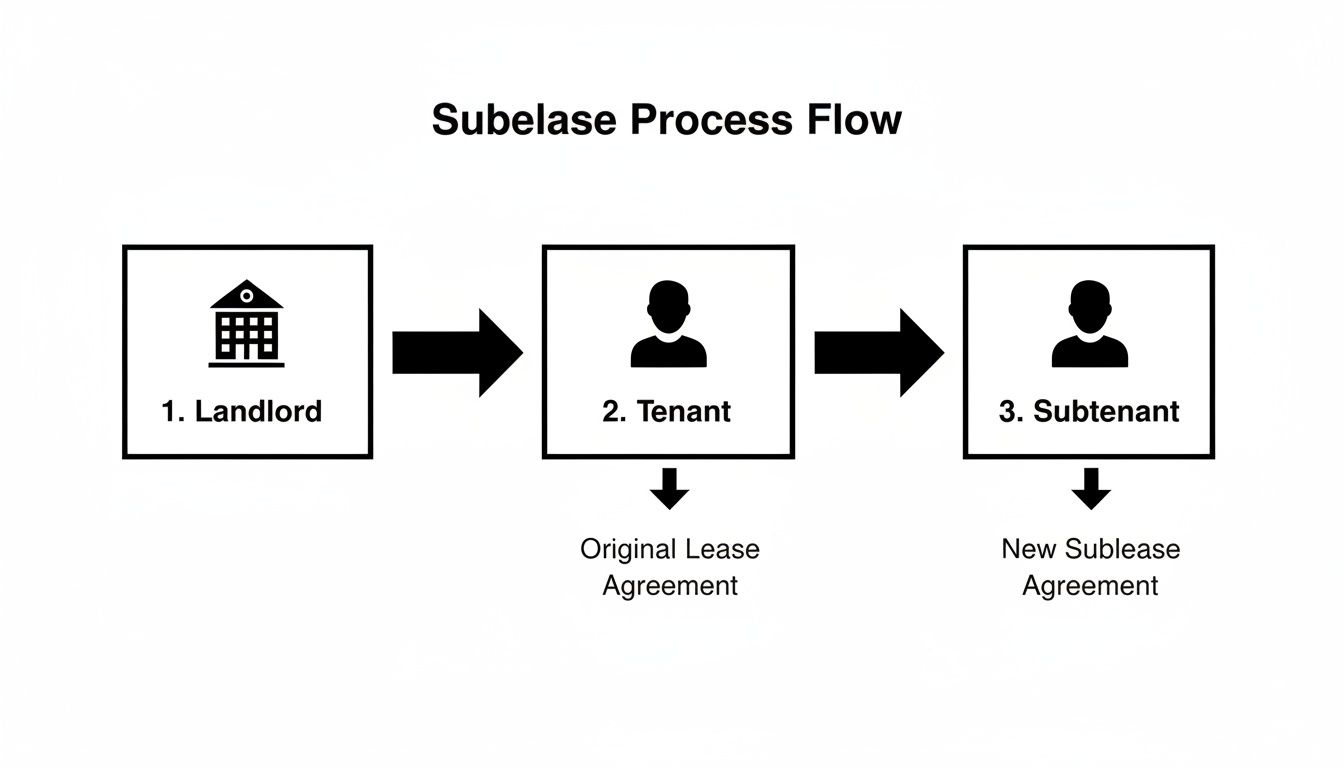
As you can see, the agreement between the original tenant and the subtenant only exists because of the primary lease with the landlord. That's why your approval isn't just a formality—it's foundational to protecting your property rights.
How to Professionally Request Permission: A Step-by-Step Guide
How a tenant asks can make all the difference. They need to approach you, the landlord, professionally, giving you all the information needed to feel secure about the arrangement. This shows they respect your property and makes a "yes" far more likely.
Here is a step-by-step process for tenants to follow:
- Read the Lease Again: Before doing anything else, the tenant should pull out their lease. They need to look for clauses on "subletting," "subleasing," or "assignment" to understand the exact procedure, including any fees or conditions.
- Put It in Writing: The tenant should send a formal letter to you requesting permission. Using certified mail provides a paper trail. A quick phone call isn't enough—and relying on a verbal okay is risky, as we explain in our article on verbal contracts in Texas.
- Introduce the Candidate: The tenant should give you a complete file on the person they want to move in, including their full name, contact information, job details, and rental history.
- Provide Financial Proof: As the landlord, you have a right to screen any new person living on your property. The tenant should make it easy for you by including a completed rental application from the prospective subtenant and offering to provide their credit report and references.
When a tenant presents a pre-vetted, responsible candidate, they are showing you that they are protecting your investment. This isn't just about filling a room; it's about maintaining trust.
A Real-World Scenario: The Risk of Skipping This Step
Consider Sarah, a tenant in Austin who had to move for a family emergency. Her lease banned subleasing without consent. Desperate, she let a friend take over her apartment and they signed their own private agreement, keeping the landlord in the dark. A month later, the property manager found out.
Because Sarah had breached her lease, the landlord started eviction proceedings against both of them. Sarah was on the hook for thousands in legal fees and unpaid rent. Worse, she got an eviction on her record, making it nearly impossible to rent another apartment. This is the risk a tenant takes when they sublease without permission. They remain legally and financially responsible, and an unauthorized sublease gives a landlord a clear reason to evict.
How to Draft an Ironclad Sublease Agreement

Once you, the landlord, have given the okay, the tenant needs to create a proper legal document. A handshake or text message won't cut it. A written sublease agreement is essential to protect the original tenant, the new tenant, and your property.
Without a solid sublease agreement, the original tenant is flying blind. They are trusting a near-stranger with their home and their legal standing with you. One dispute over rent, damages, or house rules, and they could be facing eviction and a massive bill. This isn’t about being difficult—it’s about being smart.
Essential Clauses Every Sublease Needs
The sublease should be a smaller, more specific version of the original lease. It needs to lay out the ground rules clearly, leaving no room for misunderstandings.
At a minimum, the agreement must include these key details:
- Names of All Parties: This means the original tenant (sublessor), the new tenant (sublessee), and you, the landlord. Naming the landlord confirms you've consented to the arrangement.
- Property Address: List the full, specific address, including the unit number.
- Sublease Term: State the exact start and end dates.
- Rent Amount and Due Date: How much is rent, when is it due to the sublessor each month, and what are the late fees?
- Security Deposit: Specify the deposit amount and the exact conditions for its return, just like the master lease does.
Getting these basics wrong could make the entire agreement worthless in a dispute.
Defining Rules and Responsibilities
Beyond the money and dates, the sublease needs to manage the day-to-day realities of someone else living in your property. This is where you prevent the most common headaches. A thorough process for mastering contract review is crucial here.
Make sure the agreement adds specific clauses covering:
- Utilities: Who pays for what? Will the subtenant pay the electric company directly, or will they reimburse the original tenant?
- Property Alterations: The answer here should be simple: no changes. The sublessee can't paint or make alterations without written permission from both the original tenant and the landlord.
- Maintenance and Repairs: Clarify that the subtenant reports all issues to the original tenant, who is still responsible for coordinating with you, the landlord.
The single most important part of any sublease is a clause that incorporates the original lease. It should state that the sublessee has read, understands, and agrees to follow every single rule in the master lease agreement.
This is non-negotiable. It makes the subtenant legally bound to the same pet policies, noise rules, and property regulations. If they break a rule, this clause gives the original tenant the power to hold them accountable before it puts their own tenancy at risk.
A complete understanding of Texas lease agreement laws provides critical context. Having a Texas landlord-tenant lawyer review the document is a small price to pay for true peace of mind.
Understanding Subleasing vs. Assigning a Lease
When a tenant needs to get out of a lease early, you’ll hear two terms: subleasing and assigning. Most people use them interchangeably, but in the eyes of Texas law, they are drastically different. Choosing the wrong one can lock a tenant into serious legal and financial trouble long after they've moved out.
The Key Difference You Must Know
The entire distinction between a sublease and a lease assignment boils down to one simple question: Who is still responsible to the landlord?
In a sublease, the original tenant is. They remain fully responsible for the rent and any damages. They are essentially a landlord to their own subtenant.
In a lease assignment, the original tenant transfers their entire lease—every right and every responsibility—to someone new. The new tenant steps into their shoes, pays rent directly to the landlord, and the original tenant walks away.
Let's be clear about what that means in the real world.
A sublease creates a new landlord-tenant relationship underneath the original one. An assignment replaces the original tenant entirely, ending their connection to the property.
With a sublease, if the new tenant stops paying rent, the landlord comes after the original tenant for the money. With a properly handled assignment, that liability moves to the new person. The stakes are high for everyone involved, including the landlord who needs to know who is legally accountable.
When to Sublease vs. When to Assign
The right choice comes down to the tenant's plans. Is this move temporary or permanent?
A tenant subleases when they plan on coming back. It’s the perfect setup for short-term moves, like:
- A college student studying abroad for a semester.
- An employee on a three-month work assignment.
- Someone traveling for a few months who wants their apartment waiting when they return.
In contrast, a tenant assigns their lease when they are moving out for good. It's the clean break they need for a permanent move, such as:
- Buying a house and leaving renting behind.
- Relocating to a new state for a job.
- Moving out of a shared apartment and not coming back.
This has become even more critical in Texas. In major hubs like San Antonio and Austin, subleasing is exploding as the supply of new commercial properties is expected to drop by 75% by 2026. This trend, detailed in a recent JLL market outlook, gives tenants flexibility, but landlords are managing their risk with tough approval requirements.
Sublease vs. Lease Assignment: A Head-to-Head Comparison
Before you decide, you need to understand the crucial legal and financial differences between subleasing your space and assigning your entire lease to someone else. This table breaks down exactly what you're signing up for with each option.
| Feature | Sublease Agreement | Lease Assignment |
|---|---|---|
| Your Relationship with Landlord | You stay on as the primary tenant and remain fully liable. | Your relationship ends. The new tenant deals directly with the landlord. |
| Rent Payment | The subtenant pays you, and you are responsible for paying the landlord. | The new tenant pays the landlord directly. |
| Liability for Damages | You are on the hook for any damages the subtenant causes. | The new tenant is responsible for all damages they cause. |
| Right to Return | You keep the right to move back in once the sublease is over. | You give up all rights to the property for good. |
For a permanent move, an assignment is often cleaner for the tenant. However, many landlords prefer a sublease because it gives them an extra layer of security by keeping the original, vetted tenant responsible. Before making a move, have a Texas landlord-tenant lawyer review the lease and help you choose the path that best protects your interests.
Who's Responsible for What? Rights and Duties in a Sublease
Once the sublease is signed and the new tenant has the keys, things can get complicated. With three parties involved, it's crucial to know who is responsible for what to avoid disputes and legal headaches.
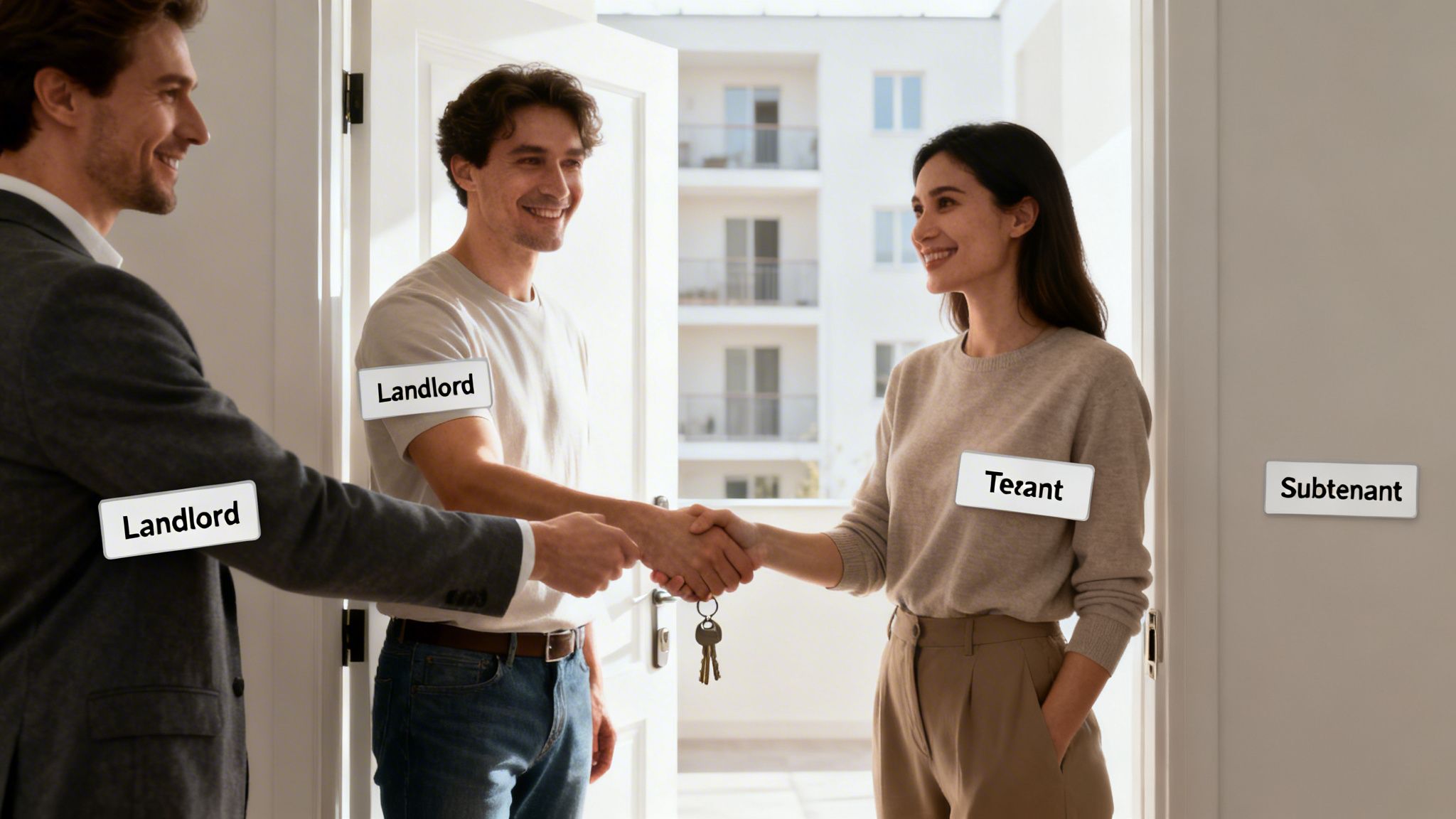
Let's break down this triangle of responsibility so everyone’s rights are protected.
The Original Tenant: You’re Now the Middleman
As the original tenant (the sublessor), you are now playing two roles. You are still a tenant to your landlord, but you are also a landlord to your new subtenant. This puts you squarely in the middle.
Your duties include:
- Paying the Landlord: It doesn't matter if your subtenant pays you late. You are still legally required to pay your full rent to the landlord on time.
- Collecting Rent: You are responsible for collecting rent from your subtenant as laid out in the sublease.
- Liability for Damages: If the subtenant damages the property, the landlord will hold you responsible for the cost of repairs.
Many tenants sublease to ease a financial burden, but those savings come with serious responsibility.
The New Tenant (Sublessee): Your Rights and Obligations
As the new tenant (the sublessee), you have tenant rights protected under Texas law, but your obligations are to the original tenant, not the property owner.
You have the right to:
- A Safe and Livable Home: The "warranty of habitability" in the Texas Property Code applies to you, meaning the home must be safe and functional.
- Quiet Enjoyment: You have the right to live in the property without unreasonable disturbances.
But you also have duties:
- Pay Rent to the Original Tenant: Your legal contract is with the sublessor. You pay rent to them, not the landlord.
- Follow All Lease Rules: You must follow every rule in the original master lease—from pet policies to parking rules.
Crucial Point: If the toilet stops working, you don't call the landlord. You must report it to the original tenant (the sublessor). The sublessor is then legally responsible for getting the landlord to fix it. You have no direct legal relationship with the property owner.
This is exactly why a rock-solid sublease agreement is non-negotiable. It defines the process when things go wrong. You can learn more about your specific sublease rights and responsibilities for tenants in our detailed guide.
The Landlord: Still the Ultimate Authority
Even with a subtenant in the picture, your primary legal relationship as the landlord is with the original tenant. Your role doesn't change, but your oversight is key.
As the landlord, you have the right to:
- Receive Full Rent: You expect the full rent payment from the original tenant, on time, no matter what.
- Enforce the Original Lease: If the subtenant violates the lease, you can hold the original tenant accountable and even move to evict them.
- Approve the Subtenant: You almost always have the right to screen and approve anyone living on your property.
You must also continue your own duties, like maintaining the property. If the air conditioning goes out, it’s your job to fix it under Section 92.052 of the Texas Property Code, even though a subtenant is the one affected. Understanding these roles is the best defense against costly and stressful legal battles.
When to Contact a Texas Landlord-Tenant Lawyer
Handling a sublease on your own can feel straightforward—until it isn’t. When a problem comes up, the financial and legal stakes get high, fast. Trying to solve a complex dispute without a Texas landlord tenant lawyer can put your lease, your money, and your rental history on the line. Knowing when to call for backup is everything.
Red Flags That Demand Legal Advice
If you see any of these signs, it's time to get professional legal help immediately.
- A Landlord Is Unreasonably Blocking a Sublease. If a lease allows subletting and a tenant finds a qualified person, but the landlord says "no" without a legitimate reason, an attorney can step in and enforce the tenant's rights.
- There’s a Fight Over the Security Deposit. If a subtenant moves out, leaves damage, and threatens to sue the original tenant over deposit deductions, a lawyer can clarify legal duties and help resolve the dispute.
- A Subtenant Is Causing Major Problems. This is the nightmare scenario. If a subtenant is damaging the property or failing to pay rent, the original tenant may face eviction threats. An experienced eviction attorney can provide an immediate legal strategy, which might include evicting the subtenant.
A quick consultation isn't a cost—it's an investment in your own protection. An experienced attorney can spot the hidden risks in your sublease agreement and stop a small misunderstanding from becoming a full-blown legal battle.
If you need help with an eviction, lease issue, or rental dispute, contact The Law Office of Bryan Fagan, PLLC for a free consultation today.
Common Questions About Texas Subleases
When you're trying to navigate a sublease, you need straight answers. One wrong move can put housing, money, and rental histories at risk. Here are some of the most common questions we hear from tenants, landlords, and property managers dealing with sublease agreements in Texas.
Can My Landlord Charge a Fee for Subleasing?
Yes. In Texas, it’s common and legal for a landlord to charge a reasonable fee for a tenant to sublease. This fee is meant to cover the administrative costs of vetting the proposed subtenant, like running background checks and handling extra paperwork. The landlord’s right to charge this fee must be spelled out in the original lease agreement. If the lease is silent on the matter, a landlord can't invent a fee after the fact.
What Happens If My Subtenant Doesn’t Pay Rent?
This is where things get serious. If a subtenant stops paying rent, the original tenant is still 100% on the hook for the full rent payment to the landlord. The master lease is a binding contract between the landlord and the original tenant that doesn't just disappear. The original tenant must pay the landlord on time or face breach of contract and potential eviction. Their next step would be to take legal action against their subtenant to recover what they’re owed.
Don't make the critical mistake of assuming the landlord will go after the subtenant. The landlord's legal relationship is with the original tenant, who is the only one who owes them rent.
Can I Sublease If My Lease Says It’s Not Allowed?
If your lease has a clear "no subleasing" clause, then the answer is no. A lease is a legally binding contract. Ignoring that clause is a direct violation that gives the landlord grounds to start eviction proceedings.
However, a tenant can always try to negotiate. They can:
- Explain their situation honestly and professionally.
- Present a well-qualified candidate with a strong rental history.
- Offer to let the landlord run their own full screening process.
Some landlords are reasonable and will make a one-time exception, especially if the alternative is the tenant breaking the lease entirely. If you say yes, you must provide approval in a signed, written addendum to the lease. A verbal "okay" is not enough to protect anyone.
If you need help with an eviction, lease issue, or rental dispute, contact The Law Office of Bryan Fagan, PLLC for a free consultation today.