In Houston, the general city rule is two pets in an apartment or other multi-unit dwelling, and up to four pets in a single-family home if the animals are over three months old and otherwise lawful under city rules. But that number is only the starting point, because your lease, your landlord's policy, and sometimes HOA rules can be stricter and still legally binding.
Dealing with a landlord dispute or eviction can be stressful, especially when the issue starts with something as personal as a pet. Maybe you're a tenant hoping to adopt a second cat, or a landlord who just learned a resident brought in an unauthorized dog. In either situation, the right answer usually isn't found in one place. You have to read the city ordinance, the lease, and any community restrictions together if you want to protect your rights and avoid a fight that gets expensive fast.
The Answer to How Many Pets Can You Have Is Not Simple
A common call starts like this: a tenant says, “The city allows pets, so I thought I was fine.” A landlord says, “The lease says no pets, but the tenant insists Houston law controls.” Both are partly right and partly missing the key issue.
How many pets can you have in Houston? The legal answer depends on a hierarchy of rules. City law sets the outer boundary. Your lease usually sets the practical rule for your unit. If the property sits in a deed-restricted community or an HOA-governed neighborhood, those rules may affect what the landlord can allow in the first place.
A familiar Houston scenario
A renter in a Houston apartment adopts a second dog after confirming the city allows two animals in many apartment settings. Then the landlord sends a lease violation notice because the lease allows only one pet. The tenant feels blindsided.
That dispute often could have been avoided by reading the lease first, then checking whether the property has any added restrictions, and only then deciding whether the city ordinance leaves room for the pet.
Practical rule: City law tells you what Houston may allow. Your lease tells you what your rental actually permits.
The same problem shows up for landlords. A property owner may assume “no pets” in a listing is enough, but if the written lease is vague, enforcement gets harder. A weak clause invites arguments about whether the animal was approved, whether pet rent applies, or whether the tenant had time to cure the violation.
If you're trying to solve the day-to-day side of pet ownership while sorting out the legal side, it may also help to browse Houston pet sitting options so temporary care doesn't turn a lease problem into a bigger one.
The rule that matters most
For most disputes, the key question isn't just “What does Houston allow?” It's this: Which rule controls this specific property? Once you answer that, the rest of the analysis gets much clearer.
What Houston City Ordinances Say About Pet Limits
Houston's ordinance gives you the public-law starting point, but tenants and landlords often misread what that starting point does. The city sets an outer limit on what may be kept at a property inside city limits. It does not guarantee that a tenant may keep that many animals under a private lease, and it does not override deed restrictions or HOA rules that apply to the property.
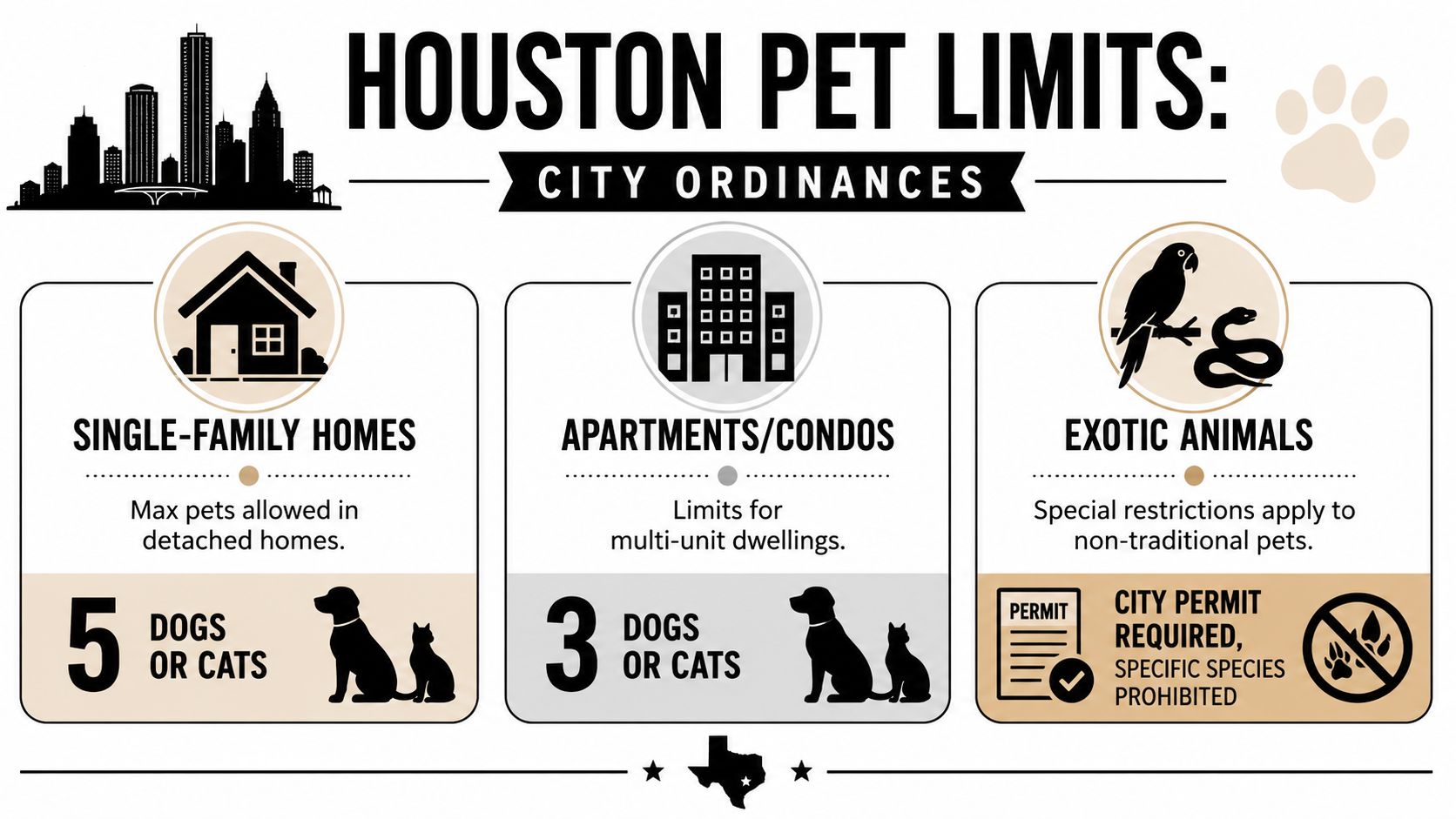
Under Houston local animal-control laws, apartment and other multi-dwelling residents generally face a lower cap than occupants of single-family homes.
The city's baseline numbers
Here is the practical baseline many Houston owners and renters start with:
| Dwelling type | General Houston limit |
|---|---|
| Apartment or multi-dwelling unit | No more than two total qualifying animals |
| Single-family home | Up to four total qualifying animals |
Those numbers matter, but only as one layer of the analysis. In a rental dispute, I tell clients to read them alongside the lease first, then check whether the property sits in a community with separate restrictions. If the home is subject to deed restrictions or an association, the rule hierarchy gets more complicated. This article on how HOA rules and tenant rights interact in Texas rentals explains that overlap.
For the larger legal framework, Texas Landlord-Tenant Law: An Overview explains how Texas landlord-tenant rules fit around private contracts and possession disputes.
Animals Houston does not allow on ordinary residential premises
Some fights over pets never reach the lease language because the city forbids the animal at the outset.
Houston prohibits certain animals in ordinary residential settings, including hogs, swine, pigs, pot-bellied pigs, and goats, under the City of Houston ordinance PDF. If an animal falls into a prohibited category, a tenant usually cannot fix the problem by pointing to a permissive landlord or a silent lease.
That point matters for landlords too. A lease clause allowing “pets” is not a defense to a city-code violation.
Compliance rules beyond headcount
Pet disputes in Houston are not always about how many animals are on the property. Compliance issues also matter, especially identification and vaccination requirements.
Houston has updated its animal-control rules to rely more heavily on microchipping and documented ownership records for cats and dogs that fall within the ordinance's requirements. If you are evaluating a pet issue at a rental property, count alone is not enough. Ask whether the animal is one the city allows, whether local compliance rules have been met, and whether the lease permits that specific animal.
That approach avoids a common mistake. Tenants often stop after finding the city limit. Landlords sometimes stop after finding a lease clause. In practice, the answer usually depends on all three layers of authority: city ordinance, private lease, and any HOA or deed restriction that applies to the property.
Why Your Lease and HOA Rules Matter More
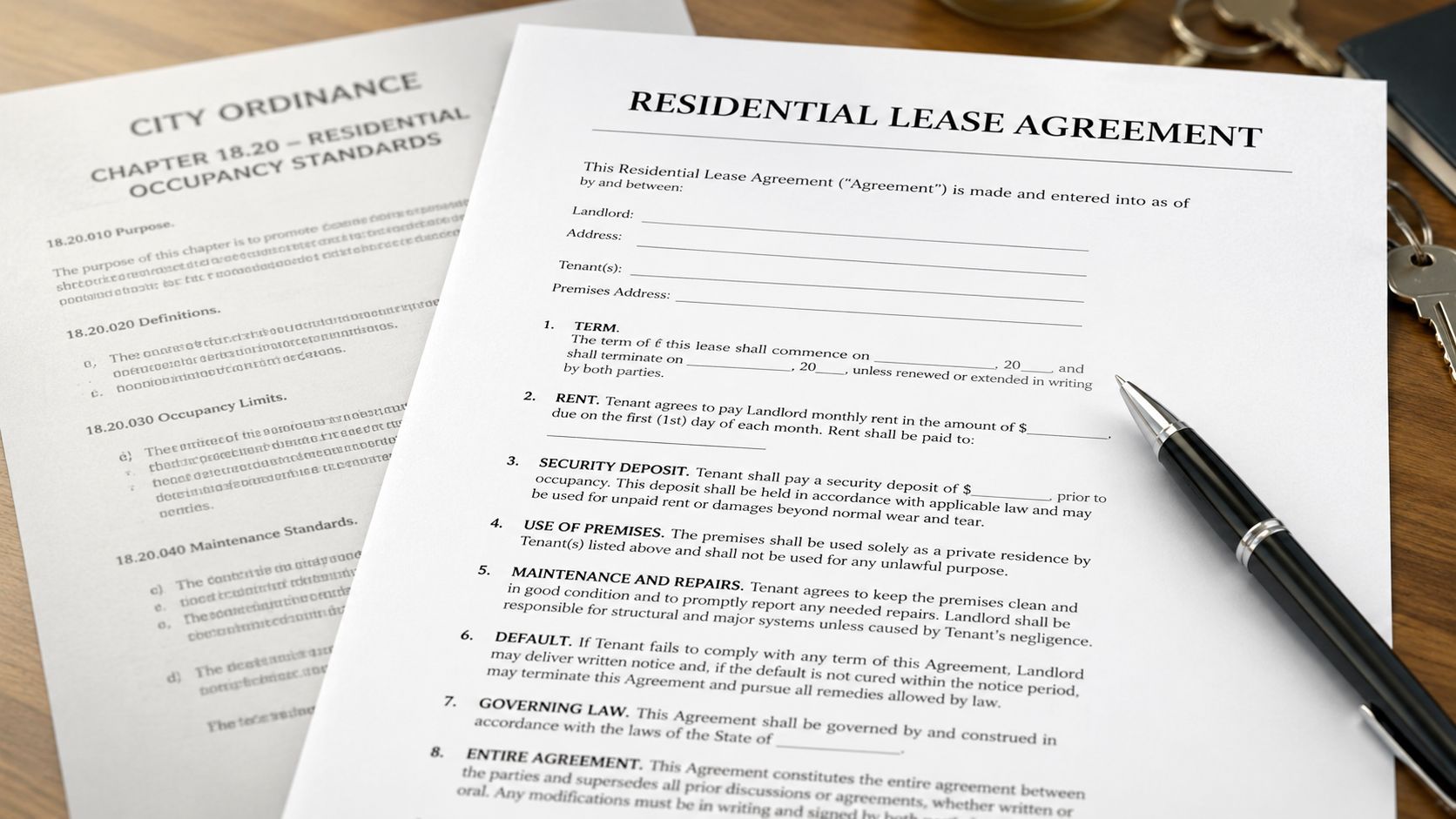
Once you know the city baseline, the next document to read is the lease. In most Houston rental disputes, the lease controls the day-to-day outcome because it is the contract between landlord and tenant.
Why the lease usually decides the fight
Texas landlords generally may set pet rules in a residential lease, so long as those rules don't violate higher law. That means a landlord can often limit a tenant to fewer animals than the city would otherwise allow. One pet allowed by lease is still one pet, even if Houston would permit more at that address type.
A workable lease clause often addresses several points at once:
Number limits
“Tenant may keep no more than one approved pet on the premises.”Approval terms
“No animal may be brought onto the property without landlord's prior written consent.”Damage responsibility
“Tenant remains responsible for all pet-related cleaning, repair, and odor remediation.”Removal language
“Unauthorized animals must be removed after written notice as provided by the lease.”
That kind of wording gives both sides clarity. Vague language does the opposite. If the lease says “pets considered” or “small pets only,” you're already inviting an argument.
HOA rules can narrow the landlord's options
If the rental property sits in an HOA-managed neighborhood or condo community, the HOA may impose another layer of restrictions. Those can include occupancy-related animal rules, registration rules, or limits that the landlord has agreed to follow as an owner.
For tenants, this creates a simple but frustrating reality. You may have a lease that appears to allow a pet, but the property could still be subject to community restrictions that create a violation. If you're sorting through that overlap, HOA vs. tenant rights in Texas is a useful starting point.
A tenant doesn't get extra rights just because one document is silent. Silence in the lease can still lead to trouble if the property is subject to outside restrictions the landlord must follow.
Public housing can be stricter than private rentals
This issue becomes even clearer in public housing. The Houston Housing Authority historically limited residents to one warm-blooded pet per family under its pet policy, as described in the Houston Housing Authority pet policy document.
That's a good example of why relying only on a general city rule can backfire. Housing-specific rules may be much tighter.
A practical order for reading the rules
When a client asks what applies, I usually tell them to read in this order:
- Start with the lease and any pet addendum.
- Check for HOA or condo rules tied to the property.
- Confirm city compliance for type and number of animals.
- Look for special-status issues such as assistance-animal requests.
If the lease terms are so restrictive that you're considering moving out early, Lease Termination and Breaking a Lease in Texas explains the lawful grounds for ending a Texas lease early for both parties.
Service Animals and ESAs A Key Legal Exception
Pet rules change dramatically when the animal is not legally treated as a pet. That's where many disputes go off track.
Landlords sometimes label every animal a “pet” and try to apply pet rent, pet deposits, breed restrictions, or number caps across the board. Tenants sometimes assume that saying “ESA” ends the discussion. Neither approach is safe.
Pets and assistance animals are not the same
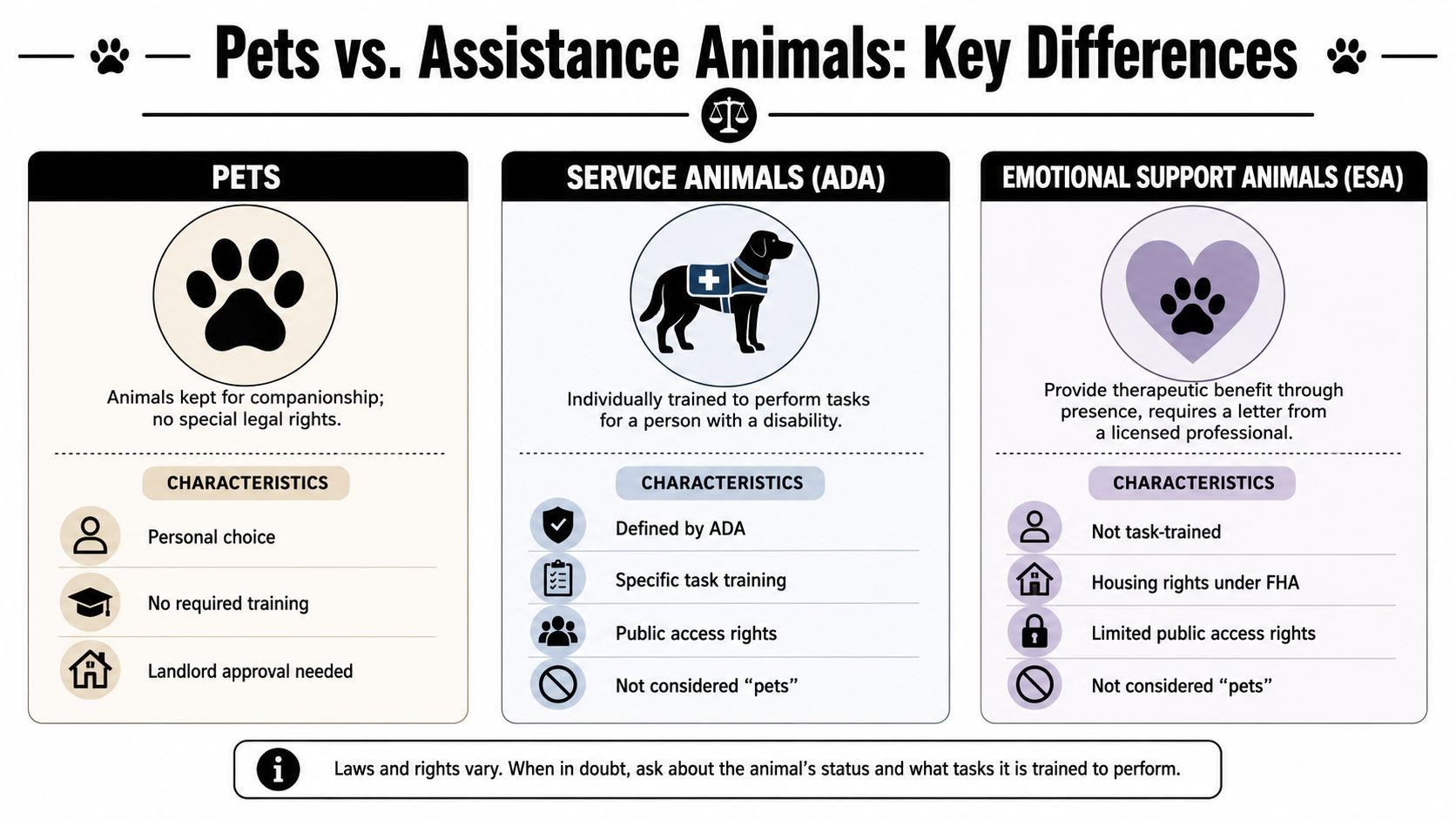
A pet is an animal kept for companionship under the lease's normal pet rules.
A service animal is generally understood under disability law as an animal trained to perform tasks for a person with a disability.
An emotional support animal is different from a service animal. In housing disputes, the issue is usually whether the tenant is entitled to a reasonable accommodation related to a disability.
Here is the practical comparison:
| Category | Lease pet rules apply | Pet fees usually apply | Counts toward pet limit |
|---|---|---|---|
| Pet | Usually yes | Usually yes if lease allows | Usually yes |
| Service animal | Not in the same way as a pet | Typically treated differently from pets | Generally not treated as a standard pet |
| Emotional support animal | Housing analysis is different from ordinary pet rules | Typically analyzed under accommodation law, not pet policy | Generally not treated as a standard pet if properly supported |
What landlords can do and what they shouldn't do
A landlord may still address real behavior problems, property damage, or safety concerns. What a landlord shouldn't do is skip the accommodation analysis and default to “no pets allowed.”
For landlords, the practical goal is consistency:
- Use a written process for accommodation requests.
- Ask only for appropriate support when the need isn't obvious.
- Focus on conduct, not labels if the animal creates actual problems.
- Avoid automatic denials based on pet caps or breed bans alone.
For tenants, the best approach is equally straightforward:
- Make the request in writing.
- Explain that you're seeking a reasonable accommodation.
- Provide supporting documentation when the law allows it to be requested.
- Keep copies of every email, form, and response.
If you're dealing with a denial, can a landlord deny an ESA in Texas walks through the housing-specific issues.
A short video can also help clarify the difference in plain language:
The mistake that creates most disputes
Don't argue the accommodation issue like it's a pet-policy issue. Those are different legal questions.
A landlord who treats an assistance-animal request as a simple lease breach risks a discrimination claim. A tenant who refuses to provide any support at all when documentation is lawfully requested can weaken an otherwise valid request. Good process matters on both sides.
Landlord Remedies for Pet Violations
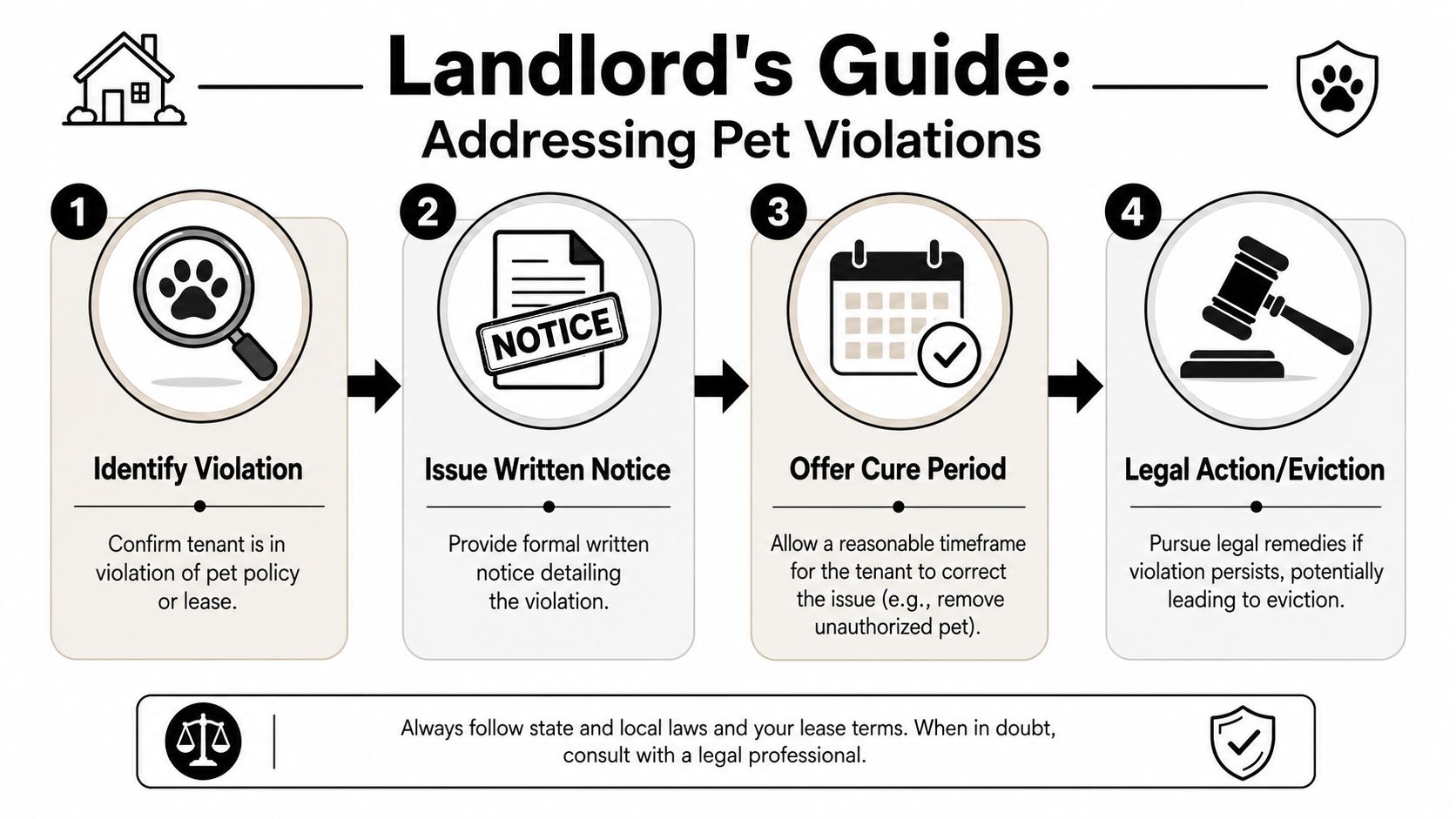
When a tenant violates a pet policy, landlords need to slow down and follow the lease and the Texas eviction process carefully. Self-help usually creates more problems than it solves.
The right way to respond
Start with proof. Confirm what animal is present, what the lease says, whether written approval exists, and whether the issue is number, type, damage, noise, or lack of compliance paperwork.
Then move in order:
Document the violation
Save photos, complaints, inspection notes, and the signed lease or pet addendum.Send written notice
Identify the lease term violated and what must be corrected.Allow the tenant to cure if the lease or notice period requires it
In many cases, the practical cure is removal of the unauthorized animal or submission of missing records.File the eviction case properly if the breach continues
Chapter 24 of the Texas Property Code governs forcible detainer actions. Landlords still need to use the court process.
If you need a procedural roadmap, the Texas eviction process for landlords explains how a forcible detainer case moves forward under Texas law.
Damages and security deposit issues
Landlords can usually pursue actual pet-related damage if the lease and the facts support it. That may include scratched doors, stained flooring, strong odor remediation, or yard damage. The key is documentation.
A move-out dispute gets stronger when the file contains dated photos, repair invoices, cleaning records, and inspection notes tied to the tenant's occupancy. Without that, a pet-damage claim often turns into a credibility fight.
For prevention, some landlords also encourage tenants to protect furniture from pet fur and claws because less wear inside the unit usually means fewer end-of-lease disputes.
Local compliance can matter too
Some violations involve more than a lease. Houston requires owners of dogs designated as dangerous to register them within the required time, pay a $50 annual fee, and provide proof of spaying or neutering unless a veterinarian says that is medically inadvisable, according to Harris County animal laws and regulations.
A landlord should enforce lease terms evenly. Selective enforcement is where many defensible cases become messy cases.
What doesn't work
Changing the locks, shutting off utilities, threatening immediate removal of an animal without process, or trying to evict by text message are all bad ideas. Texas law gives landlords remedies, but it also requires procedure.
Your Rights and Defenses as a Tenant
A pet dispute usually turns on one question first. Which rule controls your situation?
In Houston rentals, tenants often assume the city rule settles the issue. It usually does not. The better analysis is to check the rule stack in order: city law, the lease, and any HOA or condo restrictions that apply to the property. A tenant can comply with the city ordinance and still violate the lease. A landlord can point to a lease clause and still lose if the notice was defective or the rule was waived by prior written approval.
Start there.
If your landlord claims you broke a pet rule, pull every document tied to the tenancy. That includes the lease, pet addendum, renewal paperwork, HOA rules if they were incorporated into the lease, emails, texts, photos, vet records, licensing records, and any message where management approved the animal. In practice, these cases often rise or fall on a small paper trail that seemed unimportant at the time.
What to do after you get a notice
A quick, organized response gives you the best chance to contain the problem before it turns into a court case.
Read the notice line by line
Check whether it identifies the specific lease term, the conduct claimed, and what the landlord says must happen next.Compare the notice to the lease and any HOA rules
If the lease allows one thing but the HOA bars it, the wording matters. Some leases make HOA compliance the tenant's duty. Others do not do that clearly.Respond in writing with documents
If the landlord is wrong, say why and attach proof. If the landlord left out a material fact, correct it calmly.Cure what can be cured
Missing vaccination records, registration issues, or lack of written approval can sometimes be fixed quickly. Delay makes settlement harder.Keep a clean record from that day forward
Save screenshots, payment records, inspection notices, and every communication.
Compliance can help your credibility
As noted earlier, Houston has tightened some local animal-control requirements. If you have current records showing lawful ownership and responsible care, keep them together. Microchip information, vaccination records, city registration documents where applicable, and vet paperwork do not erase a lease violation, but they can help rebut a claim that you were hiding an animal or ignoring basic responsibilities.
That matters more than tenants sometimes expect. In court, credibility often comes from paperwork.
Common tenant defenses
A defense has to fit the facts. These are the ones I see most often in real lease disputes:
| Potential defense | Why it matters |
|---|---|
| Improper notice | A landlord still has to follow the lease and Texas eviction procedure before seeking possession |
| No clear lease violation | Vague pet language is harder to enforce than a specific pet addendum with clear limits |
| Waiver | If management knew about the animal, accepted pet rent, or approved the pet in writing, that can weaken a later breach claim |
| HOA rule not properly passed through | A landlord may struggle to enforce an HOA restriction against a tenant if the lease does not clearly make that rule part of the tenancy |
| Accommodation issues | A service animal or support animal request must be analyzed under fair housing rules, not ordinary pet rules |
Keep the dispute tied to documents, dates, and notice requirements. Judges usually care less about who was more upset and more about who can prove what happened.
Tenants should also watch for overreach. A landlord cannot skip the legal process because the subject is a pet. Threats to lock you out, shut off utilities, or remove an animal without court involvement can create separate legal problems. Uneven enforcement can matter too, especially when one tenant is singled out while similar violations by others were ignored.
The practical goal is simple. Figure out whether this is really a city-law issue, a lease issue, an HOA issue, or an assistance-animal issue. Those are different disputes, and the right defense depends on identifying the right one early.
Need Help? How to Resolve a Pet Dispute in Houston
Most pet disputes get better when both sides stop arguing verbally and start documenting the issue. Put everything in writing. Read the lease line by line. Confirm whether the problem is city compliance, a lease breach, an HOA issue, or an assistance-animal request. Those are different problems, and each has a different solution.
For landlords, the safest path is careful notice, consistent enforcement, and strict compliance with the Texas Property Code before filing an eviction. For tenants, the strongest position comes from quick written responses, complete records, and a clear understanding of your tenant rights before you miss a deadline or say something that hurts your case.
If you're facing an eviction notice, an ESA dispute, a lease violation claim, or a conflict over HOA pet restrictions, it often helps to speak with a Texas landlord tenant lawyer before the situation hardens. The Law Office of Bryan Fagan, PLLC handles landlord-tenant disputes involving leases, evictions, and property conflicts under the Texas Property Code, which can be useful when you need a practical legal strategy rather than guesswork.
If you need help with an eviction, lease issue, or rental dispute, contact The Law Office of Bryan Fagan, PLLC for a free consultation today.