Dealing with a landlord dispute or eviction can be stressful, but understanding your rights under Texas law can make all the difference.
If you searched what is a destabilized apartment, you're probably worried that your housing situation feels shaky. Maybe the rent changed without much warning. Maybe serious repairs keep getting ignored. Maybe your landlord is pressuring you to move, threatening eviction, or making it hard to stay in your home with any peace of mind.
In Texas, “destabilized apartment” is not a formal legal term the way it is in New York. But the problem behind that phrase is real here too. A rental can become legally unstable when a landlord ignores health and safety issues, retaliates after a repair request, bypasses the eviction process, or interferes with your right to live in the property under the lease and the Texas Property Code.
Texas tenants and landlords both do better when they understand what the law protects, and what it doesn't. A tenant may have strong rights even without rent-control protections. A landlord may have broad authority in some areas, but still has to follow the rules on repairs, rent collection, notices, and eviction procedure.
Your Guide to Housing Stability in Texas
A lot of renters use New York housing terms because they're trying to describe a Texas problem in the closest words they can find. That makes sense. When your lease feels insecure, your home feels insecure.
In practice, Texas housing instability often shows up in ways that look familiar even if the legal label is different. You report a leaking roof and nothing happens. You ask for repairs and then get threatened with removal. You pay rent, follow the lease, and still feel like the rules keep changing around you.
Practical rule: In Texas, the first question usually isn't whether an apartment is “destabilized.” It's whether the landlord is violating the lease or the Texas Property Code.
That distinction matters. New York's term comes from rent-stabilization law. Texas focuses more on lease enforcement, habitability, notice, rent collection, and court process. So the right response depends on the actual problem in front of you.
What Texas renters usually mean
Most Texas tenants who ask this question are dealing with one of these situations:
- Unsafe living conditions that affect health or safety
- Pressure to leave after asking for repairs or asserting tenant rights
- Confusing rent demands or fees that don't match the lease
- Threats of lockout or eviction without proper legal steps
- Repeated entry or interference that makes the unit feel unlivable
Landlords ask a version of the same question too. They want to know how to manage a property lawfully without creating a dispute that turns into a repair claim, retaliation defense, or eviction problem.
Why the wording matters
If you use the wrong legal label, you can still have a valid claim. But you need to frame it correctly. In Texas, that usually means looking at repair rights, retaliation protections, lease terms, and whether anyone is trying to sidestep the court process.
That's where clear legal analysis helps. Once you translate the issue into Texas law, your next steps become much easier to see.
What a Destabilized Apartment Legally Means
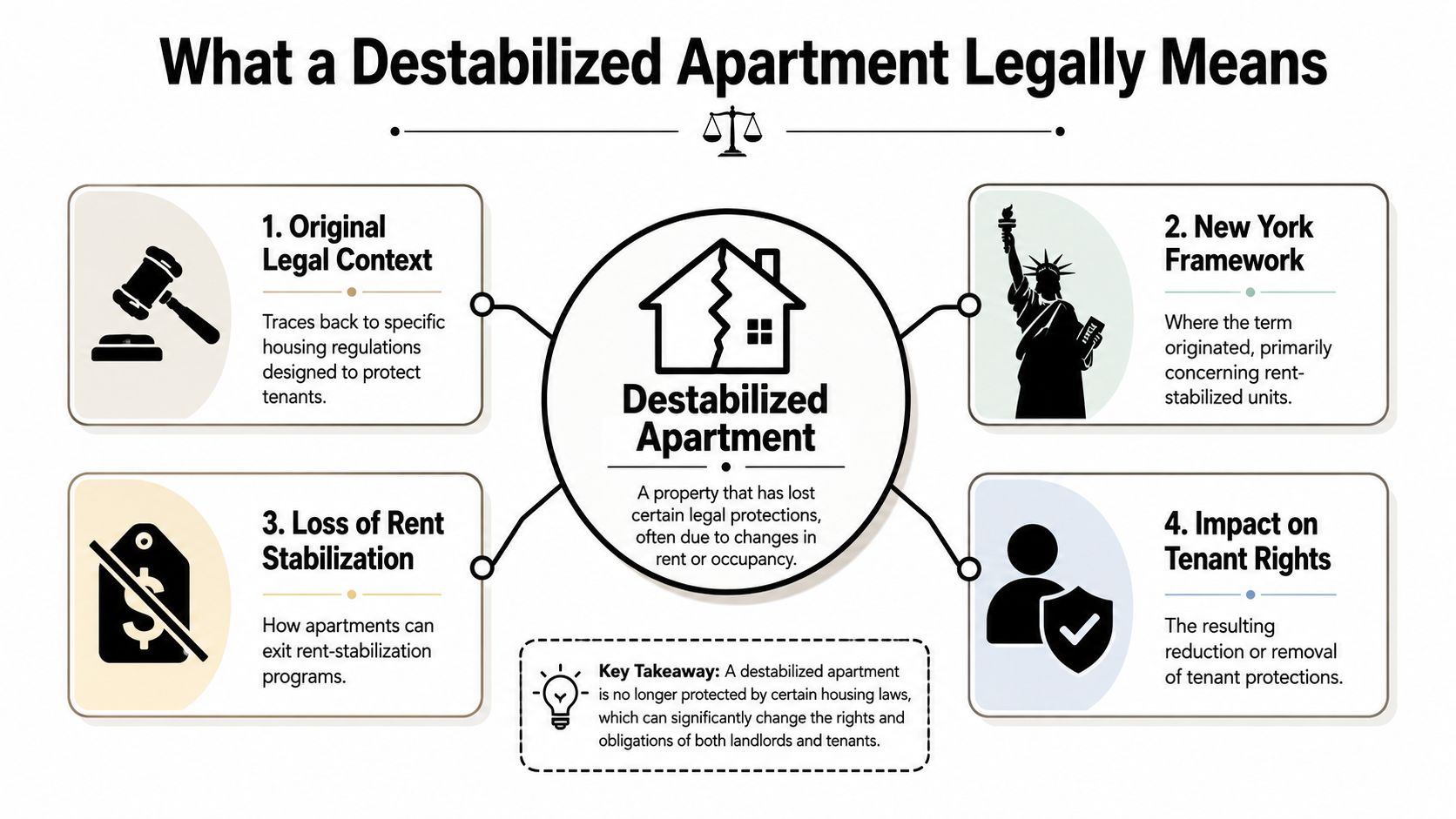
In its original legal setting, a destabilized apartment is a New York rent-stabilized unit that has been legally removed from rent-stabilization protections. Once that happens, the landlord can generally set the rent at market price without the regulatory caps that applied before.
The New York meaning of the term
Under one explanation of New York practice, destabilization or decontrol happens when a rent-stabilized unit is legally removed from those protections, often when the apartment becomes vacant and the owner can reset the rent to market level, and in some circumstances involving high-income thresholds tied to legal rent and an application to DHCR, as described by Apartments.com's rent stabilization overview.
That's a very different framework from Texas. Texas doesn't use rent stabilization in the same way, so tenants here usually need to analyze the issue through habitability, lease rights, retaliation, rent rules, and eviction procedure instead. For a Texas-specific discussion of minimum living-condition obligations, see habitability laws in Texas and what landlords must provide.
What changed in New York
A major shift came with New York's Housing Stability and Tenant Protection Act of 2019. After that reform, it became nearly impossible for a landlord to destabilize a rent-stabilized apartment unless the unit becomes vacant and the landlord invests in significant capital improvements. Before the reform, landlords could deregulate units if the legal rent exceeded approximately $2,775 or if tenants earned over $200,000 annually for two consecutive years, but those pathways were eliminated by the 2019 Act, according to this discussion of the 2019 New York deregulation changes.
That history answers the search question directly. It also shows why the term creates confusion for Texas renters. In New York, the phrase points to loss of rent-regulation status. In Texas, the main issue is usually whether the tenancy has become unstable because someone isn't following the law.
A practical Texas translation
If you're in Texas, don't focus too much on whether the apartment is “destabilized” in the New York sense. Focus on what is happening.
A more useful question is this: Has the tenancy become legally compromised?
That may happen when:
| Situation | Why it matters in Texas |
|---|---|
| Major repairs are ignored | It may trigger rights under the Texas Property Code |
| Rent demands don't match the lease | The landlord still has to follow written lease terms and state law |
| The landlord pressures the tenant to leave | That can raise retaliation or wrongful eviction concerns |
| Fees are added carelessly | Texas law limits when late fees are allowed |
If rent collection is part of the dispute, Late Fees and Rent Rules in Texas gives a useful overview of what Texas law allows regarding late fees and rent collection.
Signs Your Texas Rental Is Legally Unstable
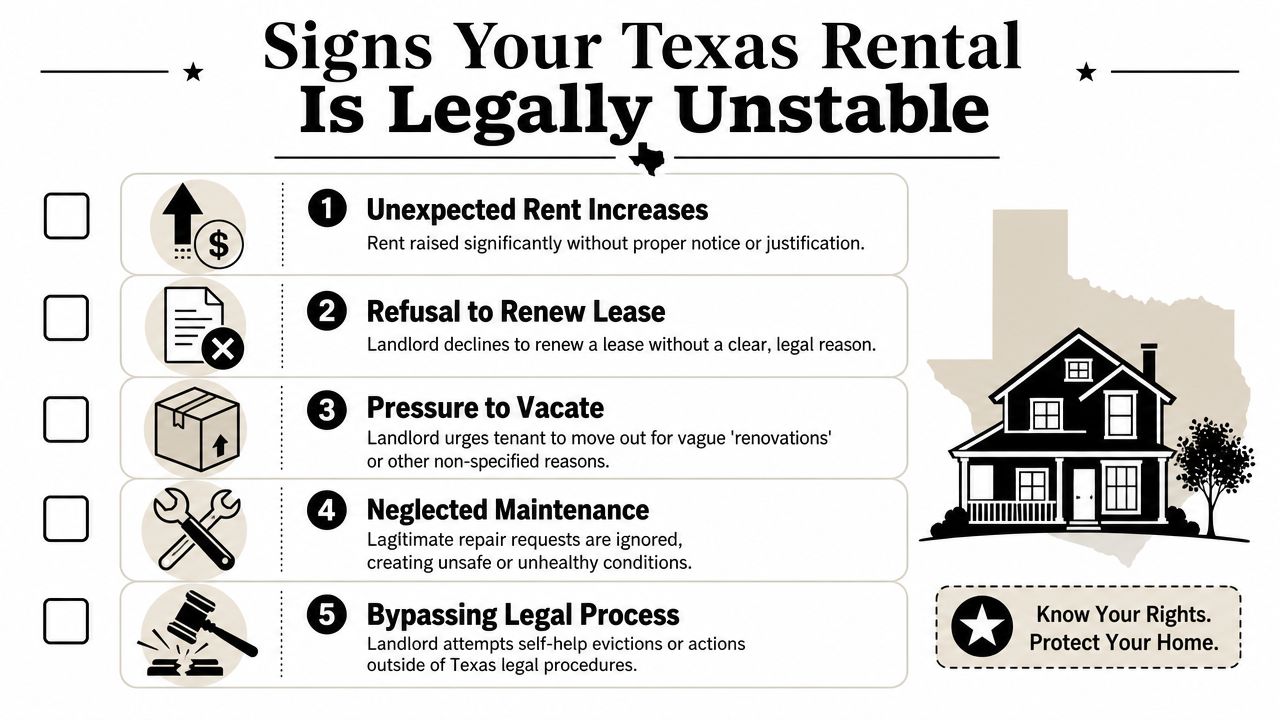
A Texas rental becomes legally unstable when daily problems turn into legal violations. Sometimes tenants sense that before they can name it. The apartment may still have four walls and a front door, but the living situation no longer feels secure, predictable, or lawful.
Repairs that affect health and safety
Start with habitability. If a condition affects physical health and safety, Texas law requires the landlord to repair it within a reasonable time after proper written notice. The law recognizes at least seven days after written notice as the baseline, unless the issue is urgent, such as a roof leak or sewage overflow. If the landlord neglects that duty, the tenant may terminate the lease, sue for damages, or seek a court order reducing rent from the date the repair request was made, as explained by Texas Law Help on the right to repairs.
That rule matters in real life. A broken decorative blind usually isn't the center of a legal case. Sewage backup, dangerous water intrusion, or a condition that creates an unhealthy living space is different.
A rental doesn't become legally unstable because it's inconvenient. It becomes unstable when the problem affects rights the law actually protects.
Short scenarios that show the difference
Here are common examples:
Leaky roof after multiple written requests
The tenant gives written notice. Water keeps entering the bedroom. Mold concerns start to grow. This is the kind of health-and-safety issue Texas law treats seriously.Sewage overflow with no prompt response
That's not a cosmetic complaint. It's an urgent condition, and waiting around without documentation is a mistake for both sides.Landlord uses pressure instead of process
A tenant reports dangerous wiring. Soon after, the landlord starts saying the tenant should “just move out” instead of addressing the issue. That often signals a retaliation problem.
Interference with quiet enjoyment
Some rentals become unstable because the landlord's conduct keeps escalating. Repeated unannounced visits, showing the unit in a disruptive way, or entering so often that the tenant no longer feels secure can create conflict even if the landlord believes they're just managing the property.
Questions about access often come up in disputes involving privacy and possession. A Landlord's Right to Enter in Texas addresses what Texas law says about landlord access and tenant quiet enjoyment.
Warning signs tenants shouldn't ignore
Not every dispute is a lawsuit. But some patterns deserve immediate attention:
- Written notices get ignored instead of answered.
- The reason for a move-out keeps changing from week to week.
- The landlord threatens lockout, utility shutoff, or removal without talking about court.
- Charges appear that aren't clearly supported by the lease.
- Conversations stay verbal on purpose and nothing important is put in writing.
What doesn't work
Tenants often make two costly mistakes.
First, they rely on phone calls alone. That leaves them with no clean record of what was reported and when. Second, they move out too quickly without understanding whether they had legal remedies short of surrendering possession.
Landlords make mistakes too. Some treat every complaint as tenant drama instead of checking whether the condition affects health and safety. Others create bigger problems by improvising instead of following the lease and the Texas Property Code.
How Texas Law Protects You from Landlord Retaliation
The most important protection many Texas tenants don't fully understand is the rule against retaliation. A landlord doesn't get to punish you just because you asked for repairs, used a legal right, or contacted a housing authority in good faith.

Under Texas Property Code Section 92.331, a tenant is protected from retaliation for six months after they in good faith give a written notice to repair, complain to a governmental housing code entity, or exercise a right granted by the lease or state statute. During that period, the landlord cannot evict them, unless an exception applies such as delinquent rent, intentional damage, or lease expiration under Section 92.332, according to Texas Legal's summary of renter rights and retaliation protections.
What “good faith” usually means
Good faith doesn't require legal perfection. It usually means the tenant made a real complaint about a real issue and wasn't inventing a problem just to gain an advantage.
A tenant who sends written notice about a dangerous repair issue is usually on stronger ground than a tenant who only complains in passing and never documents anything. A landlord who responds calmly, investigates, and communicates clearly is in a better position than one who reacts emotionally and starts threatening consequences.
For a fuller discussion of these rules, see landlord retaliation in Texas and tenant rights explained.
Conduct that may count as retaliation
Retaliation claims often arise when the timeline is tight and the landlord's response looks punitive.
Examples include:
- Rent suddenly goes up after a repair demand or official complaint
- Services are reduced after the tenant pushes for compliance
- An eviction notice appears quickly after the tenant exercised a legal right
- The lease is ended early for reasons that don't line up with the actual dispute
That doesn't mean every eviction after a complaint is unlawful. Landlords can still act for legitimate reasons recognized by law, including nonpayment in the proper case. The point is that motive and timing matter.
Key takeaway: Retaliation cases are often won or lost on documents, dates, and whether the landlord had a lawful reason unrelated to the tenant's protected conduct.
What tenants should gather
If you think retaliation is happening, keep the record simple and organized.
Save the written repair request
Keep the email, letter, portal message, or text if that's how the landlord accepts notices.Preserve the condition evidence
Photos, videos, inspection reports, and medical concerns tied to the condition can matter.Build a clean timeline
Note when you reported the issue, when the landlord responded, and when the negative action started.Keep lease documents together
You need the lease, renewal papers, notices, and payment records in one place.
After you understand the basics, this short video adds practical context on housing disputes and tenant protections in Texas.
What landlords should do instead
A lawful response is usually straightforward. Investigate the complaint. Put the response in writing. Address legitimate repair issues. If there's a separate lease violation, document that separately and don't blur it with the repair dispute.
That separation is where many cases go wrong. If a landlord has a valid nonpayment issue, they should handle it through the normal legal process. If they instead lash out after a repair request, they create an avoidable retaliation argument.
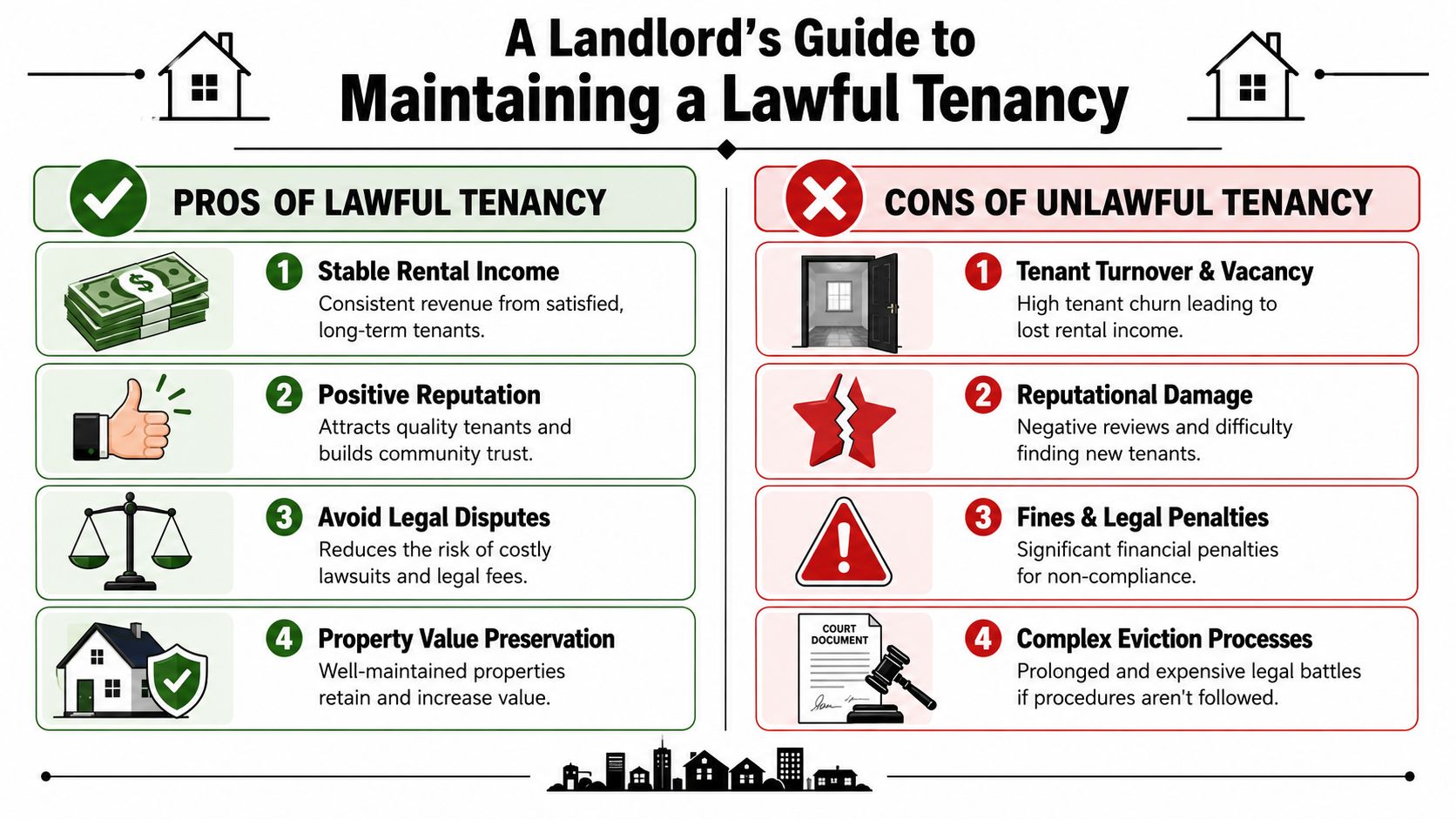
A Landlord's Guide to Maintaining a Lawful Tenancy
Landlords protect their property best when they avoid shortcuts. A lawful tenancy is not just about compliance. It's about predictable rent collection, fewer disputes, and cleaner evidence if a case ever reaches court.
The business case for following the rules
When landlords ignore repair complaints, improvise fees, or try to pressure a tenant out informally, they usually make the dispute more expensive. Even when the landlord has a valid complaint, poor process can weaken the case.
A stable tenancy usually comes from boring habits done consistently:
- Use a clear written lease
- Document notices and responses
- Track rent and fees carefully
- Repair serious conditions promptly
- Use the court process for possession disputes
Landlords don't lose control by following procedure. They keep control by creating a record a judge can trust.
Rent collection and late fee basics
Texas law gives landlords room to collect rent, but it also sets limits. A late fee is lawful only if the rent remains unpaid for more than two full days after the due date and the fee is stated in a written lease. Landlords also cannot refuse cash payments unless the lease specifies another method, and they must provide a written receipt for payments received, according to the Texas State Law Library guide on landlord-tenant rent rules.
That means a landlord should not treat fee collection casually. If the lease is vague, the payment method isn't clear, or receipts are inconsistent, the dispute can become harder to prove than it should be.
Common landlord mistakes that create unnecessary risk
A few patterns come up over and over:
| Mistake | Better approach |
|---|---|
| Handling major repair complaints verbally | Confirm receipt and response in writing |
| Charging fees not clearly tied to the lease | Review lease language before posting charges |
| Entering the property casually | Follow lease terms and respect quiet enjoyment |
| Threatening removal without court process | Use the statutory eviction process |
| Mixing personal frustration with business decisions | Separate documentation from emotion |
A practical management standard
Landlords should think in terms of proof, not assumptions. If the tenant says a condition is dangerous, inspect it. If the tenant is behind on rent, apply the lease exactly as written. If possession must be recovered, use the legal eviction route instead of self-help pressure.
In some cases, it makes sense to get legal review early. The Law Office of Bryan Fagan, PLLC helps Texas landlords and tenants evaluate lease disputes, repair claims, and possession issues under the Texas Property Code before those problems become harder to control.
Steps to Take When Your Housing Stability Is Threatened
When a tenancy starts to feel unstable, the right response is usually methodical, not dramatic. Whether you're a tenant or a landlord, your strongest position comes from written proof and careful timing.
A practical action plan
Put everything in writing
If the problem involves repairs, rent, entry, or threats to possession, stop relying on phone calls alone. Send written notice and keep a copy.Document the condition or dispute
Photos, videos, screenshots, receipts, lease terms, and payment records matter. A short timeline often helps more than a long emotional explanation.Match the problem to the right legal issue
Unsafe conditions point to repair rights. Punishment after a complaint points to retaliation. Threats to remove someone without court action point to improper eviction tactics.Check whether the lease changes the details
Texas law matters, but the written lease often controls payment method, notice procedures, and access rules. Read it closely before responding.Don't use self-help
Tenants shouldn't assume they can stop paying without legal consequences. Landlords shouldn't assume they can force a move-out without court process. Those shortcuts often create bigger cases.
If the dispute affects safety, possession, or the risk of eviction, delay usually makes the legal position worse for everyone involved.
When legal help becomes necessary
Some disputes can be handled with one solid written notice. Others can't. If there's a serious repair issue, a retaliation concern, a threatened eviction, or a question about whether you can lawfully leave the property, it's smart to get legal advice early. If safety is part of the problem, this guide on breaking a lease for safety reasons in Texas is a useful starting point.
The phrase “destabilized apartment” may come from New York, but the Texas version of housing instability is just as serious. The good news is that Texas law gives both tenants and landlords a framework to handle these disputes clearly, and lawfully.
If you need help with an eviction, lease issue, or rental dispute, contact The Law Office of Bryan Fagan, PLLC for a free consultation today. A Texas landlord tenant lawyer can help you understand your tenant rights, evaluate your options under the Texas Property Code, and respond quickly if you need an eviction attorney or guidance on repairs, notices, or retaliation.