Dealing with a landlord dispute or possible eviction is stressful, especially when it involves a pet you care about. If you're searching for how to get around a no pet policy apartment in Texas, the honest answer is that there are only a few lawful paths, and some are much stronger than others.
Texas landlords usually have broad power to enforce lease terms. That means a “no pets” clause is often enforceable. But “often” doesn't mean “always,” and it doesn't mean you're out of options. Your next step depends on whether you're dealing with a true assistance animal issue, a regular pet, or a lease violation that has already started to escalate.
First Step Review Your Lease for Pet Clauses
Most clients start in the wrong place. They start with the pet. Start with the lease.
In Texas, the written lease usually controls the relationship between landlord and tenant. Texas law does not have specific tenant-pet statutes, but landlords can prohibit or restrict pets if the rule is clearly spelled out in the written lease agreement; once a lease is signed, pet rules generally can't be changed mid-term unless the lease allows it, and an unauthorized pet can become a lease violation that leads to eviction, while approved assistance animals are treated differently under fair housing rules, including exemption from breed, size, or weight restrictions and pet-related charges, as explained in this Texas pet policy guide for landlords and tenants.
What to look for in the lease
Read the lease slowly and mark every clause that mentions animals, fees, defaults, or property rules. Don't just look for the words “no pets.”
Check for terms like these:
- Absolute prohibition means the lease bans all pets with no exception language.
- Conditional approval means pets may be allowed only with written consent, registration, or management approval.
- Penalty language may describe added charges, default notices, or grounds for termination if you keep an animal without approval.
- Property rules addendum may hide the pet policy in a separate attachment rather than the main lease.
A lot of tenants miss the addenda. Property managers often put important restrictions there.
Why this matters under the Texas Property Code
Texas Property Code disputes often come down to one simple question. What did the lease say, and did someone violate it?
If your lease clearly bans pets, your landlord starts from a strong position. If the lease allows pets only with written approval and you never got that approval, the landlord may still claim a breach. If the lease is vague, that may create room to negotiate, but vagueness is not the same as permission.
Practical rule: In Texas, verbal permission is weak protection. Written lease language is what usually matters when an eviction attorney or judge reviews the file.
A common example is the tenant who says, “The leasing agent told me it was probably fine.” If the signed lease says no pets, that conversation usually won't save the tenant.
Review the lease like a dispute may happen
Use this short checklist before you approach the landlord:
- Find the exact pet clause and highlight it.
- Check default and cure language to see whether the lease gives you a chance to correct a violation.
- Look for amendment language showing how any exception must be approved.
- Save all communications with management, including emails and text messages.
- Compare your lease to a basic checklist like what to include in a lease agreement so you can spot whether the pet issue appears in the main contract, an addendum, or house rules.
If you want a broader reference point, What a Texas Lease Should Include outlines the key terms and required disclosures in a Texas residential lease.
Understanding Your Rights for Assistance Animals
Some tenants aren't looking for a loophole at all. They're asking whether the law protects an animal that helps them function day to day. That is a different legal category.
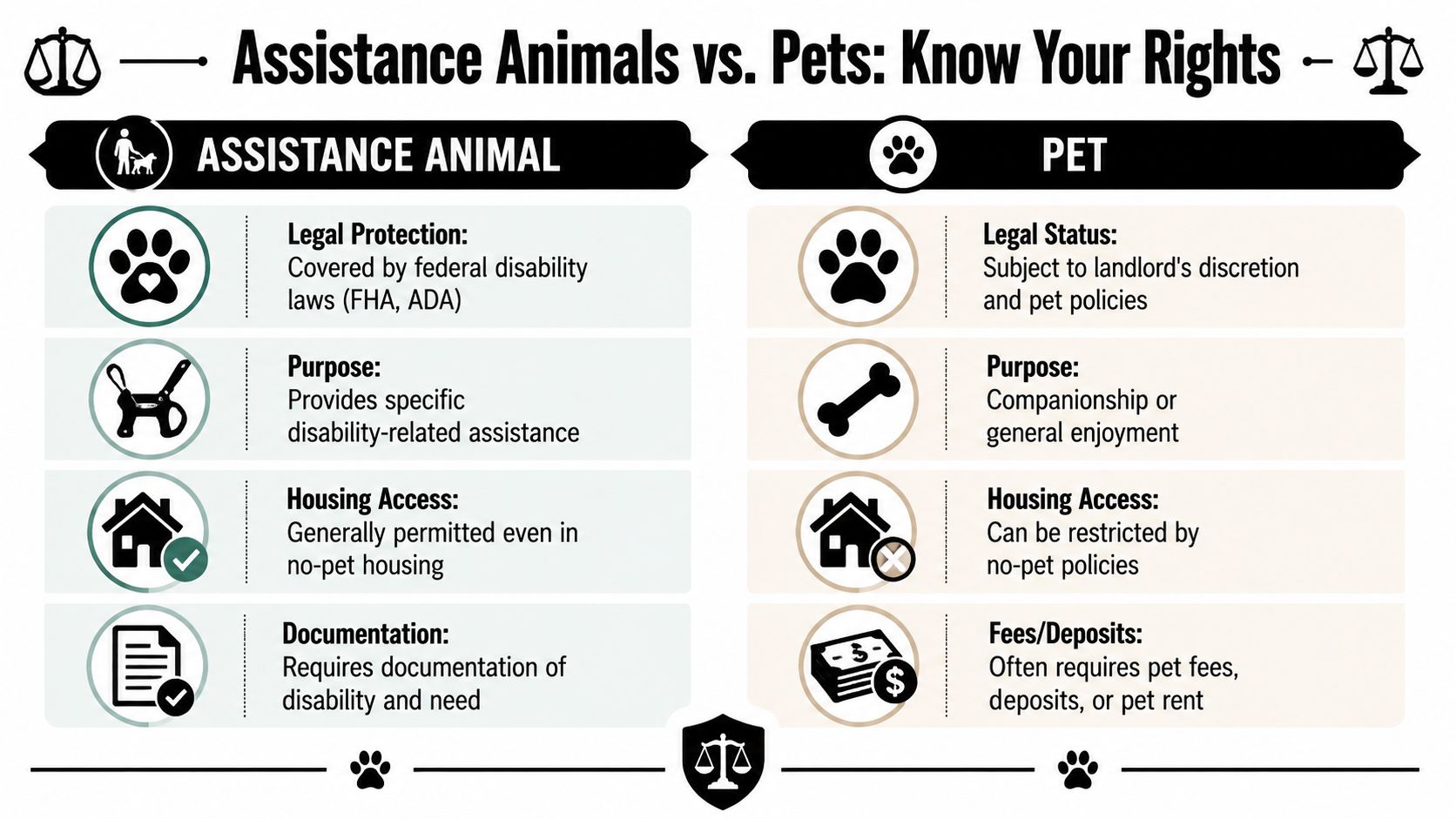
Assistance animals are not ordinary pets
Under the Fair Housing Act, a federal law in place since 1968, landlords owning properties with four or more units are legally prohibited from denying tenants with ESAs or service animals because these are treated as assistance animals, not pets, and a tenant can invoke that protection by providing a valid ESA letter from a licensed medical professional, as summarized in this Fair Housing Act assistance animal discussion.
That point matters. If your animal qualifies as an assistance animal, you are not asking the landlord to bend a pet rule as a favor. You are asking for a reasonable accommodation tied to disability rights.
Service animals and emotional support animals are not the same thing
People often blend these categories together. Housing law doesn't treat them as a casual label.
Here is the practical difference:
| Type | Main function in housing |
|---|---|
| Service animal | Performs disability-related work or tasks |
| Emotional support animal | Provides emotional support connected to a documented disability |
| Pet | Kept for companionship or enjoyment, without fair housing protection |
For housing, both service animals and ESAs can fall into the assistance-animal framework. A regular pet does not.
If your landlord calls your assistance animal “just a pet,” the legal question is not what the landlord calls it. The legal question is whether the animal qualifies for housing protection.
Coverage and limits matter
People can be harmed by misleading online advice. Federal protection isn't unlimited, and not every property is covered the same way. Smaller owner-occupied properties can raise different issues, and many online guides flatten those distinctions so much that tenants walk into avoidable lease trouble.
Another problem is documentation. A tenant may believe they are protected because they bought an online certificate or paid for a quick letter from a website that never really evaluated them. Landlords and property managers have become more skeptical of those documents, especially when they look generic or disconnected from an actual treatment relationship.
That's why the right question is not merely, “Can I say my pet is an ESA?” The right question is whether you have legitimate, supportable documentation that will stand up if challenged.
For a closer look at this issue, see can a landlord deny an ESA in Texas.
How to Formally Request a Reasonable Accommodation
A valid request is usually quiet, organized, and documented. A bad request is emotional, rushed, and built on weak paperwork.
What a landlord can reject in Texas
In Texas, a landlord can legally reject an emotional support animal only if the tenant lacks a valid ESA letter from a mental health professional licensed in Texas, or if the animal poses a documented safety or health risk such as aggression, destruction, uncontrollable toileting, or a history of violence against humans or pets; however, a landlord can't deny an ESA merely because the building or unit has a no-pet policy, according to this Texas ESA denial guide.
That means the quality of your documentation matters. So does the animal's actual behavior.
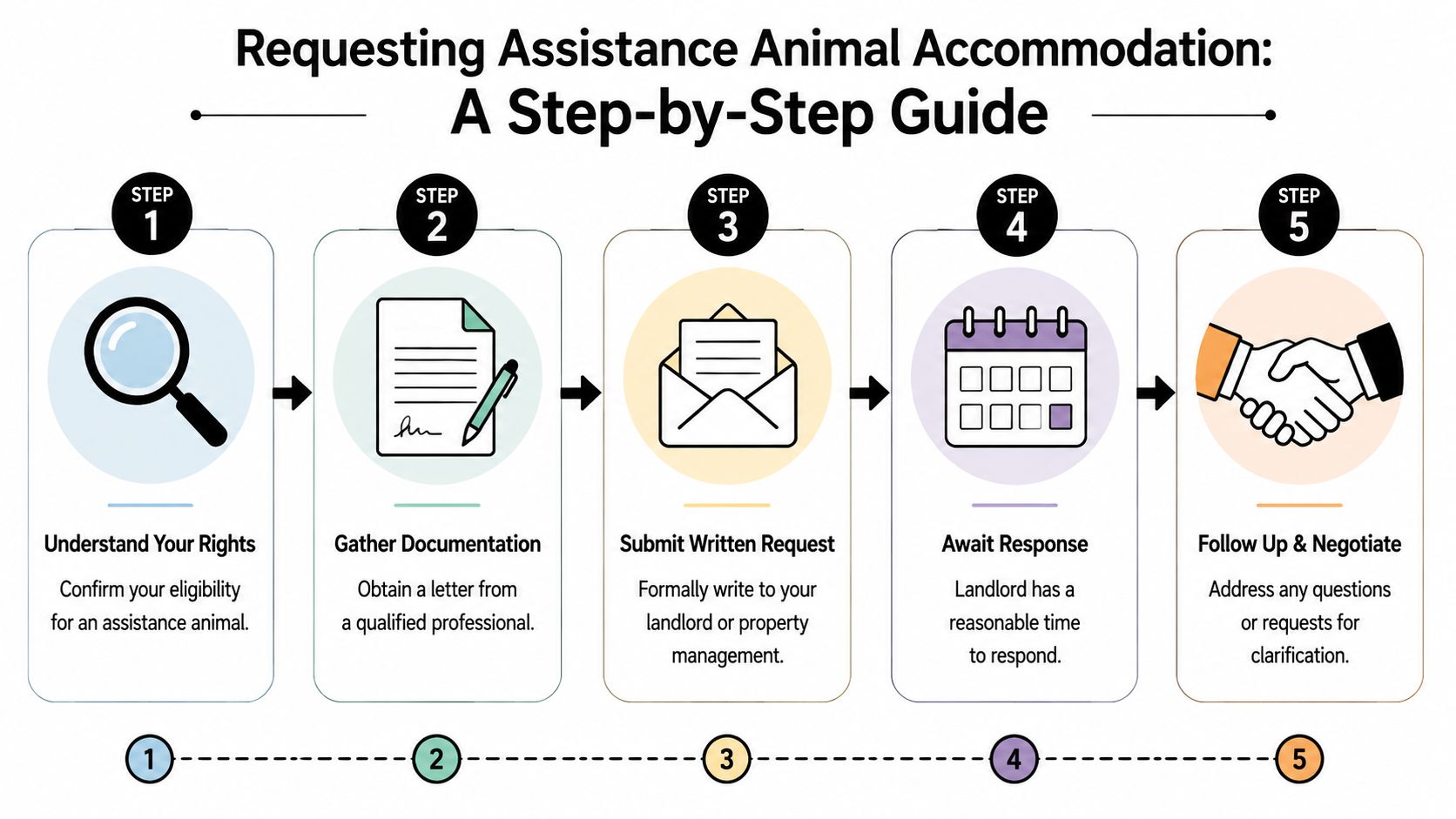
A clean way to make the request
Send the request in writing. Email is usually practical because it creates a time-stamped record, but keep a saved copy.
Your request should do four things:
- State that you are requesting a reasonable accommodation for an assistance animal.
- Identify the policy that needs to be waived such as the no-pet rule.
- Attach supporting documentation from a licensed professional.
- Ask for written confirmation from management.
Keep it simple. You don't need a dramatic explanation. You also don't need to hand over your full medical history.
Client advice I give often: Ask for the accommodation clearly, attach the right documentation, and stop talking. Extra explanations often create confusion, not protection.
Here's a practical example. A tenant with anxiety sends a short written request, attaches a letter from a licensed Texas provider stating the tenant has a disability and the animal provides needed emotional support, and asks management to confirm approval in writing. That is much stronger than showing up at the office with an internet certificate and arguing at the front desk.
A short video can also help you understand the process from a practical perspective.
What works and what usually fails
Use this table as a quick reality check:
| Approach | Risk level | Why |
|---|---|---|
| Written request with licensed-provider documentation | Lower | Creates a record and fits the legal framework |
| Verbal request only | Higher | Hard to prove later |
| Online “ESA letter mill” paperwork | Higher | Landlords may challenge credibility |
| Hiding the animal first and requesting later | Very high | Starts the dispute as a lease violation |
The “ESA letter mill” issue is where many tenants get burned. If the provider has no real treatment relationship, no meaningful evaluation, or no ability to verify the letter later, the landlord may question the request. Tenants often assume any paid letter is enough. It isn't always enough.
Negotiating a Pet Agreement with Your Landlord
If your animal is a regular pet and not a protected assistance animal, you're in negotiation territory. That doesn't mean you have no chance. It means you need to approach the landlord like you're reducing risk, not asking for sympathy.
Treat it like a business proposal
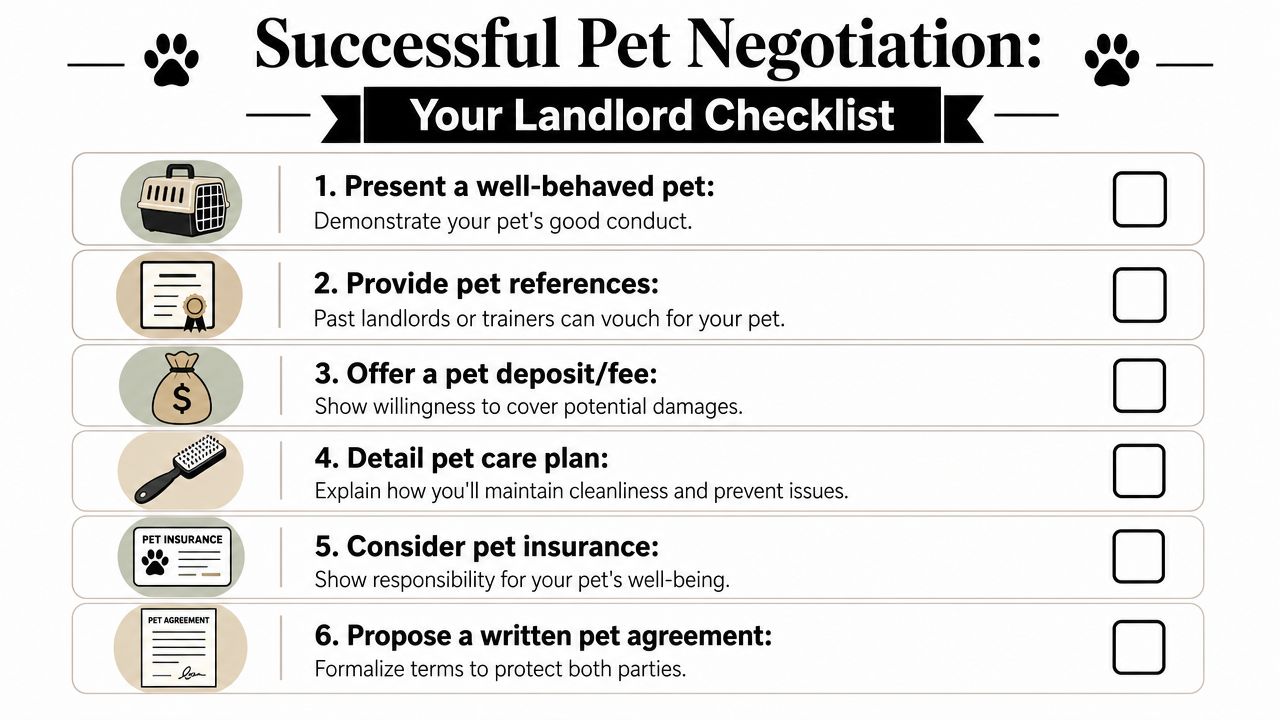
Tenants seeking an exception to a no-pet policy without federal assistance-animal status may propose an additional security deposit equal to one to two months of rent, and they may strengthen the request with a pet resume that includes training certificates, references from previous landlords, spay or neuter certificates, and a description of the pet's routine, as described in this guide to negotiating pet approval with landlords.
That's practical because it answers the landlord's real concerns. Damage. Noise. Odor. Liability. Complaints.
What to bring to the conversation
A strong pet package might include:
- A pet resume with the animal's age, routine, and temperament.
- Training records if the animal has completed obedience work.
- Past landlord references showing the pet lived in rental housing without issue.
- Vet records or spay and neuter records if available.
- A proposed lease amendment so management can approve the exception in writing.
Some tenants also offer cleaning commitments or small property care items. That can help, but only if it's paired with a written agreement.
A landlord's “Okay, I won't worry about it” is not a legal shield. If the lease still says no pets and no written amendment was signed, the risk remains with you.
Verbal deals are the trap
Texas tenants frequently encounter avoidable trouble when they pay money, the landlord accepts it, everybody moves on for a while, and then a new manager takes over or a complaint comes in. Suddenly the tenant is told the pet was never approved.
Under the Texas Property Code, lease enforcement questions often become proof questions. Can you prove the landlord changed the contract? If the answer is no, you may still face eviction even if you thought the matter was settled.
A common real-world scenario looks like this:
- The lease says no pets.
- The tenant asks the owner informally.
- The owner says it's fine if the pet is quiet.
- No amendment is signed.
- A neighbor complains months later.
- The property serves a notice for lease violation.
That's why the only safe version of a pet exception is a written lease amendment signed by the landlord. If you're trying to solve how to get around a no pet policy apartment rule for a regular pet, negotiation can work, but only if the final answer is in writing.
The Legal Risks of Hiding an Unauthorized Pet
Some tenants decide the easiest path is to move the pet in discreetly and deal with the fallout later. As a legal strategy, that is weak and expensive.
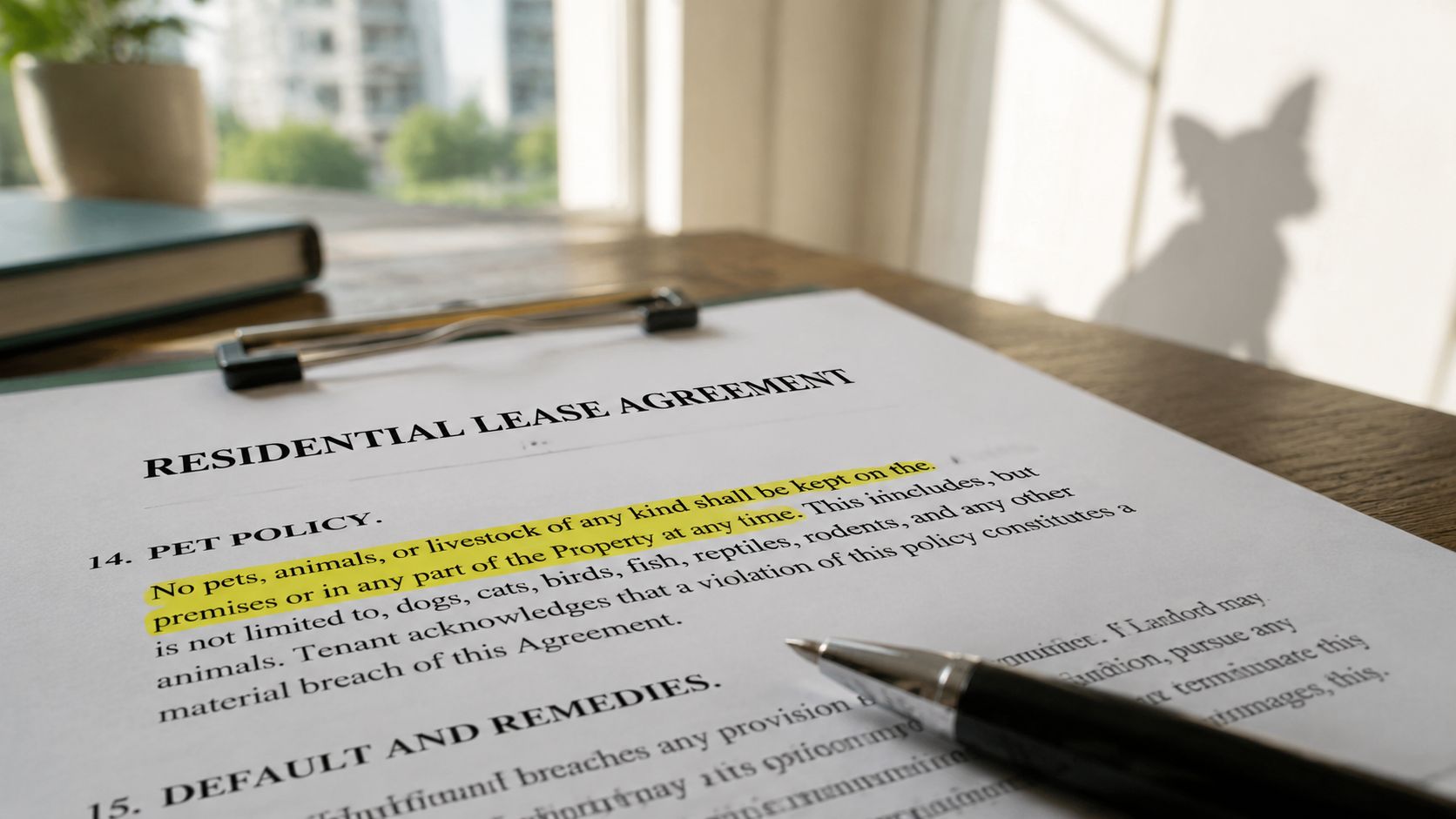
In Texas, where there are no specific state-level pet laws for tenants, landlords have full authority to enforce no-pet lease clauses, and violating those terms, even by keeping a pet temporarily, is a breach that can lead to eviction, removal of the pet, or loss of the security deposit, as explained by Texas Law Help on pets and leases.
What that usually looks like in practice
A landlord does not get to throw you out overnight. Texas law generally requires legal eviction steps such as notice and court process rather than self-help. But if the landlord can prove a clear lease violation, that process can move in the landlord's favor.
The damage is not limited to the current tenancy. An eviction case can create a rental-history problem for the next place you apply.
The side issues tenants underestimate
Unauthorized pets also create evidence problems. Odor, scratching, stains, noise complaints, hallway camera footage, maintenance reports, and messages from neighbors can all become part of the dispute.
If you're worried about carpet damage or odor becoming a point of conflict, practical prevention matters. A resource on preventing cats peeing on carpet can help reduce one of the most common complaints landlords raise in pet-related disputes.
Hidden pets tend to be discovered at the worst possible moment, after a maintenance visit, a complaint, or a renewal review, when your leverage is already gone.
Why this choice usually backfires
Here is the blunt version:
- You lose credibility if you ask for mercy after hiding the animal.
- You weaken future negotiation because the landlord now sees a contract violation, not a request.
- You increase financial exposure if there is damage, cleaning, or lease-default language in the contract.
- You invite eviction litigation that could have been avoided with a written request or a negotiated amendment.
If the animal is an assistance animal, use the accommodation process. If the animal is a pet, negotiate. Sneaking the animal in is the option with the least protection.
When to Contact a Texas Landlord-Tenant Attorney
It is 6:30 p.m., maintenance found the animal during an entry, and a notice to vacate is now taped to your door. At that point, this is no longer a routine pet discussion. It is a lease-enforcement problem with deadlines, evidence issues, and real risk to your record.
A Texas landlord-tenant attorney can help when the dispute turns on legal procedure instead of simple negotiation. That usually means an assistance-animal request was denied despite proper documentation, a landlord is trying to charge pet fees for a protected animal, management gave oral approval but refuses to honor it, or the pet issue is now tied to a notice of default or eviction filing. In Texas, small paperwork mistakes matter. So does timing.
The verbal-approval problem deserves special attention. If a manager said yes in the hallway or over the phone, but the lease was never amended, you may have a proof problem. Texas courts usually care far more about the written lease, written notices, and written addenda than about a later dispute over who said what.
You should get legal advice quickly if:
- An eviction notice has already been served and the animal is listed as the lease violation.
- Your ESA letter is being challenged and you need a candid review of whether it is likely to hold up under scrutiny.
- The paperwork looks suspicious because the letter came from an online service that did not provide a legitimate evaluation of your condition or need for the animal.
- The landlord is charging deposits, pet rent, or fees for an assistance animal and refuses to correct it in writing.
- You need a lawyer to review the lease and notices before you respond under the Texas Property Code.
Fraudulent ESA paperwork creates problems fast. I have seen tenants assume any paid online letter will solve the issue, only to learn too late that weak documentation can undermine an otherwise valid request. A lawyer cannot turn bad paperwork into good paperwork, but can tell you whether you should press the issue, cure the record, or prepare for a defense.
If you are unsure whether you are at that stage, this guide on when to hire a Texas rental lawyer is a useful place to start. If you need direct help with lease enforcement, accommodation disputes, or an active eviction, The Law Office of Bryan Fagan, PLLC handles Texas rental and property disputes for both landlords and tenants.