Dealing with a landlord dispute or eviction can be stressful—but understanding your rights under Texas law can make all the difference. An eviction appeal lawyer is a legal professional who represents landlords or tenants in challenging an unfavorable eviction ruling from a Texas Justice Court. They manage the entire appeals process, from filing time-sensitive documents to arguing the case in a new trial, with the goal of overturning the original judgment.
Navigating Your Rights After an Eviction Judgment

Receiving an eviction judgment in a Texas court can leave you feeling defeated. It’s stressful, frightening, and easy to think there’s nothing left to do. But whether you’re a tenant being told to leave your home or a landlord who received an unfair ruling, you need to know one thing: an eviction judgment is not necessarily the final word.
An eviction appeal gives you a legal path forward—a second chance to make your case in a higher court and fight for the right outcome.
What the Texas Property Code Says About Your Right to Appeal
The Texas Property Code gives both tenants and landlords the right to appeal a decision from a Justice of the Peace (JP) Court. This is a critical protection. It means you get an opportunity to have your entire case heard again, from scratch, in a new court. But there’s a catch—the appeals process is loaded with strict rules and deadlines that are incredibly easy to miss. This is where an eviction appeal lawyer becomes your most valuable advocate.
An experienced Texas landlord-tenant lawyer knows exactly what it takes to file and win an appeal. They ensure every document is filed correctly and on time, so your case doesn't get thrown out on a simple technicality.
Real-World Scenario: Imagine you’re a tenant who lost an eviction case because you couldn’t present text messages from your landlord promising to fix a leak. In an appeal to the County Court, your lawyer can use the discovery process to formally introduce those text messages as evidence, potentially changing the outcome of your case entirely.
We see successful appeals for many reasons, including:
- Improper Procedure: The landlord or even the court failed to follow the exact legal steps required for a Texas eviction.
- Illegal Retaliation: The eviction was filed in response to you legally requesting repairs or reporting a code violation.
- Breach of Lease: The other party didn’t hold up their end of the lease agreement.
- New Evidence: Critical information has come to light that wasn't presented in the original JP court hearing.
An eviction judgment from a Justice Court can feel like a final blow, but it's often just the first round. An appeal gives you a completely new trial, and with the right legal strategy, you can protect your rights and work toward a much better outcome.
Losing in court can cause more than just the loss of a home or rental income—it can damage your record. If you’re worried about this, it’s important to understand how a Texas Abstract of Judgment could affect you long-term.
Hiring an eviction appeal lawyer provides the expertise you need to effectively challenge the court’s decision. We’ll dig into the facts of your original case, pinpoint the strongest grounds for an appeal, and build a powerful new argument to present in County Court. It’s not just about increasing your chances of winning—it’s about giving you peace of mind during one of the toughest times you can face.
What Is an Eviction Appeal in Texas?
When a Justice Court judge rules against you in an eviction case, it’s easy to think it’s all over. But in Texas, that first judgment is far from the final word. An eviction appeal isn't just asking a higher court to check the first judge's work—it’s a complete do-over.
This legal process is called a trial de novo, and it’s your second chance to win. Think of it less like a review and more like a brand-new trial. The case moves to a County Court, where a new judge starts from scratch, hearing all the evidence and arguments as if the first trial never happened. This is your opportunity to present a much stronger case, and an eviction appeal lawyer is the key to making it count.
Whether you’re a tenant ordered to move or a landlord who unfairly lost your case, you have the right to appeal. Understanding that this is a real, accessible legal option is the first step toward getting the outcome you deserve.
How a Trial De Novo Works for You
The idea of a "trial de novo" is a cornerstone of Texas eviction law, and it’s a powerful tool. Unlike other appeals that only look for legal errors made by the first judge, a de novo trial simply wipes the slate clean.
So, what does this actually mean for your case?
- New Evidence is Allowed: You can introduce photos, documents, or witness testimony that you couldn't use in the Justice Court.
- A Stronger Strategy Can Be Used: Your eviction appeal lawyer can see what worked—and what didn't—the first time around and build a much sharper legal argument.
- A New Judge Hears Everything: You get a fresh set of eyes on the facts, free from any biases or misunderstandings that might have shaped the original decision.
This process gives you a powerful opening to fix mistakes from the first hearing and present your case the right way. Because it’s a full retrial, every single detail matters.
Why You Must Act Quickly
The world of evictions is always changing. While national data shows fewer eviction filings since the pandemic, the number of completed evictions is actually rising. This tells us one thing: too many landlords and tenants are losing their cases and not fighting back with an appeal. In some cities, completed evictions are even on track to blow past pre-pandemic levels. For a closer look at this data, you can discover more insights on eviction trends from New America.
This makes having an eviction appeal lawyer more critical than ever. A fast, strategic appeal can completely turn a case around.
An eviction appeal is your legal right to a second chance. It’s not a review of the past—it’s a completely new trial where you can fight for a different future.
At The Law Office of Bryan Fagan, PLLC, we help landlords and tenants across Texas use the appeal process to their advantage. For landlords, an appeal can be the tool needed to properly enforce a lease. For tenants, it's often the last line of defense against a wrongful eviction or a way to force a landlord to make repairs required under the Texas Property Code.
The key is to act fast and follow the rules perfectly. That's where professional guidance makes all the difference.
How to Appeal an Eviction: A Step-by-Step Guide
When you're fighting an eviction, appealing a bad ruling can feel like your only option. But in Texas, the appeal process is a minefield of unforgiving deadlines. One misstep, one missed signature, or one day late—and your case is over before it even starts.
The clock starts ticking the moment the judge signs the judgment. You have just five days to file your appeal. This includes weekends and holidays. If you miss that window, it’s closed for good. There are no extensions.
This is the path your case will follow, moving from the local Justice Court up to the County Court for a completely new trial.
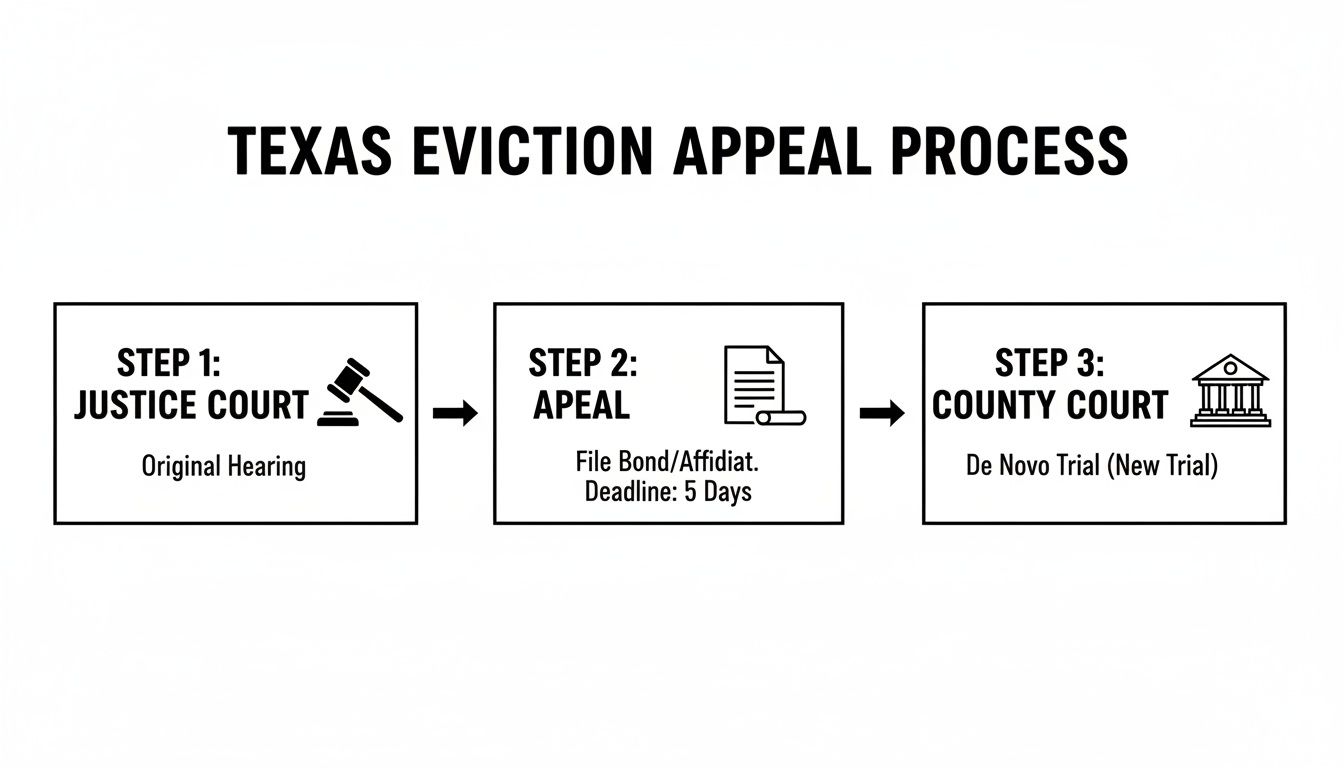
As you can see, it's not just a review of the old case; it's a fresh start. But getting there requires absolute precision, which is why having an experienced eviction lawyer managing these steps is so critical.
Step 1: Filing the Appeal and Meeting Financial Obligations
Within that five-day window, you have to do more than just tell the clerk you want to appeal. You must file the right legal documents and meet specific financial requirements to get your foot in the door.
This is where most self-represented appeals fail. Choosing the wrong form or failing to pay on time will bring your appeal to a dead stop.
You have two main options to secure your appeal:
- Filing an Appeal Bond: This is a financial guarantee that you'll pay the judgment if you lose the new trial. The judge sets the bond amount, which usually covers owed rent, court costs, and the landlord's attorney fees.
- Filing a Statement of Inability to Afford Payment of Court Costs: Often called a "pauper's affidavit," this sworn document states you don't have the funds for the appeal bond or court fees. It lets you move forward without a large upfront payment.
Your financial situation dictates which path to take. An attorney can help you choose correctly and ensure the paperwork is perfect.
Step 2: Paying Rent to the Court to Remain in the Property
If you're a tenant appealing an eviction for non-payment and you want to stay in your home during the appeal, you have another immediate deadline. You must pay one month's rent to the court registry within five days of filing your appeal.
Crucial Reminder: This is not the appeal bond. This separate payment is what stops the landlord from getting a "writ of possession" and having the constable legally remove you while your appeal is pending.
If you miss this initial payment, or any future monthly rent payments to the court, you can be evicted immediately—even with an active appeal. This is a strict rule under Texas Property Code Section 24.0054.
To help you track these fast-moving requirements, here is a breakdown of the timeline and what you must get done.
Texas Eviction Appeal Timeline and Key Actions
This table outlines the critical steps, deadlines, and requirements for filing an eviction appeal in Texas after a Justice Court ruling.
| Step | Deadline | What You Need to Do | Key Document/Action |
|---|---|---|---|
| 1. File Notice of Appeal | 5 days from judgment | Formally notify the Justice Court you are appealing the decision. | Written Notice of Appeal |
| 2. Post Bond or Affidavit | 5 days from judgment | File either an Appeal Bond for the set amount or a Statement of Inability to Afford Payment. | Appeal Bond or Pauper's Affidavit |
| 3. Pay Initial Rent | 5 days from appeal filing | If you are the tenant and staying in the unit, you must pay one month's rent to the court. | Payment to the Court Registry |
| 4. Pay Ongoing Rent | Monthly, as it comes due | Continue paying rent to the court each month to maintain possession of the property. | Monthly payments to the Court Registry |
It's a lot to handle under immense pressure. A skilled eviction appeal lawyer takes this burden off your shoulders, ensuring every procedural trap is avoided. For a deeper dive into the specifics, you can learn more about how to appeal an eviction on our dedicated page. Remember, acting quickly and correctly is your strongest defense.
Valid Grounds for Appealing an Eviction in Texas
You might feel like the judge just got it wrong. But to win an eviction appeal, that feeling isn't enough—you need clear legal reasons, or grounds, to challenge the original ruling. This is where a skilled eviction appeal lawyer becomes your most important asset. They dig into the details of your case to find the strongest legal arguments for your new trial in County Court.
Think of it this way: your appeal needs a solid foundation to stand on. An appeal is your second chance, but only if it's built on specific, recognized legal errors or defenses.
Procedural Errors and Defective Notices
The Texas eviction process is a minefield of strict rules landlords must follow to the letter. Any misstep, no matter how minor it seems, can be enough to get the entire eviction thrown out. This is often the cleanest and most direct way to win an appeal.
An experienced eviction attorney will immediately look for common mistakes like these:
- Improper Notice to Vacate: The landlord didn't give you a proper written notice as required by the Texas Property Code. A verbal warning or text message is usually not enough.
- Filing the Lawsuit Too Soon: The landlord jumped the gun and filed the eviction suit in court before your notice period was over.
- Errors in Court Paperwork: The eviction petition itself is flawed, listing the wrong tenant, the wrong address, or other significant mistakes.
Real-World Scenario: A landlord sends a tenant a text message saying "get out in 24 hours" and files an eviction the next day. This violates the Texas Property Code's requirement for a written notice to vacate with a specific time frame. An eviction appeal lawyer can use this clear procedural error to have the case dismissed.
Illegal Retaliation or Discrimination
Texas law is clear: your landlord cannot punish you for exercising your legal rights as a tenant. If they try to evict you right after you've taken a legally protected action, that's not an eviction—it's illegal retaliation.
Texas Property Code Section 92.331 specifically forbids a landlord from retaliating against you for things like requesting essential repairs, calling a code inspector, or joining a tenant organization.
Did you complain in writing about a broken heater or a serious roof leak, only to be slapped with an eviction notice a week later? You might have a powerful defense. An eviction appeal lawyer will help you gather the evidence—emails, photos, repair requests—to show a judge that the eviction wasn't about rent, it was payback.
Likewise, evicting someone based on discrimination is illegal. The Fair Housing Act protects you from being kicked out because of your race, religion, sex, national origin, family status, or a disability. Unfortunately, these situations are on the rise. Fair housing complaints related to rental issues have skyrocketed, with retaliation complaints more than doubling in recent years. You can read the full report on fair housing statistics to see the data for yourself.
Breach of the Warranty of Habitability
Every residential lease in Texas includes an "implied warranty of habitability." This is the law. It means your landlord has a non-negotiable duty to provide a home that is safe and livable. When they fail to fix major problems that impact your physical health or safety, they’ve broken that promise.
If you were evicted for not paying rent, but you only withheld that rent after the landlord ignored your repeated, written pleas to fix a severe mold outbreak or restore your hot water, you may have a valid defense. An eviction appeal lawyer can argue that the landlord's failure to provide a habitable home legally excused your non-payment, making the entire eviction wrongful.
How an Eviction Appeal Lawyer Builds a Winning Case

Winning an eviction appeal isn't about luck. It’s about building a rock-solid case from the ground up, because an appeal is a brand new trial. This is where an experienced lawyer turns the chaos of your initial hearing into a focused legal strategy.
With an attorney, you’re actively building the strongest case possible—whether that means winning in court, negotiating a fair settlement, or securing the time you need to plan your next move. It all starts with meticulous preparation.
Uncovering the Truth with Legal Discovery
One of the most important tools in an eviction appeal is legal discovery. This is the formal process of demanding information and documents from the other side. While discovery is extremely limited in Justice Court, it’s wide open in County Court, allowing your lawyer to find crucial evidence that may have been hidden or ignored.
Think of it as a legal investigation. Your attorney can expose the weaknesses in the other party's case by forcing all the facts out into the open.
Through discovery, your lawyer can:
- Demand Documents: This includes the full lease, every email and text message, payment records, repair invoices, and internal notes about your tenancy.
- Submit Interrogatories: These are written questions the other party must answer under oath, forcing them to clarify their claims before trial.
- Depose Witnesses: Your attorney can question the landlord, property manager, or other key witnesses under oath to find inconsistencies in their testimony long before you step into the courtroom.
An appeal gives you a clean slate. A sharp lawyer uses discovery to paint a new, far more complete picture for the judge—one that shines a spotlight on the facts and legal arguments that truly matter.
Gathering New Evidence to Tell Your Story
While your attorney is digging for evidence from the other side, they will also work with you to build your own case. This is your chance to bring in new evidence that wasn’t used—or simply wasn’t allowed—in the first hearing.
This could mean finding witnesses who can testify about the property's condition or gathering new photos that prove your point. Every piece helps your lawyer construct a clear, compelling narrative for the judge. A strong case tells a story backed by solid proof.
For a tenant, this might mean proving the eviction was retaliatory. For a landlord, it could mean showing a clear and undeniable lease violation. To do this effectively, you need to understand your rights and obligations. You can get a detailed breakdown by reading about your tenant rights in Texas during an eviction.
This kind of strategic approach is more critical now than ever. In some major Texas markets, eviction filings have shot up to their highest numbers in over a decade, often driven by rising housing costs. This spike in cases shows why a well-planned appeal can lead to a resolution that works for everyone. You can read the full research on rising eviction rates for more details.
Ultimately, your eviction appeal lawyer pulls it all together—legal research, new evidence, and facts from discovery—to create a comprehensive trial strategy. They will anticipate the other side's arguments and prepare to dismantle them, giving you the best possible shot at success in your new trial.
Straight Answers to Your Texas Eviction Appeal Questions
When you’re facing an eviction judgment, the clock is ticking and the questions are piling up. It’s a stressful, confusing time, and you need clear, direct answers—not dense legal jargon.
This isn’t just about information; it’s about giving you the clarity you need to make the right move. Let's tackle the questions we hear most often from landlords and tenants.
How Much Does an Eviction Appeal Lawyer Cost?
This is usually the first question people ask, and for good reason. The cost for an eviction appeal lawyer depends on your case's complexity and how the attorney structures their fees. That’s why many firms, including The Law Office of Bryan Fagan, PLLC, offer a free initial consultation to assess your situation and give you a clear picture of the costs involved.
You'll typically see two kinds of fee arrangements:
- Flat Fees: A single, predictable cost to handle the entire appeal. It’s common for more straightforward cases and gives you certainty from the start.
- Hourly Rates: For more complex appeals that might require extensive preparation or a full trial, the attorney will bill for their time.
We’ll break it all down for you in our consultation so you can make an informed choice about defending your rights.
Can I Be Evicted While My Appeal Is Pending?
No—as long as you follow the rules perfectly. Filing an appeal correctly triggers a legal "stay," which pauses the eviction process. If you follow the rules laid out in the Texas Property Code, you have the right to remain in your home until the County Court hears your case.
For tenants, this means filing the appeal properly and, if the eviction was for non-payment of rent, paying one month's rent into the court's registry within five days of filing. You must also continue paying your rent to the court every month. As long as you follow through, the landlord can’t get a writ of possession to have you removed.
If you miss a payment or a deadline, the landlord can ask the judge to lift the stay and move forward with the eviction. This is exactly why having an experienced tenant rights attorney in your corner is so essential.
What Are the Possible Outcomes of an Appeal?
An eviction appeal is a completely new trial, which means the outcome isn't just a simple win or lose.
Here are the three main ways things can go:
- You Win the Appeal: The County Court judge sides with you, completely overturning the original eviction judgment from the Justice Court.
- You Lose the Appeal: The judge agrees with the first ruling, and the eviction judgment stands.
- The Case is Settled: This happens frequently. A sharp eviction appeal lawyer can often negotiate a deal with the other side, resolving the issue without needing another trial.
A settlement can be a win-win. For a tenant, it might mean getting more time to find a new place or reducing the back rent owed. For a landlord, it can mean getting the property back on a firm date without the risk and cost of another trial.
Is It Worth Appealing if I Just Need More Time to Move?
Absolutely. An appeal is one of the most effective legal tools for securing more time. The process itself has built-in timelines that create a buffer you wouldn't get otherwise. Instead of a constable showing up at your door with a 24-hour notice, an appeal gives you critical breathing room.
More importantly, filing an appeal creates leverage. It puts you in a position to negotiate from a place of strength. Your attorney can use that leverage to work out a formal move-out agreement with the landlord, turning a chaotic situation into a predictable timeline with weeks or even months to find a new home.
Take the Next Step to Protect Your Rights
When a Justice Court judge in Texas issues an eviction judgment, it's easy to feel like the fight is over. It’s not. In fact, you have a legal right to appeal the decision, which grants you an entirely new trial and a second chance to present your case.
This is more than just a do-over; it's about standing up for your rights. Whether you're a tenant facing the loss of your home or a landlord who believes the court got it wrong, the Texas eviction appeal process is a powerful tool.
Your Five-Day Window to Act
Here’s the most important thing you need to know: time is not on your side. Texas law gives you just five days from the date the judge signs the judgment to file an appeal. This five-day window is absolute—it includes weekends and holidays, leaving zero room for mistakes or delays.
Trying to handle the complex paperwork and rigid deadlines on your own is a huge gamble. One missed signature, one form filed a day late, and your right to appeal can be lost for good. This is precisely where an experienced eviction appeal lawyer becomes your most critical asset.
An eviction judgment is not the final word. It's the start of a new chapter, and with a strategic legal appeal, you can take control of the story and fight for a better outcome.
A skilled attorney ensures every step is handled perfectly and on time, from filing the notice of appeal to securing an appeal bond or filing a pauper's affidavit. They take a chaotic, high-stress situation and turn it into a structured, strategic plan designed to protect you.
Don't Face This Alone
Your case might involve procedural mistakes by the landlord, an illegal retaliatory eviction, or a breach of the lease. No matter the details, you have options. An appeal can do more than just overturn a wrongful judgment—it can give you the leverage needed to negotiate a better outcome, like getting more time to move or settling a financial dispute.
Don't let a single court ruling dictate your future. Take back control by understanding your rights under the Texas Property Code and acting fast with a knowledgeable lawyer in your corner. Your home, your rental property, and your peace of mind are far too important to leave to chance.
If you need help with an eviction, lease issue, or rental dispute, contact The Law Office of Bryan Fagan, PLLC for a free consultation today.