Dealing with a landlord dispute or eviction can be stressful—but understanding your rights under Texas law can make all the difference. When you’re frantically searching for "property lawyers near me," you're not just looking for an answer—you're looking for a lifeline. The most important step you can take right now is to connect with a local Texas attorney who understands the landlord-tenant laws in your specific county. They can protect your rights from day one.
Your First Move When Facing a Property Dispute in Texas
Dealing with a landlord-tenant issue, whether it's an illegally withheld security deposit in Austin or a lease violation claim in Dallas, feels personal and incredibly urgent. It's easy to get overwhelmed. But understanding your rights under Texas law empowers you to take control of the situation. Your first few actions set the tone for everything that follows, and having a dedicated legal professional in your corner is the strongest move you can make.

This guide is designed to walk you through finding the right legal support, step by step. We'll help you go from feeling stressed and cornered to feeling confident and ready to protect your property rights.
Why Local Legal Help Is Critical
Here’s the thing about property law: it's not just complicated, it’s intensely local. A landlord’s rights in a Harris County court might be viewed differently by a Justice of the Peace in Tarrant County. An eviction attorney who is in those local courtrooms every week knows the procedures, the judges, and the arguments that actually work.
That local expertise isn't just a nice-to-have; it's essential. For example, a tenant in Houston facing eviction for late rent needs a lawyer who knows the exact notice requirements in the Texas Property Code and, more importantly, how the local JP court enforces them. A generic, one-size-fits-all approach is a recipe for disaster.
The stakes are high. Landlords in Texas file thousands of eviction cases every year, often triggered by nonpayment or lease breaches. Understanding the specific procedures outlined in the Texas Property Code is crucial for both sides.
Common Triggers for Property Disputes
Understanding what kicks off these conflicts helps you know when it's time to call for legal help. Many disputes start as simple misunderstandings that spiral out of control because of poor communication or a lack of legal knowledge.
Here are some of the most common issues we see day in and day out:
- Security Deposit Disputes: The landlord wrongfully keeps a deposit, or a tenant disagrees with deductions for damages.
- Eviction Notices: A landlord serves a notice to vacate for non-payment, lease violations, or other reasons—sometimes without proper legal grounds.
- Failure to Make Repairs: A tenant's health and safety are at risk because the landlord refuses to fix major problems like plumbing, mold, or AC.
- Lease Violations: This could be anything from unauthorized roommates and unapproved pets to illegal activity on the property.
The good news is that many of these situations can be resolved before they end up in a courtroom. Our attorneys are often able to find a path forward through sharp negotiation or mediation. Find out more about how real estate mediation can resolve conflicts without the headache of a court battle.
Clarifying Your Legal Needs Before You Search
Before you type "property lawyers near me" into Google, take a moment to get clear on your problem. This will make your search much more effective.
Are you a tenant staring down an illegal eviction notice? Or a landlord trying to enforce the terms of a lease? Pinpointing your exact legal challenge helps you find an attorney who has actually handled—and won—cases like yours before.
Texas landlord-tenant law is incredibly specialized. A lawyer who’s a rockstar at drafting complex commercial leases might be completely out of their depth in a residential eviction hearing. Knowing what you need from the start helps you cut through the noise and ask the right questions during your first call.
What Does the Texas Property Code Say?
Every situation feels personal, but most property disputes fall into a few common categories covered by Texas law. Figuring out which bucket your problem fits into is the first step toward getting it solved.
Scenario for a Tenant: Imagine a tenant in Houston whose landlord has ignored written requests to fix a broken AC unit in the middle of August. This isn't just an annoyance; it’s a habitability issue. It’s specifically covered under Texas Property Code, Section 92.052, which legally requires landlords to repair conditions that threaten a tenant's physical health or safety.
Scenario for a Landlord: Now, flip the script. A property manager in San Antonio discovers a tenant has moved in three unauthorized roommates, a clear violation of the lease. This is a lease enforcement issue. The landlord’s goal is to either have the extra occupants removed or start the formal eviction process for the breach.
Framing your problem with specifics—like "wrongful withholding of my security deposit" instead of just "my landlord is ripping me off"—helps you communicate your needs clearly. A good lawyer will immediately grasp the legal stakes.
To get a better handle on your specific issue, use the table below. It breaks down common disputes and points to the relevant section of Texas law.
Identifying Your Texas Property Law Issue
| Common Issue | Primary Focus for Tenants | Primary Focus for Landlords | Relevant Texas Property Code Section |
|---|---|---|---|
| Eviction | Defending against a wrongful or retaliatory eviction; ensuring proper notice was given. | Following the strict legal process for non-payment of rent or other lease violations. | Chapter 24 |
| Security Deposit | Recovering a deposit that was wrongfully withheld or had improper deductions taken. | Justifying deductions for damages beyond normal wear and tear; following timelines. | Section 92.101-109 |
| Repairs/Habitability | Forcing the landlord to make essential repairs (e.g., AC, plumbing, mold). | Responding to repair requests in a timely manner to avoid liability or lease termination. | Section 92.052-062 |
| Lease Disputes | Breaking a lease early due to unsafe conditions or military orders; fighting illegal fees. | Enforcing lease clauses (e.g., pets, occupants, subletting); drafting strong leases. | Chapters 91 and 92 |
This table can help you zero in on what kind of legal help you truly need, making your search for the right attorney more focused and productive.
Create a Quick Checklist of Your Goals
To get ready for your first consultation, make a simple list of what you want to achieve. This tool helps organize your thoughts so you don’t forget anything important when you speak with a potential lawyer.
If you're a Tenant, your list might look like this:
- Stop an illegal eviction or lockout immediately.
- Force my landlord to fix the broken plumbing.
- Get my full security deposit back.
- Get out of my lease early because the property is unsafe.
If you're a Landlord, your checklist could be:
- Legally evict a tenant for not paying rent.
- Recover money for property damages that exceed the deposit.
- Enforce the "no pets" clause in my lease.
- Draft a new, ironclad lease for my rental property.
This clarity is your best weapon. It turns a messy, stressful situation into a defined set of problems with clear legal solutions. For instance, if your main goal is to get a landlord to finally make a repair, a lawyer might start by sending a formal notice. Learn more about how a Texas demand letter can establish your legal position and compel the other side to respond.
When you know what you want to achieve, you empower your lawyer to build the right strategy from day one, saving you time, money, and stress.
How to Find and Vet the Right Texas Property Lawyer
You know your legal issue. Now comes the critical part: finding the right person to help you fight for your rights. A quick search for "property lawyers near me" will give you a long list of names, but your goal isn't to find just any lawyer. It's to find the right one for your specific Texas landlord-tenant dispute.

This step is crucial. The right attorney can be the difference between a quick, fair resolution and a drawn-out, expensive court battle that leaves you drained.
Look Beyond a Basic Google Search
Starting online is smart, but it shouldn't be your only move. To build a solid list of potential attorneys, combine digital tools with practical steps.
- State Bar of Texas Referral Service: The State Bar runs a Lawyer Referral Information Service (LRIS). This is a fantastic resource because it connects you with attorneys in your county who have specifically signed up to handle landlord-tenant cases. It’s a great first filter.
- Ask Real Estate Professionals: Talk to people in the business. A trusted real estate agent, property manager, or even a mortgage broker you know has likely seen local attorneys in action. They know who is effective, respected, and gets the job done.
- Actually Read the Online Reviews: Don't just look at the star rating. Dig into testimonials for specifics. You're looking for comments like, "helped me get my full security deposit back" or "they stopped my eviction notice." Pay close attention to what people say about communication and how the lawyer made them feel during a stressful time.
The global market for real estate legal services is growing, reflecting how often people need help with property disputes. Right here in Texas, eviction filings in major cities increased significantly after the pandemic. Acting fast under the Texas Property Code has never been more important. For more information, you can discover more insights about the growing real estate legal market to see just how critical specialized legal help has become.
How to Vet Your Shortlist
Once you have a few names, it’s time to do your homework. Vetting is all about making sure an attorney has the right qualifications and experience for your case.
Start with their law firm's website. Do they make it clear that they handle Texas landlord-tenant law? Look for pages dedicated to eviction defense, security deposit disputes, or lease issues. That's your first sign that they have focused expertise. It's also helpful to understand that the best firms invest in making themselves easy to find through specialized strategies like SEO for lawyers.
A good law firm's website won't just list services—it will teach you something. Look for blog posts, guides, or FAQs that answer real questions about tenant or landlord rights in Texas. That shows they're committed to empowering clients, not just cashing a check.
Final Checks: Credentials and Local Experience
Before you schedule a consultation, take these last few steps to confirm you're making a good choice.
- Verify Their License: Head over to the State Bar of Texas website and search for the attorney by name. You can confirm they're licensed to practice in Texas and—more importantly—check if they have any public disciplinary history.
- Look for County-Level Experience: Does the attorney actually practice in your county? An attorney who knows the ins and outs of the Justice of the Peace courts in Harris County has a different set of insights than one who only works in Dallas County. That local knowledge is priceless.
- Check Their Professional Footprint: Go beyond their website. Look up the attorney on LinkedIn. Have they published articles or given talks on landlord-tenant law? This signals a deeper commitment to their field.
If you’re facing an eviction notice, finding a lawyer with a proven track record is non-negotiable. You can learn more about what to look for in our guide to finding the right eviction attorney near you for your specific situation.
Asking the Right Questions During Your Consultation
Your first meeting with a lawyer is your best opportunity to determine if this is the person you can trust with your case. You've already done the hard work of identifying your problem and finding potential attorneys. Now it's time to see who has what it takes.
A good consultation should feel like a strategy session. You want to walk out with a clear sense of their expertise, communication style, and how they would tackle your specific landlord-tenant issue here in Texas. This is where you find out if they just know the law, or if they know how to win cases like yours in your local courthouse.
Experience That Matters: Local Courtroom Knowledge
Knowing the Texas Property Code is one thing. Knowing the judge in your local Justice of the Peace court is another. Most evictions and small claims cases are handled in these JP courts, and each one has its own procedures and personalities. You need someone who has been there.
Here are pointed questions that cut through the fluff:
- For Landlords: "In Harris County JP courts, what's a realistic timeline for a straightforward non-payment of rent eviction from start to finish?"
- For Tenants: "Have you successfully argued against a landlord keeping a security deposit for 'normal wear and tear' in Travis County? What was the outcome?"
- For Either Party: "Tell me about a time you handled a case involving a landlord's duty to repair under Section 92.052 of the Texas Property Code."
You're listening for confident, specific answers. If they get vague, that's a red flag. A seasoned local attorney won't hesitate because they've handled these scenarios dozens of times.
Questions About Strategy and Potential Outcomes
You don't need a cheerleader; you need an honest advocate. Your goal is to get a straightforward assessment of your situation, not a sales pitch. This is how you gauge their strategic thinking and get a realistic picture of the road ahead.
Try asking questions that get to the heart of their approach:
- Looking at my situation, what are the biggest strengths and weaknesses of my case?
- Honestly, what are the most likely outcomes here?
- Is your first move usually to negotiate a settlement, or do you recommend going straight to court?
- If we hit a roadblock, what's our plan B?
A sharp attorney should be able to sketch out a preliminary game plan right then and there. This isn't just about the law; it's about their ability to think on their feet and communicate a clear path forward. That's how trust is built.
Key Takeaway: The best property lawyers won't promise you a guaranteed win. Instead, they’ll give you a clear-eyed, realistic breakdown of your options and the hurdles you might face. They empower you to make an informed decision.
Understanding Communication and Case Management
Nothing makes a stressful legal battle worse than being left in the dark. You need to know how—and how often—you're going to get updates. Sorting this out from day one prevents frustration down the line.
Get practical and ask about how they run their practice:
- How often will I hear from you about my case?
- Will I be talking directly to you, or will a paralegal be my main point of contact?
- What's the best way to reach you—email, phone, or a client portal?
- What’s your typical response time for calls and emails?
An attorney who takes client communication seriously will have ready answers. They understand that keeping you informed is part of the job. This part of the conversation is just as critical as the legal talk because it sets the tone for your entire working relationship. By asking these questions, you’re not just hiring a lawyer—you're choosing the right partner for your Texas property dispute.
Figuring Out Legal Fees and Getting Ready to Move Forward
Let's be honest: one of the first questions on anyone's mind is, "How much is this going to cost?quot; It's a completely fair question, and you have a right to understand exactly how you’ll be charged before you sign any documents.
A trustworthy attorney will be upfront about their fees. This section pulls back the curtain on the common ways Texas property lawyers bill for their time so you can budget accordingly and avoid surprises. Once you know the fee structure, you can move forward feeling confident and in control.
What Do Legal Fee Structures Look Like?
In Texas landlord-tenant law, you’ll mainly run into a few different billing models. There isn't a single "best" option—it really depends on the specifics of your case.
- Hourly Rates: This is the traditional model where you pay a set rate for every hour the lawyer works on your case. It’s common for more complex situations, like a contested eviction defense where it's hard to predict how much time it will take.
- Flat Fees: For straightforward tasks, a flat fee is a great option. You pay a single, agreed-upon price for a specific service, like drafting a lease or sending a demand letter for your security deposit. This gives you cost certainty, which is a huge relief for many people.
- Contingency Fees: This is less common for landlord-tenant issues but does appear. Here, the lawyer only gets paid if they win money for you, and they take a percentage of that award. You might see this in cases where you're suing for significant damages, perhaps from an illegal lockout or a serious injury caused by the landlord's negligence.
Withheld security deposits are a constant source of friction in Texas, and knowing the fee structure upfront is what empowers you to fight for what you're owed.
Get Your Ducks in a Row Before the First Meeting
Want to make a great first impression and save yourself money? Walk into your initial consultation prepared. It shows the attorney you’re organized and serious, and more importantly, it lets them give you a much more accurate assessment of your case from the start.
Think of your documents as the evidence that tells your story. A clear timeline backed by written proof is incredibly powerful and helps your attorney build the strongest possible strategy.
Before you step into their office, start gathering every piece of paper and digital trail related to your dispute.
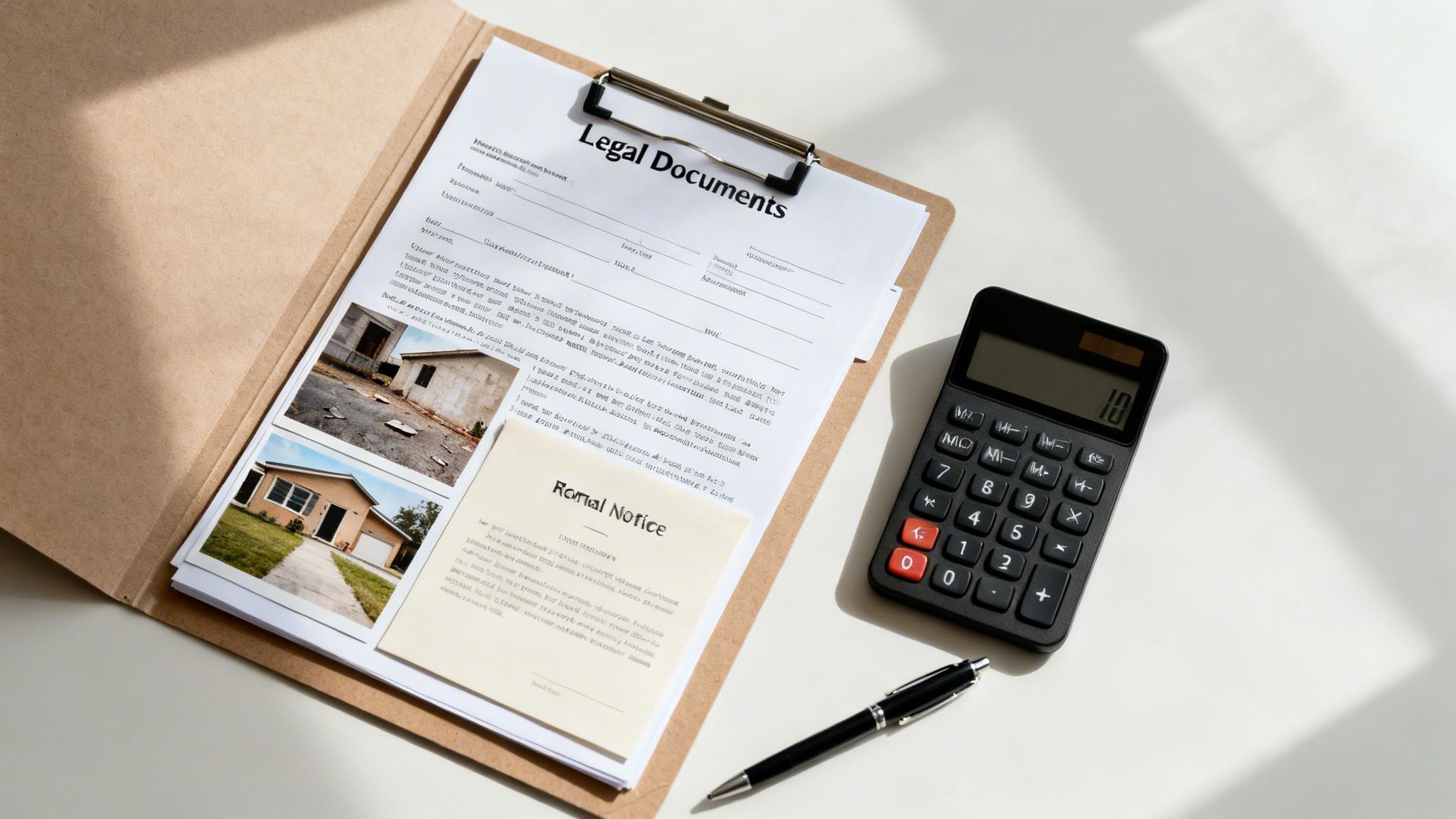
Your Essential Document Checklist
Do yourself a favor and get these items organized in a folder—either a physical one or a digital one. This simple step will make your consultation ten times more efficient.
- The Lease Agreement: The whole document. Bring the full, signed copy, plus any addendums or attachments. This is the legal foundation of your relationship.
- All Written Communication: This is crucial evidence. Gather every email, text message, and formal letter between you and the other party. If you can print them and put them in chronological order, even better.
- Photos and Videos: If your issue involves property damage, a landlord who won't make repairs, or the condition of the unit when you moved out, pictures are invaluable.
- Formal Notices: This includes any notice to vacate, eviction papers, demand for rent, or notice of a lease violation that you have sent or received.
- Proof of Payment: Round up rent receipts, bank statements showing cleared checks, or anything else that documents your payment history, especially if the dispute is about rent.
Coming in with these documents allows for a focused, productive conversation right away. It helps the attorney grasp the facts, spot potential legal violations, and give you clear, no-nonsense advice on what to do next.
What Happens After You Hire Your Attorney?
You've hired a property lawyer—that’s a huge step. It’s the moment you stop just worrying and start taking control. But what happens now?
Knowing what’s coming demystifies the process and turns anxiety into a clear plan of action. Your case won't be settled overnight, but every action your attorney takes is a deliberate move to get you the best possible result.
Step 1: The Demand Letter
One of the very first things your lawyer will likely do is send a formal demand letter to the other side. This isn't just an angry email—it's an official legal document.
It lays out your claims, points to specific sections of the Texas Property Code that support your case, and makes it clear what you expect to happen next. Often, this single, professional step is enough to get the other party to negotiate seriously.
Step 2: The Path to Resolution
If a strongly worded letter doesn’t do the trick, your attorney will move to the next step. For most landlord-tenant disputes in Texas, that means filing a formal petition with the correct court—often the local Justice of the Peace (JP) court. This officially starts a lawsuit.
Once the case is filed, the legal process unfolds in a structured way:
- Discovery: This is where both sides exchange information. Your lawyer and the opposing attorney will swap documents, written questions (interrogatories), or even sworn testimony taken out of court (depositions).
- Negotiation: Just because a lawsuit is filed doesn't mean you stop talking. A good lawyer is always on the lookout for a chance to settle your case fairly. A solid resolution outside of court can save you time, money, and stress.
- Mediation: Many Texas courts will require you to try mediation before you can see a judge. A neutral third-party mediator facilitates a conversation to help you find common ground. It's a highly effective way to resolve disputes.
A quick but important note: Communication with your legal team is everything. The faster you respond to their requests and the more closely you follow their advice, the stronger your position will be. You're an active partner in your own case.
If a settlement isn't possible, your case will head toward trial. Your attorney will prepare to present your arguments to a judge, using facts and the law to fight for your interests. Having a skilled Texas landlord tenant lawyer in your corner through every stage means your rights are being defended with confidence and expertise.
If you need help with an eviction, lease issue, or rental dispute, contact The Law Office of Bryan Fagan, PLLC for a free consultation today.
Your Questions About Texas Property Law, Answered
When you're caught in a property dispute, questions pile up fast. Here are straight answers to the most common concerns we hear from Texas landlords and tenants.
How Much Does a Property Lawyer Cost in Texas?
Costs vary based on the complexity of your situation and the lawyer's experience.
For straightforward tasks like drafting a standard residential lease, many attorneys offer a flat fee, so you know the cost upfront. For more unpredictable situations, like a contested eviction, an hourly rate is more common.
The most important thing? Ask for a clear fee agreement during your initial consultation so there are no surprises.
Do I Really Need a Lawyer for a Texas Eviction?
While you can represent yourself, Texas eviction laws are strict and have many technical requirements.
One small mistake on the notice to vacate or a missed court deadline can get your entire case thrown out, forcing you to start over. Hiring an experienced eviction attorney ensures every step complies with the Texas Property Code. It's your best defense, whether you're the landlord trying to reclaim your property or the tenant fighting to stay in your home.
It's a common myth that going it alone in an eviction saves money. A dismissed case from a simple procedural error can end up costing you far more in lost rent and extra court fees than hiring a knowledgeable attorney from the start.
What Kinds of Disputes Do Property Lawyers Handle?
A good Texas landlord tenant lawyer does much more than just evictions.
Their expertise covers a wide range of issues: fighting over security deposits, forcing a landlord to make critical repairs, handling illegal lockouts, and negotiating lease terms. They are also there to defend tenants against housing discrimination and claims of retaliation, ensuring your rights are protected every step of the way.
If you need help with an eviction, lease issue, or rental dispute, contact The Law Office of Bryan Fagan, PLLC for a free consultation today.