Dealing with a landlord dispute can be stressful—but understanding your rights under Texas law can make all the difference. While a difficult landlord is one thing, facing illegal harassment in Texas is something else entirely, and you don't have to put up with it.
State law gives tenants real power to fight back against landlords who cross the line. The first step to reclaiming your peace of mind is understanding exactly what counts as harassment and what legal protections you have.
What Constitutes Landlord Harassment in Texas

When you're dealing with a landlord who won't back off, it can feel like you have nowhere to turn. But Texas law draws a clear line between a landlord's duties and illegal harassment. While the Texas Property Code doesn't use the word "harassment" in one single definition, it builds powerful protections around a core tenant right: the covenant of quiet enjoyment.
What the Texas Property Code Says About Quiet Enjoyment
Think of "quiet enjoyment" as a fundamental promise built into every Texas lease, whether it's on paper or not. This isn't about literal silence; it’s the legal guarantee that your landlord won't interfere with your right to live peacefully and securely in your home. It’s your right to privacy.
When a landlord’s actions repeatedly and intentionally shatter that peace, they have gone from being a property manager to a harasser. We’re not talking about minor annoyances. This is about a pattern of behavior designed to make you feel unsafe, intimidated, or unable to use the home you pay for.
Distinguishing Legal Actions from Harassment
It’s critical to know the difference between a landlord doing their job and a landlord breaking the law. A landlord has every right to enter for repairs, show the property, or handle emergencies. But they must follow the rules—and their actions can’t be used as a weapon to intimidate you.
The key is reasonableness and intent. Is the landlord's action necessary and done respectfully, or is it a tactic meant to disrupt your life? To make this crystal clear, let's compare some common scenarios.
Examples of Legal Landlord Actions vs. Illegal Harassment
| Action | Legal and Permissible (With Proper Notice) | Illegal and Harassing (Potential Violation) |
|---|---|---|
| Entering the Property | Entering at a reasonable time with advance notice (usually 24 hours) for repairs, inspections, or showings. | Showing up unannounced repeatedly, using a key to enter without permission when you aren't home, or entering for no valid reason. |
| Communicating | Sending formal notices for rent, lease violations, or entry. Calling during business hours about legitimate issues. | Making threatening phone calls, sending aggressive texts at all hours, or showing up to confront you in a hostile manner. |
| Making Repairs | Scheduling and performing necessary repairs in a timely manner after you've made a proper request. | Intentionally delaying or refusing to make critical repairs (like fixing AC in the summer) to make you miserable or force you out. |
| Collecting Rent | Sending a formal late notice and following the legal eviction process if rent is not paid. | Changing the locks, shutting off your water or electricity, or removing your belongings to force payment. |
| Ending a Tenancy | Providing proper written notice to vacate according to the lease and Texas law, and filing a formal eviction suit if you don't leave. | Threatening you, trying to physically remove you, or engaging in any "self-help" eviction tactics outside of the court system. |
This distinction is everything. Recognizing when a landlord's actions cross from legitimate business into a pattern of illegal harassment gives you the power to act.
If you are facing repeated disruptions, threats, or privacy violations, you don't have to endure it. Document everything. A knowledgeable Texas landlord tenant lawyer can review your situation and lay out a strategy to stop the harassment and protect your rights.
Recognizing Common Forms of Landlord Harassment
Landlord harassment isn't always a single, dramatic event. More often, it's a slow burn—a pattern of small, repeated actions designed to make you feel stressed, unwelcome, and powerless in the very place you’re supposed to feel safe.
To stand up for your rights, you first need to recognize when a landlord’s conduct crosses the line from being merely difficult to becoming illegal. Once you see the pattern, you’ll realize you aren't just dealing with a bad landlord; you're experiencing harassment in Texas.
Privacy Violations and Illegal Entry
Your right to quiet enjoyment and privacy is a cornerstone of your tenancy. A landlord doesn’t have a free pass to enter your home whenever they want. While your lease gives them the right to enter for valid reasons—like making repairs or showing the property—that right comes with rules, including giving you proper advance notice.
When a landlord abuses this privilege, it’s a serious violation. Look out for:
- Constant, unannounced visits: Your landlord repeatedly showing up or letting themselves in without the 24-hour notice typically required by your lease.
- Vague or excessive “inspections”: Using inspections as an excuse to frequently disrupt your life without a legitimate, specific reason.
- Removing your doors or windows: An extreme but shockingly real tactic used to make you feel unsafe and exposed.
- Spying or snooping: Any attempt to watch you or peek through your windows is an absolute violation of your privacy.
Real-World Scenario: Let's say you work from home. Your landlord starts dropping by every other day, unannounced, claiming he needs to "check something." The constant interruptions make it impossible to focus, and you start feeling like you're under surveillance. This isn't reasonable—it's a clear pattern of harassment.
Threats and Intimidation
No one should have to live in fear of the person who holds their lease. When a landlord uses threats or intimidation to scare you into doing what they want—or to force you out—they are breaking the law. This aggressive behavior can be verbal, written, or even physical.
These are major red flags:
- Hostile communication: This includes yelling, using abusive language, or sending a barrage of angry texts and emails, especially at odd hours.
- Phony eviction notices: Handing you fake or legally defective eviction paperwork to panic you into leaving.
- Threatening to call the police: Using law enforcement as a weapon to intimidate you over a small disagreement.
Think about it this way: certain jobs carry a higher risk of nonfatal violence, with women accounting for 72.5% of cases, often in roles involving public interaction. A similar power dynamic can exist between tenants and landlords, which is why the law provides strong protections against this kind of intimidation. You can learn more about these risk factors in this report on workplace violence trends.
Interference with Utilities or Property
One of the most destructive forms of harassment is when a landlord deliberately tries to make your home unlivable. This is sometimes called a "self-help" or "constructive" eviction, and the Texas Property Code strictly forbids it.
A landlord cannot legally interrupt your essential services except for a genuine emergency or a necessary repair. Watch for these illegal tactics:
- Shutting off your water, gas, or electricity.
- Changing the locks or adding new ones to lock you out.
- Removing your furniture or other personal belongings from the home.
- Refusing to fix essential items like the air conditioning in summer or heat in winter.
These actions are not just illegal—they can give you the right to sue for significant damages. If your landlord locks you out or cuts your utilities, a skilled eviction attorney can help you take immediate legal action to get back into your home and hold your landlord accountable.
Your Legal Protections Under the Texas Property Code
Knowing the law has your back is a powerful feeling. Fortunately, tenant rights aren't just an idea in Texas—they're written into the law, giving you a strong shield against landlord harassment.
The Texas Property Code is the official rulebook that every landlord must follow. Understanding these rules is the first step to reclaiming your peace of mind and holding your landlord accountable. Let's break down what these laws mean for you in the real world.
The Right to Quiet Enjoyment
We mentioned this earlier, but it’s so critical it’s worth repeating. Your right to "quiet enjoyment" is more than a courtesy; it's a legal guarantee. Think of your lease as a contract for peace and privacy. Once you pay your rent, you have the right to use and enjoy your home without your landlord constantly interfering. If their behavior—like showing up unannounced or making excessive noise—disrupts that peace, they aren't just being a nuisance. They are breaking the law, and this is the foundation for almost every harassment claim in Texas.
The Ban on Landlord Retaliation
This is one of the most important protections you have. Section 92.331 of the Texas Property Code makes it illegal for a landlord to punish you for exercising your legal rights. Your landlord can't get back at you for being a responsible tenant who stands up for your rights.
Example Scenario: Your heater goes out in the dead of winter. You do everything right—you send a certified letter requesting a repair. A few days later, you get an eviction notice, even though you’re all paid up on rent. That’s a textbook case of illegal retaliation.
The law presumes it’s retaliation if, within six months of you taking a protected action, your landlord suddenly:
- Files to evict you (for a reason other than non-payment).
- Denies you use of the property, like locking you out of the pool or laundry room.
- Cuts back on services, like refusing to pay the water bill.
- Tries to raise your rent or non-renews your lease.
Protected actions include requesting legally required repairs, reporting a code violation to the city, or forming a tenants' union. This law was written specifically to stop landlords from using intimidation to silence you.
Unlawful Lockouts and Utility Shutoffs
The law is crystal clear when it comes to landlords taking matters into their own hands. Texas Property Code § 92.008 and § 92.0091 flat-out forbid landlords from changing your locks to keep you out or intentionally shutting off your water, electricity, or gas. The only exception is for a legitimate, temporary repair or an emergency.
These "self-help" tactics are taken so seriously that the law gives you immediate and powerful ways to fight back. If your landlord illegally locks you out or cuts your utilities, you can sue to:
- Get a court order to regain access to your home.
- Legally terminate your lease.
- Recover a civil penalty of one month's rent plus $1,000, plus your actual financial damages, court costs, and attorney's fees.
These aren't just guidelines; they are hard-and-fast rules with severe consequences for landlords who break them. If you’re facing any of these situations, you have a strong legal case. You can dive deeper into these rules in our guide to the Texas Property Code and tenant rights.
How to Build Your Case Against a Harassing Landlord
When you’re dealing with a landlord who won’t stop, your evidence is your power. Simply telling a judge what you've been through isn't enough—you have to prove it. Building a solid case means methodically documenting every single incident. This isn't just about winning in court; it's about creating a factual record that an attorney can use to demand the harassment stops for good. Think of it as building a timeline of undeniable proof.
Step 1: Start a Detailed Harassment Log
Your first move should be to start a harassment log. This can be a simple notebook or a document on your phone, but consistency is everything. For every single incident, write down the specifics:
- Date and Time: Get as precise as you can. "October 26, 2024, around 10:15 PM" is much stronger than "sometime last week."
- What Happened: Be objective and descriptive. Instead of saying, "my landlord was aggressive," write, "The landlord banged on my door for five straight minutes, yelling that the rent was due tomorrow, even though it wasn't."
- Who Was There: Note exactly who did what. If a neighbor or a friend saw or heard it, write down their name. Witnesses are invaluable.
- Your Response: What did you do? Did you ask them to leave? Did you feel unsafe? Did you end up calling the police?
This log transforms a series of stressful events into a clear, structured timeline of evidence. It's the backbone of your entire case.
The protections you're documenting violations of are grounded in Texas law. This chart gives you a high-level view of the legal framework that shields you.
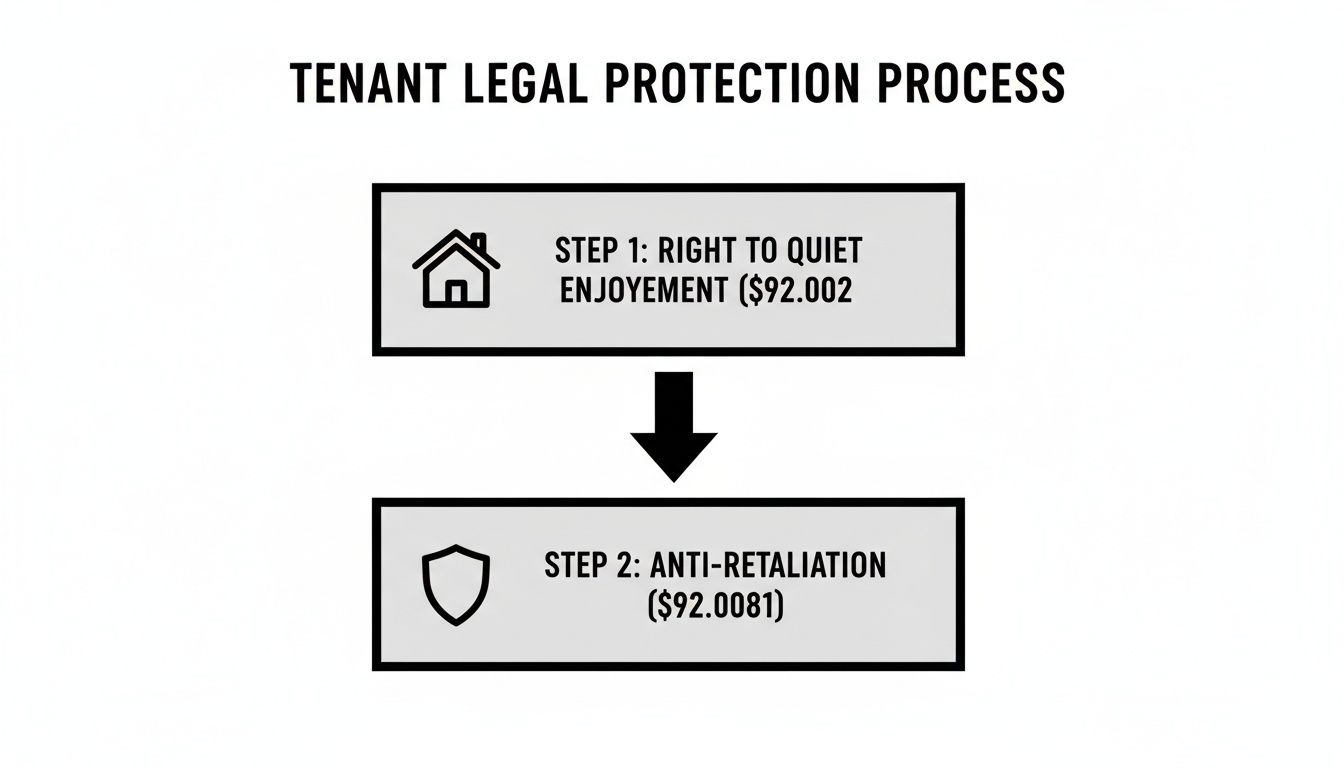
It all begins with your fundamental Right to Quiet Enjoyment, which is backed by powerful Anti-Retaliation laws. Together, they create a strong legal shield for tenants.
Step 2: Preserve Every Piece of Communication
Along with your log, you need to save every text, email, voicemail, and letter from your landlord. This paper trail can provide irrefutable proof of their conduct and intentions.
Key Takeaway: Never delete a communication from your landlord, especially if it feels hostile or inappropriate. Those digital records are time-stamped and serve as powerful, objective evidence of harassment in Texas.
Keep everything organized in a dedicated folder on your computer or a cloud drive. If you get voicemails, use an app to record them or save the audio files externally.
Step 3: Use Photos and Videos as Hard Evidence
Your smartphone is one of the most powerful tools you have. A picture or video can show what words can only describe. Use it to document everything you can:
- Illegal Entry: If you come home and find things moved or a notice left inside that wasn't there before, take photos immediately. This can help prove they entered without proper notice.
- Property Damage: If your landlord damages your property or is neglecting a critical repair (like a leaking roof), photograph and video the problem repeatedly over time.
- Utility Shutoffs: If they cut your power or water, take a picture of the disconnected meter or a video showing the faucets are dry.
Fear of retaliation is real. In fact, a 2022 workplace survey found that 49% of employees wouldn't report misconduct unless they could do it anonymously. While that’s about the workplace, the fear is the same. That's why having undeniable, hard evidence is your best defense. You can explore more on these reporting trends in the full survey.
Step 4: Send a Formal 'Cease and Desist' Letter
Once you have a documented pattern of harassment, it’s time to put your landlord on formal notice. This is done with a "cease and desist" letter—a formal, written demand that the landlord stop their illegal behavior immediately.
This isn’t just an angry letter; it’s a strategic legal move. The letter should clearly list the specific actions you consider harassment and reference your rights under the Texas Property Code. Critically, you must send this letter via certified mail with a return receipt requested. That little green card you get back in the mail is your legal proof they received it. Sending a proper demand letter in Texas shows you are serious and prepared to defend your rights.
Taking Action and Seeking Legal Remedies
You’ve done the hard work of gathering your evidence. You’re ready to fight back. Texas law gives you several powerful ways to stop your landlord’s illegal behavior and hold them accountable. It’s time to shift from documenting the problem to ending it for good.
A well-drafted cease and desist letter Texas is a serious warning shot. Sending it via certified mail creates an official paper trail, proving you put your landlord on legal notice to end the harassment in Texas.
Filing a Lawsuit to Stop the Harassment
If a formal letter doesn't work—or if the harassment is severe—your next step is the courthouse. You can file a lawsuit in a Justice of the Peace (JP) or district court to get an injunction. An injunction is a direct order from a judge telling your landlord to stop the illegal conduct immediately.
This court order can specifically forbid them from entering your home without proper notice, threatening you, or interfering with your utilities. If your landlord violates the injunction, they face serious consequences like fines and even jail time.
Pursuing Financial Compensation
Getting peace and quiet isn't the only remedy. The Texas Property Code allows you to hit a law-breaking landlord where it hurts: their wallet. Depending on the violation, you could be entitled to significant financial damages.
- For illegal lockouts or utility shutoffs: You can sue for one month's rent plus $1,000, plus your actual damages, court costs, and attorney's fees.
- For landlord retaliation: You can recover a civil penalty of one month's rent plus $500, along with actual damages and legal fees.
- For privacy violations: You can seek actual damages, one month's rent plus $500, and attorney's fees.
These penalties are designed to punish landlords for their actions and discourage them from harassing another tenant.
Legally Terminating Your Lease
Sometimes, the harassment is so relentless that it makes your rental unlivable. The law has a name for this: "constructive eviction." When your landlord’s actions have destroyed your right to quiet enjoyment, you may have the right to legally terminate your lease and move out without penalty.
Breaking a lease is a serious step, and doing it wrong can leave you on the hook for thousands in unpaid rent. It is critical to speak with a Texas tenant rights lawyer first. To understand the proper steps, check out our guide on how to file a complaint against your landlord. A lawyer can ensure you protect yourself and follow the law to the letter.
Frequently Asked Questions About Texas Landlord Harassment
When you're dealing with a landlord who crosses the line, you’re left feeling confused and intimidated. Let’s clear things up with straight answers to the questions Texas tenants ask most.
Can My Landlord Enter My Apartment Without Notice?
No. Your landlord can't just show up whenever they feel like it. While your lease gives them the right to enter for valid reasons—like making repairs or showing the property—the Texas Property Code and most leases demand reasonable advance notice, usually at least 24 hours.
There are only a few times a landlord can legally enter without warning:
- In a genuine emergency, like a fire or a burst pipe.
- If you’ve already given them clear permission.
- When they have a good-faith reason to believe you've abandoned the property.
If unannounced visits become a pattern, it starts looking like harassment and a violation of your right to quiet enjoyment.
What Should I Do If My Landlord Threatens a False Eviction?
First, don't panic. A threat is just a threat—it's not a legal eviction. Your landlord can’t just kick you out. The eviction process in Texas is a strict, court-supervised procedure. If they’re threatening to evict you right after you asked for a repair, that’s a massive red flag for illegal retaliation.
Here’s your step-by-step plan:
- Document everything. Write down the date, time, and exactly what your landlord said or did.
- Check your records. Make sure your rent is paid and you’re following your lease.
- Stay put. A verbal threat has zero legal power. You do not have to move out until a judge issues a formal court order.
Are Constant Calls or Texts From My Landlord Considered Harassment?
Yes, they can be. A landlord needs to communicate, but there's a line. When communication turns into a constant stream of aggressive, abusive, or late-night calls and texts, it crosses over into harassment.
The key is reasonableness. A text reminding you about rent is one thing. Twenty texts in a single night demanding you comply with an unreasonable request is something else entirely—it’s a clear intimidation tactic and powerful evidence in your favor.
Can I Break My Lease Because of Severe Harassment?
In serious situations, yes. This is what the law calls a "constructive eviction." If your landlord’s harassment is so relentless that it makes your home fundamentally unlivable or unsafe, you may have the right to terminate your lease and walk away without penalty.
But this is a major legal move. You have to be able to prove the conditions were truly intolerable and that you gave the landlord written notice and a chance to stop the behavior. Before you pack a single box, you absolutely must speak with a Texas landlord-tenant lawyer to make sure your rights are protected.
How a Texas Tenant Rights Lawyer Can Help You
You've documented everything and you know your rights, but the harassment hasn't stopped. The thought of facing your landlord—let alone the court system—is overwhelming. You don’t have to do this alone. This is the moment when an experienced Texas tenant rights lawyer can change everything.
Hiring an attorney isn’t just about getting advice; it's about putting a stop to the intimidation. The moment we take your case, we take over all communication. No more threatening calls for you to deal with. A formal letter from a law firm lands with far more weight than an email from a tenant and often brings the worst behavior to an immediate halt.
Strategic Legal Action and Representation
When you hire an attorney, you get a strategic partner who knows exactly how to build a case for harassment in Texas. We know what judges look for and how to turn your evidence into a powerful legal claim.
Here’s what we do:
- Review Your Evidence: We’ll dig into your harassment log, texts, emails, and photos to pinpoint the strongest claims you have under the Texas Property Code.
- Draft Official Communications: We will send a formal "cease and desist" letter on our legal letterhead. It’s a powerful first strike that shows your landlord you are serious.
- File a Lawsuit on Your Behalf: If needed, we will file a suit to get a court-ordered injunction. This legally forces the landlord to stop their behavior under penalty of law.
- Fight for Financial Compensation: We will aggressively pursue every dollar you’re owed for the harm you’ve suffered, including statutory penalties, actual damages, and your attorney's fees.
Key Takeaway: The goal isn’t just to make the harassment stop—it’s to hold your landlord accountable. Our job is to make sure you get the compensation you are legally entitled to for what you've endured.
Handling the Legal Complexities
The legal process is a minefield of strict rules and deadlines. One mistake can derail your case. A landlord-tenant lawyer ensures every document is filed correctly and on time and that your evidence is presented effectively before a judge. This is especially vital in complex situations like proving a "constructive eviction" or illegal retaliation.
An experienced eviction attorney also knows how to shut down a landlord’s counter-arguments and protect you from a wrongful eviction claim they might file out of spite. Hiring a lawyer levels the playing field and sends a clear message: you will not be intimidated.
If you need help with a lease issue, rental dispute, or are experiencing landlord harassment, contact The Law Office of Bryan Fagan, PLLC for a free consultation today. Our dedicated team is ready to step in and handle the legal burden so you can get your peace of mind back. Schedule your free consultation online now.