Dealing with a property dispute or finding an unauthorized person on your property can be incredibly stressful—but understanding your rights under Texas law can make all the difference. You're left wondering what to do, what your rights are, and how to get them out. It’s a violation, and you need clear, practical guidance.
So, let's get straight to the point: Does Texas have squatters' rights? The simple answer is no—at least, not in the way most people think. Texas law is built to protect property owners, and it doesn't give a trespasser any quick or easy path to claiming your home or land.
What Property Owners Need to Know
The term "squatters' rights" causes a lot of confusion and anxiety. It paints a picture of someone moving in and instantly gaining legal protections, leaving you powerless.
The reality is much different. The legal concept everyone is actually talking about is called adverse possession. It’s a very old, very specific legal doctrine that is long, difficult, and almost never successful for a typical squatter.
For property owners, here’s the most important thing to remember: someone who just showed up on your property without a lease or your permission is a trespasser. That’s it. Understanding this difference is the key to taking fast, decisive, and lawful action to protect your property rights.
The Myth of Instant Rights
A common fear is that a squatter gets legal footing the second they step onto your property. This is a complete myth.
In Texas, a person can't just move into a vacant home and declare themselves a tenant. If there's no lease agreement—written or verbal—they have zero tenant rights. This means you don’t have to jump through the hoops of a formal eviction process that you’d use for a renter who stopped paying rent.
Instead, your first and best move is to treat it as a criminal trespass. This lets you involve local law enforcement to have the person removed immediately. The lines can get blurry if someone has been there a long time or tries to create the appearance of a landlord-tenant relationship, but your initial response should always be to assert your ownership rights.
What the Texas Property Code Says: The Texas Property Code is clear: your ownership is protected. An individual can’t gain rights to your property by simply occupying it for a few days or weeks. The burden of proof is always on the person trying to make a claim, not on you to defend what’s already yours.
Adverse Possession Isn’t a Loophole for Trespassers
The only way a person can legally gain ownership of a property they don't own is through adverse possession, and Texas law makes this incredibly demanding for a reason.
This isn’t some sneaky loophole for short-term occupants. It's a legal doctrine designed to resolve very rare and specific situations, like a decades-old property line dispute or a case where someone has openly maintained and paid taxes on a piece of abandoned land for years, acting as the clear owner.
To even begin an adverse possession claim under the Texas Civil Practice and Remedies Code, Chapter 16, a person must occupy the property continuously for a set period while meeting a laundry list of other strict criteria. That period isn't short—it can be 3, 5, or even 10 years, depending on the specific circumstances of their occupation. You can learn more about the specific legal requirements for an adverse possession claim in Texas.
As a property owner, knowing these long timelines should give you peace of mind. Your ownership is secure against short-term intruders.
The Reality of Adverse Possession Claims
When people talk about "squatters' rights," what they're really talking about is a legal doctrine called adverse possession. But let’s be clear: this isn't some quick loophole for someone to steal your property. It's an incredibly difficult legal path with a very high bar to clear, designed to protect property owners like you.
Think of it this way: for an adverse possession claim to even have a chance, the person occupying the property has to perfectly clear five legal hurdles. If they stumble on even one, their claim is dead in the water.
The Five Pillars of an Adverse Possession Claim
Under the Texas Civil Practice & Remedies Code, a person trying to claim your property must prove their possession was all of the following:
- Hostile: This doesn't mean they were violent or aggressive. In legal terms, it just means they're there without your permission, acting against your ownership rights.
- Actual: They have to be physically present and using the property. We're talking about living there, farming the land, building fences—not just stopping by occasionally.
- Exclusive: They must have sole control. They can't be sharing the property with you, the public, or anyone else.
- Open & Notorious: Their presence can't be a secret. It has to be so obvious that any reasonably attentive owner would notice someone was living on their land.
- Continuous: This isn't a summer vacation home. Their possession must be completely uninterrupted for a legally defined period of time.
Falling short on a single one of these elements is enough to defeat the entire claim. This is exactly why successful adverse possession cases are so rare. They almost always involve truly unique circumstances, not just someone breaking into a vacant house for a few months. A good Texas landlord tenant lawyer can often dismantle these claims by showing how the claimant failed to meet this strict legal burden.
Understanding the Timelines for a Claim
Even if someone could magically meet all five of those tough requirements, they still have to run out the clock. Texas law requires them to occupy the property continuously for 3, 5, or 10 years, depending on the specific facts of their case.
Real-World Scenario: Imagine someone finds an abandoned house in the country and moves in. They decide to live there secretly to avoid being discovered. Because their presence is hidden, their claim fails the "Open & Notorious" test. If they let friends come and go as they please, it fails the "Exclusive" test. The law is built to shut down these kinds of opportunistic takeovers.
Each timeline has its own set of rules, making the path to ownership even steeper.
This isn’t a simple countdown; the requirements get tougher as the timeline gets longer.
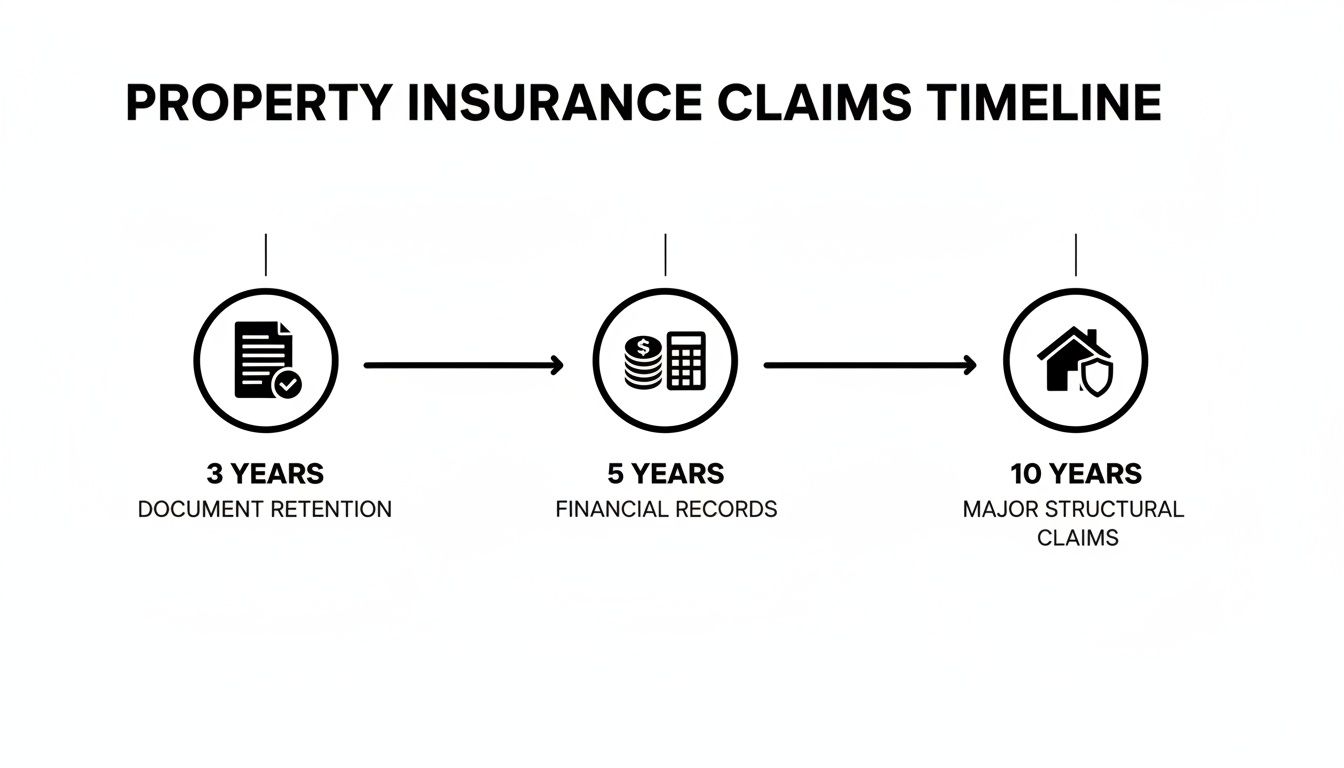
As you can see, the burden on the squatter only grows over time, reinforcing the legal protections that you, the actual owner, have.
Breaking Down the Statutory Periods
These different timeframes aren't just random numbers; each one is tied to specific actions the claimant must take.
- The 3-Year Statute: This is the shortest path and almost never applies to a typical squatter. It requires the person to have a document that looks like a real deed but has some hidden legal flaw (what lawyers call "color of title").
- The 5-Year Statute: To make a claim under this rule, the person must do more than just live there. They have to pay all property taxes and have a registered deed (even a flawed one). This is a huge hurdle—very few unauthorized occupants are willing or able to publicly pay taxes on a property they don't own.
- The 10-Year Statute: This is the one most people try for, but it demands a full decade of uninterrupted, open, and hostile possession. That's an incredibly long time to occupy someone else's property without them noticing and taking legal action.
These strict rules show just how much Texas law favors you, the property owner. The system is intentionally designed to stop people from taking what isn't theirs. It’s not fast, it’s not easy, and the law is firmly on your side.
How to Legally Remove Squatters from Your Property
Finding someone living on your property without permission feels like a total violation. Your first impulse is probably to get them out—immediately. But how you handle these first few moments is critical. It can be the difference between a quick, legal resolution and a drawn-out, expensive court battle.
To protect your property and your rights as an owner, you have to follow the step-by-step process laid out by Texas law.

What You Must Never Do
Before we get into the right steps, let’s cover what you absolutely cannot do. Taking matters into your own hands is called a “self-help eviction,” and it’s illegal under the Texas Property Code. It might feel justified, but it will land you in serious legal trouble, facing lawsuits and fines—even if the person is there without permission.
Never, ever do the following:
- Change the locks while their things are still inside.
- Shut off the utilities like water, power, or gas.
- Remove their personal belongings from the property.
- Use threats, intimidation, or force to make them leave.
It sounds counterintuitive, but the fastest and safest way to reclaim your property is by following the official legal process. An experienced eviction attorney can make sure you do everything by the book, avoiding costly mistakes.
Step 1: Report the Trespassing to Law Enforcement
Your first move should be to call the police and report a criminal trespass. Be clear: there is someone on your property without your consent, and you have no rental agreement with them, verbal or written.
Sometimes, if it’s a straightforward case, the police can remove the person on the spot. But be prepared for a common delay tactic. If the squatter shows any document—even a fake lease—or claims you gave them verbal permission to be there, the police will likely back off and call it a civil matter.
Don’t panic. This doesn't mean you’ve lost. It just means you have to shift from a criminal complaint to a civil eviction.
Step 2: Serve a Formal Notice to Vacate
Once the situation is defined as a civil issue, you have to start the formal eviction process. It all begins with serving the unauthorized occupant a legal document called a “Notice to Vacate.” This is your official, written demand for them to leave.
Under the Texas Property Code, this notice isn't just a simple letter. It must:
- Be in writing.
- Give the person a minimum of three days to leave.
- Clearly state why you’re issuing the notice (they are occupying the property without authorization).
- Be delivered correctly—either in person, by mail, or posted on the inside of their front door.
This notice is a non-negotiable legal requirement. Any mistake in the content or delivery can get your case thrown out of court, forcing you to start the whole process over. For a deeper dive into getting this step right, you can learn more about how to evict squatters in our detailed article.
Step 3: File a Forcible Detainer Lawsuit
If the three-day notice period comes and goes and the person is still there, it’s time to go to court. Your next step is filing a forcible detainer suit—the legal term for an eviction lawsuit—with the Justice of the Peace court in the property's precinct.
In court, you'll present your evidence: proof of ownership and proof that the occupant has no legal right to be on your property.
This isn’t just a theoretical problem; it's a growing issue for property owners. Post-COVID, high-profile squatting cases have exploded, contributing to over 164,000 eviction filings in Texas's four biggest cities alone. Owners have been caught in battles that drag on for months, racking up thousands in damages and legal fees, which has pushed lawmakers to look for better ways to protect property rights.
Step 4: Obtain a Writ of Possession
When the judge rules in your favor, they will issue a judgment for possession. But it’s not over just yet. The occupant has five days to appeal the decision.
If they don’t appeal and still refuse to leave, you can ask the court for a Writ of Possession.
This is the final, decisive step. A Writ of Possession is a court order that gives a constable or sheriff the authority to physically remove the person and their belongings from your property. This is the only legal way to have an unauthorized occupant forcibly removed, finally and safely restoring your property to you.
New Laws Strengthening Landlord Protections in Texas
If you're a property owner, you know how maddening and slow it can be to deal with an unauthorized occupant. The legal landscape in Texas, however, is finally catching up and shifting to give landlords stronger, more direct ways to protect their property. Recent legislative changes are cutting through the red tape to give you a faster path to get your property back.
Lawmakers have started to recognize that the traditional civil eviction process just doesn't work for clear-cut squatting cases. It’s too slow and too costly. In response, new laws are on the books that redefine certain types of squatting as criminal offenses. This is a game-changer. It gives police the power to take direct action and remove trespassers without forcing you into a drawn-out court battle.
These new statutes are designed to close the very loopholes that squatters have used for years to drag out their removal.
A Decisive Shift Towards Criminal Penalties
At its core, this legislative push treats squatting for what it truly is: criminal trespassing. When someone moves into your property without a legitimate claim, without a lease, and without your permission, these new laws give law enforcement much clearer authority to step in.
This saves you, the property owner, a huge amount of time, money, and stress. Instead of filing a forcible detainer suit and waiting on the court's schedule, you can now turn to a more immediate criminal solution. It's a clear signal from the state: your ownership rights will be protected.
Texas Senate Bill 38 and Other Key Legislation
The momentum for change is undeniable. In response to a growing crisis, Texas passed groundbreaking legislation to protect property owners. The new law, known as Senate Bill 38, expedites the removal of squatters and shields owners from bad-faith occupants. It builds on previous bills that criminalized unauthorized occupation, allowing for sheriff-led removals without a full-blown court process.
Sponsored by Senator Paul Bettencourt, this new framework allows for faster judgments without a full trial, cutting removal timelines from months down to just a few days. The approach is modeled after successful laws in other states, requiring an occupant to show proof of their right to be on the property within a few business days. This was a direct result of powerful testimony from property owners who shared their frustrating experiences, highlighting the urgent need for reform. You can read more about how this new law protects property owners.
Real-World Example: This shift means that if someone breaks into your vacant property and changes the locks, you have a much stronger argument for immediate police intervention rather than being told it is a "civil matter."
An experienced Texas landlord tenant lawyer can help you figure out exactly how these new laws apply to your specific situation, ensuring you use the most effective legal tools available. The goal of this legislation is to give you more power than ever to reclaim what is yours—swiftly and decisively.
Proactive Steps to Prevent Squatters on Your Property
Dealing with an unauthorized occupant is a stressful, expensive nightmare. The absolute best way to protect your investment is to stop squatters from ever setting foot on your property in the first place. A solid, proactive security plan is your strongest defense against the legal headaches and financial drain that come with removing trespassers.
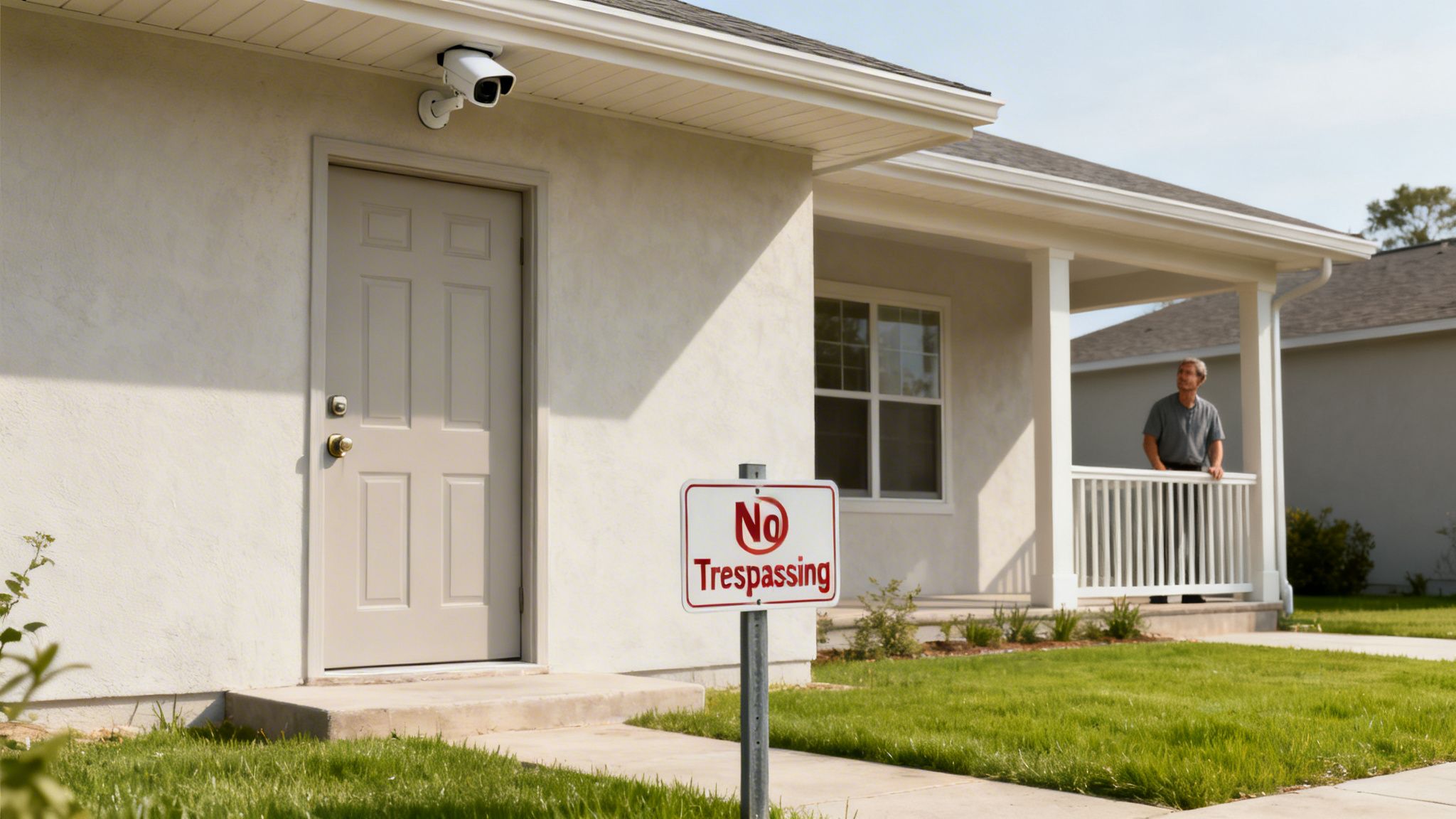
It all comes down to making your property look occupied, secure, and actively managed. This sends a clear signal that it is not an easy target. A few small, consistent efforts now can save you from months of court battles and thousands of dollars down the road.
Secure Your Vacant Property
An empty property is an open invitation for trouble. To make your property as unappealing as possible to potential squatters, you need to focus on physical security and create the illusion of oversight.
- Conduct Regular Inspections: Swing by the property often, and don't just do a drive-by. Walk the perimeter and check the interior. A mowed lawn and a clean exterior tell people the property isn't abandoned.
- Reinforce Entry Points: Make sure every window and door is securely locked. It’s worth adding deadbolts, window locks, or even security bars on ground-floor windows that are out of sight.
- Install a Security System: Visible security cameras, bright motion-activated lights, and an alarm system are incredibly powerful deterrents. Even dummy cameras can make a would-be trespasser think twice and move on.
For property managers trying to keep multi-unit or larger properties secure, adding a professional night patrol security service can be a game-changer.
Make Your Ownership Clear and Visible
Don't leave any room for ambiguity. It must be obvious that the property is privately owned and that uninvited guests are not welcome. This is crucial for building a clear criminal trespassing case if you need to involve the police.
Post clear, prominent “No Trespassing” signs around the property line. These signs eliminate any claim that someone didn't know they were on private property, which can significantly strengthen your position with law enforcement.
Why This Matters: A "No Trespassing" sign isn’t just a suggestion; it’s a legal declaration. Under Texas law, it helps establish that anyone on the property without authorization is knowingly committing a criminal act, which can make their removal much faster.
Build a Neighborhood Watch Network
Your neighbors can be your best allies in protecting a vacant property. They are on the ground every day and are often the first to notice when something is off.
Take a few minutes to introduce yourself and give them your contact information. Ask them to give you a call or contact the police if they see anything suspicious—people coming and going at strange hours, lights on inside, or signs of a break-in. This community-based monitoring is one of the most effective and low-cost security measures you can have.
Implement a Rigorous Tenant Screening Process
Finally, it’s important to remember that some of the worst "squatter" situations start with a legitimate tenant. A holdover tenant who simply refuses to leave after their lease expires can drag you into the same legal quagmire.
Your first line of defense is a bulletproof screening process. Run comprehensive background checks, verify their employment and income, and always call previous landlords. A well-written lease that clearly spells out the consequences of holding over is also non-negotiable. By picking reliable tenants from the very beginning, you dramatically cut your risk of dealing with occupancy disputes later.
Distinguishing Holdover Tenants from Squatters
Not every person on your property without permission is a squatter. As a property owner, it's absolutely critical to understand the difference between a squatter and a holdover tenant. While both are there without your consent, how you got to that point changes everything legally.
A squatter is a trespasser from the moment they step foot on your property. They never had a right to be there. A holdover tenant, on the other hand, is someone who once had a valid lease but simply refused to leave after it expired. Because a legal landlord-tenant relationship once existed, you must follow the formal eviction process laid out in the Texas Property Code, starting with a proper Notice to Vacate.
Your Strongest Defense? A Rock-Solid Lease Agreement
The single most powerful tool you have to prevent these headaches is a professionally drafted lease. A clear, comprehensive lease doesn't leave room for interpretation—it sets firm expectations for what happens when the term ends. Think of it as your first and best line of defense.
A well-written lease should leave no doubt about the rules for:
- Guests and Occupants: Spell out exactly who is allowed to live on the property and put a firm time limit on how long guests can stay. This stops a tenant's long-term guest from trying to claim they have a right to stay.
- Subletting: Strictly prohibit unauthorized subletting. You need to know exactly who is living in your property at all times.
- End-of-Lease Procedures: Detail the precise move-out process, including the penalties for failing to leave on time. This creates an undeniable contractual breach if they overstay.
Real-World Scenario: A tenant's lease is up, but their cousin, who's been crashing on the couch for months, decides to stay. If your lease clearly defines authorized occupants, that cousin is now an unauthorized occupant. You can proceed with an eviction and use the lease itself as ironclad proof that they have zero right to tenancy.
Understanding the right legal steps is crucial for any landlord. To get a handle on the full procedure, you can learn more about the eviction process in Texas in our in-depth guide.
Ultimately, knowing whether you're dealing with a squatter or a holdover tenant helps your eviction attorney build the strongest possible case. It clarifies the legal path forward and ensures you follow the right steps under the Texas Property Code to reclaim your property lawfully and as quickly as possible.
Common Questions About Texas Squatter Laws
Navigating property law can feel like a minefield, especially when you're stressed out by an unauthorized occupant. To give you some clarity, here are straightforward answers to the questions we hear most often from Texas landlords and property owners.
Can I Turn Off the Utilities on a Squatter?
Absolutely not. It might seem like a quick fix, but cutting off essential services like water, electricity, or gas is one of the worst mistakes you can make.
Under the Texas Property Code, this is considered an illegal “self-help” eviction. Taking matters into your own hands this way opens you up to serious legal and financial trouble. The occupant can sue you for damages, and a judge will look very unfavorably on your actions, making it much harder to legally remove them. Always stick to the formal eviction process.
How Is a Trespasser Different from a Squatter?
The line between the two often comes down to timing and appearance. A trespasser is someone who has just entered the property without permission. Think of someone breaking into a vacant house for a night—it's a criminal matter, and the police can typically remove them immediately.
The situation gets murky when a trespasser sticks around and starts to look like a tenant. If they've moved in belongings, been there for a while, or even show up with a fake lease, law enforcement may reclassify it as a civil dispute. At that point, a police officer will likely tell you it's no longer a simple trespassing issue and that you need to go through the courts to evict them.
Should I Offer a Squatter Cash for Keys?
Offering "cash for keys"—paying someone to leave—is a business decision, not a legal requirement. I know, it can feel infuriating to pay someone who is on your property illegally. But sometimes, it’s the smartest, fastest, and cheapest way out of a bad situation.
Think about the costs. A formal eviction can drag on for weeks or even months, racking up attorney fees and court costs with every delay. A cash-for-keys agreement could get them out in a matter of days. It’s a strategic choice you should weigh carefully with your eviction attorney, who can help you decide if it makes financial sense.
How Long Does a Squatter Eviction Take in Texas?
There's no single answer—the timeline for an eviction in Texas can vary widely. While recent laws have helped streamline things, you could still be looking at anywhere from a few weeks to several months from start to finish.
The exact time depends on the court's schedule, whether the occupant decides to fight the eviction in court, and if they file an appeal after a judgment. Even after you win, you still need to get a Writ of Possession from the court, which is the final order that authorizes law enforcement to physically remove the person from your property. You can learn more about the timeline for a Writ of Possession and its role in the eviction process.
If you need help with an eviction, lease issue, or rental dispute, contact The Law Office of Bryan Fagan, PLLC for a free consultation today at https://texastenantlawyers.com.