Dealing with a landlord dispute or eviction can be stressful—but understanding your rights under Texas law can make all the difference. Think of an Austin tenant lawyer as your personal legal shield. When you're in a dispute with a landlord over things like a wrongful eviction, a security deposit they won't return, or unsafe living conditions, they step in. Their job is to cut through the legal jargon of the Texas Property Code and create a straightforward plan to defend your rights.
Your Guide to Navigating Austin Landlord Disputes
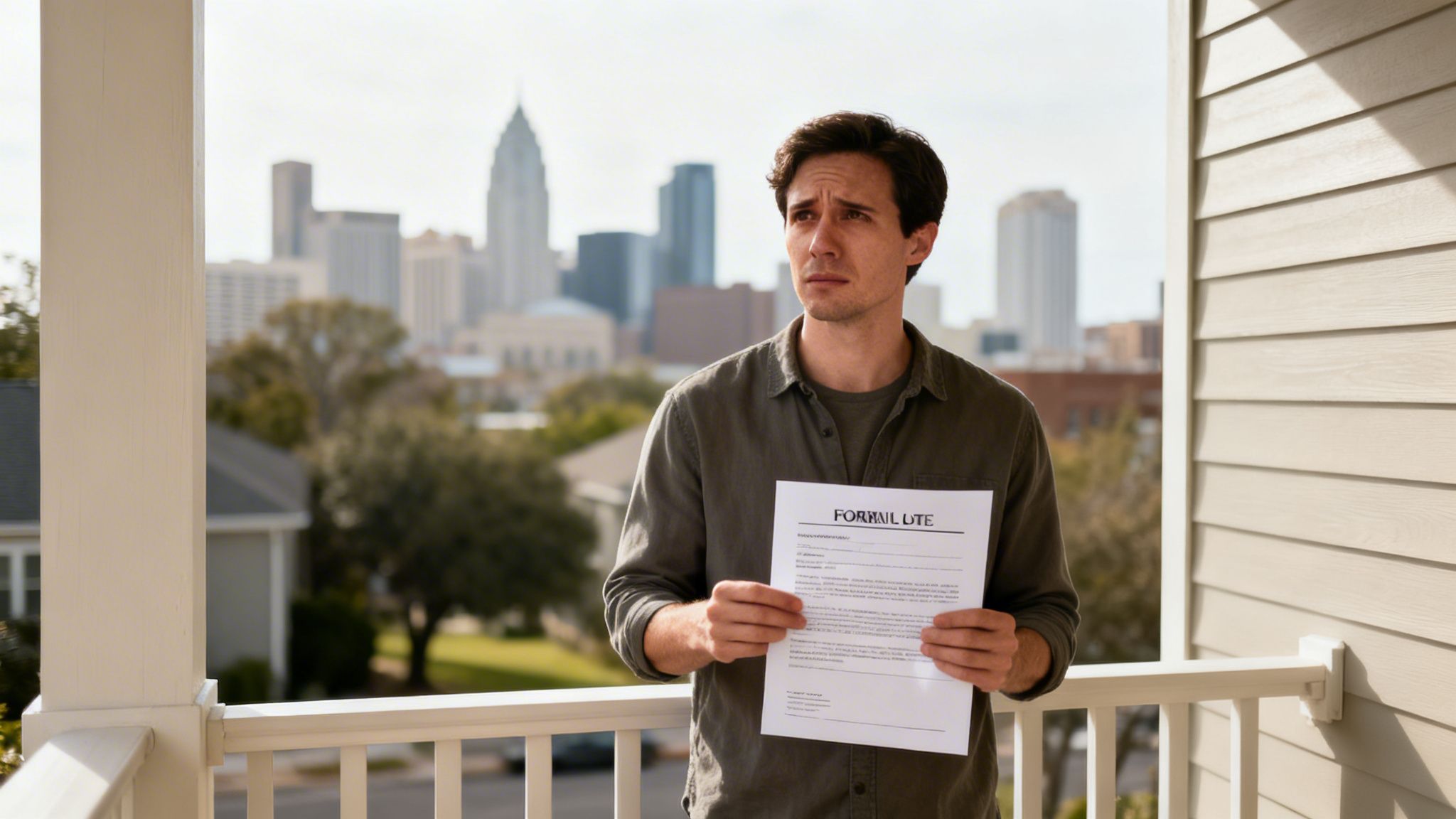
Few things are more stressful than getting an eviction notice or fighting with a landlord. When your home and your peace of mind are on the line, knowing your rights isn't just helpful—it's essential. This guide is here to untangle the common problems Austin renters face and show you there's a clear path forward.
Many conflicts, from arguments over security deposits to demands for urgent repairs, start with a simple misunderstanding of the law. An Austin tenant lawyer is your professional advocate, making sure your landlord plays by the rules and that your side of the story gets heard.
Why Legal Guidance Is Crucial in Austin's Market
Austin's rental market is a different beast. A recent apartment construction boom has actually given tenants a bit more leverage, with landlords often offering a month of free rent just to get people in the door. But this environment has also brought a new set of problems to the surface.
Despite average rents dropping, eviction filings in Travis County have actually gone up. Worse yet, a staggering 20-30% of Austin tenants report every year that their security deposits were wrongfully withheld. Under Texas Property Code Section 92.103, landlords have just 30 days to return your deposit, but countless renters never see that money again without a fight. You can dig into these market trends yourself in this detailed market analysis.
This is exactly where an experienced Texas landlord-tenant lawyer becomes your greatest asset. They can draft formal demand letters that get a landlord’s attention, challenge bogus fees, and even sue for up to three times the amount of a deposit that was illegally kept.
Common Issues We Will Cover
This guide will walk you through the most common battles tenants face and show you how a legal pro can turn the tables. We're going to break down these complex situations into simple, actionable steps, focusing on the big issues:
- Wrongful Evictions: Learning the exact legal process a landlord must follow to evict you.
- Security Deposit Disputes: How to demand your full deposit back—and win.
- Failure to Make Repairs: What you can legally do when your home becomes unsafe.
- Landlord Retaliation: Your rights when a landlord tries to punish you for standing up for yourself.
Our goal is to demystify the legal process and give you a roadmap for getting this resolved. Your home is your sanctuary, and the first step to protecting it is knowing your rights.
What an Austin Tenant Lawyer Actually Does for You

Most tenants think calling a lawyer means you’re headed straight to a huge, expensive court battle. That’s rarely the case.
An Austin tenant lawyer is your advocate, your strategist, and your guide through the maze of Texas landlord-tenant law. They don’t just show up for court; they create a clear plan to solve your problem, often before a lawsuit is even on the table.
From Prevention to Fierce Advocacy
The best time to talk to a lawyer? Sometimes it's before you even have a problem.
A sharp attorney can review your lease before you sign it, spotting those tricky clauses and hidden fees designed to trip you up later. This single step can save you an incredible amount of grief and money.
But when a problem has already blown up, their role changes. They step in as your official representative, taking over all the stressful calls and emails with your landlord. This simple act levels the playing field and sends a clear message: you’re not backing down.
An experienced lawyer knows exactly what to say—and just as importantly, what not to say—to keep you protected.
Step-by-Step Actions a Tenant Lawyer Takes
So what does this actually look like day-to-day? A good tenant lawyer doesn't just give you advice; they take real, concrete action. Here’s a glimpse of what they do:
- Send Formal Demand Letters: A letter on law firm letterhead gets attention. It clearly states your issue, cites the specific Texas laws your landlord might be breaking, and lays out exactly what you want—like getting your security deposit back or forcing an urgent repair.
- Translate Your Lease: They cut through the dense legalese in your lease and explain, in plain English, what your rights and responsibilities actually are. No more guessing.
- Negotiate a Fair Deal: Many disputes end at the negotiating table, not in a courtroom. Your lawyer can work directly with your landlord to hammer out a fair solution, like a rent credit for unlivable conditions or a manageable payment plan if you’ve fallen behind.
- File Official Complaints: If your landlord is ignoring city codes, your lawyer can file official complaints with local housing authorities, adding another layer of pressure to get things fixed.
It's a common myth that lawyers are just for lawsuits. The reality is, most of their best work happens behind the scenes, using smart negotiation and powerful communication to resolve issues without ever seeing a judge.
Standing Up for You in Court
Of course, sometimes going to court is the only option left.
If you’re facing an eviction, your lawyer is your first and best line of defense. They will comb through every piece of paperwork, making sure the landlord followed the rigid procedures required by the Texas Property Code.
For example, a landlord might give you a 24-hour notice to vacate when the law requires a 3-day notice. A skilled attorney spots these errors immediately. Even a tiny mistake in the process can get an eviction case thrown out. A skilled attorney provides a strong eviction defense that protects your home and your rights.
In the courtroom, your lawyer fights for you. They present your evidence, question witnesses, and make sure your side of the story is heard loud and clear. Whether you're fighting a wrongful eviction, suing over an illegal lockout, or trying to recover a security deposit, having a legal pro in your corner gives you the best shot at winning.
Common Tenant Problems That Need a Lawyer's Help
You signed a lease expecting a safe, stable place to live. But sometimes, things go sideways. When a dispute with your landlord blows up, it can feel like you're completely on your own, facing a problem that's getting bigger by the day.
Knowing your rights is your first line of defense. Certain issues, though, are notoriously difficult to fix without legal backup. When a landlord refuses to play by the rules on things like evictions, security deposits, or critical repairs, it’s time to call in an expert. An experienced Austin tenant lawyer doesn't just know the law; they know how to make it work for you, leveling the playing field and making sure your rights under the Texas Property Code are enforced.
Wrongful Evictions
Getting a "Notice to Vacate" is a gut-punch. But it's not the end of the story. Your landlord can't just throw you out on the street. They have to follow a very specific, step-by-step legal process, and if they mess up even one of those steps, the entire eviction could be invalid.
A wrongful eviction is what happens when a landlord ignores the law and takes matters into their own hands—changing the locks, shutting off your water, or tossing your stuff out. All of that is completely illegal.
Real-world scenario: You're a few days late on rent for the first time ever. The next morning, you find a note taped to your door saying you have 24 hours to get out, and your key fob no longer works.
Under Texas Property Code § 92.0081, a landlord is flat-out prohibited from illegally locking you out. A lawyer can take immediate action, filing a lawsuit to force the landlord to let you back in. They can also help you sue for damages, which can include one month's rent plus $1,000, plus your attorney's fees.
Security Deposit Disputes
This is one of the most common fights a tenant can have. You’ve moved out, you left the place in great shape, and now you’re waiting for your deposit. In Texas, the landlord has 30 days to either return your money or give you a written, itemized list of deductions for damages that go beyond "normal wear and tear."
The problem is, some landlords try to use your deposit to pay for their own operating costs. They'll deduct for things like a professional carpet cleaning or tiny scuffs on the wall, which are just the costs of doing business. When dealing with common tenant problems, learning how to protect your security deposit is a smart move that often requires a legal push.
Real-world scenario: You left the apartment sparkling clean and gave your landlord your new address in writing. Six weeks go by, and your $1,500 deposit is nowhere to be found. No check, no letter, nothing. The landlord is now ignoring your calls.
According to Texas Property Code § 92.109, if a landlord withholds your deposit in "bad faith," you can sue for three times the amount they wrongfully kept, plus $100 and your attorney’s fees. Often, a single, formal demand letter from an attorney is all it takes to get them to send the check.
Failure to Make Repairs
Your landlord isn't just a rent collector; they have a legal duty to provide you with a safe and livable home. This is called the "warranty of habitability," and it means they must fix any problem that seriously threatens your physical health or safety.
We're talking about major issues—a broken A/C in the middle of a brutal Austin summer, a roof that leaks every time it rains, or a serious mold outbreak. But just telling your landlord about it isn't enough to legally force them to act.
Real-world scenario: It’s August, and your air conditioning has been out for a week. You’ve called, you’ve texted, but nothing happens. The inside of your apartment is getting dangerously hot.
To trigger your landlord’s legal duty under Texas Property Code § 92.056, you must provide a formal written notice, preferably sent by certified mail, that details the repair needed. If they still do nothing, a lawyer can help you break your lease, sue the landlord, or force them to make the repair.
Landlord Retaliation
You have every right to stand up for yourself as a tenant. The law protects you when you request repairs, report a health code violation, or even organize with other tenants. Your landlord is not allowed to punish you for it.
Retaliation can look like a lot of different things:
- Suddenly trying to evict you right after you asked for a major repair.
- Jacking up your rent after you called a city inspector about a code violation.
- Refusing to renew your lease for no good reason.
If your landlord does any of these things within six months of you exercising a legal right, the law automatically assumes it's retaliation. For a deeper dive, you can learn more about what qualifies as landlord harassment in Texas in our article.
Real-world scenario: You sent a certified letter demanding that your landlord finally fix a serious plumbing leak. A week later, you get a notice that your rent is going up by $300 next month—way more than anyone else in the building.
An eviction attorney can use this as a powerful defense against you in court. Texas Property Code § 92.331 was written specifically to shield tenants from these kinds of vindictive actions, and a lawyer can help you stop an unfair eviction and even sue for damages.
Navigating these issues on your own can be confusing and stressful. This quick guide breaks down your rights and the first step you should always take.
Your Rights as a Texas Tenant: A Quick Guide
| Common Issue | What the Texas Property Code Says | Your First Step |
|---|---|---|
| Wrongful Eviction / Illegal Lockout | § 92.0081 | Do not attempt to force re-entry. Contact an attorney immediately. |
| Security Deposit Not Returned | § 92.109 | Send a written demand letter for your deposit and forwarding address. |
| Failure to Make Essential Repairs | § 92.056 | Send a formal written notice via certified mail detailing the needed repair. |
| Landlord Retaliation | § 92.331 | Document all communication and the retaliatory act. Consult a lawyer. |
Remember, putting things in writing is almost always the right move. It creates a paper trail that protects you and gives your attorney the evidence they need if the situation ends up in court.
Knowing When to Hire an Austin Tenant Lawyer
It’s a tough spot to be in—wondering if your landlord problem is something you can smooth over yourself or if it’s time to call in legal help.
A lot of tenants wait, hoping the issue will just disappear. But here’s the hard truth: waiting usually just weakens your position and closes doors on your legal options.
Knowing the right moment to act is everything. Some situations are more than just a disagreement; they're giant red flags telling you it’s time to stop talking and start getting real legal help from an Austin tenant lawyer.
The Three Signs You Need a Lawyer Now
Every tenant's story is different, but there are three classic scenarios where you absolutely should be on the phone with an attorney. These are the moments when the stakes are highest, and a single mistake could cost you your home and your savings.
If you find yourself in one of these situations, it’s a clear sign things have escalated beyond a simple dispute. You need a legal strategy, now.
You Receive a Formal "Notice to Vacate"
This isn’t just a nasty letter; it’s the first legal step in an eviction. It's an official document with a deadline, and your response is critical. An eviction attorney can dissect that notice to see if it’s legally valid. Sometimes, a mistake on the landlord's part is all it takes to stop an eviction cold.Your Landlord Ignores Urgent Repair Requests
A broken A/C in the Texas heat, a serious leak causing water damage, or a growing mold problem—these are health and safety issues. When your landlord ignores your formal written pleas to fix them, they may be breaking the law. A lawyer can turn up the heat with a formal demand letter or take legal action to force their hand.Your Security Deposit is Being Withheld
Once you’ve moved out, your landlord has 30 days to either return your security deposit or give you a detailed, itemized list of deductions. If they miss that deadline or try to charge you for "normal wear and tear," you need backup. An attorney can fight those bogus charges and go after them for penalties if they’re withholding your money in bad faith.
This decision tree gives you a quick visual on when these common problems cross the line into "call a lawyer" territory.
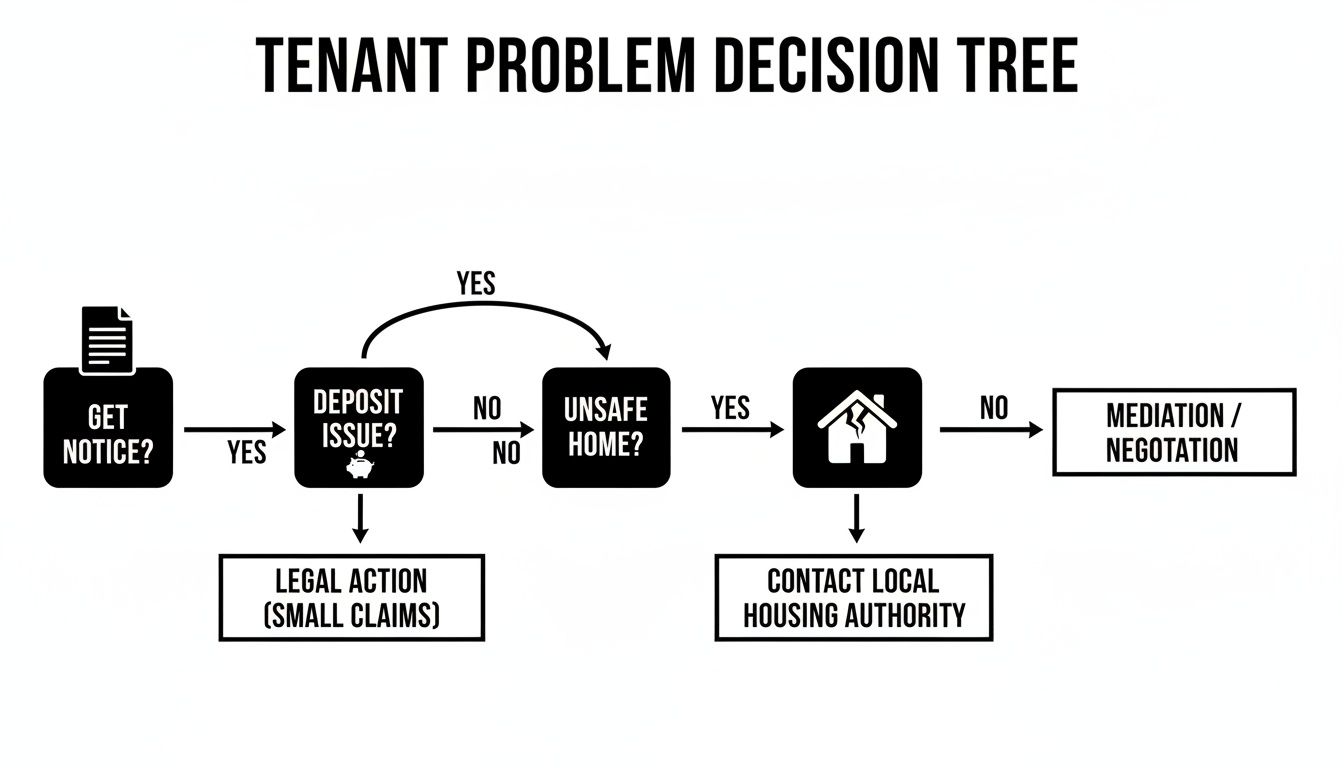
As you can see, getting a formal notice, battling over a deposit, or living with an unaddressed safety hazard are all critical points where you need professional legal advice.
Preparing for Your First Consultation
So you've decided to get help. Now what? Walking into that first meeting prepared will make a world of difference. Your goal is to give the attorney a crystal-clear picture of what’s going on so they can give you the best possible advice.
The single most important thing you can do is gather your documents. Your lawyer needs to see everything.
Key Takeaway: Think of this first meeting as building your case file. The more organized you are, the faster your lawyer can spot the strengths and weaknesses of your case and start building a game plan.
What to Bring to Your Free Consultation
To get the most out of your free consultation, pull these items together. Having them on hand lets the attorney dig in and give you specific, concrete guidance right away.
- Your Lease Agreement: This is the big one. It's the contract that spells out everyone's rights and responsibilities.
- All Written Communication: Every email, text message, and formal letter between you and your landlord or property manager. Print them out if you can.
- Photos and Videos: A picture is worth a thousand words, especially in court. Clear photos or videos of unsafe conditions, property damage, or anything else central to your dispute are pure gold.
- The "Notice to Vacate" (if you have one): Bring the actual document. The exact wording and dates on it are incredibly important for an eviction defense.
- Proof of Rent Payments: Canceled checks, receipts, or bank statements are your proof that you've held up your end of the bargain. This can be a game-changer.
Showing up organized proves you’re serious and helps your Texas landlord tenant lawyer cut straight to the chase. It saves you time and gets you on the path to a solution faster.
If you need help with an eviction, lease issue, or rental dispute, contact The Law Office of Bryan Fagan, PLLC for a free consultation today.
What Does a Tenant Lawyer in Austin Actually Cost?
When you’re staring down a dispute with your landlord, the last thing you need is another source of stress. For many tenants, that stress is the potential cost of hiring a lawyer. It’s a valid concern, but let’s clear the air: getting legal help is often far more affordable than you think.
The right Austin tenant lawyer isn't trying to break your bank. They're trying to find a clear, manageable path to get you justice. It all starts with understanding how the fees work.
How Lawyers Bill for Tenant Cases
Legal fees aren’t a one-size-fits-all deal. The cost really depends on what you need. Are we sending a sharply worded demand letter, or are we heading to court for a full-blown eviction defense? Your situation will point to one of a few common fee structures.
- Hourly Rates: This is the traditional way. You pay the attorney for the time they spend on your case. It’s most common for complex situations where the total workload is hard to predict from the start.
- Flat Fees: This is my personal favorite for straightforward tasks. Need a lawyer to draft a demand for your security deposit or review a lease before you sign? A flat fee gives you a single, upfront price. No surprises.
- Contingency Fees: This is a big one. In cases where you’re suing your landlord for money—say, for an illegal lockout or a deposit kept in bad faith—an attorney might take your case on contingency. This means you pay nothing upfront. The lawyer only gets paid if you win, taking a percentage of the money you recover.
The initial consultation is where we figure this out together. We’ll look at your case and map out a financial plan that makes sense for you.
Can You Make Your Landlord Pay Your Legal Fees?
Yes. This is one of the most powerful tools Texas law gives to tenants.
In certain cases, the Texas Property Code has what are called "fee-shifting" provisions. It’s a fancy term for a simple, game-changing concept.
It means that if you take your landlord to court for violating your rights and you win, the judge can order your landlord to pay for your reasonable attorney's fees.
This provision exists to level the playing field. Lawmakers knew that without it, many tenants couldn't afford to stand up for themselves.
For example, Texas Property Code § 92.109 is crystal clear: if you can prove your landlord kept your security deposit in "bad faith," you can sue for three times the deposit, $100, and your attorney’s fees. The same goes for illegal lockouts.
Having an honest conversation about money is the first step. Our free consultation at The Law Office of Bryan Fagan, PLLC, is a no-pressure, no-risk way to get your questions answered. We believe in total transparency, and our goal is to find a solution that protects your rights and your wallet.
How The Law Office of Bryan Fagan Can Help You
Fighting with your landlord can make you feel like you’re on an island. It’s isolating. It’s stressful. But you don't have to go through it alone.
At The Law Office of Bryan Fagan, PLLC, our entire team is built around one thing: protecting Texas tenants. We live and breathe the Texas Property Code, but we pair that deep legal knowledge with a simple, client-first approach. That means you get straight talk and a powerful legal game plan.
We know the unique pressures renters face in Austin's cutthroat market, and we’re here for tenants in all of Texas's major hubs, including Houston, Dallas, and San Antonio. We believe the best decisions come from being informed, which is why we offer every potential client a free 30-minute consultation.
Your No-Risk First Step
Think of this first meeting as a chance to finally get some clarity. It's a completely risk-free opportunity to get your biggest questions answered.
We’ll listen to what’s happening, look at the facts, and give you a straightforward assessment of where you stand and what your options are. No confusing legal jargon—just practical, real-world advice for your specific situation.
Our mission is simple: give you the confidence and clarity to move forward. We'll handle the legal heavy lifting so you can focus on protecting your home and your peace of mind.
Whether you're staring down an eviction notice, battling to get your security deposit back, or living in a place that’s just not safe, we step in as your advocate. We take over the communication with your landlord and build a solid case for you. It's all about leveling the playing field.
The attorneys at our firm bring years of dedicated experience to the table. You can learn more about our firm's founder and his commitment to clients by reading Bryan Fagan's professional bio. Protecting your rights isn't just part of our job; it's our top priority.
We’re ready to defend you with the skill and determination your case deserves. Don't just wait and hope the problem disappears. Let our team give you the support you need.
If you need help with an eviction, lease issue, or rental dispute, contact The Law Office of Bryan Fagan, PLLC for a free consultation today.
Common Questions We Hear from Texas Tenants
Facing off with a landlord can feel overwhelming, and it's easy to get lost in the legal maze. Here are some quick, no-nonsense answers to the questions we get asked most often by renters in Austin. Think of this as your starting point for understanding where you stand.
Of course, every tenant's story is different. For advice that fits your specific situation like a glove, the best move is always to talk directly with an experienced Austin tenant lawyer.
I Just Got an Eviction Notice. How Fast Do I Need to Move?
You have to act right now. That "Notice to Vacate" isn't a suggestion—it's the starting pistol for the eviction race, and the clock is ticking. For most non-payment of rent situations, you're looking at a three-day window to either pay up or pack up before your landlord can legally file to evict you.
Don't make the mistake of ignoring it. It won't disappear. Your best bet is to call an eviction attorney the same day you get that notice. They'll immediately scan it for legal mistakes—because even a tiny error can make the whole notice invalid—and start building a defense to keep you in your home.
My Security Deposit Was Small. Is It Even Worth Hiring a Lawyer to Get It Back?
Yes, absolutely. Too many tenants write off their deposits, thinking the amount is too small to justify legal fees. But Texas law has your back here, and it has teeth.
Under Texas Property Code § 92.109, if a landlord keeps your security deposit in "bad faith," you can sue them for three times the amount they wrongfully withheld, plus an extra $100 and your attorney's fees.
That last part is key. It's a "fee-shifting" rule, which means if you win, the court can order your landlord to pay for your lawyer. Often, a single, strongly-worded demand letter from an attorney is all it takes to get that check in the mail, no courtroom required.
What Can I Do If I Think My Landlord Is Harassing Me?
Landlord harassment isn't just a nuisance; it's illegal. Whether it's constant, unannounced visits, threats, or shutting off your water, you don't have to put up with it. The first thing you need to do is document everything. Create a detailed log with dates, times, what happened, and who saw it.
Next, send a formal letter via certified mail demanding the harassment stop. This creates a paper trail. If they don't back off, it’s time to bring in a Texas landlord tenant lawyer. They can seek a court order to force your landlord to leave you alone and help you sue for the damages and stress they've caused. You have a legal right to the "quiet enjoyment" of your home, and we can help you enforce it.
If you need help with an eviction, lease issue, or rental dispute, contact The Law Office of Bryan Fagan, PLLC for a free consultation today.
https://texastenantlawyers.com