You moved out, cleaned the unit, returned the keys, and now you're staring at a deduction list that charges you for scuffed walls, faded paint, and carpet that appears lived in. That's one of the most common security deposit disputes in Texas.
The short answer is no. In Texas, a landlord can't keep a security deposit for normal wear and tear. The harder part is proving whether a condition was routine aging or actual tenant-caused damage. That's where most fights begin, and where good evidence usually decides the outcome.
For both tenants and landlords, the question isn't just “what feels fair?” It's what the Texas Property Code allows, what the lease says, and what each side can prove with photos, inspection notes, and itemized records. If you're searching for answers to “can landlord keep deposit for normal wear and tear Texas,” the rule is clear, but the proof matters just as much as the rule.
Protecting Your Security Deposit in Texas
A typical move-out dispute starts the same way. The tenant believes the property was left in decent condition. The landlord sees a unit that needs work before the next renter moves in. Then the deposit becomes the battleground.
That's frustrating because many people assume the deposit is there to cover any expense tied to turnover. It isn't. Texas law draws a line between ordinary aging and chargeable damage, and that line matters. A rental home will show use over time. Carpet wears down. Paint fades. Small scuffs happen.
If you're a tenant, that means you have real tenant rights when a landlord tries to charge you for normal use. If you're a landlord, it means you need a disciplined process before making deductions. Vague claims and round-number withholding create problems quickly.
Practical rule: A security deposit isn't a general remodeling fund or a turnover budget. It's limited by Texas law.
A good starting point is understanding the basic framework under Texas security deposit law. Once you know the rule, the rest of the dispute usually comes down to evidence, timing, and whether the deductions are specific enough to hold up.
What Normal Wear and Tear Means Under Texas Law
Texas gives a fairly direct definition. A landlord may not retain any portion of a deposit for normal wear and tear, and the Texas Property Code defines that phrase as deterioration from the intended use of a dwelling, while excluding deterioration caused by negligence, carelessness, accident, or abuse by the tenant or guests, as summarized by the Texas State Law Library security deposit guide.
That definition matters because it answers the core question behind “can landlord keep deposit for normal wear and tear Texas.” The answer is no if the condition came from ordinary living. The answer may be yes if the condition came from misuse or neglect.
Think in terms of use versus misuse
A simple way to understand it is to compare a pair of shoes. If the soles are worn down from walking, that's normal use. If someone kicked a hole through the side, that's damage.
Rental property works the same way. If the wall paint looks a little dull after years of normal occupancy, that's expected. If there's a large hole in the drywall, that points to something beyond ordinary use.
Common examples that usually fit the rule
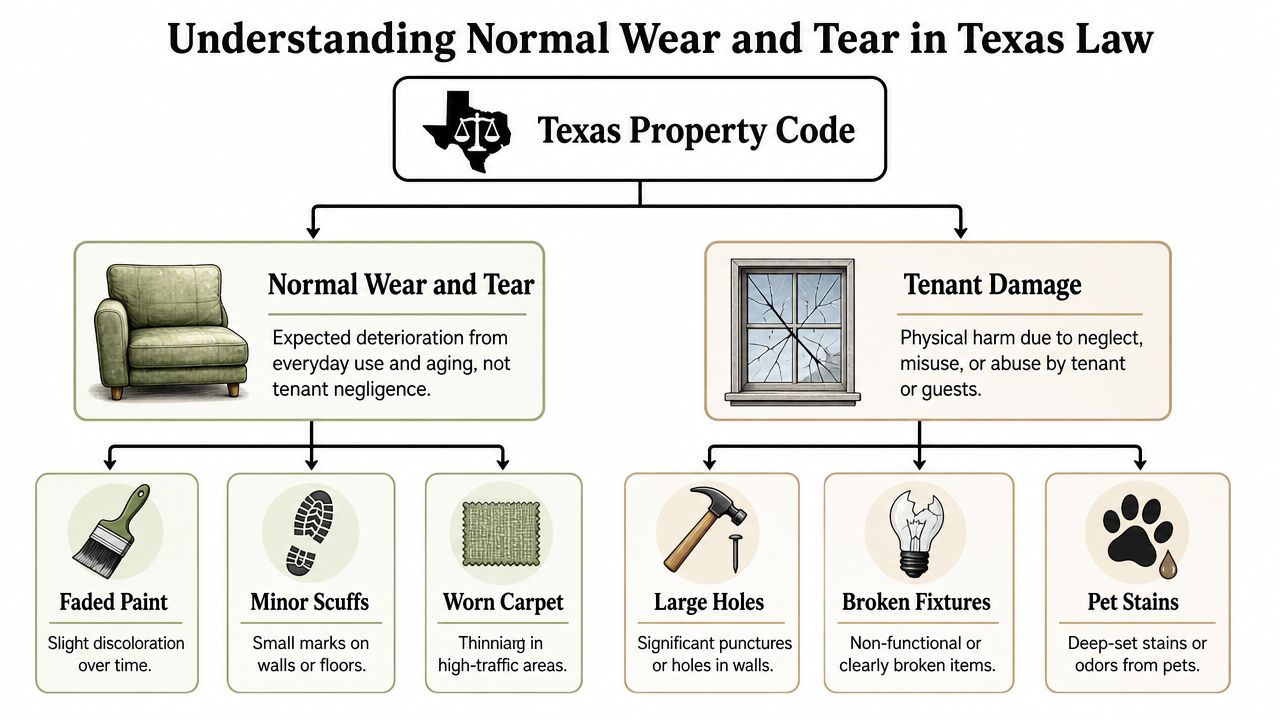
Texas guidance commonly treats conditions like these as ordinary wear:
- Worn carpet: Traffic patterns and thinning in common walking areas.
- Faded or peeling paint: Aging that happens over time with normal occupancy.
- Minor scuffs: Small marks on walls, trim, or flooring from daily life.
By contrast, a landlord may view conditions differently when they go beyond routine use, such as:
- Large holes in walls
- Broken fixtures
- Stains that appear tied to misuse rather than ordinary aging
That's why these disputes are rarely won by broad statements like “the unit was trashed” or “it looked fine to me.” The law focuses on classification. Was the condition normal deterioration, or did someone's negligence, carelessness, accident, or abuse cause it?
Ordinary aging is the landlord's cost of doing business. Tenant-caused damage is different.
Why the definition matters in real disputes
This rule protects tenants from being charged for the inevitable passage of time. It also protects landlords when they can show the property wasn't just worn, but damaged.
A lot of move-out arguments center on cleaning, odor, and “make ready” work. A landlord can't label all turnover costs as damage. The issue is whether the condition reflects ordinary aging or something more serious. If the property only needs standard preparation for the next tenant, that usually looks very different from repair work tied to excessive mess, contamination, or neglect.
For a Texas landlord tenant lawyer, this is often the first issue to sort out. Before talking about letters, court, or settlement, you identify the exact condition and place it on the right side of the legal line.
Examples of Normal Wear and Tear vs Property Damage
Abstract definitions only go so far. Side-by-side examples are often helpful. That's usually the fastest way to evaluate a deduction list and decide whether a charge looks legitimate.
Normal wear and tear vs damage in Texas rentals
| Condition Category | Normal Wear and Tear (Not Deductible) | Property Damage (Potentially Deductible) |
|---|---|---|
| Walls | Minor scuffs, slight fading, ordinary aging of paint | Large holes, heavy gouges, unauthorized markings that go beyond minor use |
| Carpet | Wear in high-traffic areas, general flattening from normal use | Deep stains, burns, or damage that appears caused by misuse |
| Fixtures | Ordinary loosening from age and use | Broken fixtures or missing parts |
| Flooring | Light surface wear from walking | Significant damage, major staining, or breakage |
| Paint | Peeling or fading over time | Damage tied to abuse, carelessness, or unauthorized alteration |
| Cleaning condition | Routine dust or ordinary turnover cleaning | Excessive filth, severe odor issues, or conditions requiring restoration beyond standard prep |
Where disputes usually get messy
Cleaning deductions are a common example. Many landlords assume they can automatically charge for professional cleaning after every move-out. Many tenants assume they can never be charged for cleaning. Neither view is always right.
The key question is what the cleaning addressed. If it was routine turnover work, that looks much closer to the landlord's ordinary business expense. If the property had smoke residue, strong pet odor, heavy buildup, or conditions that required unusual remediation, the argument for a deduction becomes stronger.
For tenants trying to reduce those disputes in the first place, this checklist on avoiding move-out cleaning deductions is a practical resource because it focuses on the kinds of conditions that often trigger avoidable charges.
What works better than arguing in generalities
If you're reviewing a deduction list, don't argue with labels alone. Focus on the item itself.
- Ask what the condition was. “Cleaning” is too vague. Was it ordinary dusting, stain removal, odor treatment, or repair-related cleanup?
- Look for before-and-after proof. A move-out photo without a move-in baseline is weaker than landlords often assume.
- Check whether the charge matches the condition. Repainting an entire room because of minor scuffs raises different issues than patching a large hole.
When tenants and landlords slow down and identify the exact condition, many disputes become easier to assess. That's also what a court will usually want to see.
Your Landlord's Legal Deadlines and Responsibilities
Even when a landlord believes deductions are justified, Texas imposes procedural duties. Those rules matter because a landlord can weaken a valid claim by handling the deposit poorly.
Under Texas law, the landlord has a 30-day deadline to refund the deposit after the tenant surrenders the premises, but that deadline is triggered only after the tenant provides a written forwarding address, as explained by the Texas State Law Library's summary of security deposit rules. If the tenant doesn't give a forwarding address in writing, that can delay the refund process.
What tenants should do immediately
Many tenants lose their advantage by overlooking a simple step. They move out, assume the landlord knows where to send the deposit, and wait.
Don't do that. Provide your forwarding address in writing and keep proof that you sent it. Email can help, but a written notice you can preserve is much safer than relying on memory later.
Important: If you want the deposit timeline to start cleanly, give the forwarding address in writing and keep a copy.
What landlords must do if they keep money
When a landlord doesn't return the full deposit, the safest approach is a detailed, itemized explanation. A vague deduction list invites a dispute because it doesn't show what was charged, why it was charged, or how the amount was tied to the actual condition.
In practice, strong landlords do a few things consistently:
- Compare move-in and move-out condition records
- Identify each deduction separately
- Keep estimates, invoices, or repair support
- Avoid lump-sum descriptions that hide the basis for the charge
Many property owners encounter problems. They know work had to be done, but they don't keep the paper trail needed to justify taking money from the deposit.
Why bad-faith withholding matters
Texas takes improper withholding seriously. If a landlord keeps a deposit in bad faith, the consequences can be significant. That's one reason experienced landlords document carefully and avoid treating every turnover task as chargeable damage.
For tenants, that means deadlines and paperwork aren't side issues. They are often the pressure points that move a dispute toward resolution. For landlords, compliance isn't just formality. It's the best protection against a claim that the deposit was withheld without legal support.
If you're dealing with a contentious move-out, this is one area where a Texas landlord tenant lawyer or eviction attorney with landlord-tenant experience can often spot weaknesses quickly, especially when the problem is less about the property condition and more about the process the landlord followed.
A Tenant's Step-by-Step Guide to Disputing Charges
When a deduction looks wrong, tenants often make one of two mistakes. They either do nothing, or they send an angry message that doesn't organize the facts. Neither approach works well.
A better method is to build the record in a way a judge can follow.
Start with your evidence
The strongest deposit disputes usually aren't won by emotion. They're won by documentation.
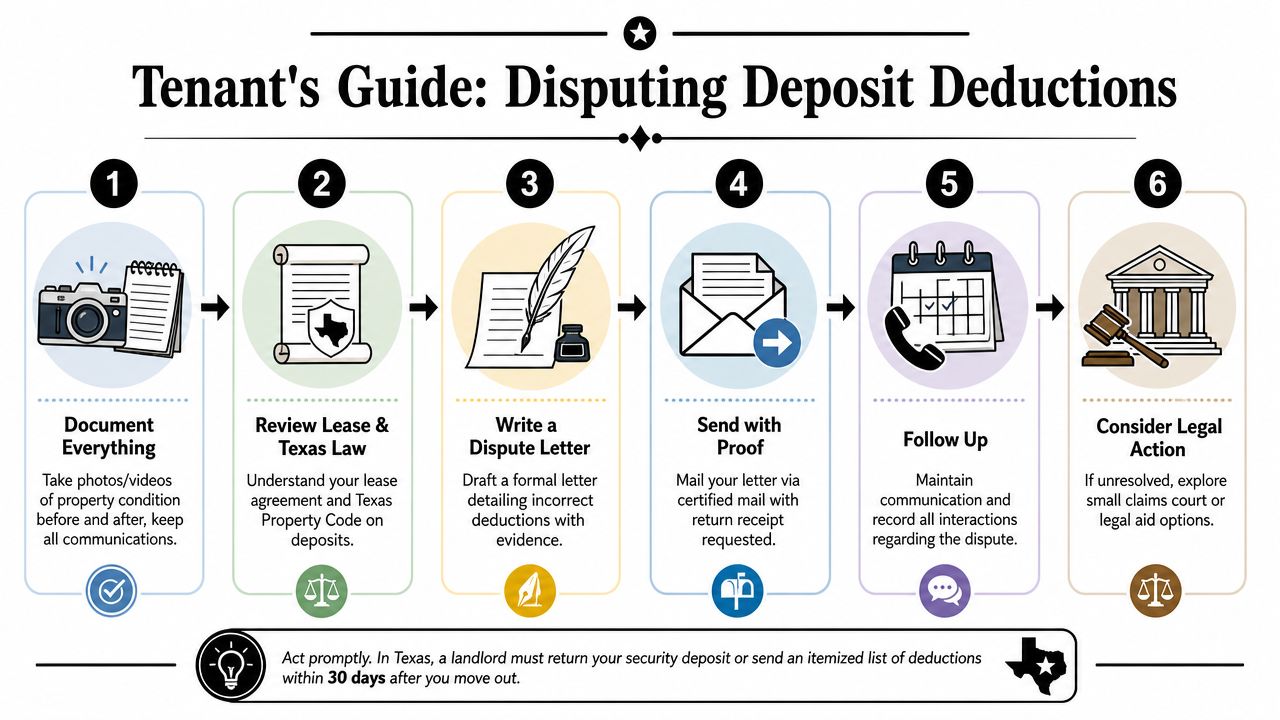
Before you write anything, gather:
- Move-in photos and videos: These show the starting condition.
- Move-out photos and videos: Take clear shots of each room, appliances, floors, walls, and any disputed area.
- Your lease: Look for cleaning language, repair terms, and deposit provisions.
- Messages with the landlord: Save texts, emails, inspection notes, and the deduction letter.
- Proof of your forwarding address: Keep a dated copy.
A helpful next step is reviewing a practical guide on how to get your security deposit back so you can compare your facts against the usual dispute process.
Write a formal dispute letter
Once your records are organized, send a written dispute letter. Keep the tone calm. You're building credibility, not venting.
Your letter should do four things:
Identify the deductions you dispute
Be specific. Name the charge and explain why you believe it reflects normal wear and tear or lacks proof.Reference your supporting evidence
Mention the dated photos, lease terms, and any communication that supports your position.Request the return of the wrongfully withheld amount
Ask for a response by a reasonable date.Keep proof of delivery
Certified mail is often the cleanest option because it creates a record.
A short, organized letter usually does more than three pages of anger.
Here's the basic idea. “I dispute the charge for repainting the living room because the condition shown in the move-out photos reflects minor scuffing and ordinary fading, not damage beyond normal wear and tear.” That kind of statement is direct and useful.
Use the video as a practical walkthrough
If you want a simple visual explanation of how tenants can approach deposit issues, this video gives a helpful overview.
Prepare for small claims if needed
If the landlord won't correct the deductions, the next step may be small claims court. That process is designed to be accessible, but you still need a clean presentation.
Bring a packet that includes:
- The lease
- The deduction statement
- Your dispute letter
- Photos in date order
- Receipts or records showing the condition of the unit
- A timeline of move-in, move-out, and communications
What doesn't work is showing up with a phone full of unsorted photos and a general claim that the landlord was unfair. Judges want sequence, clarity, and proof.
If you're the tenant, your basic argument is usually simple. The landlord charged for conditions that fall under normal wear and tear, failed to support the deductions, or mishandled the refund process under the Texas Property Code. If you're organized, that argument becomes much easier to present.
Guidance for Texas Landlords to Avoid Deposit Disputes
Landlords can avoid many deposit fights before the lease even begins. The best protection isn't a harsh clause buried in the contract. It's a repeatable documentation system.
That matters because the legal line between “normal cleaning” and “damage” often depends on whether the condition is ordinary aging or tenant-caused contamination, and in modern deposit disputes landlords increasingly rely on move-in and move-out photos, detailed inspections, and itemized estimates because the law requires documentation and can penalize improper lump-sum withholding, as discussed in this article on wear and tear and Texas security deposits.
Build your file before there's a dispute

A landlord who waits until move-out to start documenting is already behind. The better approach is to create a baseline at move-in and preserve it carefully.
Useful habits include:
- Signed inspection forms: Have both sides review the condition at move-in.
- Room-by-room photos: Walls, flooring, fixtures, appliances, and windows should all be documented.
- Consistent storage: Keep photos, notices, and invoices together so they can be produced quickly.
- Specific deduction support: If a deduction is necessary, tie it to an estimate, invoice, or other record.
For landlords who want a more systematic process, a property inspection checklist for landlords can help create consistency across move-ins and move-outs.
Treat routine turnover as a business cost
One of the biggest mistakes landlords make is charging the deposit for ordinary preparation of the unit. Standard turnover cleaning, touch-up work from aging, and ordinary cosmetic refreshes often belong in the operating costs of the rental business.
That doesn't mean cleaning can never be deducted. It means the facts have to support it. If the property needs unusual deodorizing, heavy debris removal, or treatment of conditions caused by neglect, the deduction case becomes stronger. The key is not the label. The key is the reason.
Good landlords don't just document damage. They document why the condition goes beyond normal use.
Clear expectations reduce conflict
Strong lease drafting and clear move-out instructions often prevent disputes before they start. When tenants know what condition is expected, where to return keys, and how to provide a forwarding address, misunderstandings drop.
It also helps to maintain the property during the tenancy. Preventive maintenance protects the unit and supports a stronger record if a dispute arises later. Landlords looking for practical maintenance ideas may find this resource on protecting your rental investment useful, especially for wear-sensitive surfaces like floors.
A careful landlord usually gets better outcomes than an aggressive one. Courts tend to respond well to owners who can show a fair process, a documented baseline, and deductions tied to actual conditions rather than assumptions.
If you need help with a security deposit dispute, lease issue, eviction, or other rental conflict, contact The Law Office of Bryan Fagan, PLLC for a free consultation today. Whether you're a tenant protecting your rights or a landlord trying to comply with the Texas Property Code, experienced legal guidance can help you act quickly and avoid costly mistakes.