You and your roommate probably started with a simple plan. Split the rent. Split the bills. Keep the peace. Then real life hits. One roommate loses a job, stops paying, damages the unit, or moves out without warning. Suddenly you're not asking who was supposed to pay. You're asking who is legally responsible.
That's where a lot of Texans get blindsided. Roommate problems feel personal, but once a lease is involved, they become legal and financial problems fast. The landlord is looking at the lease, not your text messages about who promised to cover utilities this month.
If you recently relocated, this confusion can be even worse because lease practices vary from state to state. People planning a big move often focus on logistics first, and practical guides like moving from Boston to Texas can help with the transition, but the legal side of shared housing in Texas deserves just as much attention.
The phrase many people search for is roommate lease rights Texas who is responsible. The answer depends on one thing above all else. Your legal status in the home. If you signed the lease, your rights and risks are very different from someone who moved in later without being added. If your roommate is only a guest, the rules change again.
Living with Roommates in Texas Can Be Complicated
Take a common situation. Three friends rent an apartment in Texas. Everyone agrees to pay one-third. For a few months, it works. Then one roommate starts paying late. Another says they'll “catch up next month.” The landlord sends a notice, and the roommate who always paid on time is stunned to learn that paying their own share may not be enough to protect them.
That shock is justified. The common understanding is that a roommate split is a private arrangement that the landlord has to respect. In many Texas lease disputes, that isn't how it plays out. The lease controls the landlord's rights, and your side agreement with roommates may only help you sort things out among yourselves later.
Why these disputes get serious so fast
Roommate conflicts usually start small. A late utility payment. A broken door. Someone's boyfriend or cousin staying “just for a while.” Then the issue grows into something bigger.
- Short rent: The landlord wants the full amount due under the lease.
- Property damage: The landlord usually looks to the people legally tied to the unit.
- Move-out chaos: One roommate leaves, but their legal responsibility may not leave with them.
- Unapproved occupants: Informal living arrangements can create lease problems.
Living together is a personal arrangement. Paying for housing is a legal one.
The question that matters first
Before you argue about fairness, ask this: Who is on the lease, and what does the lease say?
That's the starting point for nearly every roommate dispute in Texas. Chapter 92 of the Texas Property Code is the statutory backdrop for many residential landlord-tenant issues, including the remedies and risks that can arise when rent is not fully paid.
The Golden Rule of Texas Leases Joint and Several Liability
When multiple roommates sign one lease in Texas, the legal rule that matters most is joint and several liability. That sounds technical, but the idea is simple.
Consider a group dinner where one person puts the bill on their card for the whole table. The restaurant doesn't care that everyone promised to pay their own meal. The full bill still has to be paid. If one friend disappears, the person holding the obligation gets stuck dealing with it.
For many Texas leases, that's how the landlord sees co-tenants.
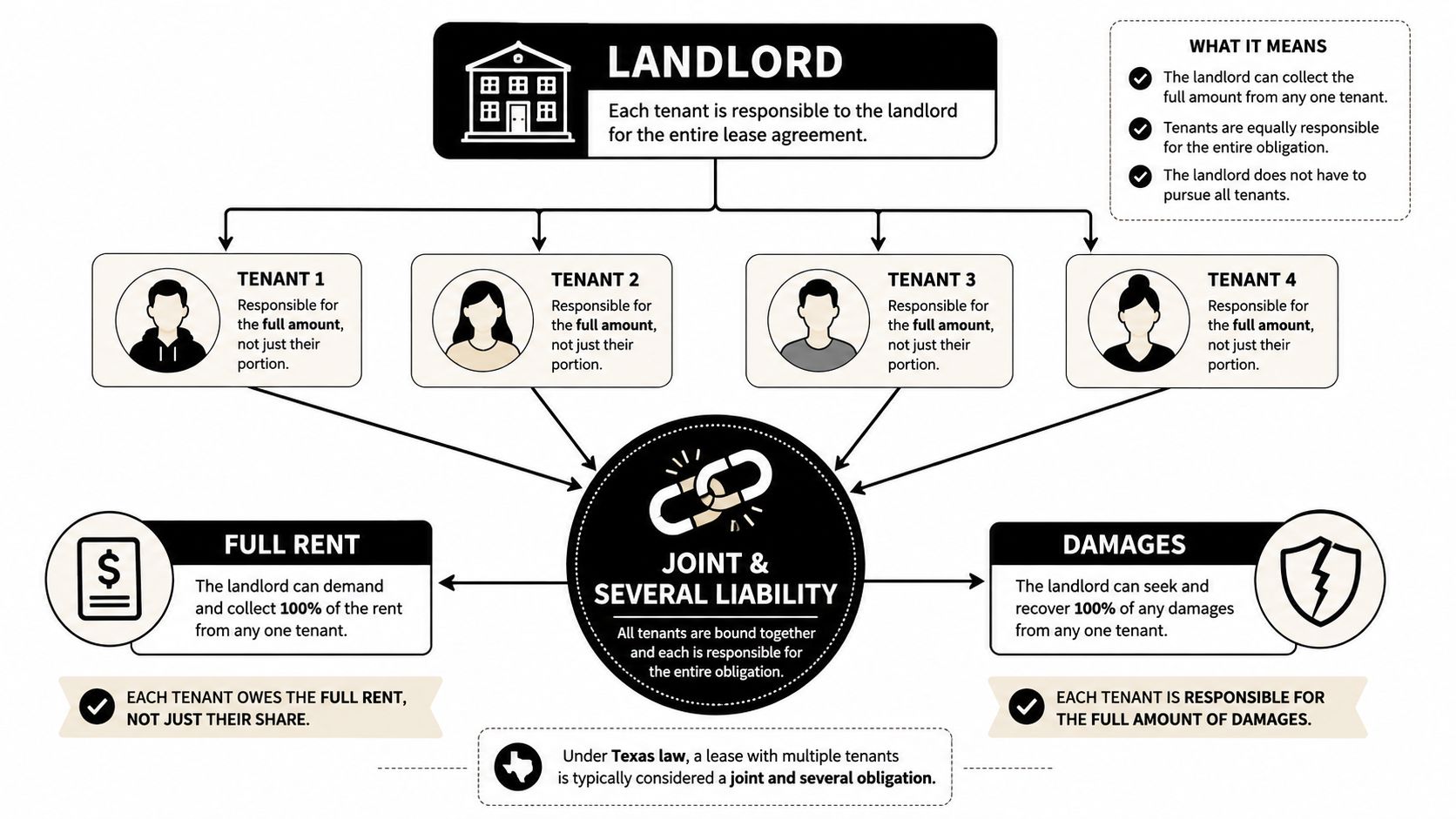
Texas Tenant Advisor explains that roommates on the same lease are generally treated as co-tenants and are responsible for getting the total rent to the landlord, not just their own portion, and that the landlord can pursue the full amount from any signer if the others do not pay, under the broader framework of Chapter 92 of the Texas Property Code rules in Chapter 92.
What that means in plain English
If you signed the same lease as your roommate, the landlord usually doesn't have to split blame neatly. The landlord can focus on the unpaid lease obligation itself.
Here's what that often means in practice:
- Your “share” may not protect you: You can pay your part and still face consequences if the full rent doesn't reach the landlord.
- One roommate's default can affect everyone: Lease enforcement typically follows the lease, not your internal agreement.
- Private deals don't bind the landlord: A Venmo note saying “my half of rent” may help in a claim against your roommate later, but it usually doesn't rewrite the lease.
Why landlords rely on this rule
A landlord rented one property under one lease. From the landlord's point of view, that lease is one package. This structure gives the landlord a clearer way to enforce payment and address lease violations.
That can feel harsh, especially if you did everything right. But understanding the rule helps you protect yourself early. It changes how you screen roommates, how you document payments, and how seriously you take anyone asking to “just join the place for a bit.”
Practical rule: If your name is on a shared lease, act as though you are exposed to the whole lease obligation, because that is often how Texas law treats co-tenants.
A simple example
Sara, Malik, and Jordan sign one lease. Sara pays on time every month. Malik loses income. Jordan moves out without permission. The rent comes up short.
Sara may say, “I paid my third.” The landlord may still say, in effect, “The lease is not fully paid.” That is the difference between a moral argument and a legal one.
Are You a Co-Tenant Subtenant or Guest Your Legal Status Matters
People use the word “roommate” loosely. Texas law doesn't. Your status matters because it changes who owes what, who has rights to stay, and who has authority to take action.
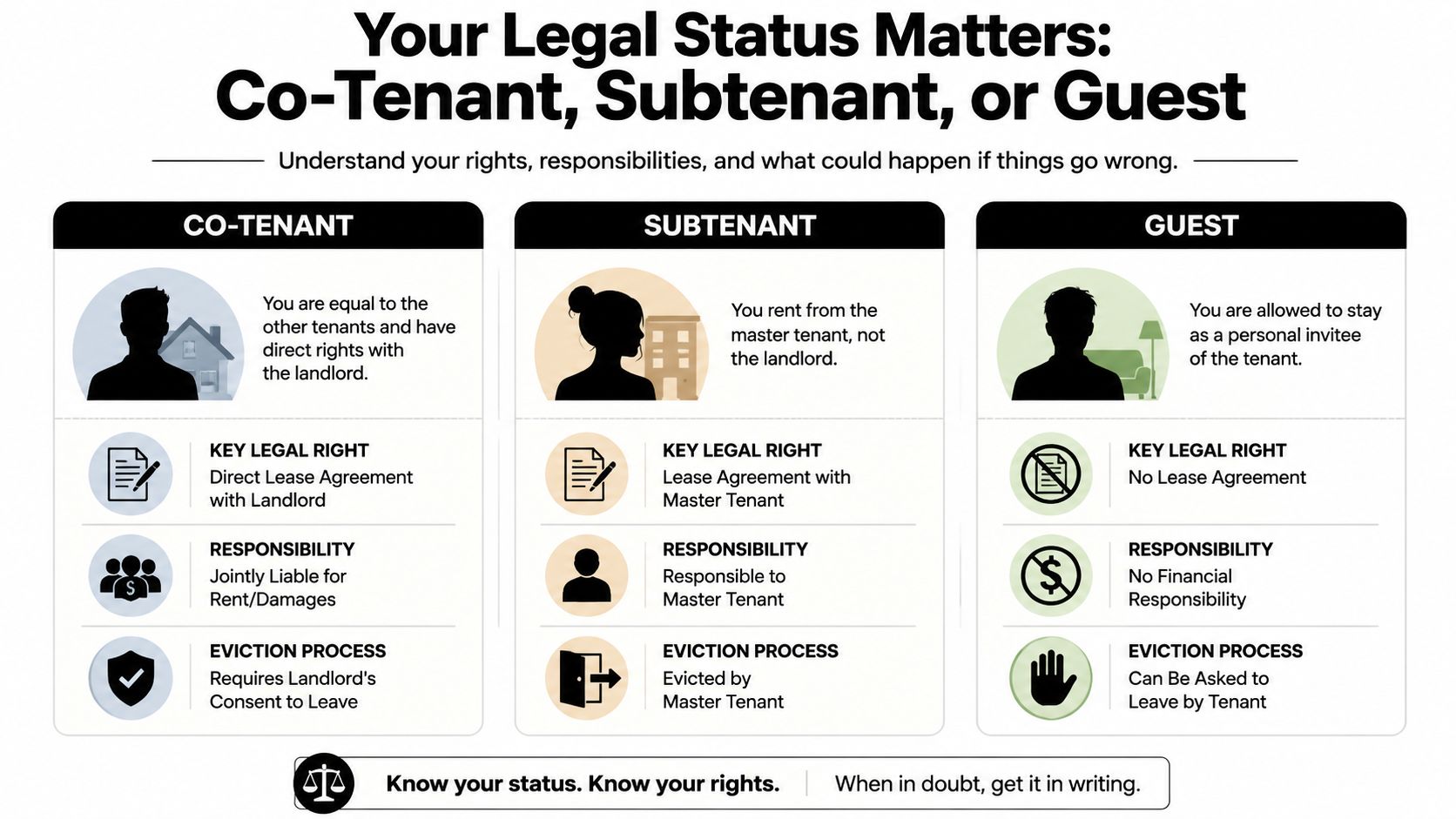
Texas Law Help notes that if a roommate is not on the lease, that person is usually treated as a guest or subtenant, while the named tenant remains fully liable to the landlord. It also explains that becoming official often requires landlord approval and a lease addendum, which is why formal paperwork, not informal deals, controls responsibility. If you want more detail on that distinction, this guide on lease vs sublease in Texas is a useful starting point.
Co-tenant
A co-tenant signed the lease with the landlord.
A co-tenant usually has direct rights under the lease and direct exposure under it too. If rent is unpaid or the lease is breached, the landlord generally looks to the signers. A co-tenant cannot usually be treated like a random guest just because they stopped paying their agreed share.
Subtenant
A subtenant usually rents from the original tenant, not directly from the landlord.
This setup can create two layers of responsibility. The original tenant may still remain liable under the main lease, while the subtenant owes obligations under the sublease arrangement. That's why written landlord consent matters so much. Without it, the tenant who allowed the subtenant in may have created added risk without reducing their own.
Guest or unlisted occupant
A guest or unlisted occupant may have permission to stay, but that doesn't automatically make them a co-tenant under the lease.
Still, this is often a source of confusion. A person can begin as “just staying over” and later argue they became something more than a guest because of how they lived in the home. That's one reason casual arrangements become expensive.
| Status | Relationship to landlord | Main financial exposure |
|---|---|---|
| Co-tenant | Direct lease signer | Direct responsibility under the lease |
| Subtenant | Usually through the main tenant | Often responsible to the tenant who sublet |
| Guest or unlisted occupant | No direct lease status in many cases | Named tenant often remains exposed |
Not all roommates are equal under Texas law. Two people may share the same kitchen and have very different legal positions.
Who Pays for What Rent Utilities Damages and Security Deposits
Most roommate disputes come down to four buckets. Rent, utilities, damage, and the security deposit. Each works a little differently, and confusion usually comes from assuming that fairness and legal responsibility are the same thing.
They aren't always.
Rent is the first pressure point
The landlord expects the lease amount to be paid in full. If you and your roommate decided on a fifty-fifty split, that may be fair between you, but the landlord is still focused on whether the required rent arrived.
That's why roommates should document every payment carefully. Save screenshots. Keep bank records. Write clear notes when transferring money. If one person sends the full payment to the landlord each month, everyone should be able to prove what they contributed.
Utilities need their own system
Utilities often create disputes because they're usually in one person's name. If that person pays late, everyone loses service. If everyone pays late to that person, the account holder is still the one being chased for payment.
A simple system helps. Some roommates use one shared spreadsheet. Others prefer a consistent digital trail. If you're deciding how to manage reimbursements and recurring household bills, this comparison of PayPal or Venmo for household finances can help you think through what creates the clearest record.
Damage is rarely “just their problem”
One roommate punches a hole in the wall. Another's dog ruins the flooring. A third guest breaks a window. Internally, you may know exactly who caused it. But if the landlord suffered damage to the property, the lease usually controls how the landlord pursues that claim.
That is why move-in and move-out documentation matters so much.
- Photograph the condition at move-in: Include walls, doors, appliances, floors, and windows.
- Report existing issues early: Put repair or damage concerns in writing so nobody blames your household later.
- Track who caused what: If one roommate admits to damage in text messages, save it.
- Inspect before move-out: Compare current conditions to your move-in records.
The security deposit often becomes the final argument
Security deposit disputes are common because the deposit usually belongs to the tenancy as a whole, even when the damage was caused by one person. The landlord may deduct for covered damage from the deposit without sorting out roommate fairness for you.
That leaves the roommates to sort out the internal split afterward.
A separate written roommate agreement can help by assigning responsibility for certain types of damage and explaining how deposit refunds will be divided. It won't erase the landlord's rights under the lease, but it can make it easier to recover from the roommate who caused the problem. For a broader look at these rules, review this resource on Texas security deposit law.
If you don't decide in writing how to handle damage and deposit deductions, you're leaving the hardest part of the roommate relationship to memory and emotion.
When a Roommate Leaves or Needs to Be Removed
Stress usually peaks. One roommate stops paying. Another won't leave after promising to move out. Someone says, “Just change the locks.” That advice can get you in trouble.
In Texas, a roommate dispute does not give one tenant the right to act like a landlord.
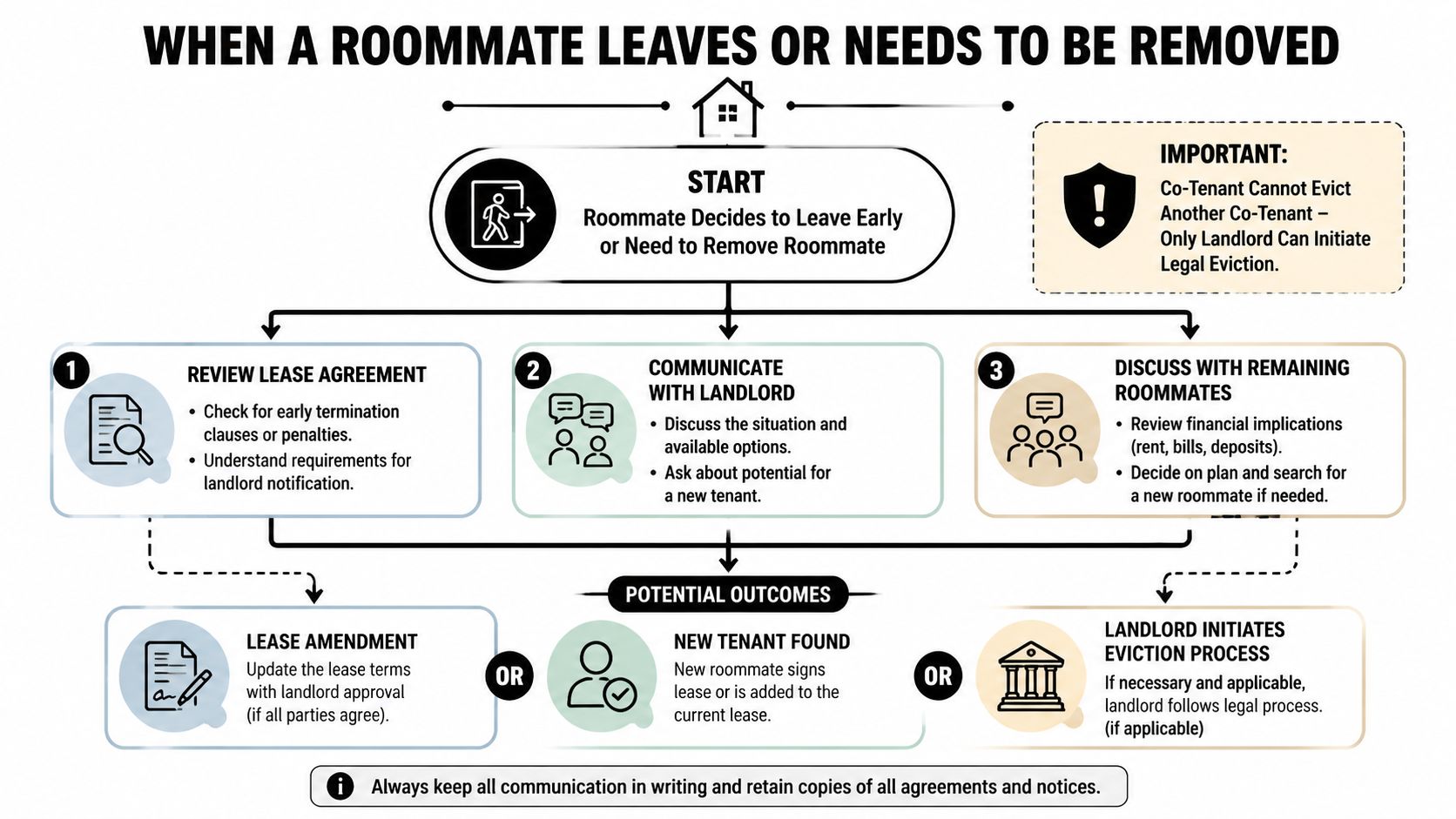
Texas guidance explains that a person who has lived in the home with permission is generally a tenant or lawful resident, not a squatter, and removal usually requires a formal eviction process through the courts initiated by the landlord, not by the other roommate, as discussed in this Texas Law Help article on guests, tenants, and when there is no lease.
What you should not do
If you are angry, avoid self-help. That includes actions people take out of frustration because they think the other person has “lost their rights.”
- Don't change the locks on your own
- Don't throw their property outside
- Don't shut off utilities to force them out
- Don't assume police will remove them as a trespasser
Those moves often make the situation worse.
What to do when a co-tenant wants to leave
A co-tenant who signed the lease usually cannot unilaterally text the group, hand over keys, and erase their legal exposure. If the landlord does not release that person in writing, the lease may still control.
A practical approach usually includes:
- Read the lease carefully for clauses on early move-out, replacement tenants, subleasing, and notice.
- Notify the landlord in writing about the problem or proposed change.
- Ask whether the landlord will approve a replacement or addendum.
- Get any change in writing before assuming anyone has been removed from responsibility.
What if the person is not on the lease
Status matters here. A true short-term guest may be easier to ask to leave. But once a person has been living there with permission, the situation often becomes more complicated than people expect.
That is why “they're not on the lease” is not the end of the analysis. It is the beginning.
A person can be unwelcome and still have rights that require a legal process.
A calmer path forward
The cleanest solution is usually paperwork, not confrontation. That may mean a lease amendment, a landlord-approved replacement, or a formal process if removal is necessary. If the situation is escalating, one practical option is to speak with a Texas landlord tenant lawyer or eviction attorney before anyone changes locks or makes threats. The Law Office of Bryan Fagan, PLLC handles lease review, eviction guidance, and landlord-tenant disputes for Texans dealing with these exact issues.
How to Protect Yourself The Power of a Roommate Agreement
A lease protects the landlord first. A roommate agreement protects the people living together.
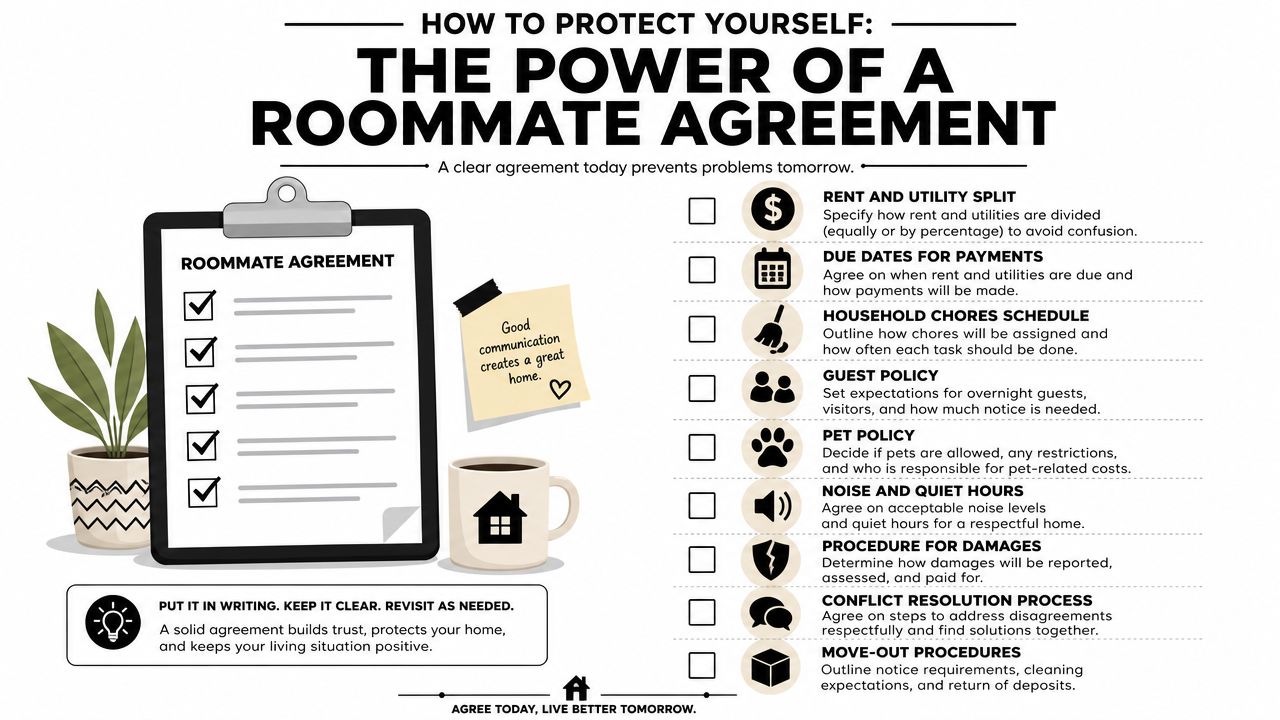
That distinction matters. You usually can't use a roommate agreement to cancel what the lease says to the landlord. But you can use it to decide how you and your roommates will handle money, chores, guests, damage, move-outs, and disputes among yourselves. That can save a lot of grief later.
Here's a practical checklist to keep in writing and signed by everyone.
What to include
- Rent responsibility: State the exact amount or formula each person owes, when it must be paid, and how it gets to the person submitting payment.
- Utility rules: List which accounts exist, whose name is on each account, and when reimbursement is due.
- Guest limits: Decide how long overnight guests can stay and when everyone's consent is needed.
- Cleaning and shared spaces: Put expectations in writing so resentment doesn't build over daily living issues.
- Damage responsibility: Say that the person who causes damage pays for it, and explain how proof will be handled.
- Move-out procedures: Require advance written notice, cooperation with finding a replacement if needed, and a plan for deposit issues.
- Conflict process: Include a simple step such as a meeting, written notice, or mediation before anyone files a claim.
For readers who want a plain-language walkthrough of how a roommate agreement can work in real life, this short video is a helpful supplement.
Why this document matters even among friends
Friends often skip this step because it feels awkward. In practice, writing things down is what preserves the friendship. It removes guessing. It creates a record. It gives you something better than “I thought we agreed.”
A good roommate agreement also helps if you end up needing small claims court or a negotiated resolution. Judges and landlords both respond better to written facts than to competing memories.
Need Help with a Lease or Roommate Dispute
If you're dealing with a roommate mess right now, the core issue is usually this simple. The master lease controls the relationship with the landlord. Your separate agreement with roommates controls the relationship among yourselves, if you have one.
That's why the answer to roommate lease rights Texas who is responsible depends first on legal status. A co-tenant, subtenant, and unlisted occupant do not stand in the same position. Once you know which one you're dealing with, the next steps become much clearer.
If rent is short, a roommate moved out, someone won't leave, or you're trying to avoid an eviction tied to someone else's conduct, get legal advice before the situation hardens into a court case. A clear strategy early can prevent expensive mistakes.
If you need help with an eviction, lease issue, or rental dispute, contact The Law Office of Bryan Fagan, PLLC for a free consultation today.