Dealing with a landlord dispute or eviction can be stressful—but understanding your rights under Texas law can make all the difference. When you’re up against a landlord, it’s easy to feel outmatched and alone. But a tenant attorney in Houston, TX can be the one thing that levels the playing field and protects your home.
Whether you're fighting a wrongful eviction or living in an apartment that's falling apart, having an experienced lawyer isn't just a good idea—it's your best defense. The right attorney makes sure your landlord plays by the rules and that your side of the story gets heard, loud and clear.
Your Guide to Tenant Rights in Houston
Facing off with a landlord can be incredibly stressful, but knowing your rights under Texas law is the first step to taking back control. When your landlord ignores urgent repair requests, threatens eviction for no good reason, or illegally keeps your security deposit, you are not powerless.
The Texas Property Code gives you specific protections, and an experienced tenant lawyer knows exactly how to enforce them.
The Houston rental market is massive. With over 1.2 million renter-occupied homes making up nearly 45% of all households, landlord-tenant conflicts are more common than you think. In fact, eviction filings in Harris County shot up by 28% in 2022 compared to pre-pandemic levels. You’re not the only one going through this. For more context on local legal resources, you can review Avvo's landlord-tenant lawyer page.
When to Call a Houston Tenant Attorney
Sometimes, a simple disagreement can be solved with a conversation. Other times, you need to bring in legal backup. If you're in one of the situations below, don't wait to get legal advice.
The table below breaks down some of the most common—and serious—issues where a Houston tenant attorney can make all the difference.
| Your Situation | Why You Need a Lawyer | Relevant Texas Property Code Section |
|---|---|---|
| You received an eviction notice. | An attorney can spot illegalities in the notice, build a defense against wrongful or retaliatory eviction, and represent you in court. The process moves fast, and a mistake can cost you your home. | Section 24.005 (Notice to Vacate) |
| Your landlord won't make essential repairs (AC, plumbing, etc.). | A lawyer can force your landlord to comply with the "warranty of habitability" by sending a legal demand letter or helping you pursue remedies like lease termination or repair and deduct. | Section 92.056 (Landlord Liability) |
| Your security deposit was not returned within 30 days. | Texas law is clear. If your landlord withholds your deposit in bad faith, an attorney can help you sue for up to three times the amount, plus attorney's fees. | Section 92.109 (Liability for Withholding) |
| You're facing landlord retaliation or harassment. | If your landlord tries to evict you, raise your rent, or cut off utilities because you requested a repair or asserted a right, that's illegal. A lawyer can prove retaliation and protect you. | Section 92.331 (Retaliation) |
These aren't just minor inconveniences; they are violations of your rights. Having a legal expert on your side ensures those rights are taken seriously.
An experienced Texas landlord tenant lawyer doesn't just give advice; they provide a strategic plan to resolve your issue. This could involve sending a formal demand letter, negotiating a settlement, or representing you in eviction court.
The goal is always to protect your home, your money, and your peace of mind. You don't have to navigate these complex legal battles by yourself. Knowing when to ask for help is the first step toward getting the fair outcome you deserve.
If you need help with an eviction, lease issue, or rental dispute, contact The Law Office of Bryan Fagan, PLLC for a free consultation today.
How to Navigate an Eviction in Houston
Getting an eviction notice is a gut-wrenching experience. It can feel like the floor is dropping out from under you, leaving you scared, stressed, and unsure of what to do next. But you need to know this: an eviction is a legal process. A landlord can't just change the locks or toss your belongings onto the street. They are bound by a strict set of rules laid out in the Texas Property Code.
The process almost always starts with a formal letter called a “Notice to Vacate.” This isn’t the eviction itself. Think of it as a legally required warning shot. It gives you a specific window of time to either move out or, in some cases, fix the issue that triggered it (like paying rent you've fallen behind on). When you get one of these, the clock starts ticking, and you have to act fast.
Understanding the Eviction Timeline
For most rent-related issues, Texas law says your landlord has to give you at least a 3-day notice to vacate before they can even think about filing an eviction lawsuit in the Harris County Justice of the Peace court. The law is specific here: the day you get the notice and the day you're supposed to leave don't count toward that three-day period. Neither do weekends or legal holidays, which can buy you a little more time.
If you haven't moved out when that notice period is up, only then can the landlord file what’s called an eviction suit (or a "forcible detainer" suit). After that, you’ll be officially served with a citation from the court. This document will tell you about the lawsuit and, most importantly, the date for your hearing. You absolutely have the right to show up in court and tell your side of the story.
This whole journey, from the initial problem to getting real legal help, follows a clear path.
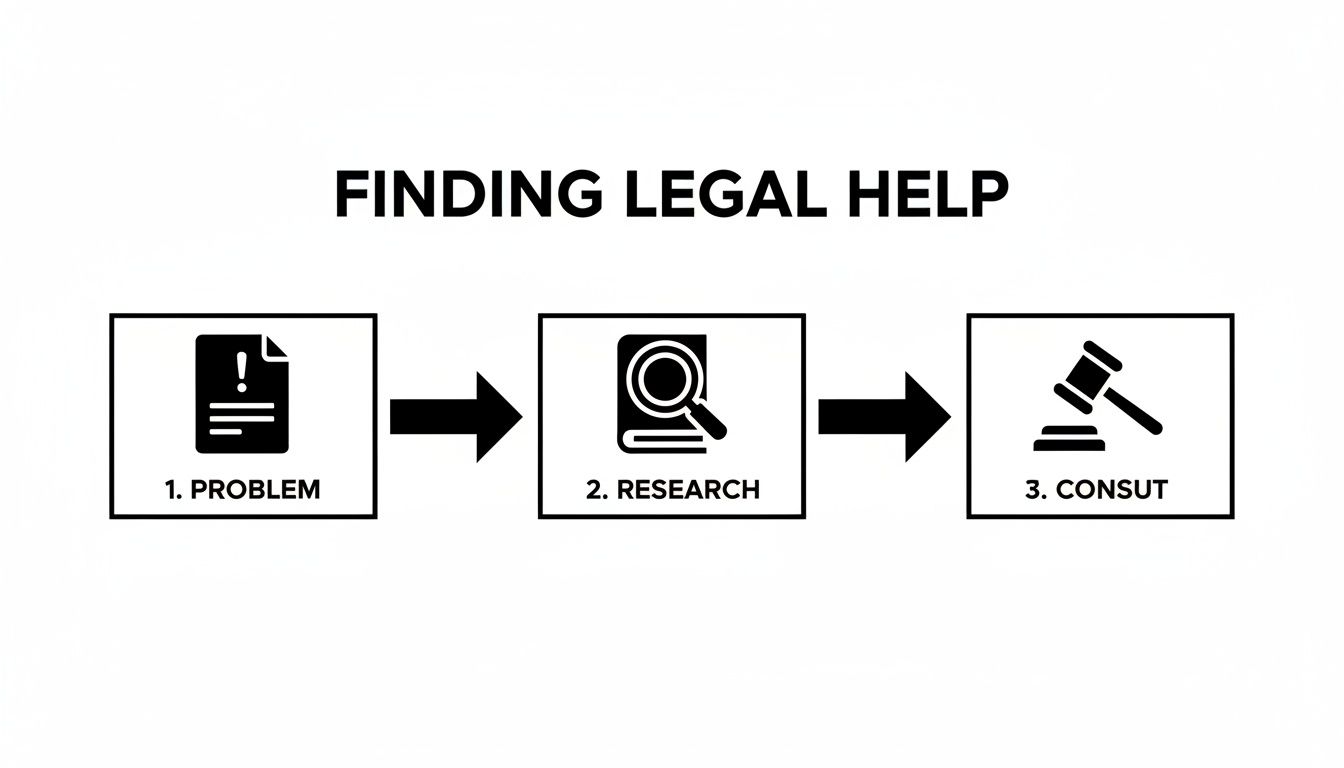
As you can see, once you’ve identified the problem—like that notice taped to your door—your next moves should be researching your options and then talking to a professional who knows this turf inside and out.
Defending Against Wrongful Eviction
Just because a landlord files for eviction doesn't mean they're going to win. Landlords make mistakes. Sometimes they get sloppy, and sometimes they deliberately try to cut corners. A good tenant attorney in Houston, TX lives for finding these procedural screw-ups—the kind that can get an entire eviction case thrown out of court.
Let's look at a real-world scenario we see all the time:
- Scenario: Sarah gets a text message from her landlord telling her she has three days to get out because her rent was late. She pulls the money together on the fourth day, but the landlord refuses to take it and files the eviction paperwork.
This landlord just made several huge mistakes. The Texas Property Code Section 24.005 is crystal clear: a notice to vacate must be a written document, delivered in person, sent by mail, or posted on the inside of the front door. A text message doesn't count. It’s not legal. Because that notice was invalid from the start, the whole eviction case is built on a foundation of sand.
An experienced eviction attorney would spot that error immediately and file a motion to have the case dismissed, protecting Sarah and her home. This is just one of many common defenses, which also include:
- Retaliatory Eviction: Your landlord is trying to evict you because you had the nerve to ask for legally required repairs.
- Improper Notice: The notice itself was flawed—it didn't give you enough time or, like in Sarah's case, it wasn't delivered correctly.
- Waiver: Your landlord sent an eviction notice but then accepted a partial rent payment from you anyway, which can cancel out their right to evict for that specific issue.
The eviction process is a minefield. It moves at lightning speed, and it's incredibly tough for tenants to fight back on their own. To dig deeper into the specific steps and what to expect in court, you can learn more about the eviction process in Texas in our detailed guide. Having an attorney in your corner is the surest way to make sure your rights are defended every step of the way.
What the Texas Property Code Says About Repairs
When you signed your lease, you weren’t just paying for a roof over your head. You were paying for a safe, functional home. Under Texas law, your landlord has a legal obligation to provide one. This isn't just a courtesy; it's a fundamental tenant right known as the implied warranty of habitability.
This powerful protection means your landlord must fix any issue that threatens your physical health or safety. We’re not talking about minor annoyances. We’re talking about serious problems that make your home unlivable—like no A/C during a sweltering Houston summer, a serious pest infestation, or dangerous mold growing in the walls.
If your landlord is dragging their feet on major repairs, they might be breaking the law.
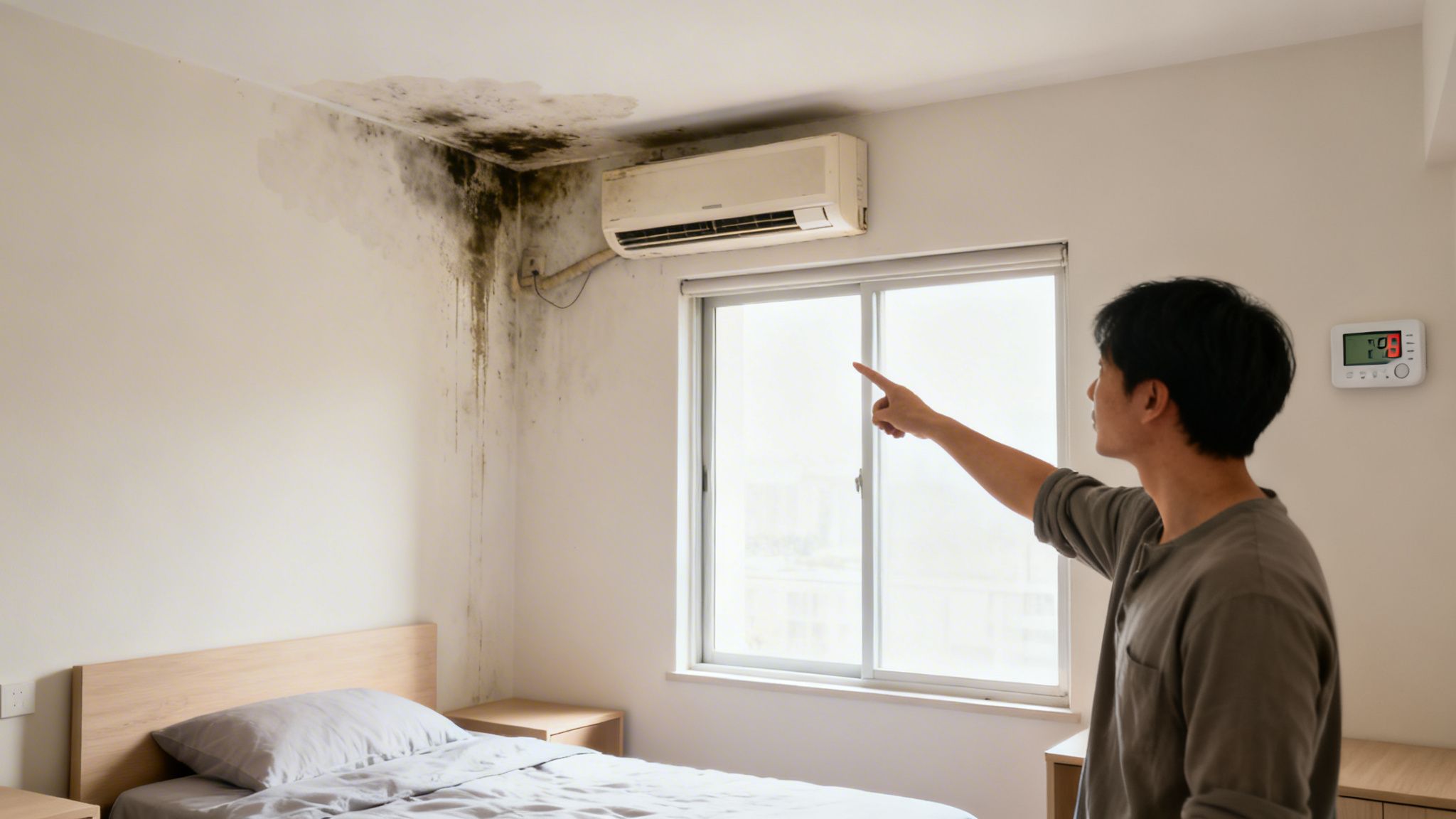
The foundation of your tenant rights is Texas Property Code Section 92.052. This law is clear: a landlord must make a diligent effort to repair a problem once they are properly notified. But there are a few catches.
For the law to be on your side, the problem must:
- Materially affect the physical health or safety of an ordinary tenant.
- Be reported to the landlord with proper written notice.
- Exist while you are current on your rent.
A dripping faucet probably won't qualify. But a collapsed ceiling, a broken heater in January, or extensive mold after a flood absolutely does. These are the kinds of issues the law was made for.
The Step-by-Step Process for Requesting Repairs
This is the most critical part: a phone call, text, or email is not enough to legally protect you. To officially trigger your landlord's duty to make repairs, you must provide formal written notice.
Sending your request by certified mail with a return receipt is non-negotiable. It creates an undeniable legal paper trail. It proves exactly what you requested and the date your landlord received it, which starts the legal clock for them to act.
This single piece of paper is often the most powerful evidence a tenant attorney in Houston, TX can use to build your case and hold a negligent landlord accountable. Don't give your landlord any excuse to ignore you. Follow these steps to the letter.
- Write It Down: Draft a formal letter. State your name, address, and the date. Describe the problem in detail and explain why it's a threat to your health and safety.
- Send It Certified: Go to the post office. Send the letter via "Certified Mail, Return Receipt Requested." The few extra dollars it costs are an investment in your case.
- Keep Everything: Save a copy of your letter, the post office receipt, and the green return-receipt card when it comes back to you. Take dated photos and videos of the problem. This is your evidence.
You can adapt this simple template:
- [Date]
- [Landlord/Property Manager Name]
- [Address of Landlord/Property Manager]
- Re: Formal Request for Urgent Repairs at [Your Full Address]
Dear [Landlord's Name],
This letter serves as formal written notice to request immediate repairs for a condition at the above property that is materially affecting my health and safety.
The issue is [be specific, e.g., "the central air conditioning has been broken since June 1st" or "there is a severe black mold outbreak in the master bedroom closet from a persistent leak"].
As required by the Texas Property Code, I am requesting you make these repairs in a timely manner. You can reach me at [Your Phone Number] to arrange a time for the work.
Sincerely,
[Your Name]
Your Legal Options When Your Landlord Refuses to Act
So you've done everything right, and your landlord is still ignoring you. Now what? The law gives you powerful remedies under Texas Property Code Section 92.056. After giving the landlord a reasonable time to respond, you may have the right to:
- Terminate Your Lease: End the lease agreement without penalty and move out.
- Repair and Deduct: Pay for the repairs yourself and deduct the cost from your rent. This is a very complex option with strict rules and spending limits.
- Sue Your Landlord: Take your landlord to court to force them to make the repairs, and you may be able to recover financial damages.
Navigating these options alone is risky, especially the "repair and deduct" remedy. One wrong move could put you in violation of your lease. You can learn more about Houston tenant repair rights in our comprehensive guide, but consulting an attorney is the safest way to proceed.
You shouldn't have to live in unsafe conditions. If your landlord refuses to do their duty, it's time to fight back. Contact The Law Office of Bryan Fagan, PLLC for a free consultation and let's talk about your rights.
How to Get Your Full Security Deposit Back
It's one of the most frustrating parts of moving. You’ve paid your rent on time, kept the place clean, and handed over the keys. But now your landlord is refusing to return your security deposit. It feels like they’re holding your money hostage, and you’re not sure what to do next.
The good news? Texas law is incredibly clear about this, and it’s written to protect tenants like you. But you have to know the rules and follow the right steps to use them to your advantage.
Under Texas Property Code Section 92.103, your landlord has exactly 30 days from the day you move out and provide a forwarding address to return your deposit. This isn’t a friendly suggestion—it’s a hard deadline. If they miss it without a legitimate reason, they could be in serious legal trouble.

Normal Wear and Tear vs. Actual Damage
So, when can a landlord legally keep your money? This is where most disputes happen. The law allows them to deduct for actual damages but not for "normal wear and tear."
It’s a simple concept.
- Normal Wear and Tear: Faded paint, minor scuffs on the walls where your couch was, or lightly worn carpet in a high-traffic area. These things happen from just living in a home, and fixing them is the landlord's cost of doing business.
- Actual Damage: A giant hole you punched in the drywall, deep gouges in the wood floors, or a carpet ruined by pet stains. This is damage caused by negligence or abuse, and the landlord can absolutely charge you to fix it.
Your landlord can't use your deposit to remodel their property on your dime. If they do withhold money, they are required by law to give you a written, itemized list explaining every single deduction.
A landlord who fails to provide this itemized list within the 30-day window loses the right to withhold any part of your deposit. They must return it all.
This isn't a minor detail; it's a critical protection for you.
What Happens When Your Deposit Is Wrongfully Withheld?
So, the 30 days are up. You have no check and no explanation. Or maybe you got a list of bogus charges for "deep cleaning" and "paint touch-ups." Now what?
This is where Texas law gives you real power. Texas Property Code Section 92.109 states that if a landlord withholds your security deposit in "bad faith," you can sue them for:
- Three times the amount of the deposit they wrongfully kept.
- An additional $100 in damages.
- Your attorney's fees and all court costs.
And here’s the best part: the law presumes the landlord acted in "bad faith" if they fail to return the deposit or provide the itemized list within 30 days. The burden is on them to prove they had a right to keep it. This puts incredible pressure on landlords to follow the rules.
Often, a powerful demand letter from a tenant attorney in Houston, TX is all it takes to get your money back without ever stepping foot in court.
Security Deposit Timeline and Penalties Under Texas Law
This table breaks down the landlord's obligations and the steep consequences they face for failing to comply.
| Action | Legal Deadline for Landlord | Penalty for Non-Compliance |
|---|---|---|
| Return Security Deposit | 30 days after you move out and provide a forwarding address. | Presumed "bad faith," potentially liable for 3x the deposit, $100, and attorney's fees. |
| Provide Itemized List of Deductions | 30 days after you move out (if withholding any amount). | Forfeits all rights to withhold any part of the deposit for damages. |
These aren't just guidelines; they are strict legal requirements designed to hold landlords accountable and protect your money.
Your Step-by-Step Guide to Protecting Your Deposit
Don't wait until there's a problem. The smartest way to get your deposit back is to build your case before you even move out. Documentation is your most powerful weapon.
- Provide a Forwarding Address in Writing: This is non-negotiable. Send it via certified mail with a return receipt requested. This starts the 30-day clock and proves you did your part.
- Take Detailed Photos and Videos: Before you lock up for the last time, document everything. Record a slow walk-through of the empty apartment, showing the condition of the walls, floors, appliances, and bathrooms.
- Do a Final Walk-Through: Use a move-out checklist to formally note the property's condition. If you can get the landlord or property manager to sign it, even better.
- Return the Keys: Formally hand over the keys on your move-out date. Get a receipt or send an email confirming you’ve returned them and have fully vacated the property.
Taking these steps makes it extremely difficult for a landlord to invent reasons to keep your money. For an even more comprehensive guide, check out our post on how to get your security deposit back in Texas.
What to Do About Landlord Retaliation
Are you scared to ask for that broken A/C to be fixed? Do you worry that if you complain about a leaky roof, you’ll suddenly get an eviction notice? It’s a fear we hear all the time from Texas tenants. But you need to know: the law is on your side.
This is called landlord retaliation, and it’s flat-out illegal. When a landlord punishes you for exercising your legal rights as a tenant, they are breaking the law. This isn't some vague concept; it's spelled out clearly in Texas Property Code Section 92.331 to protect you from this exact kind of intimidation.
What the Texas Property Code Says About Retaliation
Retaliation isn’t just about getting an eviction notice. The law looks at a whole range of hostile actions a landlord might take after you’ve stood up for your rights. You are legally protected if you have:
- Requested necessary repairs that your landlord is obligated to make.
- Filed a complaint with a city or county agency about a health or safety code violation.
- Formed or participated in a tenant organization.
If you take any of these legally protected actions, your landlord is barred from retaliating against you for six months. Prohibited actions include trying to evict you, jacking up your rent, cutting back on services, or refusing to renew your lease.
Proving Your Landlord Acted Illegally
To win a retaliation claim, you have to connect the dots between your action and your landlord's punishment. Your most powerful weapon here is documentation.
Let's walk through a real-world example:
- On July 1st, you send your landlord a certified letter demanding they fix a serious plumbing leak. On July 15th, a notice appears on your door—not from a plumber, but from your landlord—informing you that your rent is going up by $200 next month, even though your lease isn't up.
This is a classic retaliation scenario. The timing is more than a coincidence; it's evidence. A skilled tenant attorney in Houston, TX would use that certified mail receipt and the rent increase notice to build a powerful case. The goal is to show a judge that the landlord’s motive wasn't business—it was punishment.
Here's the most critical part: if your landlord takes one of these negative actions within six months of you asserting a right, the law presumes it's retaliation. The burden of proof shifts to them to prove they had a legitimate, non-retaliatory reason for their action.
Dealing With Landlord Harassment and Illegal Entry
Sometimes, retaliation is less direct. It can feel more like harassment, including your landlord showing up whenever they please. While your lease likely gives them the right to enter for valid reasons like repairs, Texas law requires them to give you reasonable advance notice unless there's a true emergency.
If your landlord constantly enters your apartment without permission or shows up unannounced just to "check on things," they are violating your right to quiet enjoyment of your home. The first step is to formally tell them to stop. Send a letter by certified mail demanding they provide proper notice and cease the unannounced visits.
If the behavior continues, you have legal options. You may be able to break your lease without penalty or even sue them. The key is to document everything. Keep a detailed log of every incident: note the date, the time, and exactly what happened. This log becomes crucial evidence if you have to go to court.
If you believe you’re a victim of landlord retaliation or harassment, don't just hope it goes away. Texas law gives you specific remedies, including the right to sue for actual damages, a penalty of one month's rent plus $500, and your attorney's fees.
If you need help with an eviction, lease issue, or rental dispute, contact The Law Office of Bryan Fagan, PLLC for a free consultation today.
Prepare for Your Free Consultation
You’ve decided to talk to a lawyer. That’s a huge first step toward taking back control and finding some peace of mind. To get the most out of your free consultation with our team, a little prep work can make all the difference.
When you come prepared, we can get straight to the heart of your problem. Think of it as building your case from day one. The more we have to work with, the clearer and more direct our advice will be.
What to Bring to Your Consultation
Don’t spend your valuable consultation time hunting for a stray email or trying to remember a specific date. Gathering your documents ahead of time means we can immediately focus on strategy. This is especially true if you’re dealing with lease changes. Knowing how to compare different versions of PDF documents can help you pinpoint exactly what your landlord changed so we can review it together.
Here’s a quick checklist of what to round up:
- Your Lease Agreement: The whole thing. Bring the original lease and any renewals, addendums, or riders attached to it. This is the rulebook for your tenancy.
- All Written Notices: This means any "Notice to Vacate," letters about rent increases, or warnings about supposed lease violations. Don’t leave anything out.
- Landlord Communications: Print them out. Every email, text message, or letter you’ve exchanged with the landlord or property manager tells a piece of the story.
- Photos and Videos: If you’re fighting over repairs, property damage, or unsafe conditions, a picture is worth a thousand words. Make sure they are dated.
- Proof of Rent Payments: Canceled checks, bank statements, or official receipts are your best defense against claims that you haven't paid.
- Formal Repair Requests: Did you send a request by certified mail? Bring a copy of that letter and the return receipt. This is gold.
What to Expect During the Meeting
A free consultation isn’t a sales pitch. It’s a strategy session. You tell us what’s happening, and we’ll tell you how Texas law applies to your fight. We’ll listen, review what you brought, and ask the questions that matter.
We believe in clarity, not confusion. Our job is to give you straight answers in plain English—explaining your rights, outlining your options, and discussing the likely outcomes. You will leave knowing exactly where you stand.
This is your chance to get real legal answers without any obligation or pressure. It’s a confidential conversation designed to give you a roadmap for moving forward.
If you’re facing an eviction, a security deposit battle, or any other landlord dispute, it's time to get help. Contact The Law Office of Bryan Fagan, PLLC for your free consultation today.
Your Top Houston Tenant Rights Questions, Answered
When you're caught in a dispute with your landlord, the questions can pile up fast. It's easy to feel overwhelmed and unsure of where to turn. We hear these concerns from tenants across Houston every single day. Here are straight answers to some of the most common questions we get.
Can My Landlord Really Evict Me for Being One Day Late on Rent?
No. An eviction isn't something a landlord can just decide to do on a whim. It’s a formal legal process with strict rules.
While your lease definitely has rules about late fees, your landlord can't just kick you out. Before they can even think about filing an eviction in court, they must give you a written ‘Notice to Vacate.’ For non-payment of rent, this usually gives you three days to either pay up or move out. Without that proper, legally required notice, any eviction is dead in the water.
What Does it Cost to Hire a Tenant Attorney in Houston?
The cost can change depending on how complex your fight is, but getting initial advice shouldn't cost you a dime. That's why we at The Law Office of Bryan Fagan, PLLC offer a free consultation. It’s your chance to have a real attorney review your case and lay out your options, all without any financial pressure.
It’s crucial to know that Texas law sometimes makes the landlord pay your attorney's fees. If you have to sue your landlord for illegally keeping your security deposit and you win, the court can order them to reimburse your legal costs.
This part of the Texas Property Code exists for a reason: to make sure tenants can afford to stand up for their rights and aren't bullied into silence.
What Can I Do if My Landlord Just Walks into My Apartment Without Notice?
Your right to privacy doesn't disappear when you sign a lease. Landlords are required by most Texas leases to give you 'reasonable notice' before entering your home. The only real exception is a true emergency, like a fire or major flood.
If your landlord ignores this and repeatedly enters your apartment unannounced, you need to shut it down.
- Document everything. Start a log immediately. Write down the date, time, and any details every single time it happens.
- Send a formal letter. The single most powerful first step is sending a letter by certified mail with a return receipt. In it, you state your right to privacy and demand they follow the lease and Texas law by providing proper notice. Don't be aggressive, just firm.
This creates a paper trail that is absolutely essential. If the behavior doesn’t stop, that documentation becomes powerful proof when you bring in a tenant attorney in Houston, TX to take legal action.
If you need help with an eviction, lease issue, or rental dispute, contact The Law Office of Bryan Fagan, PLLC for a free consultation today.