You can't legally withhold rent for repairs in Texas. If you do, you can face a civil penalty of one month's rent plus $500, along with attorney's fees and actual damages, and your landlord may have grounds to file a non-payment eviction.
Dealing with a broken air conditioner in a Texas summer, a roof leak over your bed, or plumbing that won't stop backing up can make you feel trapped. When the landlord ignores calls and texts, many tenants ask the same question: can you withhold rent for repairs in Texas? The hard answer is no. Directly withholding rent for repairs is illegal in Texas, but tenants do have legal options that can protect their tenant rights if they follow the rules carefully.
A lot of people get into trouble because the illegal shortcut feels reasonable. You think, "If the unit isn't livable, why should I pay full rent?" Texas law doesn't work that way. The safer path is to stay current on rent, document the problem, give proper written notice, and use the statutory remedies the Texas Property Code allows.
Your Rights When a Landlord Wont Make Repairs
If your AC quits in July and your landlord stops responding, your frustration is justified. The same goes for a leak that ruins your clothes, a sewage problem that makes the bathroom unusable, or a safety issue that keeps getting pushed aside. Tenants often assume withholding part of the rent will force action.
That instinct can backfire fast. Texas does give tenants rights when serious repair problems affect health or safety, but those rights have to be used in the correct order. A missed step can weaken your position and put your housing at risk.
What tenants usually get wrong
A common example looks like this. A tenant reports a major repair problem by phone, waits, gets no response, and then sends only half the rent the next month with a note that says the rest will be paid after the repair is done. The tenant believes that seems fair. Under Texas law, it isn't the right move.
What matters is not only the condition itself, but also how you respond to it. Texas expects tenants to use written notice and the statutory repair process, not self-help rent withholding.
Practical rule: If the repair issue is serious, act quickly. But don't stop paying rent on your own.
For a broader overview of how these disputes fit into the bigger landlord-tenant framework, VerticalRent's guide to Texas landlord laws is a useful background read.
Your rights still matter
Saying you can't withhold rent doesn't mean you're powerless. It means Texas channels these disputes into specific remedies. If your landlord won't act, you may be able to use repair and deduct, terminate the lease in the right circumstances, or ask a court to order repairs and award relief.
That distinction matters. A Texas landlord tenant lawyer or an eviction attorney often sees cases where the repair problem was real, but the tenant weakened their position because they chose the wrong remedy first.
Why Withholding Rent Can Lead to Eviction and Penalties
You wake up to a ceiling leak, your landlord still has not fixed it, and rent is due tomorrow. Holding back part of the rent can feel like the only way to get attention. In Texas, though, that choice often turns one problem into two: the repair dispute stays unresolved, and a nonpayment case can start on top of it.
Texas law is very strict here. A tenant generally cannot stop paying rent just because repairs have not been made. That answer frustrates people because it feels unfair, especially when the condition is serious. But fairness and legality are not always the same thing, and this is one of those places where Texas expects tenants to use the repair procedures the statute gives them.
What Section 92.058 means in plain English
Texas Property Code Section 92.058 allows penalties against a tenant who withholds rent unlawfully after written notice from the landlord. The financial hit can be severe: one month's rent plus $500, along with the landlord's attorney's fees and actual damages in the right case. A landlord may also treat the unpaid balance as nonpayment and file for eviction.
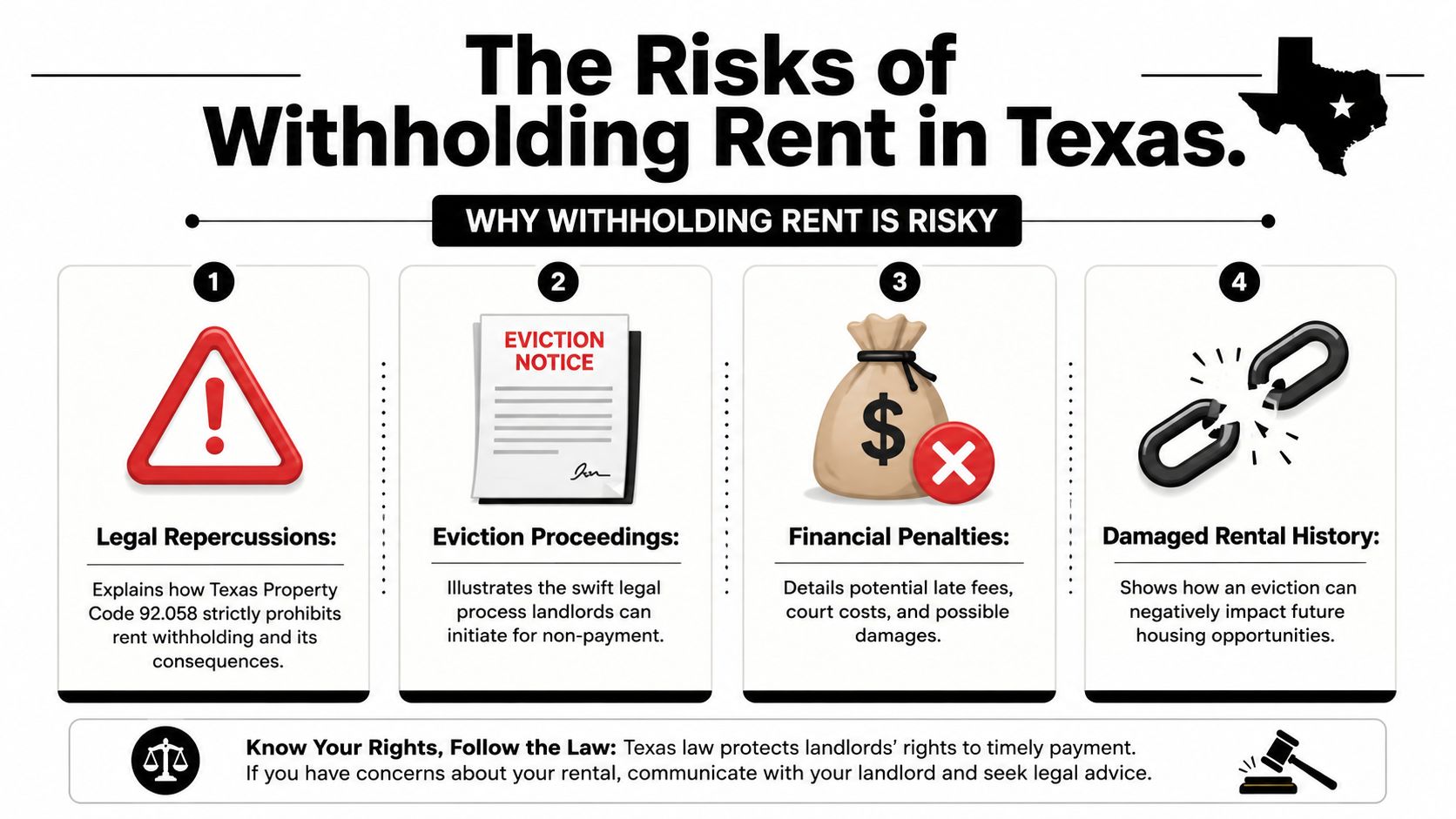
That is the trap many tenants miss. They focus on the bad condition. The court may focus first on whether rent was paid.
Partial withholding usually does not solve that problem. If your lease says $1,800 is due and you send $900 with a note about repairs, the shortage can still be treated as unpaid rent. Judges often see the payment issue as separate from whether the repair request had merit.
The money problem gets worse fast
The penalty is only part of the risk. Once you are behind, late fees may follow if the lease and the statute allow them. Then come filing costs, time off work to attend court, and the pressure of trying to gather records while an eviction deadline is already running. For many tenants, that is the true financial trap. They withhold rent to gain an advantage, but they end up in a more expensive and weaker position.
There is another practical problem that gets overlooked in large Texas cities. Even tenants who later learn about "repair and deduct" are often surprised by how limited that remedy can be for a major plumbing, electrical, or HVAC issue. The legal cap is often far below the full cost of a serious repair. So a tenant may withhold rent hoping to force action, only to learn later that the lawful self-help remedy would not have covered the full fix anyway. That is why using the wrong tactic at the start can be so costly.
A serious repair problem does not erase the duty to pay rent. It changes which legal remedies you should use.
Bad faith also matters under Section 92.058, but tenants should be careful not to build their plan around that phrase. It is not a safe harbor. Arguing about your intent after rent has gone unpaid is much harder than avoiding the nonpayment issue in the first place.
Eviction can begin before the repair dispute is decided
A landlord who claims nonpayment does not have to wait for the repair fight to be fully sorted out. The eviction process can start first, as long as the required notice is given. If you want to understand what that pre-filing notice should include, The Notice to Vacate: Requirements and Timing explains what a valid Texas Notice to Vacate must contain before an eviction can be filed.
Here is the practical takeaway for tenants:
- Do not use rent as pressure. Texas law does not treat that as an approved repair strategy.
- Do not assume paying part of the rent protects you. A short payment can still support a nonpayment claim.
- Do not rely on the seriousness of the condition alone. You still need to follow the legal repair process.
- Do not wait until a notice to vacate arrives. By that point, the timeline gets tighter and your options are harder to use well.
For landlords, this section matters too. If a tenant withholds rent over repairs, the response should be documented carefully and handled through the proper notice and court process.
Lawful Alternatives That Protect Your Tenant Rights
Your landlord has ignored a serious repair. Rent is due. You may be tempted to hold the money back until someone finally fixes the problem.
Texas law gives you safer options. The goal is to protect your housing and your money at the same time, because the wrong move can turn a repair dispute into an eviction case.
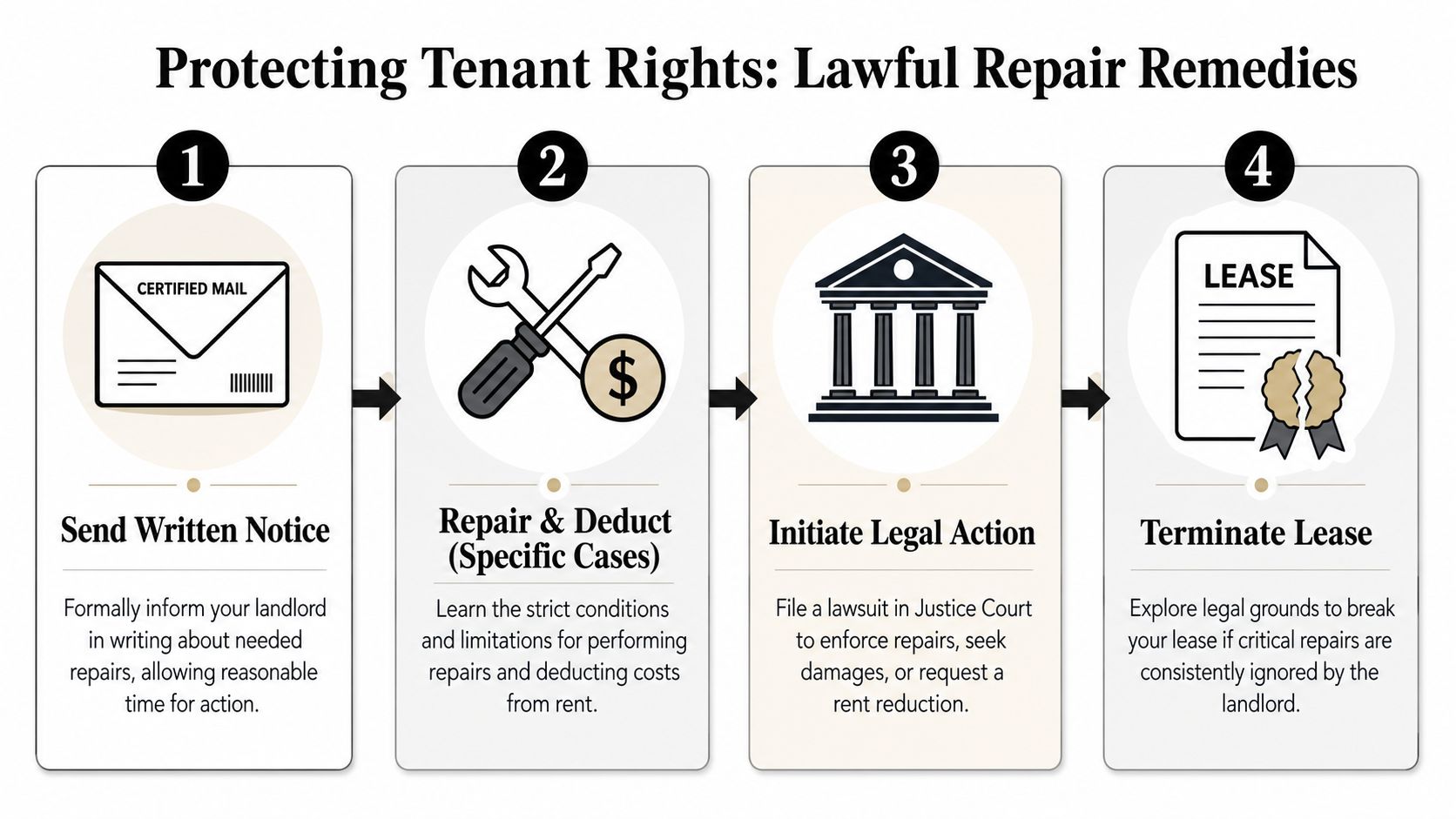
The main statutory option is repair and deduct. The Texas Attorney General explains that the repair and deduct remedy is available only if you follow the notice rules, give the landlord time to act, and stay within the legal limits on what can be deducted.
How repair and deduct actually works
Repair and deduct works more like a narrow reimbursement rule than a rent protest. You do not get to stop paying rent because the repair is overdue. Instead, if the statutory requirements are met, you arrange the repair properly, pay for it, and then deduct the allowed amount from rent.
That distinction matters. A tenant who skips rent often ends up defending against nonpayment. A tenant who follows the statute is building a paper trail that supports a legal remedy.
If you want a focused explanation of the procedure, The Repair-and-Deduct Remedy in Texas discusses how the 92.0561 repair-and-deduct process works and its strict requirements.
The financial cap is where many tenants get trapped
On paper, repair and deduct sounds useful. In practice, the cap can be too small for major problems, especially in large Texas cities where licensed repairs often cost more than tenants expect.
Texas limits the deduction to the greater of one month's rent or $500. That sounds workable until you apply it to a real repair bill. A failed air-conditioning system, plumbing leak behind a wall, or electrical issue may cost far more than that limit. So even if you qualify, you may need cash up front and may only be able to recover part of the cost through the deduction allowed by law.
That is one of the most expensive mistakes tenants make. They assume, "The landlord forced me to fix it, so I can just subtract the whole bill from rent." Texas does not treat it that way.
A related trap appears in court. If the facts support statutory remedies and the landlord is liable, potential relief can include $500 plus one month's rent, along with court costs and attorney's fees in some cases under the Property Code. That sounds substantial, but it does not erase the short-term cash problem created by a large repair. Strategy matters here. You need to evaluate whether repair and deduct is realistic for the size of the problem, or whether another remedy fits better.
Other lawful options may fit better than repair and deduct
Sometimes repair and deduct is too limited to solve the actual problem. Texas law may give tenants other options, depending on the condition, the notices sent, and whether the issue affects health or safety.
Lease termination
In some situations, a tenant can end the lease after following the required repair process and giving the landlord the chances the law requires.Court action for repairs and damages
A court can be asked to order repairs and, if the legal requirements are met, award statutory relief. This option is often more realistic than trying to front a large repair bill yourself.A stronger evidence file
Photos, copies of written notices, receipts, inspection reports, and mailing proof can make the difference between a claim that sounds frustrated and one that sounds provable.
The practical lesson is simple. Use the remedy that fits the size of the problem and your budget. A small fix may work under repair and deduct. A major system failure often calls for lease termination analysis, court action, or legal advice before you spend your own money.
For tenants dealing with habitability problems, resources and legal help on health-and-safety conditions and the landlord's duty to repair can make the next step much clearer. In some situations, working with The Law Office of Bryan Fagan, PLLC is one way to evaluate whether repair and deduct, lease termination, or court action fits the facts.
Your Step-by-Step Guide to Requesting Repairs Correctly
Your ceiling starts leaking on Friday night. By Monday, the carpet is wet, the smell is getting worse, and you are tempted to shave money off the rent to force action.
That impulse is understandable. In Texas, it can also get expensive fast.
The safer approach is to build your repair claim the way you would build a court file. Every photo, notice, receipt, and mailing record matters. A good paper trail does two things at once. It gives the landlord a fair chance to fix the problem, and it protects you from turning a valid repair issue into a rent-default problem.
Build your file before you make demands
Start with proof.
If the dispute later becomes a question of who said what, documents usually carry more weight than memory. That is why the first job is not writing an angry message. It is preserving the facts.
Keep these items together in one folder, digital or paper:
- Dated photos: Take clear pictures from more than one angle.
- Video when it shows the problem better: Dripping water, buzzing electrical issues, weak airflow, and repeated appliance failures are easier to understand on video.
- A simple log: Write down when the problem started, when it got worse, and any conversations about it.
- Copies of every message: Save texts, emails, maintenance portal submissions, and voicemails if you can download them.
- Proof you stayed current on rent: This is a common trap. A strong repair complaint can weaken quickly if the landlord can point to missed rent.
That last point deserves attention. Tenants often focus so hard on the repair that they overlook the financial setup of the dispute. If you stop paying rent, the argument can shift from "why was this not repaired?" to "why are you behind?"
Send written notice that can be proved later
Texas repair rights depend heavily on notice. Verbal complaints may be real, but they are hard to prove. Written notice is much stronger.
Your first written request should do four simple things:
- Identify the rental unit.
- Describe the condition clearly.
- Explain briefly why it affects health or safety.
- Ask for repair.
Plain language works better than legal-sounding threats. You do not need a dramatic letter. You need a usable record.
I am requesting repair of the following condition at my rental unit: [describe the problem clearly]. This condition affects health or safety because [brief explanation]. Please make repairs as soon as possible. I am keeping records of this request.
If you want the best proof of timing, send the notice by certified mail and keep the receipt. Email or an online portal may still be useful, but certified mail often becomes the anchor document if the landlord later claims no proper notice was given.
Watch the timeline like money is attached to it
It often is.
Many tenants make a preventable mistake here. They assume that once a serious condition exists, they can immediately hire someone, deduct the cost, or stop paying full rent. Texas law is much narrower than that. Timing, notice, and proof of delivery matter. The landlord usually must have a reasonable opportunity to act after proper notice.
A simple checklist helps:
| Step | Action | Why it matters |
|---|---|---|
| 1 | Identify the repair issue | Be specific about what is wrong and when it began |
| 2 | Gather proof | Photos, video, logs, and saved messages make the claim harder to dispute |
| 3 | Send written notice | Written notice creates a record. Certified mail gives stronger proof of delivery |
| 4 | Allow a reasonable time for response | The law often treats about a week as reasonable in the right circumstances, but facts can change that analysis |
| 5 | Record the landlord's response | Note inspections, promises, repair attempts, delays, and missed appointments |
| 6 | Evaluate the next legal step carefully | The right option depends on the size of the problem, your budget, and whether the legal requirements have been met |
Many tenants find it helpful to hear the process explained out loud before sending formal notices. This overview can help you think through the timeline and documentation.
Do not let frustration push you into the wrong remedy
As a result, tenants fall into financial traps.
One trap is assuming any repair bill can be passed back to the landlord later. Another is assuming "repair and deduct" will solve a major problem such as a failed air-conditioning system, plumbing line, or extensive water intrusion in a large Texas city where contractor pricing is high. In practice, the cap can be too low to cover a serious repair, which leaves the tenant paying out of pocket or stuck with an incomplete fix.
There is another risk. If a tenant gets the process wrong, Texas law can expose the tenant to the landlord's damages, including a penalty tied to one month's rent plus $500 in some situations. That is the kind of number that turns a repair dispute into a budget crisis.
The lesson is simple. Follow the procedure with care before you spend your own money or threaten any deduction.
Sample certified mail notice
Use a calm tone. Stick to facts. Do not threaten to withhold rent.
Sample notice
Date: [insert date]Landlord or Property Manager: [insert name]
Property Address: [insert rental address]I am providing written notice of the following condition that needs repair: [describe the condition].
The problem began on or about [date]. It affects health or safety because [brief explanation].
Please make a diligent effort to repair or remedy this condition. I have attached or retained photographs and other documentation.
Sincerely,
[Your name]
[Your contact information]
A letter like this keeps the dispute grounded in facts. That gives you a better chance of protecting your rights without creating a second problem based on nonpayment or a premature deduction.
A Landlord's Guide to Handling Repair Disputes
A repair dispute often stops being just a maintenance issue the moment rent comes in short.
For landlords and property managers, the safest approach is to treat every serious repair complaint like a file you may need to defend later. That means quick inspection, clear written responses, and records that show what was reported, what you observed, and what you did next. A plumbing leak can usually be fixed. A weak paper trail is harder to repair once an eviction case starts.

A smart landlord separates the dispute into two tracks. One track is the condition itself. Does the problem affect health or safety, and is it the landlord's responsibility to fix? The second track is procedure. Has the tenant given proper notice and stayed current on rent? Those questions often get blurred together in tense conversations, but keeping them separate helps you respond calmly and lawfully.
Speed matters, but so does precision. If a tenant says, "the bathroom is broken," ask follow-up questions in writing. Is the toilet overflowing, the sink leaking, or the shower unusable? Clear facts help everyone. They also reduce the risk that a tenant later claims you ignored a serious condition when the original complaint was too vague to act on.
If the tenant starts paying less rent without a legal basis, the financial risk grows fast for both sides. The landlord now faces a collection problem and a possible eviction case. The tenant may be walking into penalties that can include the kind of "$500 plus one month's rent" exposure discussed earlier if they misuse self-help remedies. That is why experienced landlords do not answer a short payment with angry texts or verbal threats. They answer with documentation.
A measured response usually includes these steps:
Update the ledger immediately
Record the amount received, the date, and the exact shortfall.Reply in writing
State that rent was not paid in full and that Texas law does not generally let a tenant withhold rent on their own because repairs are delayed.Preserve the repair timeline
Keep copies of notices, work orders, photos, vendor messages, and entry logs. In court, the timeline often matters as much as the repair itself.Check your notice requirements before filing
Even when the tenant is wrong to withhold rent, the landlord still needs to follow the proper nonpayment process.
Good landlords also understand the trap tenants fall into with repair-and-deduct. On paper, it can sound simple. In practice, the monthly cap may be too small for a major repair in cities where labor and parts are expensive. If a tenant tries to solve a large problem with a partial rent payment, the landlord may end up dealing with an avoidable nonpayment case instead of an orderly repair process.
That practical reality can help landlords make better decisions. If the repair is legitimate and serious, handling it promptly is often cheaper than fighting over reduced rent, missed payments, court costs, turnover, and vacancy. If the tenant is overreaching, your records will put you in a stronger position.
Cost control matters on the legal side too. For landlords trying to budget a dispute before it turns into litigation, understanding hourly legal billing can help you evaluate whether early advice may cost less than a contested eviction or repair lawsuit.
The goal is simple. Fix real problems fast, answer improper rent withholding in writing, and keep a record that would make sense to a judge reading it cold months later.
When to Call a Texas Landlord-Tenant Lawyer
Some repair disputes stay manageable. Others stop being DIY problems the moment housing, money, or court deadlines are on the line.
For tenants, legal help is worth considering when the landlord ignores certified notices, the condition makes the home unsafe, or the repair cost is too large to fit comfortably within the monthly repair-and-deduct limit. That's also true if you've received a notice to vacate or you're worried the landlord is retaliating after a repair complaint.
For landlords, legal guidance becomes important when a tenant has stopped paying, the property condition is disputed, or you need to make sure notices and filing steps are done correctly. A mistake at the front end of an eviction or repair dispute can create delay and expense later.
Signs the issue has become high stakes
- You received formal papers: Court dates and written notices shouldn't be ignored.
- The numbers don't work practically: Under Texas renters' rights guidance on repair deductions, the deduction is limited to one month's rent or $500 per month, whichever is greater, and multiple repairs across different months are allowed only if the deduction in any single month stays within that limit.
- The facts are contested: One side says the condition was serious. The other says notice was defective or the tenant caused the problem.
- You need a strategy, not just forms: Repair law, eviction procedure, and evidence rules often overlap.
Cost is part of the decision for many Texans. If you're comparing legal help, a practical primer on understanding hourly legal billing can help you ask better questions before you hire counsel.
A Texas landlord tenant lawyer can help tenants avoid self-inflicted mistakes and help landlords enforce leases without cutting corners. In a serious dispute, that guidance can be the difference between a controlled process and a costly scramble.
If you need help with an eviction, lease issue, or rental dispute, contact The Law Office of Bryan Fagan, PLLC for a free consultation today.