Dealing with a rent increase can be stressful—but understanding your rights under Texas law can make all the difference. Before you panic or start packing boxes, it’s crucial to know the rules your landlord must follow. This knowledge isn't just power—it's the foundation for a confident, effective negotiation.
To successfully negotiate a rent increase in Texas, you have to know the rules your landlord must play by. This knowledge is the foundation for a confident, effective negotiation.
Your Landlord Raised the Rent—What Are Your Rights in Texas?
Few things are more stressful for a tenant than a sudden rent hike. It can feel like you have no control, but under Texas law, you have more standing than you might think. The key is understanding the rules of the road before you respond to your landlord.
What the Texas Property Code Says
Let's get one crucial fact out of the way first: Texas has no statewide rent control. This means there's no legal ceiling on how much a landlord can raise your rent.
But that doesn't give them a blank check to do whatever they want, whenever they want. They still must follow the proper legal procedures laid out in the Texas Property Code.
For tenants on a month-to-month lease, the law is very clear. Texas Property Code § 91.001 requires your landlord to give you at least 30 days' written notice before the new rent takes effect. If you're in a fixed-term lease (like a one-year agreement), they generally can't raise the rent until your lease is up for renewal—unless a specific clause in your contract allows for it. This is why your first move should always be to pull out and carefully review your Texas lease agreement.
Is the Rent Increase Legal?
Not every rent increase is legal, even without rent control laws. A landlord absolutely cannot raise your rent for discriminatory or retaliatory reasons. The Texas Property Code is your shield against these kinds of illegal actions.
Discrimination: Your rent cannot be raised because of your race, religion, national origin, sex, disability, or familial status. If you suspect you're being singled out as a member of a protected class, the increase may be illegal.
Retaliation: This is a big one. A landlord is legally prohibited from retaliating against you for exercising your rights as a tenant.
Real-World Scenario: Imagine you sent a certified letter to your landlord requesting a critical repair, like a broken heater in the winter. A week later, you get a notice that your rent is going up by $300. Under Texas Property Code § 92.331, that timing is highly suspect. The law presumes an action is retaliatory if it happens within six months of you exercising a legal right.
Knowing these rules completely changes the dynamic. You're no longer just a tenant facing a bigger bill; you are an informed individual who understands your legal protections. If you have any reason to believe the increase is retaliatory or discriminatory, a Texas landlord-tenant lawyer can help you protect your rights.
This flowchart maps out your first critical steps after receiving that notice. You check the notice period, review it for any red flags of illegality, and then decide your next move.
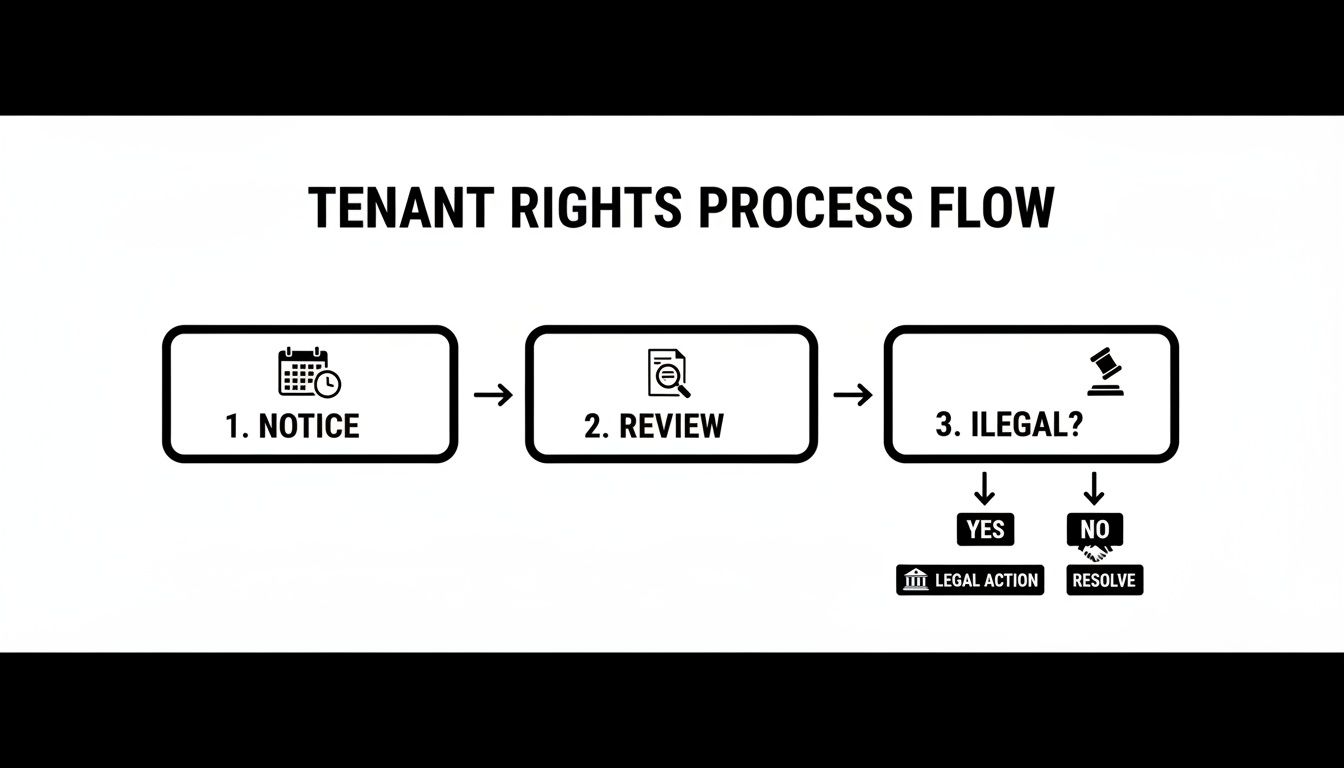
This process isn't about emotion; it's about facts and law. By arming yourself with this knowledge first, you can approach the situation with a clear head. If you suspect the increase is illegal, your next step isn't negotiation—it's seeking legal advice from an experienced tenant rights attorney.
How to Build a Compelling Case for Your Rent Negotiation

A successful rent negotiation isn’t won with good intentions. It’s won with solid evidence.
When you walk into a discussion with your landlord armed with facts—not just feelings about fairness—you transform the entire conversation. It’s no longer a plea. It’s a business proposal. This preparation is your single most powerful tool when you’re figuring out how to negotiate a rent increase.
Your goal is to build a case so reasonable and well-supported that it's difficult for your landlord to simply say no. You need to present yourself as a valuable, informed tenant who is worth keeping.
Research Comparable Market Rents
The most persuasive argument you can make is that the proposed new rent is out of line with the current market. This isn’t a guess; it’s something you can prove. It just requires a little homework to find "comps"—comparable rental prices right in your neighborhood.
Start digging on real estate sites like Zillow, Apartments.com, and Trulia. Don't just look at city-wide averages. Filter your search to match your apartment’s specific features:
- Neighborhood: Look at units in your specific pocket of Houston, Dallas, or Austin. A block or two can make a huge difference.
- Size and Layout: Only compare apartments with the same number of bedrooms, bathrooms, and similar square footage.
- Amenities: Does the other unit have in-unit laundry, a balcony, or included parking just like yours? Be specific.
Track what you find in a simple spreadsheet. List the address, rent price, and a link to the active listing. If you find even a few comparable units renting for less than your proposed new rate, you have hard evidence to anchor your negotiation.
Build Your "Good Tenant" Profile
Next, you need to remind your landlord that you're an asset, not just a line item on their profit-and-loss statement. Landlords hate turnover. It's expensive and time-consuming, involving lost rent during vacancy, cleaning fees, and the hassle of finding a new, reliable person.
Put together a brief profile highlighting your value as a tenant:
- Payment History: Point to your perfect record of paying rent on time, every time.
- Property Care: Mention how well you've maintained the property and how you've always reported necessary repairs promptly.
- Lease Compliance: Reiterate that you've never caused problems or violated the lease.
Key Takeaway: Frame your tenancy as a low-risk, high-value proposition for your landlord. A great tenant who wants to stay is often far more valuable than the uncertainty and cost of finding a new one for a few extra dollars a month.
This "good tenant" narrative shows you’re not just trying to get out of paying more; you're invested in the property and want to continue a positive relationship. It completely changes the dynamic from confrontational to collaborative.
Arm Yourself with a Pre-Negotiation Inspection
Finally, use the condition of your own unit as direct leverage. Before you even think about sending that email, do a thorough walkthrough of your apartment and the building's common areas.
Make a detailed list of every outstanding issue, big or small. Look for things like:
- Maintenance requests you've submitted that were never addressed.
- Appliances that are old, inefficient, or barely working.
- Needed repairs like leaky faucets, running toilets, or damaged flooring that was there when you moved in.
- Advertised amenities that are consistently unavailable, like a "closed for maintenance" pool or broken gym equipment.
Each one of these is a bargaining chip. You can position your counter-offer as a fair trade: you might be willing to accept a smaller increase, but only if these long-standing issues are finally resolved. It shows you’re being reasonable and looking for a solution that works for everyone.
To help you get organized, we've put together a step-by-step checklist. Use it to gather every piece of information and documentation you'll need before you reach out to your landlord.
Rent Negotiation Preparation Checklist
| Preparation Step | What to Look For | Why It Matters |
|---|---|---|
| Review Your Lease | Notice periods, renewal clauses, rules about rent increases. | Ensures you follow the exact legal requirements for timing and communication. |
| Research Comps | 3-5 similar local listings with lower rent. | Provides market-based evidence that the proposed rent is too high. |
| Document Your Tenant History | Records of on-time rent payments, positive communication. | Proves you are a reliable, low-risk tenant worth keeping. |
| Inspect Your Unit | Unfulfilled repairs, broken appliances, outdated features. | Creates bargaining chips and justifies a lower rent amount. |
| Check Market Trends | Local vacancy rates and average rent changes. | Gives you context on whether the market favors tenants or landlords. |
Having these documents ready to go shows your landlord you've done your homework and are serious about finding a fair outcome.
Understanding the bigger picture is also critical. The U.S. recently saw its largest average rent increase in decades, with an 8.85% year-over-year jump that has squeezed tenants everywhere. Texas renters in hot markets like Houston and Dallas-Fort Worth are certainly feeling this pressure. At the same time, other data points to a national rental vacancy rate of 8.6% in early 2026, which can give tenants more negotiating power than they realize. For more on how these economic forces impact rental markets, reports like the US Real Estate Market Outlook 2026 provide valuable data to support your case.
Your Negotiation Letter: How to Ask and What to Say
You’ve done the hard work. You've researched the market, you know what’s fair, and you’re ready to make your case. But how you present that case is just as important as the facts you’ve gathered.
This is where many tenants stumble. A demanding or confrontational tone can shut the conversation down before it even starts. Your goal isn’t to pick a fight; it’s to start a professional, collaborative business discussion.
Think of it this way: your landlord is more likely to work with a tenant who approaches the situation with respect. A well-written email or letter shows you’re serious, organized, and invested in finding a solution that works for everyone.
Structuring Your Letter for a Positive Response
Whether it’s an email or a paper letter, your communication needs a strategy. You’re not just asking for cheaper rent—you’re telling the story of a great tenant who wants to continue a good relationship.
And always, always put it in writing. An email or letter creates a paper trail with a date and time stamp. This isn't about being difficult; it's about being clear and protecting yourself if a dispute comes up later.
Instead of a blunt demand, build your case piece by piece. Here’s a step-by-step framework that works:
- Start with the Positive: Reaffirm that you enjoy living there and want to stay. This sets a cooperative tone from the get-go.
- Acknowledge Their Notice: Mention that you received the rent increase notice. It shows you’re responsive and not just ignoring it.
- Remind Them of Your Value: Briefly mention your track record. "I've always paid on time and taken great care of the unit" is a powerful reminder that you're a low-risk, high-value tenant.
- Introduce Your Research: Gently bring in your market data. Frame it as something you looked into to understand the new rent in the context of the neighborhood.
- Make Your Counter-Offer: This is the key. State a specific number for your counter-offer and mention that it’s based on your research.
This approach frames your request as a win-win. Your landlord avoids the cost and headache of finding a new tenant, and you secure a rent you can afford.
A Sample Script You Can Actually Use
Staring at a blank screen can be intimidating. Here’s a sample email you can adapt. Notice how it’s polite, based on facts, and focuses on shared interests.
Subject: Lease Renewal for [Your Address], Unit [Your Unit Number]
Dear [Landlord's Name/Property Manager's Name],
I hope this email finds you well.
I'm writing to you about my lease renewal. I have genuinely enjoyed my time here over the past [Number] years and hope to continue calling this apartment my home.
I received the notice about the rent increase to $[New Rent Amount] per month. To prepare for the renewal, I looked at what similar apartments in our immediate area are going for. My research showed that the market rate for comparable units seems to be closer to $[Your Researched Average Rent].
As a tenant who has always paid rent on time and treated the property with care, I’d like to propose a monthly rent of $[Your Counter-Offer Amount]. I believe this is a fair rate that reflects the current market and would allow me to renew my lease.
Thank you for your time and for considering my request. I am confident we can find a solution that works for both of us.
Best regards,
[Your Name]
[Your Unit Number]
[Your Phone Number]
This script is your opening move. It's designed to start a conversation, not end one. Sometimes, a respectful, data-backed request is all it takes. For trickier situations where a landlord is unresponsive or dismissive, a more formal approach may be needed. The principles of clear, documented communication in a Texas demand letter can provide a useful framework for escalating your request properly.
What to Do If They Won't Budge on Price
If the landlord says "no" to a rent reduction, the negotiation isn't over. It’s time to get creative and propose other valuable concessions.
Think about what your landlord wants most: stability and reliable income. You can use that to your advantage.
- Offer to Sign a Longer Lease: Proposing an 18-month or 24-month lease can be very appealing. It guarantees them income for a longer period and saves them the turnover costs they’d face in a year.
- Propose Pre-Paying Rent: If you have the cash on hand, offering to pay two or three months of rent upfront is a powerful bargaining chip. It gives your landlord immediate cash flow and proves your financial reliability.
- Barter Your Skills or Services: Do you have a professional skill? Maybe you’re great at landscaping, painting, or social media marketing. You could offer a one-time service, like repainting a common area, in exchange for keeping your current rent.
Flexibility is your best asset here. If they won’t move on the monthly rent, pivot to other options that save you money or add value. The goal is to find a middle ground where you both walk away feeling like you got a fair deal.
What to Do When Your Landlord Says No
You did everything right. You sent a polite, professional letter with solid research to back it up. And then the email arrives with a single, frustrating word: "No."
It’s easy to feel defeated, but this is where the real negotiation begins. An initial rejection isn’t a slammed door; it’s an invitation to get creative. When a landlord won’t budge on the rent itself, it's time to stop talking about price and start talking about value.
Make a Second, More Strategic Offer
Your first counter-offer might have been too ambitious. If your landlord’s rejection was firm but not hostile, don't be afraid to make a second proposal. This shows you’re serious about staying and willing to find a middle ground.
Frame it as a final compromise. For instance, if they hit you with a $150 increase and you countered with $50, a revised offer of $100 might just be the sweet spot. It shows you're flexible, and landlords almost always appreciate a tenant who is willing to meet them partway.
Pivot to Things That Aren't Rent
If the dollar amount is truly off the table, shift the conversation. What perks could make your life better and offset the cost of the increase? Think about the daily frustrations you put up with and what the landlord could do to fix them.
Here are a few real-world examples of valuable concessions you can negotiate:
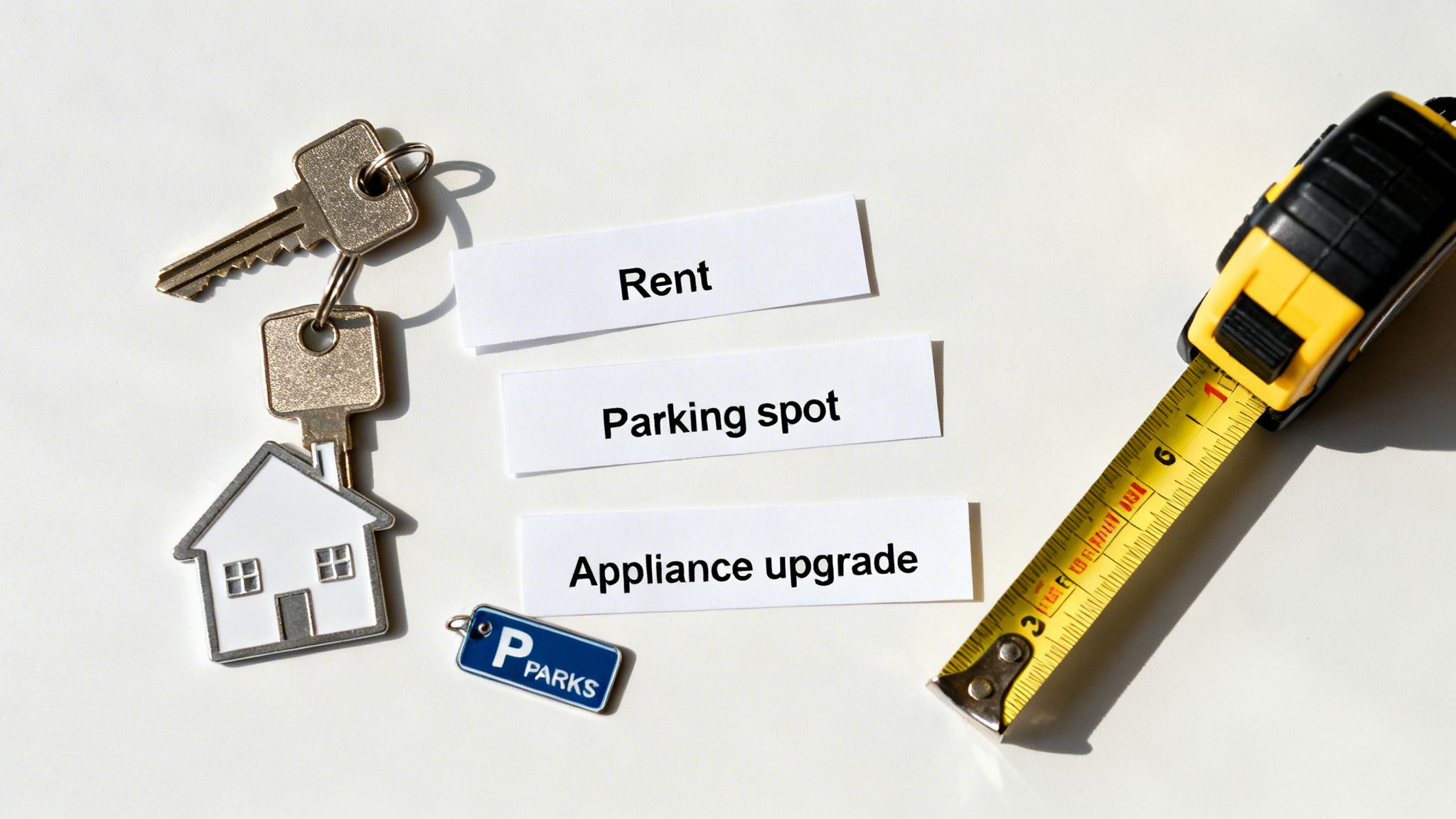
- A Guaranteed Parking Spot: If finding a spot is a nightly nightmare, a reserved space can be worth its weight in gold.
- An Appliance Upgrade: Is your dishwasher on its last legs or your fridge a relic from the 90s? Propose that you’ll accept the new rent in exchange for a modern, energy-efficient appliance.
- Permission to Get a Pet: Getting the green light for a dog or cat (and maybe even a waived pet fee) can be a massive win you can't put a price on.
- Minor Renovations: Ask for a fresh coat of paint, new light fixtures, or for that old, stained carpet to finally be replaced.
Expert Tip: These kinds of upgrades often cost a landlord far less over a year than a rent reduction would. They get the monthly rent they want, and you get a tangible improvement that makes your home better. It’s a classic win-win.
Gently Remind Them About Turnover Costs
This is a tactic that requires finesse, but it can be incredibly effective. The single biggest hidden expense for a landlord is the cost of turning over a unit. When a reliable tenant like you moves out, they’re looking at a financial headache.
You’re not making a threat; you’re just pointing out a simple business reality. The costs add up fast:
- Lost Rent: At least one month of zero income while the unit is empty.
- Repairs & Cleaning: Deep cleaning, painting, and fixing wear-and-tear are unavoidable.
- Marketing: Listing fees and advertising to find a new tenant.
- Screening New Applicants: Background and credit checks aren't free.
National data shows that while U.S. rents saw 5.62% average annual growth from 2020-2026, the market is cooling off. In Q2 2024, national rent growth slowed to just 0.2% as vacancy rates climbed to 8.6%. A landlord can easily lose $1,600-$2,000 or more for every month a good apartment sits empty.
Your stability is a valuable asset to them. Reminding them of that fact—calmly and professionally—can be your most powerful tool. To see how these trends are playing out in different areas, you can explore detailed rental market research.
When to Contact a Texas Landlord Tenant Lawyer
Trying to negotiate with your landlord can feel overwhelming, especially when the conversation turns hostile or you suspect something isn't right. Most rent discussions can be handled professionally between you and your landlord. But some situations cross a line—a line where you need to stop talking and get legal help.
Knowing when you've reached that point is critical. Pushing forward on your own against an illegal rent hike or a retaliatory landlord can jeopardize your housing and your rights. If your gut is telling you something is off, it’s time to listen.
Clear Signs You Need Legal Help
Not every negotiation needs a lawyer. But when a landlord’s actions feel more like punishment than business, you’re in legal territory. If any of these scenarios sound familiar, don't wait to make the call.
You should seriously consider hiring a Texas landlord-tenant lawyer if:
- The Rent Hike Feels Like Payback: Did the increase notice show up right after you asked for a critical repair? Or maybe after you reported a health code violation or got your neighbors together for a tenants' meeting? This could be illegal retaliation. Texas Property Code § 92.331 explicitly forbids landlords from punishing you for exercising your legal rights.
- You Think You're Being Singled Out: Your rent can't be raised because of your race, religion, family status (having kids), disability, or national origin. If you notice that tenants in similar units aren't getting the same massive increase, you may be facing illegal housing discrimination.
- The Increase Breaks Your Lease Agreement: Are you in the middle of a fixed-term lease? Your landlord generally can't raise the rent unless your lease has a specific clause allowing it. A surprise mid-lease hike is often a clear breach of contract.
- Your Landlord Gets Aggressive or Goes Silent: If your polite, well-documented attempts to talk are met with threats, harassment, or just radio silence, you need an advocate. A lawyer can step in and force a professional conversation.
Real-World Example: A tenant in San Antonio was hit with a 25% rent increase notice just one week after she submitted a formal request to fix a serious mold problem. An attorney sent a demand letter citing the state's anti-retaliation laws. Faced with a real legal challenge, the landlord backed down, withdrew the increase, and started the mold cleanup.
How a Lawyer Can Change the Game
Bringing an attorney from The Law Office of Bryan Fagan, PLLC into the picture does more than just show your landlord you’re serious. It gives you immediate strategic advantages and levels the playing field.
A Texas eviction attorney will step in and:
- Analyze Your Case: We’ll dig into your lease agreement, the rent increase notice, and all your communications to find any and all legal leverage you have.
- Send a Formal Demand Letter: Often, a letter on our firm's letterhead is all it takes to make a landlord think twice about an illegal or unfair action. It proves you know your rights and have the power to enforce them.
- Take Over Negotiations: We can handle the back-and-forth for you, shielding you from pressure and ensuring the discussion stays focused on the facts and the law.
- Defend You in Court: If things escalate and your landlord tries to evict you, you’ll already have a skilled litigator ready to fight for you.
The rental market is tough. We see it every day. Global data shows rents spiking in some cities, and here in Texas, markets like Austin and San Antonio are still feeling the pressure from post-pandemic demand. But the numbers also show that tenants who know their rights and negotiate effectively win their cases 60-70% of the time. Don't let a landlord bully you into an unfair situation.
You can learn more about global rent price trends and how they impact tenants, but the most important thing to know is that Texas law gives you rights.
Common Questions About Texas Rent Increases
When a rent increase notice lands on your doorstep, it’s easy to feel overwhelmed. Suddenly, a lot of questions come up, and you need clear, straight answers to figure out your next move. Here’s what Texas tenants most often ask when trying to understand their rights and options.
Is There a Legal Limit on How Much My Landlord Can Raise the Rent?
This is the big one, and the answer is often surprising: no, Texas does not have statewide rent control. This means there isn't a legal cap or a maximum percentage that a landlord is allowed to raise your rent by.
But that doesn't give them a blank check. Any rent hike absolutely cannot be for retaliatory or discriminatory reasons. For instance, your landlord can't jack up the rent just because you asked for a necessary repair or because of your race, religion, or family status.
What if My Landlord Gives Me Less Than 30 Days' Notice?
For month-to-month tenants, the Texas Property Code is clear. Your landlord generally has to give you at least 30 days of written notice before a rent increase can take effect. If you get a note saying your rent is going up in two weeks, that notice is improper.
You should immediately notify your landlord—in writing—that you know the notice period requirements under Texas law. State that you will continue to pay your current rent until you receive a proper 30-day notice. This is a perfect example of where knowing your rights gives you immediate leverage.
Can My Rent Be Raised in the Middle of My Lease?
For the most part, no. If you signed a one-year lease, that rent amount is locked in for the entire term. A landlord can't legally raise your rent six months into your agreement unless there is a very specific clause in your lease that explicitly allows for mid-term increases.
This is why it’s absolutely critical to read every single word of your lease before you sign it. Pull it out and review it again anytime a rent increase is proposed. If your lease doesn't have a clause allowing it, the increase is a breach of contract until your lease is up for renewal.
What’s the Best Way to Make a Counter-Offer?
Always, always put your counter-offer in writing. An email or a formal letter is infinitely better than a phone call because it creates a documented record of your professional and timely response.
When you draft your counter-offer letter, think of it as a business proposal, not a complaint.
- Be Polite and Positive: Start by saying you enjoy living there and want to stay.
- Present Your Evidence: Briefly bring up your research on comparable market rents in the area.
- State Your Case: Remind them you’re a great tenant who always pays on time and takes care of the property.
- Make a Specific Proposal: Clearly state the rent amount you believe is a fair compromise.
This approach changes the entire dynamic. You're no longer just a tenant complaining; you're a valued customer negotiating a new contract. It dramatically improves your odds of finding a solution.
If you need help with an eviction, lease issue, or rental dispute, contact The Law Office of Bryan Fagan, PLLC for a free consultation today.