
Dealing with a landlord dispute or eviction can be stressful—but understanding your rights under Texas law can make all the difference. Texas lease agreement laws, found primarily in the Texas Property Code, create a clear framework that protects both tenants and landlords.
Getting a handle on these rules is your first—and most important—step toward a fair, legal, and stress-free rental experience. This guide will walk you through what you need to know.
Understanding Your Core Rights Under Texas Law

Whether you’re a tenant signing your first lease or a landlord managing multiple properties, your relationship is a legal partnership built on a foundation of state law. This framework makes the rental process predictable and gives both sides a clear path forward when disagreements arise.
The cornerstone of this legal structure is the Texas Property Code, Chapter 92. Think of it as the official rulebook for residential leases. It covers nearly everything, from a landlord's duty to make repairs to a tenant's obligation to pay rent on time.
While you can have a verbal lease for a term of one year or less, it’s a recipe for disputes. Texas law is clear: any lease lasting longer than one year must be in writing to be enforceable. This isn't just a suggestion; it's a critical protection against "he said, she said" arguments. You can find more insights on why written leases are crucial over at Baselane.com.
What the Texas Property Code Says About Tenant Rights
As a tenant in Texas, you have fundamental rights that cannot be signed away in a lease agreement. These are designed to guarantee you have a safe and peaceful home.
- The Right to a Habitable Home: Your landlord is required to provide a property that’s safe and livable. This means they must fix major issues like faulty plumbing, pest infestations, or a lack of hot water. This isn't a luxury; it’s the law.
- The Right to Quiet Enjoyment: You have the right to live in your rental without constant, unnecessary disruptions from your landlord.
- The Right to Proper Notice: A landlord can't just show up and walk into your home. Except for true emergencies, they must give you advance notice before entering. Your lease should spell out how much notice is required.
Of course, your rights come with responsibilities. As a tenant, your key duties are to:
- Pay Rent on Time: This is the core of your agreement with your landlord.
- Keep the Property in Good Shape: You must keep your unit reasonably clean and avoid causing damage beyond normal wear and tear.
- Follow the Lease Rules: If your lease has rules about pets, guests, or noise, you are legally expected to follow them.
What the Texas Property Code Says About Landlord Rights
Landlords have protected rights, too, which allow them to run their business and protect their investment.
A landlord’s most basic right is to collect rent on schedule and to have their property taken care of. The Texas Property Code gives landlords a clear, legal path—like the eviction process—to deal with tenants who don't pay rent or who seriously violate the lease.
But with those rights come serious obligations:
- Make Necessary Repairs: Landlords are legally required to fix any condition that seriously affects a tenant's physical health or safety.
- Return the Security Deposit: Once a tenant moves out and provides a forwarding address, the landlord must return the security deposit within 30 days or provide a detailed, itemized list of any deductions.
Key Rights and Responsibilities at a Glance
To make it even clearer, here’s a simple breakdown of the core duties for each party under the Texas Property Code.
| Party | Key Rights | Key Responsibilities |
|---|---|---|
| Tenant | The right to a safe and habitable home. Right to quiet enjoyment of the property. | Pay rent on time. Maintain the property and avoid causing damage. Abide by all terms of the lease. |
| Landlord | The right to collect rent in a timely manner. The right to evict for non-payment. | Provide a habitable property. Make necessary health and safety repairs. Return the security deposit. |
This table isn't exhaustive, but it highlights the most important points that form the foundation of nearly every landlord-tenant relationship in Texas.
What Every Texas Lease Agreement Must Include

Think of your lease agreement as the constitution for your rental property. It’s the legally binding contract that sets the rules for the entire landlord-tenant relationship. A well-drafted lease is your single best defense against future disputes.
When clauses are vague or missing, you're inviting confusion and potential legal headaches down the road.
Under Texas lease agreement laws, some elements are non-negotiable. A solid lease must clearly spell out the rights and duties of both parties from day one. That clarity is what protects you, whether you're the one signing the lease or the one handing over the keys.
Core Components of a Compliant Texas Lease
To be enforceable, every Texas lease needs to be a clear and detailed roadmap. It must contain specific information that leaves no room for guesswork.
At a minimum, you'll need the landlord's name and contact information, tenant details, the lease duration, rent specifics, and policies covering everything from security deposits to repairs and utilities. You'll also need to cover the eviction process and include legally required disclosures, like those for lead-based paint in older homes. You can get a much deeper look into these crucial components at Baselane.com.
Let’s break down the most critical clauses you should always look for:
- Identification of Parties: The full, legal names of the landlord (or their management company) and every adult tenant must be on the document.
- Property Description: This needs to be the complete address of the rental unit, including the apartment number.
- Lease Term: Spells out the exact start and end dates and should explain what happens when the term is up—does it go month-to-month or automatically renew?
- Rent Details: The exact monthly rent amount, the due date (e.g., the 1st of every month), and how you can pay are all essential.
Financial Terms and Conditions
Beyond the basics, financial matters are where most disputes begin. A strong lease tackles these issues head-on.
The finance section should explicitly detail the policy on late fees, including the amount and any grace period allowed under the Texas Property Code. The security deposit clause is just as important. It must state the exact amount, the conditions for withholding it, and confirm the landlord's legal duty to return it—or provide an itemized list of deductions—within 30 days after you move out.
A well-written lease is a preventative tool. By defining every financial obligation upfront, you minimize misunderstandings and create a legal framework to resolve conflicts if they happen.
For example, who pays for utilities like electricity, water, and gas? A vague lease can cause serious problems here.
Real-World Scenario: Imagine a tenant, Maria, who moves into a new apartment. Her lease just says "tenant is responsible for utilities" without specifying which ones. A month later, a huge water bill arrives. She's shocked, assuming it was included in her rent like at her last place. The landlord insists it's her responsibility. Without a clear clause, they're stuck in a frustrating dispute that a single sentence in the lease could have prevented.
This scenario shows why every detail matters. The lease should list each utility and state which party is responsible for payment. This simple step protects the tenant from surprise bills and the landlord from fights over unpaid utilities. If you're ever unsure about the language in your lease, a qualified Texas landlord tenant lawyer can provide the clarity you need.
Your Guide to Tenant Rights and Landlord Duties
In Texas, the landlord-tenant relationship is a carefully balanced legal framework designed to keep things fair. Knowing your rights and responsibilities isn't just good practice—it's your best defense against small disagreements turning into full-blown legal headaches.
Ultimately, a smooth rental experience comes down to understanding the Texas Property Code. This is the rulebook that defines the most important rights and duties for both parties.
What the Texas Property Code Says About Repairs
The single most important right you have as a Texas tenant is the "implied warranty of habitability." This is a straightforward guarantee baked into the law: your rental unit must be safe and fit to live in.
This means your landlord has a legal duty to diligently repair any condition that seriously threatens your physical health and safety. This isn't about minor annoyances. We're talking about major issues like:
- A broken air conditioner during a brutal Texas summer.
- Major water leaks, broken pipes, or other serious plumbing failures.
- No hot water for an extended period.
- A severe infestation of roaches, rodents, or other pests.
However, this right only kicks in after you give your landlord proper notice. A quick phone call or text is not enough. To protect your legal options, your notice must be in writing.
Real-World Scenario: The AC Dies in July
Imagine your air conditioning gives out during a Houston heatwave. You cannot just stop paying rent. Under Texas lease agreement laws, your first step is to give your landlord formal written notice—sending it by certified mail is the best way to create an undisputed legal record.
Once you have provided notice, the landlord has a "reasonable" amount of time to make the repair. If they don't, you may have legal options, but you must follow the steps in the Texas Property Code precisely. If you skip a step, you could find yourself in violation of the lease, even when your landlord is the one at fault.
This infographic breaks down the basic process for getting essential repairs handled.
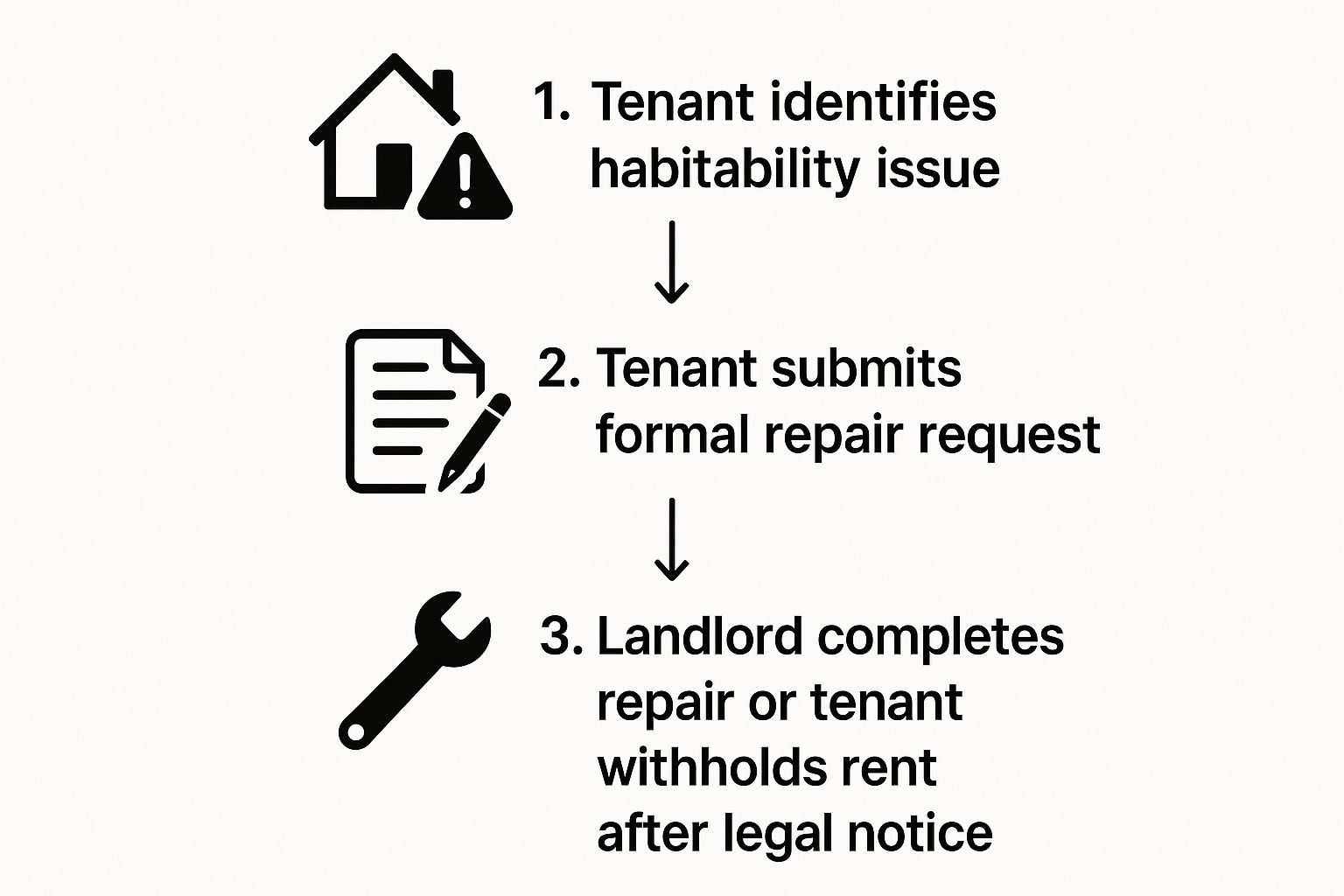
As you can see, it all starts with formal notification. That is what triggers the landlord's legal duty to act and unlocks your remedies if they fail to do so.
The Landlord's Core Duties and Rights
While landlords must keep the property safe, they also have rights to protect their investment. Their number one right is to collect rent on time as specified in the lease.
Landlords also have the right to enter the property for legitimate reasons, like making repairs, showing the unit, or responding to an emergency. But that right isn't unlimited.
Your lease agreement should spell out how much advance notice a landlord must give before entering for a non-emergency. This is all about respecting your right to the "quiet enjoyment" of your home.
If a landlord shows up unannounced without a valid reason, they could be violating your privacy. An experienced Texas landlord tenant lawyer can help clarify what is considered reasonable notice under the law.
When communication breaks down and you feel your rights are being ignored, it can be incredibly stressful. If you find yourself in that situation, our guide on how to file a complaint against a landlord provides a step-by-step roadmap for escalating your concerns legally.
With nearly 38% of Texas households now renting, these legal protections are more important than ever.
Step-by-Step Guide to Resolving Common Issues
Disagreements are bound to happen. The key is knowing the correct, legal way to address them. This table breaks down common issues and the proper first steps required under Texas law.
| Common Issue | Tenant's First Step (Legal Requirement) | Landlord's Obligation |
|---|---|---|
| Failure to Make Essential Repairs | Provide written notice (certified mail recommended) detailing the issue and its impact on health/safety. | Make a diligent effort to repair the condition within a "reasonable time" after receiving notice. |
| Improper Entry by Landlord | Send a written notice to the landlord reminding them of the lease's notice requirements and your right to quiet enjoyment. | To provide advance notice as specified in the lease before entering for non-emergency reasons. |
| Security Deposit Not Returned | Provide a written forwarding address to the landlord for the return of the deposit. | Return the deposit or an itemized list of deductions within 30 days of the tenant moving out. |
| Illegal Lockout or Utility Shutoff | Contact an attorney or Justice of the Peace immediately to seek a "writ of re-entry." This is an illegal eviction. | To never use "self-help" methods to remove a tenant; must go through the formal court eviction process. |
Remember, following the proper procedure is everything. Taking matters into your own hands—like withholding rent without following legal steps—can backfire and put you at risk of eviction, regardless of the landlord's actions.
How the Texas Eviction Process Really Works
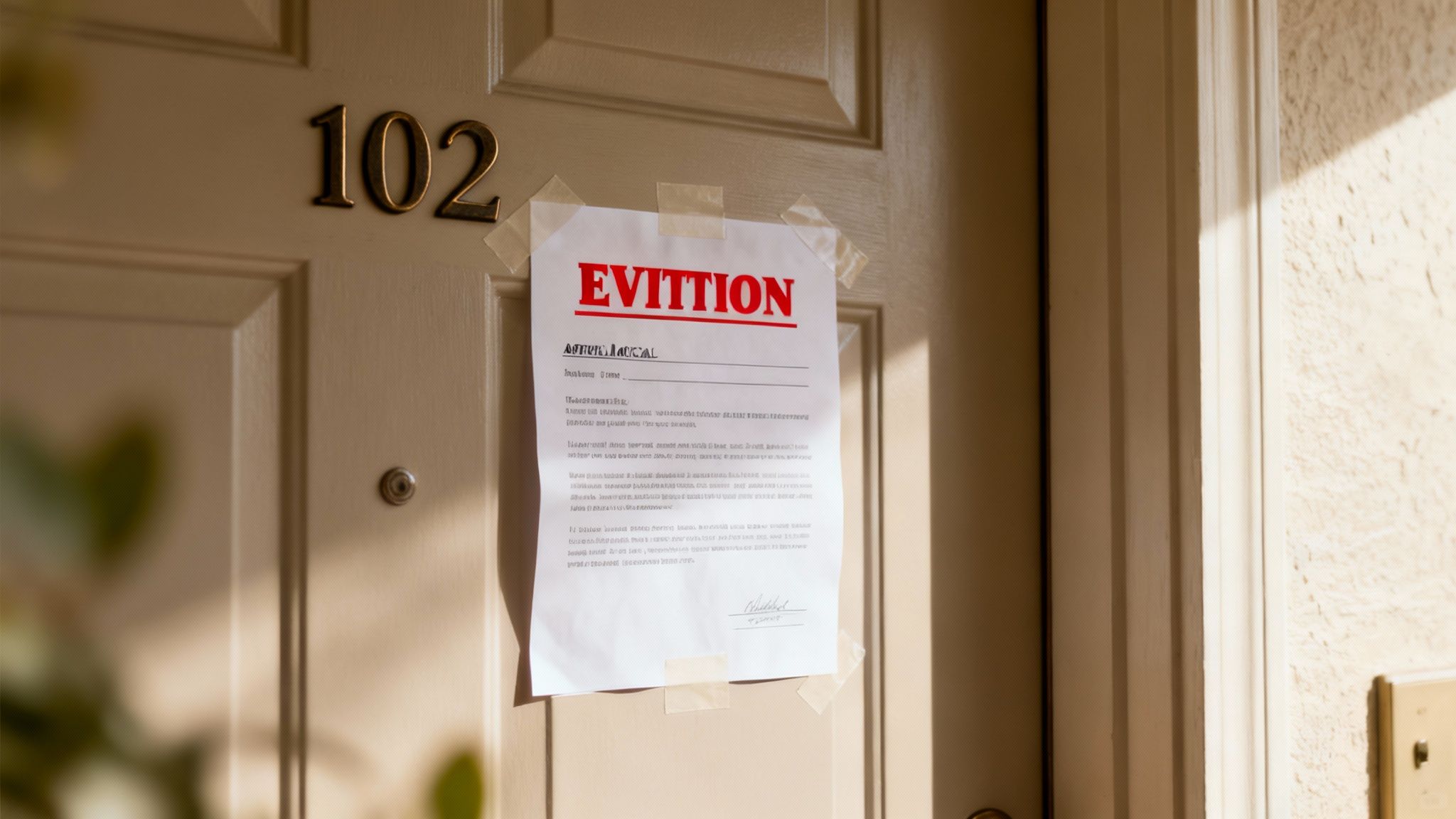
Facing a potential eviction is one of the most stressful experiences a person can endure. But under Texas law, it is a strictly regulated legal procedure—not a personal dispute.
Landlords cannot just change the locks, shut off utilities, or throw a tenant's belongings out. The Texas Property Code lays out a mandatory path that everyone must follow, step by step. This process ensures both sides know their rights and what to expect.
Whether you're a landlord initiating an eviction or a tenant facing one, understanding these rules is essential.
Step 1: The Notice to Vacate
Before a landlord can file an eviction lawsuit, they must deliver a formal “Notice to Vacate.” This is the non-negotiable first step.
This written notice informs the tenant they have violated the lease and gives them a deadline to move out. For unpaid rent, Texas law usually requires the landlord to give the tenant at least three days (72 hours) to leave, unless the lease specifies a different timeframe.
The notice must be delivered in one of the following ways:
- In-person to the tenant or anyone 16 or older at the home.
- By mail (regular, certified, or registered).
- Posted on the inside of the front door.
This notice is a legal requirement. If a landlord cannot prove they delivered it correctly, a judge will almost certainly dismiss the eviction case, forcing the landlord to start over.
Step 2: Filing the Eviction Lawsuit
If the tenant remains on the property after the notice period expires, the landlord’s next step is to file an eviction lawsuit. In Texas, this is officially called a “Forcible Detainer” suit, and it is filed at the local Justice of the Peace (JP) court.
This filing formally asks the court to order the tenant to leave and return possession of the property to the landlord.
Once filed, the court serves the tenant with a citation. This document notifies them of the lawsuit and provides the court hearing date. The tenant has a right to appear and present their side of the story. This is where an experienced eviction attorney can be invaluable. You can dive deeper into the timelines and legal details in our guide on the eviction process in Texas.
Step 3: The Court Hearing and Judgment
At the hearing, both the landlord and the tenant present their case to the judge. The landlord must prove that the tenant violated the lease and that they followed every legal step correctly, including the Notice to Vacate.
The tenant can present any legal defenses they may have. For example, perhaps the eviction is in retaliation for requesting a necessary repair, or the landlord failed to provide proper notice.
If the judge rules in the landlord's favor, they will issue a judgment for possession.
Step 4: The Writ of Possession
A judgment does not mean the tenant must leave that same day. They have a five-day window to appeal the judge's decision.
If they do not appeal and still do not leave, the landlord can request a “Writ of Possession.”
This is the final step. A Writ of Possession is a court order directing a constable or sheriff to physically remove the tenant and their belongings from the property. The officer must post a 24-hour warning notice on the property first, giving the tenant one last chance to move out voluntarily.
This strict process makes it clear: eviction is a legal matter for the courts, not for landlords, to handle.
Handling Security Deposits and Breaking a Lease
Security deposits and broken leases are common sources of tension between landlords and tenants.
Knowing your rights under Texas lease agreement laws is the only way to protect your financial interests in these high-stakes situations.
When a lease ends, you expect your deposit back. The landlord needs to cover any real damages. The law creates a clear, time-sensitive process to keep things fair.
How to Handle Security Deposit Disputes in Texas
Here's the bottom line: under the Texas Property Code, your landlord has exactly 30 days after you move out to either return your security deposit or provide a written, itemized list of all deductions.
This is a hard legal deadline, not a suggestion.
To start the 30-day clock, you must give your landlord a forwarding address in writing. If you do that and they still miss the deadline or fail to send an itemized list, they could be acting in "bad faith." A landlord found to have acted in bad faith could owe you up to three times the deposit, plus your attorney's fees.
The secret to getting your security deposit back is documentation. A landlord cannot legally charge you for "normal wear and tear"—like minor paint scuffs or carpets that are slightly worn from walking. Deductions are only for actual damage, like a large hole in the wall or a broken appliance.
When you're in a standoff over a withheld deposit, knowing the law is your best weapon. These situations can get complicated, which is why understanding the rules around security deposit disputes in Texas is critical to protecting your rights.
How to Legally Break a Lease in Texas
Walking away from a lease before it ends can have serious financial consequences.
However, Texas law provides tenants with a legal right to terminate a lease without penalty in a few specific situations:
- Active Military Service: If you are called to active duty, the Servicemembers Civil Relief Act protects you.
- Unsafe Living Conditions: If the landlord fails to fix a problem that seriously affects your physical health and safety after you have given them proper written notice.
- Landlord Harassment: If your landlord illegally enters your apartment or repeatedly violates your right to privacy.
- Specific Lease Clauses: Some leases include early termination clauses that allow you to end the lease if you pay a set fee.
Special protections also exist for survivors of domestic violence or other specific crimes, allowing them to break a lease if they provide the required documentation. If the property is sold, the new owner inherits the responsibility for your security deposit. You can find more details on these specific landlord-tenant laws in Texas on rentecdirect.com.
Breaking a lease for a reason not covered by law can be expensive. A landlord could sue you for all remaining rent payments. If you must move, the best first step is to talk to your landlord. They may be willing to work with you on a solution, like allowing you to find a replacement tenant.
When to Contact a Landlord Tenant Lawyer
Knowing your rights is the first step, but some fights are too complex to handle on your own. True power comes from knowing when to stop trying to solve a legal problem yourself and call a professional.
Hiring an experienced Texas landlord tenant lawyer isn't giving up—it's being strategic. It’s about protecting your home, your money, and your peace of mind.
How a Texas Landlord Tenant Lawyer Can Help You
For tenants, certain situations are clear red flags. If you receive an eviction notice—especially one you believe is retaliatory or baseless—you need an eviction attorney immediately. The legal clock is ticking.
The same applies if a landlord is ignoring critical health and safety repairs or refusing to return your security deposit. These are serious violations of the Texas Property Code, and you need legal support.
A good lawyer doesn't just solve problems; they prevent them. Having an attorney review your lease before you sign it can save you from significant trouble later. They can spot unfair clauses and ensure you understand exactly what you're agreeing to.
For landlords, having a lawyer on your side is smart business. An attorney can draft a solid lease that complies with all Texas lease agreement laws, protecting your investment from day one.
When it comes to eviction, a single mistake in the process can get your case thrown out of court, leading to lost rent and more delays. A lawyer ensures every step is done correctly, from the Notice to Vacate to the final court filing. They are also your best defense against claims of discrimination or retaliation.
Whether you're a tenant fighting for a safe home or a landlord protecting your property, legal guidance provides clarity when you're overwhelmed and strength when you're being challenged.
If you need help with an eviction, lease issue, or rental dispute, contact The Law Office of Bryan Fagan, PLLC for a free consultation today.
Common Questions About Texas Lease Laws
When you’re dealing with a lease in Texas, many questions can arise. Even if you understand the basics, real-world landlord-tenant situations often require a closer look at the Texas Property Code.
To provide clarity, we've answered some of the most common questions we hear from both landlords and tenants across the state.
Can a Landlord Enter My Apartment Without Notice in Texas?
In most situations, no. Your right to "quiet enjoyment" means your landlord cannot just enter your home whenever they want. While the Texas Property Code does not set a specific statewide notice period, your lease almost certainly does.
The standard for most Texas leases is a 24-hour advance written notice for any non-emergency entry. This covers routine inspections, repairs, or showing the unit to prospective renters. The only exception is a true emergency—like a fire or a major water leak—where immediate entry is necessary to prevent further damage.
If your landlord repeatedly enters without proper notice, they may be violating your legal rights.
Is Texas a Landlord-Friendly or Tenant-Friendly State?
This is a common question, and the answer isn't simple. Many legal experts consider Texas landlord-friendly primarily because of the efficient eviction process. The law provides landlords with a clear path to regain their property if a tenant violates the lease, especially for non-payment of rent.
But that’s only part of the story.
The Texas Property Code provides tenants with very strong protections, most notably the implied warranty of habitability. This is a legal guarantee that you have a right to a safe and livable home. If your landlord fails to make critical repairs affecting your health and safety, this law gives you significant legal leverage.
So, while the eviction process can favor landlords, Texas law creates a balance by placing strict duties on them to maintain their properties and handle security deposits according to the law.
What Happens If My Lease Is Not in Writing?
A verbal lease agreement in Texas for a term of one year or less can be legally binding. If you and your landlord agree on the rent and general terms and you move in, you have likely created a valid month-to-month tenancy.
The major problem is proof. Without a written agreement, a dispute becomes your word against theirs. Proving what you originally agreed upon regarding pets, late fees, or utilities can be nearly impossible.
Critically, a Texas law known as the "Statute of Frauds" requires any lease for a period longer than one year to be in writing. A verbal agreement for a two-year lease is not enforceable in court. A written lease is always the safest and smartest option for both landlords and tenants.
If you need help with an eviction, lease issue, or rental dispute, contact The Law Office of Bryan Fagan, PLLC for a free consultation today.

![Graphic design featuring the title "8 Valid Reasons to Break a Lease in Texas [2025 Guide]" with decorative elements like a pen and paper, emphasizing tenant rights and legal guidance in Texas.](https://texastenantlawyers.com/wp-content/uploads/2025/11/featured-image-7ebe2aec-eacb-4e61-8e85-9c298b07ad11.jpg)