Dealing with a landlord dispute or eviction can be stressful, but it gets even harder when you are not sure who owns the property. You may be paying rent to one company, getting repair messages from another, and receiving a notice from a person whose name you have never seen before.
That is where proof of ownership matters. In Texas landlord-tenant disputes, ownership is not just a paperwork issue. It affects who can collect rent, who can file an eviction, who must respond to repair problems, and who has the legal authority to enforce a lease under the Texas Property Code.
If you are a tenant, this issue can help you spot red flags before signing a lease or defend yourself when the wrong person tries to remove you. If you are a landlord or property manager, proper proof can keep your case from falling apart in court. A Texas landlord tenant lawyer or eviction attorney often starts with this exact question: who has the legal right to act?
Your Rights When Ownership Is Unclear
Maria rented a house from someone who introduced himself as the “local manager.” For months, she paid rent through an online portal and sent text messages about a leaking roof. Then a different company posted a notice on her door saying she had to move out.
She had one reasonable question. Who is my landlord?
That question comes up more often than people expect. A rental property may be owned by an individual, an LLC, a trust, or an out-of-state investor using a local manager. The people involved may all sound official. That does not mean they all have legal standing.
Why this causes so much confusion
Most discussions about proof of ownership focus on buying and selling real estate. Rental disputes are different. In Texas landlord-tenant cases, courts usually look at possession, tax records, and lease documents, rather than the kind of deep title package used in a closing, as noted in this discussion of ownership proof in landlord enforcement actions.
For tenants, that means the person demanding rent or threatening eviction should be able to connect themselves to the property in a clear, believable way.
For landlords, it means you should not assume the lease alone will solve every standing problem if your name does not match the public records or if a manager is filing on your behalf.
Key takeaway: If ownership is unclear, do not guess. Ask for documents that show who owns the property and who has authority to act.
Common real-life warning signs
A problem may exist if:
- The notice comes from an unfamiliar name and that name does not appear on your lease.
- The property manager says they cannot approve repairs because they “need owner permission,” but no one identifies the owner.
- A new person claims the property changed hands but gives no deed, tax record, or written assignment of management authority.
- An eviction is filed after the owner dies and no one explains who now controls the property. If that is your situation, this related article on what happens if your landlord dies may help.
What your rights look like in practice
If you are a tenant, unclear ownership can affect your tenant rights in several ways:
- You may have grounds to question whether the person suing you has standing.
- You may need to know who is responsible for repairs, notices, or security deposit issues.
- You may want to verify that the lease was offered by someone who had authority to rent the home.
If you are a landlord, unclear ownership can delay or weaken your case. Judges want to see a straight line between the plaintiff and the property. If that line is missing, the court may focus on that before it ever reaches nonpayment, damage, or lease violations.
What Texas Law Considers Proof of Ownership
When people hear “proof of ownership,” they often think of a closing binder full of title papers. In a Texas rental case, the court usually wants something more practical. The main question is simple: does this person or company have the legal right to enforce the lease or seek possession of the property?
The court is looking for legal standing
In plain English, standing means the right to bring the case.
A judge does not need a history lecture on the property. The judge usually needs a reliable link between the property and the person asking the court for relief. That might be the owner named in the deed. It might also be an agent, manager, executor, or trustee with documents showing authority to act.
This matters under the Texas Property Code because rights and duties in rental housing depend on who the landlord is. Section 92.001 is often important because it frames who qualifies as a landlord for residential tenancies and why that identity matters in disputes involving repairs, deposits, and enforcement.
Texas relies on public property records for a reason
The reason these disputes can be sorted out at all goes back to how property rights developed in the United States. The American title registry system became the main way private land claims were organized and proven, and in Texas, county registries hold deeds and transfers that can trace ownership back through earlier grants, as discussed in the Yale Law Journal article on the history of title registries and property claims.
That history matters today because modern Texas courts still rely on the same basic idea. Public records help answer a practical courtroom question: who has the right to control this property?
Owner versus agent
The distinction between owner and agent can lead to messy cases.
An owner holds the legal interest in the property. An agent acts for the owner. A property manager may be fully authorized to collect rent, send notices, coordinate repairs, and even testify. But that authority should be tied back to the owner.
A tenant should pay attention to that difference. If “Hill Country Rentals LLC” owns the property, but the eviction is filed by “John Smith” in his own name with no explanation, that gap may matter.
A landlord should pay attention too. If you use a management company, your paperwork should show the relationship clearly.
What usually persuades a judge
Judges often find these items useful when deciding ownership-related issues:
- A recorded deed connecting the owner to the address
- Tax records showing who is listed for the property
- The lease itself if it identifies the landlord clearly
- Management documents if someone other than the owner is acting
- Probate or trust papers when the owner has died or title is held in a trust
Practical point: In rental court, the best evidence is usually the evidence that is easiest to follow. Clean, matching documents often matter more than a large stack of unrelated papers.
Why this helps both sides
For landlords, solid proof of ownership helps avoid dismissal and keeps attention on the core issue, whether that is unpaid rent, holdover possession, or lease violations.
For tenants, this knowledge helps you ask the right question early: “Can this person prove they have the authority to act as my landlord?” That question can change the direction of a case.
Key Documents That Establish Ownership in Texas
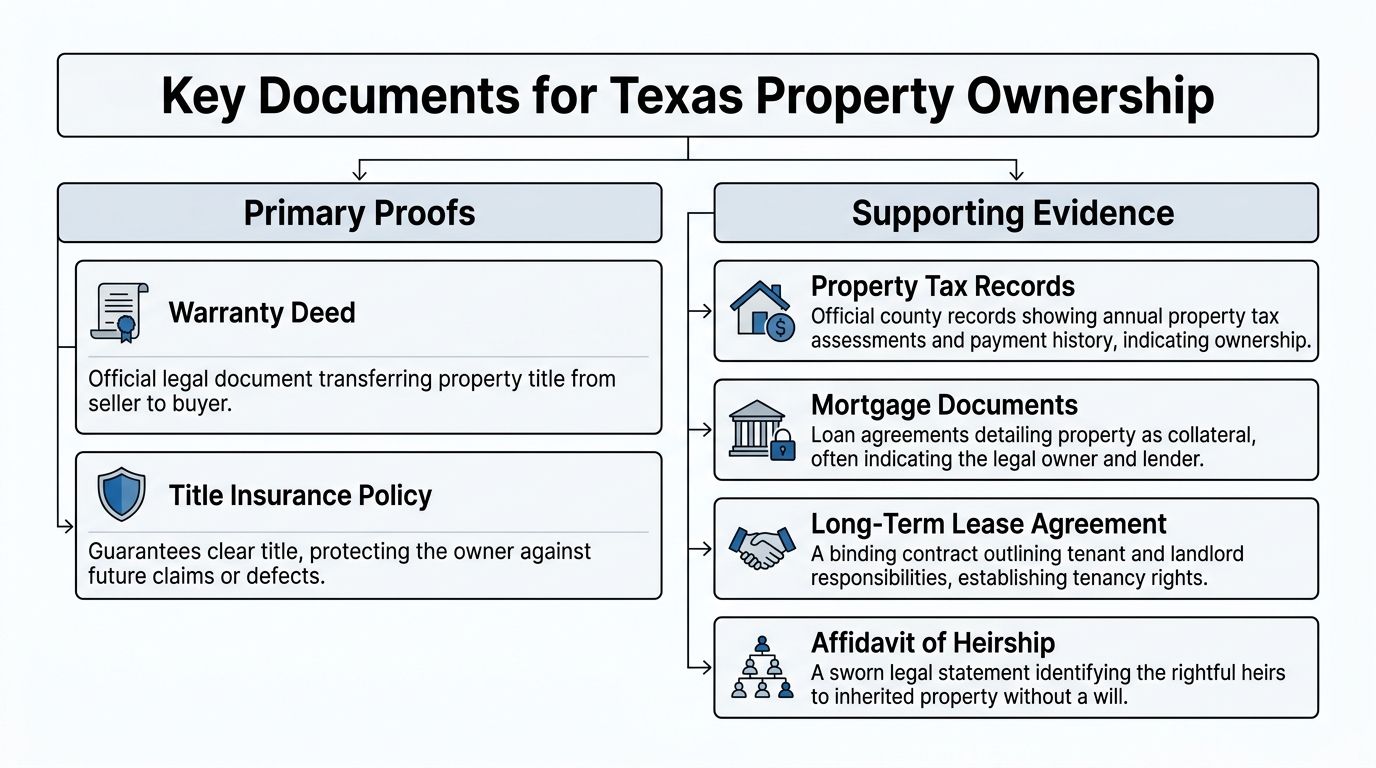
Knowing the concept is one thing. Knowing which papers help is where many need guidance. In landlord-tenant disputes, some documents carry much more weight than others.
The strongest records
A few records usually do the heavy lifting.
Recorded deed
This is often the clearest ownership document. It shows a transfer of title and ties the owner to the property address or legal description.Certified county record
A certified copy from the county clerk can give the court more confidence than an informal printout.Probate, trust, or estate paperwork
If the record owner has died or title is held through a trust, these papers may explain who now has authority to lease, collect rent, or file suit.
Useful supporting documents
Other papers may not prove title by themselves, but they can support the story.
Property tax records
These often identify the person or entity associated with the property for tax purposes.Lease agreement
A lease can be powerful if it clearly names the landlord and matches the rest of the public records.Management agreement or authorization letter
This can show why a property manager, leasing agent, or company representative is the one dealing with the tenant.Repair notices, rent ledgers, and notices to vacate
These do not prove ownership alone, but they can help establish the working relationship between the parties.
A practical comparison
Not every document does the same job. This table shows how they differ.
| Document Type | What It Proves | Where to Find It |
|---|---|---|
| Recorded deed | Legal transfer of title to the owner | County clerk or county recorder records |
| Certified copy of deed | Official county-backed proof of the recorded title document | County clerk |
| Property tax record | Who the county tax system associates with the property | County appraisal district or tax assessor records |
| Lease agreement | Who presented themselves as landlord and what address was leased | Your own records, landlord, or property manager |
| Management agreement | Authority of an agent or manager to act for the owner | Owner or management company |
| Probate or estate filing | Who controls property after a death | Probate court records |
| Trust-related document | Authority of trustee or trust representative | Trust records, court filings, or producing party |
| Affidavit of heirship | Claimed inheritance path when formal probate may be absent | County records if filed |
What tenants should ask for
If you are a tenant and something feels off, ask for documents that answer one of two questions:
- Who owns the property?
- If this person is not the owner, who gave them authority?
You do not need to demand every paper under the sun. Start with the basics.
A useful request might be:
- A copy of the deed or tax record
- A lease showing the landlord identity
- Written proof that the manager or agent can act for the owner
What landlords should have ready before court
Landlords often lose momentum because they bring too little, or they bring a pile of papers that do not connect clearly.
Bring documents that match each other. The name on the petition, lease, tax record, and deed should make sense together. If they do not, include the paper that explains the gap.
For example:
- The deed is in an LLC’s name.
- The lease was signed by a property manager.
- The lawsuit is filed by the LLC.
- The manager appears with written authority.
That is a coherent chain. A judge can follow it.
Tip for landlords: If your ownership structure is complicated, prepare a short timeline with your exhibits. It helps the court see the connection quickly.
Documents that are often misunderstood
Some papers sound important but may not solve the core problem.
A utility bill, for example, may show occupancy or account use, but not legal ownership. Insurance documents may be relevant in some disputes, but they are not a substitute for a deed or authority record. Email chains can help explain communication, but they are rarely the foundation of ownership proof.
The strongest approach is simple. Use public records first. Then use private records, like the lease or management agreement, to fill in the courtroom story.
How to Find and Verify Ownership Information
Many people assume ownership records are hidden or difficult to get. In most Texas counties, they are public. The challenge is knowing where to look and how to connect the records.

Real property research works a lot like checking provenance for a valuable object. You follow the ownership history over time. County offices keep deeds, mortgages, and liens, tax offices keep descriptive ownership history, and for the oldest records, Texas archives may matter, as explained in the Getty discussion of provenance and chronological ownership records.
Start with the county appraisal district
This is usually the easiest first step.
Search the property address in the county appraisal district database. You may find:
- The owner name listed for tax purposes
- The mailing address for the owner
- The legal description of the property
- Tax account information that helps confirm you found the right parcel
This is often enough to spot an obvious mismatch between the property and the person claiming to be your landlord.
Then check the county clerk records
The appraisal district is helpful, but the county clerk or recorder records are often where the stronger documents live.
Look for:
- Deeds
- Liens
- Releases
- Probate-related filings
- Affidavits of heirship
If the owner name in the tax records matches the deed records, that is a good sign. If it does not, dig further before relying on anyone’s claim.
If a company owns the property, verify the company too
An LLC can own rental property. That is common. But you should still confirm the entity exists and is the same one listed in the property records.
Check:
- The exact LLC name on the deed or appraisal record
- The exact LLC name on the lease
- Whether the person contacting you appears to be acting for that same entity
If a money judgment is involved, or if you are tracing other related filings, this article on a Texas abstract of judgement can help you understand how property records and enforcement records can intersect.
A simple verification path
When people get overwhelmed, I suggest this order:
| Step | Office or Record | What to Confirm |
|---|---|---|
| 1 | Lease | Who is named as landlord |
| 2 | County appraisal district | Who is listed for the property |
| 3 | County clerk | Whether a deed supports that listing |
| 4 | Court or probate records | Whether death, trust, or estate issues affect authority |
| 5 | Business records | Whether the LLC or entity is real and matches the property records |
Here is a short walkthrough that can help you visualize the process:
What to do if records do not match
A lot of scams and mistakes show up when records do not match.
You may find that:
- the lease names a person, but the deed names an LLC
- the tax records are in one name, but the notice to vacate comes from another
- the property manager cannot produce written authority
- the owner recently died, and no successor is clearly identified
When that happens, slow down. If you are a tenant, do not assume the loudest person is the lawful landlord. If you are a landlord, do not file first and sort out authority later.
Best practice: Match the property address, owner name, and acting party before a dispute reaches court. It is easier to fix paperwork early than explain inconsistencies to a judge.
Navigating Ownership by an LLC or Trust
Ownership becomes harder to verify when the landlord is not a person at all. You may see a lease signed by “Blue Cedar Homes LLC” or a notice from a trustee acting for a family trust. That does not mean anything improper is happening. But it does mean you need to look at authority more carefully.
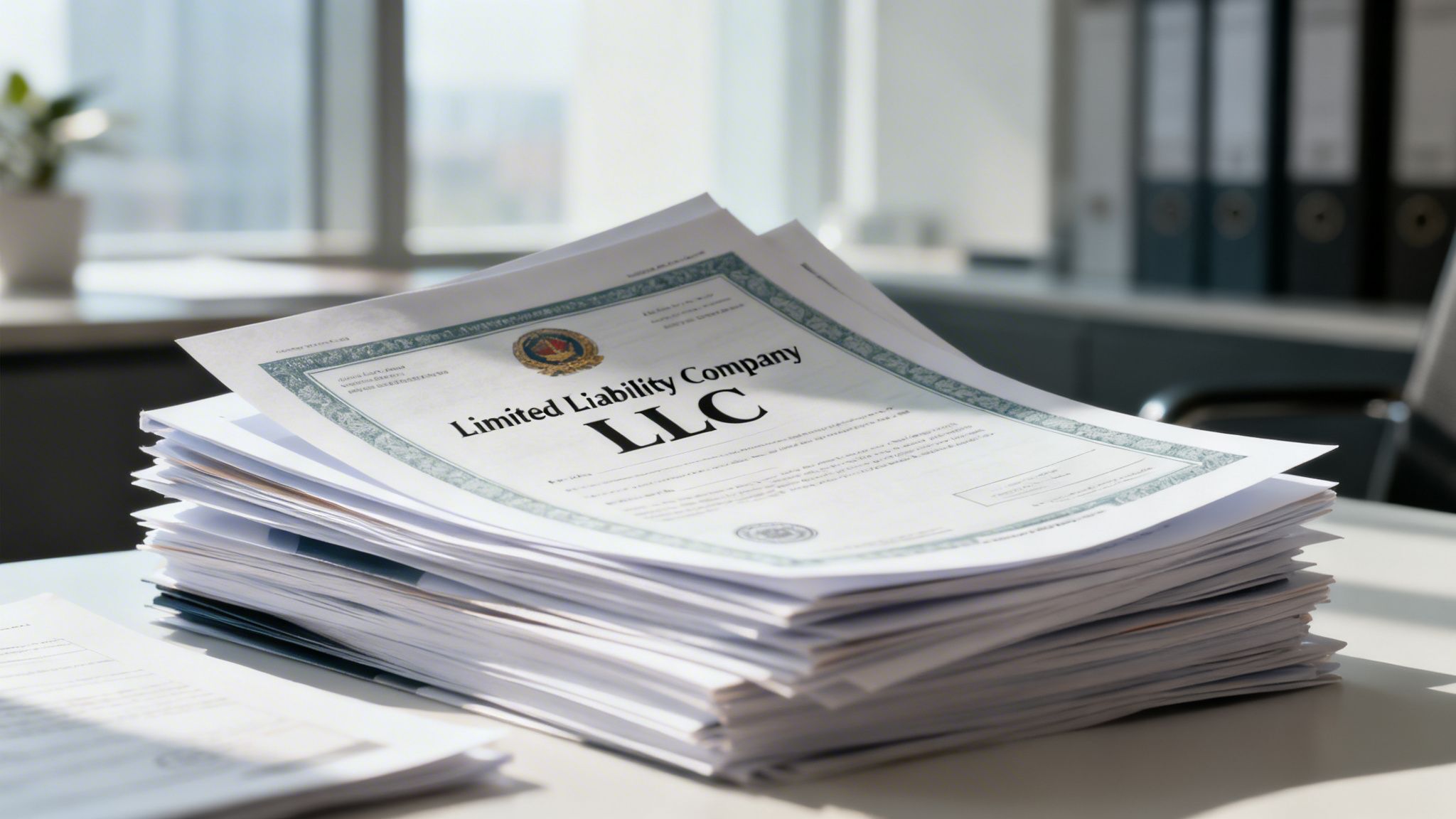
The difficulty is that entity ownership can create a real transparency gap. Federal law requires beneficial ownership disclosure to FinCEN, but that information is not public, which leaves tenants with fewer tools for identifying the people behind an LLC or trust, as discussed in this article on anonymous real estate ownership and disclosure limits.
Why landlords use LLCs and trusts
There are legitimate reasons.
An LLC may be used for liability protection or business organization. A trust may be part of estate planning or long-term family ownership. Those structures are not automatically suspicious.
The legal problem arises when the structure hides who can sign the lease, order repairs, collect rent, or file an eviction.
What tenants should verify
If your landlord is an LLC or trust, focus on practical authority.
Ask questions like:
- Does this entity own the property?
- Who signed the lease for the entity?
- What is that person’s role?
- Can they show written authority if there is a dispute?
A tenant usually does not need every internal company record. But a tenant does need enough information to know the entity is real and connected to the property.
What landlords should be prepared to show
If you own rentals through an LLC or trust, your paperwork should tell a clean story.
That may include:
- The deed showing the property is in the entity’s name
- The lease signed in the entity’s proper name
- Documents showing who can act for the entity
- Trustee authority or estate documents where needed
If a manager serves notices, make sure the owner-entity and the manager relationship are easy to prove. If a member, officer, trustee, or authorized representative appears in court, their role should be clear.
A common courtroom problem
A manager files an eviction in the wrong name. Or the lease says one LLC, while the deed shows another LLC with a similar name. Or the tenant paid “Austin Premier Rentals,” but the suit is brought by “APR Property Holdings LLC” without any bridge between the two.
Those are not small issues. They can distract from the core dispute and create standing problems.
If ownership runs through an LLC or trust, the missing piece is usually not title. It is authority. The court wants to know who can legally act for that entity.
A good rule for both sides
Do not stop at the entity name.
For tenants, verify that the entity owns the property and that the person contacting you acts for that entity.
For landlords, make sure the entity name is used consistently across the deed, lease, notices, petition, and testimony. Small naming inconsistencies can become big courtroom headaches.
Using Proof of Ownership in Court
By the time a case reaches court, proof of ownership is no longer abstract. It becomes part of the judge’s first impression. If your papers do not connect, the judge may question your right to be there before considering rent, repairs, damage, or possession.
How landlords should present ownership proof
A landlord does best with a short, logical set of exhibits.
That usually means:
- A lease showing the rental relationship
- A public record tying the owner to the property
- An authority document if someone other than the owner is acting
- The relevant notices that led to the case
Do not bury the court in unnecessary papers. If the owner is an LLC, bring the deed and the authority record. If the owner inherited the property, bring the probate or estate papers that show control.
A judge should be able to answer one question quickly: why does this plaintiff have the right to sue over this property?
How tenants can challenge a weak ownership claim
Tenants often think they cannot question ownership once a case is filed. That is not true. If the plaintiff cannot show a clear connection to the property, that may matter a great deal.
A tenant can focus on practical inconsistencies such as:
- the plaintiff’s name does not match the lease
- the deed names someone else
- the person testifying says they are “just the manager” but has no written authority
- the notices came from one entity and the lawsuit from another
This does not mean every mismatch wins the case. It does mean the court may require clarification before granting relief.
A familiar example
Take a nonpayment case where the lease names “Oak Street Leasing LLC” as landlord. The notice to vacate comes from “Premier Property Services.” Then the eviction is filed by an individual manager in his own name.
That is a problem chain.
Maybe the manager is fully authorized. Maybe the management company acts for Oak Street Leasing LLC. But someone has to prove that. Without that proof, the tenant has a fair reason to challenge standing.
Ownership also matters outside eviction
This issue does not stop with possession cases.
In a security deposit dispute, the tenant needs to know who holds the deposit and who owes the accounting. In a repair or habitability dispute, the tenant needs to identify the party responsible under the lease and the Texas Property Code. In a damage claim, the landlord needs to show authority to recover for the property.
That is why proof of ownership often shapes the case even when the word “ownership” is not the main issue.
How to organize your evidence
Whether you are a landlord or tenant, think like a judge reading the file for the first time.
Use this checklist:
| Goal | Helpful evidence |
|---|---|
| Show who the landlord is | Lease, rent ledger, notices |
| Show who owns the property | Deed, certified county record, tax record |
| Show who may act for the owner | Management agreement, trustee document, estate paperwork |
| Show whether the names line up | Matching names across all exhibits |
A short timeline can help too. If ownership changed, say when. If the owner died, say when authority passed. If a trust or LLC is involved, identify the acting representative.
Why this can decide the outcome
Some parties lose cases they might have won on the merits because they treated ownership proof like a technical side issue. It is not. It can be the gateway issue.
The same is true in related property conflicts outside ordinary rentals. If a co-owner dispute or division issue is lurking in the background, understanding concepts like what is a partition action can help explain why possession and ownership do not always point to the same legal rights.
Courtroom reality: Judges appreciate documents that line up. They become skeptical when the story depends on assumptions, missing links, or unexplained entity names.
Frequently Asked Questions About Property Ownership
Can a property manager evict me in Texas
Sometimes, yes. But the key question is whether the manager is acting for the owner and can prove that authority. If the manager files in a way that does not clearly connect back to the owner, you may have grounds to challenge standing.
Is a tax record enough to prove ownership
A tax record can be helpful, but it is not always the whole story. It is often supporting evidence. A deed or other authority document may still be needed, especially if the names in the case do not match neatly.
What if my lease names one landlord but another person collects rent
That is a warning sign worth checking. Ask how the collecting party is connected to the named landlord. In some cases, it is normal property management. In others, it may reveal confusion or a lack of authority.
Can I ask for proof before signing a lease
Yes. That is a smart step. You can ask who owns the property, whether a management company is involved, and what authority the signer has. A legitimate landlord or manager should be able to explain that relationship clearly.
What if the owner died during my lease
The lease does not automatically disappear. But someone must have legal authority to step in. That may be an executor, administrator, trustee, or heir with proper authority. Until that is clear, disputes about rent, repairs, or eviction may become more complicated.
If the property is owned by an LLC, do I have a right to know the individual owner
Not always in the way tenants expect. LLC ownership can limit public visibility. Still, you can ask for proof that the LLC owns the property and that the person dealing with you is authorized to act for it.
Does proof of ownership matter in repair cases too
Yes. If you are requesting repairs, you want to direct the notice to the party responsible under the lease and the Texas Property Code. If the wrong entity is handling the property, that can complicate enforcement.
What should I bring to court if ownership is disputed
Bring documents that show the chain clearly.
For tenants, that may include:
- The lease
- Rent receipts
- Texts or emails from the claimed landlord or manager
- Public property records
For landlords, that may include:
- The lease
- The deed or tax records
- Authority documents
- The notice history
When in doubt, organize your records by date. A simple timeline often helps more than a thick folder of loose papers.
If you need help with an eviction, lease issue, or rental dispute, contact The Law Office of Bryan Fagan, PLLC for a free consultation today. Whether you are a tenant trying to verify a landlord’s authority or a landlord preparing to enforce your rights under the Texas Property Code, a seasoned Texas landlord tenant lawyer or eviction attorney can help you protect your position and move forward with confidence.