
Dealing with a landlord dispute or eviction can be stressful—but understanding your rights under Texas law can make all the difference. An eviction notice is the start of a legal process, not the end, and the first thing to remember is this: don't panic.
An official-looking paper from your landlord is not a court order to pack your bags and be out by sundown. Now is the time for a calm head and a clear plan to protect your rights. This guide explains how to respond to an eviction notice in Texas, step by step.
First Steps After Getting a Texas Eviction Notice
The document you're holding is most likely a "Notice to Vacate," and it’s your landlord's required first move under Texas law. This isn't a judge telling you to leave. Think of it as a formal warning—a legally mandated heads-up that gives you a critical, albeit short, window to act.
Under Texas Property Code Section 24.005, your landlord must give you a specific amount of time to either fix the problem (like paying overdue rent) or move out before they can file a lawsuit. For unpaid rent, this is usually a 3-day notice, but always double-check your lease agreement, as it can specify a different period.
Understanding the Notice and Your Next Moves
Your top priority is to dissect that piece of paper. You're looking for a few key things:
- The why: What is the specific reason for the eviction? Is it non-payment of rent, a lease violation, or something else?
- The deadline: How many days do you have to comply or leave? The clock starts ticking the day you receive it.
- The dollar amount (if applicable): If this is about rent, is the amount they're demanding accurate? Check your records.
This simple flowchart breaks down the immediate thought process.
As you can see, it all starts with reading that notice. What it says—and what it doesn't say—is your roadmap for what to do next.
To make this easier, let's break down the typical components of a Texas eviction notice and what they really mean for you.
What the Texas Property Code Says About Your Notice to Vacate
This table breaks down the key components of a Texas eviction notice and explains what each part means for you as a tenant.
| Component of the Notice | What It Means Under Texas Law | Your Immediate Action |
|---|---|---|
| Clear Demand to Vacate | The notice must explicitly state that you need to move out of the property. Vague language doesn't cut it. | Confirm the notice is unambiguous. If it's unclear, this could be a defense later. |
| Reason for Eviction | The landlord must specify the reason, such as "non-payment of rent for the month of July" or a specific lease violation. | Verify the reason is accurate. Do you agree with the landlord's claim? |
| Date and Delivery Method | The notice must show how and when it was delivered (e.g., in person, by mail, posted on the door). | Note the date you actually received it. This is crucial for calculating your deadline. |
| Time to Comply or Vacate | It must state the deadline. Texas law requires at least 3 days for non-payment, unless your lease says otherwise. | Calculate your exact deadline. Don't assume. Weekends and holidays count unless the last day falls on one. |
| Total Amount Due | If it's for unpaid rent, the notice should clearly state the exact amount of rent owed. | Scrutinize this number. Does it match your records? Does it include late fees you dispute? |
Understanding these elements is the first step in building a defense or negotiating with your landlord. Don't just skim it—read every word.
It’s also important to know you're not alone. The housing market has put immense pressure on tenants. In fact, by March of last year, eviction filings across the U.S. shot up by 72% year-over-year. Major Texas cities like Houston have been hit particularly hard. This isn’t just your problem; it’s a nationwide issue, and there are resources and legal experts who can help you navigate it. An experienced Texas landlord-tenant lawyer can be your best ally in this situation.
Why Did This Eviction Notice Land on Your Doorstep?
In Texas, a landlord can't just kick you out on a whim. There has to be a specific, legally recognized reason, and that reason should be spelled out on the Notice to Vacate. Understanding the "why" is the most important piece of the puzzle when you're figuring out how to respond.
The Texas Property Code lays out the grounds for eviction, but almost all of them boil down to one thing: a violation of your lease. That signed agreement is the rulebook for your tenancy, and any breach can open the door to an eviction proceeding.
The Most Common Reasons a Landlord Files for Eviction
The number one reason tenants get evicted is for not paying rent. It sounds simple, but the details can get messy.
Real-World Scenario: Your lease says rent is due on the 1st of the month, but for the last six months, your landlord has been fine with you paying on the 5th. Then, out of the blue, you get a 3-day Notice to Vacate on the 2nd. You'd feel completely blindsided, right? The problem is, in court, the written lease usually wins out over any informal "understanding."
Of course, rent isn't the only issue. Other common lease violations that can trigger an eviction include:
- Unauthorized Roommates or Pets: Maybe you let a friend crash on your couch for a few weeks, which turned into a few months. Or you brought home a puppy, even though your lease has a strict no-pets clause. These are clear violations.
- Serious Property Damage: We're not talking about a scuff on the wall. This is for major stuff—a hole punched in a door, a broken window, or anything that harms the property's value.
- Illegal Activity: Using the rental for any kind of criminal enterprise is one of the fastest ways to get evicted.
- Being a Nuisance: If your lease has a clause about "quiet enjoyment" for other tenants and you're constantly throwing loud parties, that can be grounds for removal.
The financial pressure of rent is a tough reality for many. A recent study out of Los Angeles found that a shocking 94% of the 210,901 eviction notices filed were for non-payment, with the average tenant owing nearly $4,000. It just goes to show how quickly a small debt can escalate into a massive legal problem. You can read more about these trends and how they're affecting renters nationwide.
Your lease is your playbook. The very first thing you need to do is grab your copy of the lease and compare what it says to the reason listed on the eviction notice. An eviction attorney is an expert at finding the little details and discrepancies that can make all the difference.
What if the Eviction Is Illegal?
It's also critical to know that not all evictions are legal. A landlord absolutely cannot evict you for discriminatory reasons—your race, religion, family status, or any other protected class has no bearing on your tenancy.
They also can't hit you with a retaliatory eviction.
Under Texas Property Code Section 92.331, it’s against the law for a landlord to evict you for exercising a legal right. For example, say your air conditioning goes out in the middle of a brutal Texas August. You send a formal, written request for repair, and a week later, an eviction notice appears. That sounds like retaliation, and it’s illegal. Knowing your tenant rights is the first step to defending them.
Crafting Your Formal Response to the Lawsuit
Once the deadline on your "Notice to Vacate" comes and goes, your landlord can file an eviction lawsuit. In Texas, this is officially called a "Forcible Detainer" suit, and it's filed in the local Justice of the Peace (JP) court. This is where things get serious. Ignoring a lawsuit can wreck your rental history and leave you with an eviction on your record.
The absolute worst thing you can do is nothing.
When you're properly "served"—meaning a constable or authorized officer hands you the lawsuit papers or posts them on your door—a strict countdown begins. You are required to file a written response, called an "Answer," with the court clerk by a specific deadline. If you don't, your landlord can get a default judgment, which means they win automatically. You won't even get a chance to tell your side of the story.
Filing Your Answer with the Court
Think of your Answer as you officially raising your hand and telling the judge, "I'm here, and I don't agree with what the landlord is claiming." It doesn't need to be filled with complicated legal jargon to be effective.

All it takes to stop a default judgment is a simple, written Answer filed with the JP court clerk. Your document just needs to include a few key things:
- Your name and contact information
- The court's case number (it'll be on the papers you were served)
- A "general denial" of the landlord's claims
- Any defenses you believe you have against the eviction
This piece of paper is your first and most powerful tool in this fight. Keep in mind, a phone call to the landlord or an email doesn't count. The only thing the court recognizes is a formal document filed directly with the clerk's office. For a deeper dive into your legal standing, our guide on tenant rights in a Texas eviction can offer more background.
Raising Your Defenses in the Lawsuit
Your Answer is also the place where you officially introduce your legal defenses. This is your opportunity to tell the court exactly why the eviction isn't justified. The Texas Property Code gives tenants several powerful arguments they can make.
One of the strongest defenses is often the "repair and deduct" remedy. Let's say you properly notified your landlord in writing about a serious repair that affects your health or safety, and they just ignored it. You may have the right to get it fixed yourself and deduct the cost from your rent. If the landlord then tries to evict you for non-payment, you have a solid defense.
When you write your Answer, you need to state any defenses you plan to use. Thinking through the specifics of your situation can reveal which legal arguments might apply.
Common Defenses in a Texas Eviction Lawsuit
Here’s a breakdown of some of the most common defenses tenants raise in court. Each one is tied to a specific failure on the landlord's part to follow the law.
| Defense Strategy | When It Typically Applies | Real-World Example |
|---|---|---|
| Improper Notice | The landlord failed to follow the strict notice requirements under Texas law. | Your landlord only gave you a 2-day notice for unpaid rent instead of the required 3 days, or they sent it via text message instead of a proper delivery method. |
| Breach of Warranty of Habitability | The landlord failed to repair a condition that materially affects your physical health or safety. | Your apartment has had no hot water for weeks, despite your written requests for repair, making it unsanitary and unlivable. |
| Retaliation | The landlord is evicting you for exercising a legal right. | You received the eviction notice just one week after you reported a serious code violation to the city health inspector. |
| Waiver | The landlord accepted a partial rent payment after sending the Notice to Vacate. | After the 3-day notice expired, your landlord accepted half the rent you owed. This can sometimes "waive" their right to proceed with that specific eviction. |
Choosing the right defenses and wording them correctly in your Answer is absolutely crucial. An experienced eviction attorney can pinpoint the strongest arguments for your case, ensuring your response is filed correctly and on time to give you the best shot at a good outcome.
Navigating the Texas Eviction Court Hearing
Walking into a courtroom is intimidating, but knowing what’s coming can make all the difference. Most Texas eviction cases are heard in a Justice of the Peace (JP) court, which is less formal than what you see on TV.
Still, you can't just show up and wing it. Preparation and professionalism are your best allies. The judge's job is to hear both sides, look at the evidence, and make a decision based on Texas law. This is your moment to calmly and clearly tell your side of the story.
It's impossible to ignore the bigger picture. The U.S. recently saw an unprecedented 18% jump in homelessness, with over 771,000 people affected. With an estimated 900,000 households evicted every single year, your case is one part of a massive, systemic problem tied to housing affordability.
Presenting Your Case and Evidence
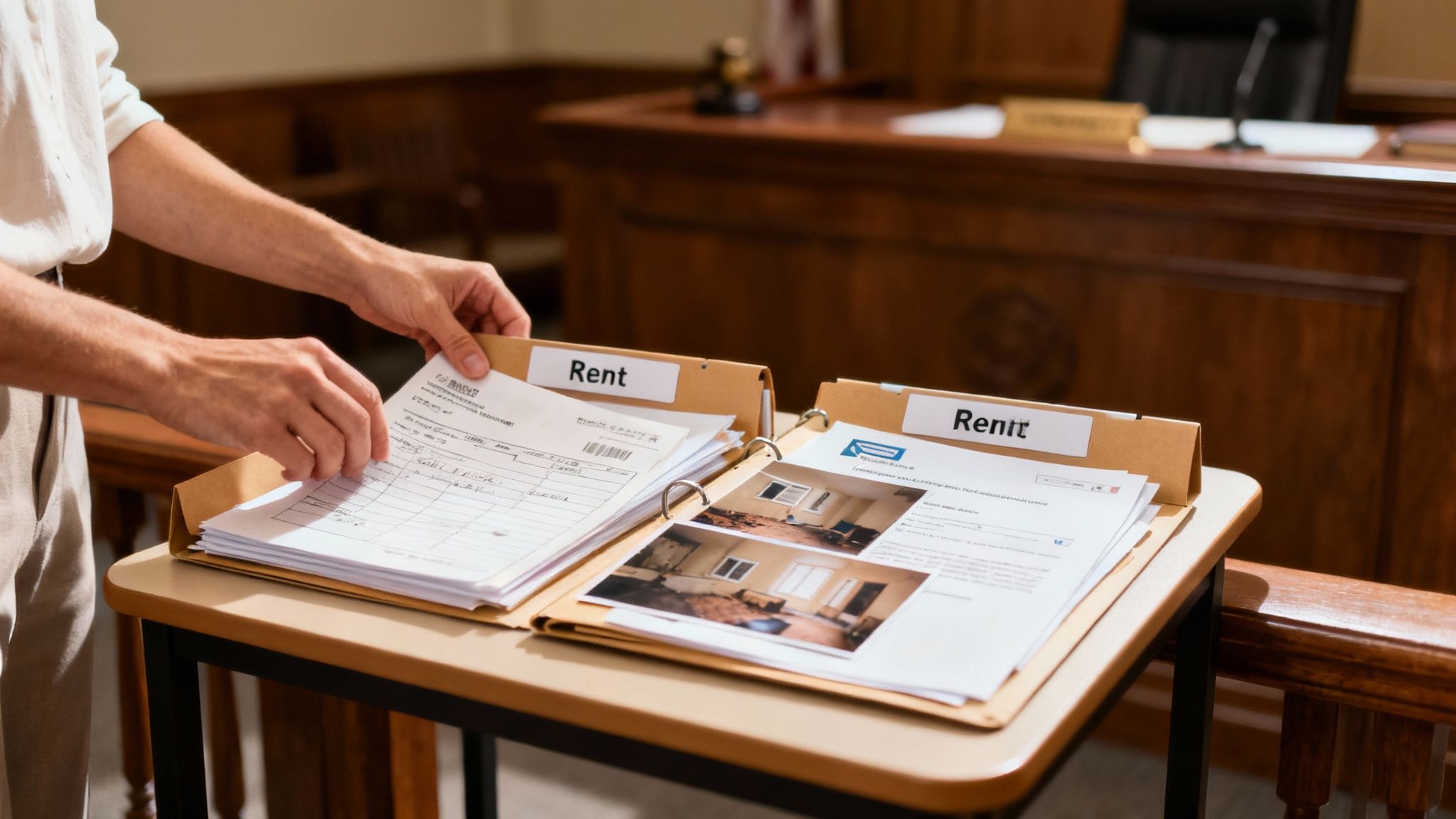
Words alone won't win your case. Your most powerful tool in the courtroom is solid, organized evidence. The judge needs proof, not just your side of the story. Before your court date, start pulling everything together that backs up your defense.
Think of it as building a case file. You should have items like:
- Proof of Rent Payments: Canceled checks, bank statements, or official rent receipts are non-negotiable if the eviction is about non-payment.
- Written Communication: Print out every email, text message, or letter between you and your landlord. This is especially vital if you've been talking about repairs or other disputes.
- Photographs and Videos: Dated photos or videos are gold. They can instantly show the property's condition, proving your point if the landlord failed to make repairs.
- Copies of Your Lease and Notices: Have your original lease, the Notice to Vacate you received, and the lawsuit papers you were served ready to go.
Organize your documents chronologically so you can find what you need in seconds. When it’s your turn to speak, present the facts. Stick to the point, avoid getting emotional, and show the judge how each piece of evidence supports what you’re saying.
Courtroom Tip: Dress like you're going to a job interview. It shows respect. Address the judge as "Your Honor" and never interrupt them or your landlord. A calm, respectful attitude goes a long way.
Understanding the Possible Outcomes
Once the judge has heard from both sides, they'll issue a judgment. There are two primary outcomes.
If the judge rules in your favor, the eviction is dismissed, and you get to stay in your home.
If the judge rules for the landlord, they will be granted a Judgment for Possession. This doesn't mean you have to be out that same day. You have five calendar days to appeal that decision to a higher court.
If you don’t appeal, the landlord can then file for a Writ of Possession. Once a judge signs off on that, a constable will post a 24-hour notice on your door. After that 24-hour period is up, they can legally remove you and your belongings from the property.
Understanding the entire timeline is critical. You can learn more in our overview of the eviction process in Texas. If you believe the judge got it wrong, an eviction attorney can help you navigate the appeals process and fight for your rights.
Finding Solutions Outside of the Courtroom
Not every eviction notice has to end in a courtroom showdown. In fact, most of the time, it shouldn't.
A formal judgment is expensive, stressful, and leaves a permanent stain on your rental history. Often, the best outcome for both you and your landlord is one you work out yourselves, without ever setting foot in front of a judge.
Before things escalate, try reaching out to your landlord. A calm, professional conversation can open doors you might have assumed were closed. Explain your situation honestly and see if there’s any middle ground. This proactive step shows you’re taking responsibility and can instantly de-escalate the conflict.
Negotiating a Workable Agreement
One of the most common alternatives to eviction is negotiating a payment plan. If the notice is for unpaid rent, come to the table with a realistic, written schedule to get caught up. Most landlords would rather have a reliable plan to get the rent they're owed than gamble on the time and cost of finding a new tenant.
Another practical option is a "cash for keys" agreement.
It is just what it sounds like: the landlord offers you money to help with moving costs in exchange for you voluntarily handing over the keys and vacating by a specific date. It saves them court fees and gets them the property back quickly. For you, it means help for your next move and, most importantly, no eviction on your record.
An eviction judgment can follow you for years, making it incredibly difficult to find quality housing in the future. Exploring alternatives like a 'cash for keys' deal is a strategic move to protect your long-term rental prospects.
Getting Help from a Neutral Party or Financial Programs
If talking directly with your landlord isn't working, mediation is an excellent next step. A neutral, third-party mediator sits down with both of you to help find a solution you can both live with. The process is confidential and far less combative than court. Many Texas counties even offer low-cost or free mediation services specifically for landlord-tenant disputes.
Don't forget to look into financial help, either. Numerous Texas rental assistance programs can provide emergency funds to help you pay back rent and get stable again. Organizations like the Texas Department of Housing and Community Affairs and local non-profits often have resources available.
You can find more information about these options in our guide on how to stop an eviction in Texas.
Taking these steps shows a good-faith effort to fix the problem. Better yet, a tenant rights attorney can negotiate on your behalf, often securing a much better outcome while ensuring any agreement you sign protects your legal rights.
Common Questions About the Texas Eviction Process
Facing an eviction can feel like a maze of legal deadlines and confusing terms. To help you get your bearings, here are the answers to some of the most common questions our eviction attorneys hear from Texas tenants.
How Long Does a Texas Eviction Actually Take?
It happens faster than most people realize. The clock starts with a 3-day Notice to Vacate. If you haven't moved out by that deadline, your landlord can file an eviction lawsuit. A court hearing is usually scheduled within 10 to 21 days.
If the landlord wins, you have just five days to appeal. If you don't, they can ask the court for a Writ of Possession. That's the order that allows a constable to post a final 24-hour notice on your door. All told, the whole process can be over in as little as three weeks.
Can My Landlord Evict Me Just for Asking for Repairs?
Absolutely not. It's illegal. Section 92.331 of the Texas Property Code is very clear: a landlord cannot retaliate against you for exercising your legal rights as a tenant, and that includes requesting necessary repairs.
If you get an eviction notice right after you submitted a formal, written repair request, you might have a very strong defense. This is exactly why it's so critical to document every conversation you have with your landlord in writing.
What if I Just Ignore the Lawsuit Papers?
Ignoring an eviction lawsuit is the single worst mistake you can possibly make. If you've been properly served with the court papers and you don't file a written Answer on time, the landlord can win by what's called a "default judgment."
A default judgment means the judge rules in your landlord’s favor without ever hearing your side of the story. Filing a timely Answer is the most critical step you can take to protect your home and ensure you even get a day in court.
Can I Stop the Eviction by Just Paying the Rent I Owe?
Sometimes, but don’t count on it. If you can pay the full amount of rent owed before the 3-day Notice to Vacate expires, your landlord might accept it and drop the matter.
But once they file a lawsuit with the court, they are no longer legally required to take your money. You can still offer to pay as part of a settlement negotiation, but whether they accept it is entirely up to them—unless your lease specifically includes a "right to cure" the default.
If you need help with an eviction, lease issue, or rental dispute, contact The Law Office of Bryan Fagan, PLLC for a free consultation today.

![Graphic design featuring the title "8 Valid Reasons to Break a Lease in Texas [2025 Guide]" with decorative elements like a pen and paper, emphasizing tenant rights and legal guidance in Texas.](https://texastenantlawyers.com/wp-content/uploads/2025/11/featured-image-7ebe2aec-eacb-4e61-8e85-9c298b07ad11.jpg)