
Dealing with a landlord dispute or eviction can be stressful — but understanding your rights under Texas law can make all the difference, especially when the unexpected happens. When you find out your landlord has passed away, your first thought is probably, "What happens to my home?" It’s a jarring and uncertain situation.
The most important thing to know is this: your lease does not automatically end. In Texas, the lease agreement you signed is a legally binding contract tied to the property itself, not just to the person who owned it.
Your Lease Rights When a Landlord Dies in Texas
Discovering your landlord has died adds a layer of confusion to an already complex landlord-tenant relationship. Fortunately, the Texas Property Code provides a clear framework to protect your tenant rights. Your immediate housing situation is secure because the lease agreement you signed is still valid and fully enforceable.
Think of it this way: the property now belongs to the landlord's estate. This estate, which is managed by an executor or administrator, essentially steps into the landlord's shoes. It inherits not only the house or apartment but also all the legal obligations that come with it—including honoring every single term of your lease.
This means your rent amount, the lease duration, and all other conditions cannot be changed until the lease officially expires. You can find more details about how these agreements are structured in our guide to Texas lease agreement laws.

When a landlord passes away, the property enters a court-supervised process called probate. This is where a judge validates the will (if there is one) and officially appoints an executor to manage the deceased's assets, including your rental property.
This transition period can be quick, or it can drag on for months—sometimes even over a year—depending on how complex the estate is. During this entire time, the executor is legally responsible for fulfilling the landlord's duties. As you can see in insights about managing a landlord's unexpected death, tenants are legally required to continue paying rent to the estate or its designated representative throughout the probate process.
Your key responsibilities and rights don't change one bit:
- You must continue to pay your rent on time, every time.
- The estate is legally required to handle essential repairs and maintenance.
- You cannot be evicted without just cause, as defined in your lease and by the Texas Property Code.
Understanding this foundation is the first step to confidently navigating the transition ahead.
Immediate Steps for Tenants After a Landlord's Death
When you first hear the news, it's easy to feel overwhelmed. But taking a few clear, immediate steps can protect your rights and prevent future headaches. The table below outlines what you should do right away.
| Action Item | Why It's Important | Best Practice |
|---|---|---|
| Confirm the Information | Prevents acting on rumors and ensures you have the facts straight before making any decisions. | Try to get official confirmation from a reliable source, like a family member of the landlord or a property manager. |
| Review Your Lease Agreement | Your lease is the go-to document defining your rights and obligations. Everything you need to know is in there. | Keep a digital and physical copy handy. Pay close attention to clauses about rent payment, notices, and property sale. |
| Identify the New Contact | You need to know who is managing the property and where to send rent and repair requests. | Ask for the name, phone number, and mailing address of the executor, administrator, or property manager in writing. |
| Document Everything | Creates a clear paper trail that can protect you if disputes arise during the transition. | Keep copies of all emails, letters, and text messages. Take notes during phone calls, including the date, time, and who you spoke with. |
Taking these initial steps puts you in a much stronger position. It establishes a clear line of communication and ensures you're prepared for whatever comes next in the estate administration process.
What the Texas Property Code Says About Your Lease
When you get the news that your landlord has passed away, it's completely natural to feel a jolt of uncertainty. Is my housing safe? Am I about to be kicked out?
Take a deep breath. The good news is that Texas law is built to protect you in exactly this situation. Here’s the single most important thing to remember: your lease is a contract tied to the property, not to the person who owned it.
Think of it this way: the lease is a set of rules that comes with the house itself. Your landlord's death doesn't just erase those rules. Anyone who inherits or takes over the property also inherits the legal duty to follow them, right up until your lease term is officially over.
The Lease Survives the Landlord
In Texas, your lease agreement isn't just a casual handshake deal. It's a legally binding contract that clearly lays out everyone's rights and responsibilities. Because it’s a formal contract, it stays in full force even if one of the original people involved is no longer in the picture.
All of the landlord's legal and financial duties—including the duty to honor your lease—now fall to their estate. An estate is simply the legal entity that handles a deceased person's assets and debts. A court appoints someone, called an executor or administrator, to manage it.
This person effectively becomes your temporary landlord. Their job is to manage the property according to the law until its future is decided.
Key Takeaway: The estate's representative or any new owner cannot legally force you out, jack up your rent, or change any lease terms before your current agreement expires. They must honor the contract exactly as it was written.
How the Texas Property Code Has Your Back
This stability isn’t an accident; it’s grounded in contract law, a cornerstone of the Texas Property Code. This massive legal framework is designed to make sure real estate agreements are honored, giving everyone involved a clear and predictable path forward. Your rights as a tenant are secure because the law puts the written contract first.
Real-World Scenario: Let's say you have seven months left on your one-year lease. The landlord's heir decides they want to sell the property fast. They can't just terminate your lease and tell you to leave.
Instead, they have two options:
- Wait until your seven months are up before asking you to move.
- Sell the property with you in it, making it clear to the new buyer that they must honor your existing lease.
This legal foundation gives you crucial breathing room during what can be a confusing and stressful time. To get a better handle on the specific laws that protect renters, check out our in-depth guide on Texas Property Code tenant rights. Knowing your rights is the first step to making sure your home stays your home.
How to Handle Rent Payments Safely
When you find out your landlord has passed away, one of the first and most practical questions is always, "Who gets the rent money now?"
It's a huge concern, and getting it wrong could land you in legal hot water. The single most important rule is this: do not stop paying your rent. It might feel like the logical thing to do when you're unsure, but withholding rent is a breach of your lease. It could give the new owner grounds to evict you later.
Your lease didn't die with your landlord. Your obligation to pay continues, but the person you're paying to is going to change. That responsibility now falls to the legal representative of the landlord's estate—usually an executor named in the will or an administrator appointed by a court.
Step-by-Step: Identifying the Right Person to Pay
Before you hand over a single dollar to a relative or anyone else claiming to be in charge, you have to verify they have the legal authority to collect rent. It's not about being difficult; it's about protecting yourself from scams or family disputes you want no part of. The legitimate representative must be able to provide you with official court documents proving their role.
Ask to see one of these two documents:
- Letters Testamentary: This is a document issued by a probate court giving an executor the green light to manage the deceased person's estate.
- Letters of Administration: This is a similar court order, but it's used when someone dies without a will. It appoints an administrator to handle the estate.
Don't accept verbal assurances. Get a copy of the official paperwork for your records. This creates a clear paper trail proving you paid the correct, legally authorized person.
This infographic helps visualize why your lease is tied to the property itself, not just the owner, and why your obligations continue.
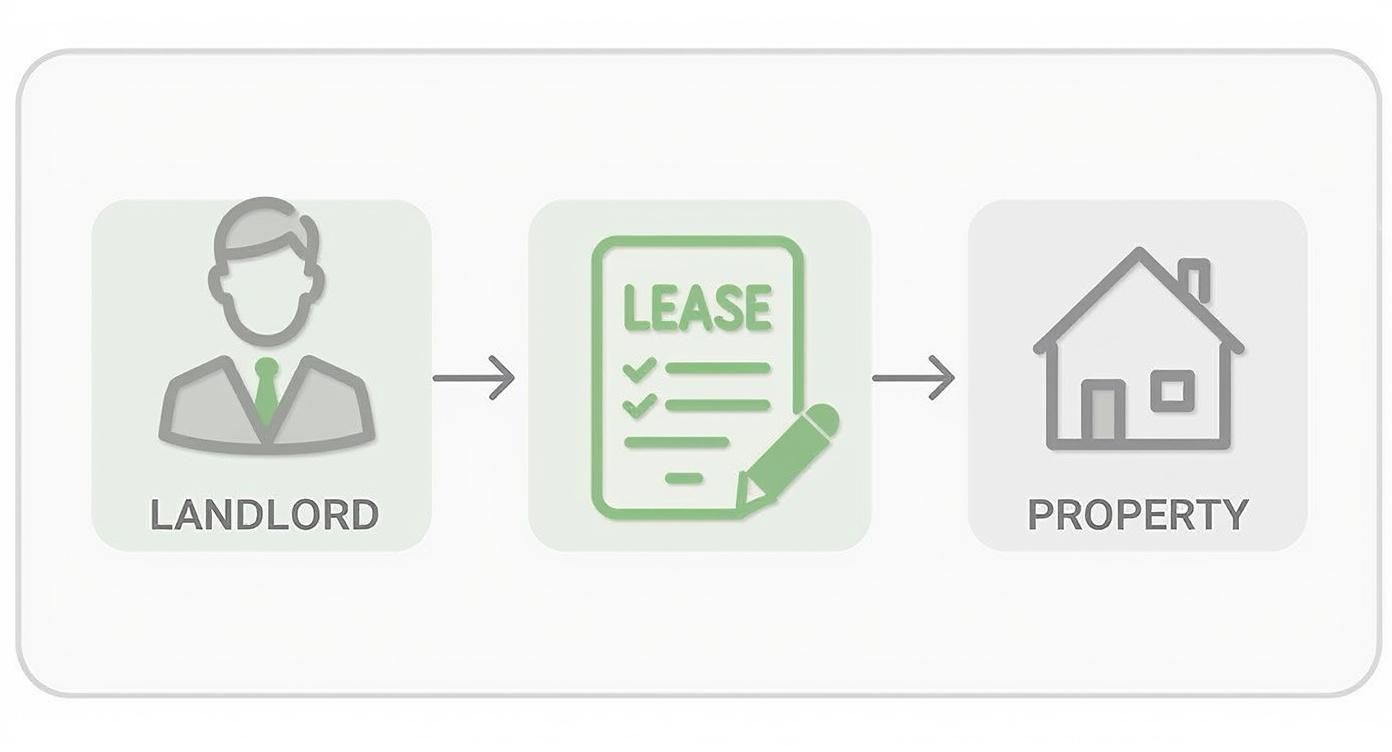
As you can see, the lease is a legal instrument attached to the property. It survives the owner, and its terms remain in full force.
What to Do if No One Contacts You
Sometimes, the transition isn't smooth. Weeks might go by, the first of the month is looming, and you've heard nothing from the landlord's estate. This is a tough spot, but you can't just sit on the rent money.
Crucial Advice: If you can't confirm who to pay, open a new, separate bank account. Deposit your full rent payment into that account on the day it's due. Do not touch that money for any reason.
This one simple step is your best defense. It proves you acted in good faith and were ready and willing to meet your lease obligations.
When the executor or new owner finally gets in touch, you'll have the full amount ready to go. This action creates powerful evidence that you upheld your end of the deal, protecting you from any bogus claims of non-payment. If the silence continues, it's a good idea to consult a Texas landlord-tenant lawyer to figure out the next steps.
Getting Property Maintenance and Repairs Handled
Just because your landlord passed away doesn't mean your right to a safe and livable home does, too. The landlord's legal duties—especially when it comes to property maintenance—don't just vanish into thin air.
Instead, those responsibilities are passed on to the estate and its legal representative. They are now the ones who must uphold the standards laid out in the Texas Property Code.
This means if your A/C gives out during a sweltering Texas summer or a pipe bursts under the sink, the estate is legally on the hook to fix it. Your lease and the law still protect you, guaranteeing the property remains habitable. The real challenge, though, is often figuring out who to call to get the ball rolling.
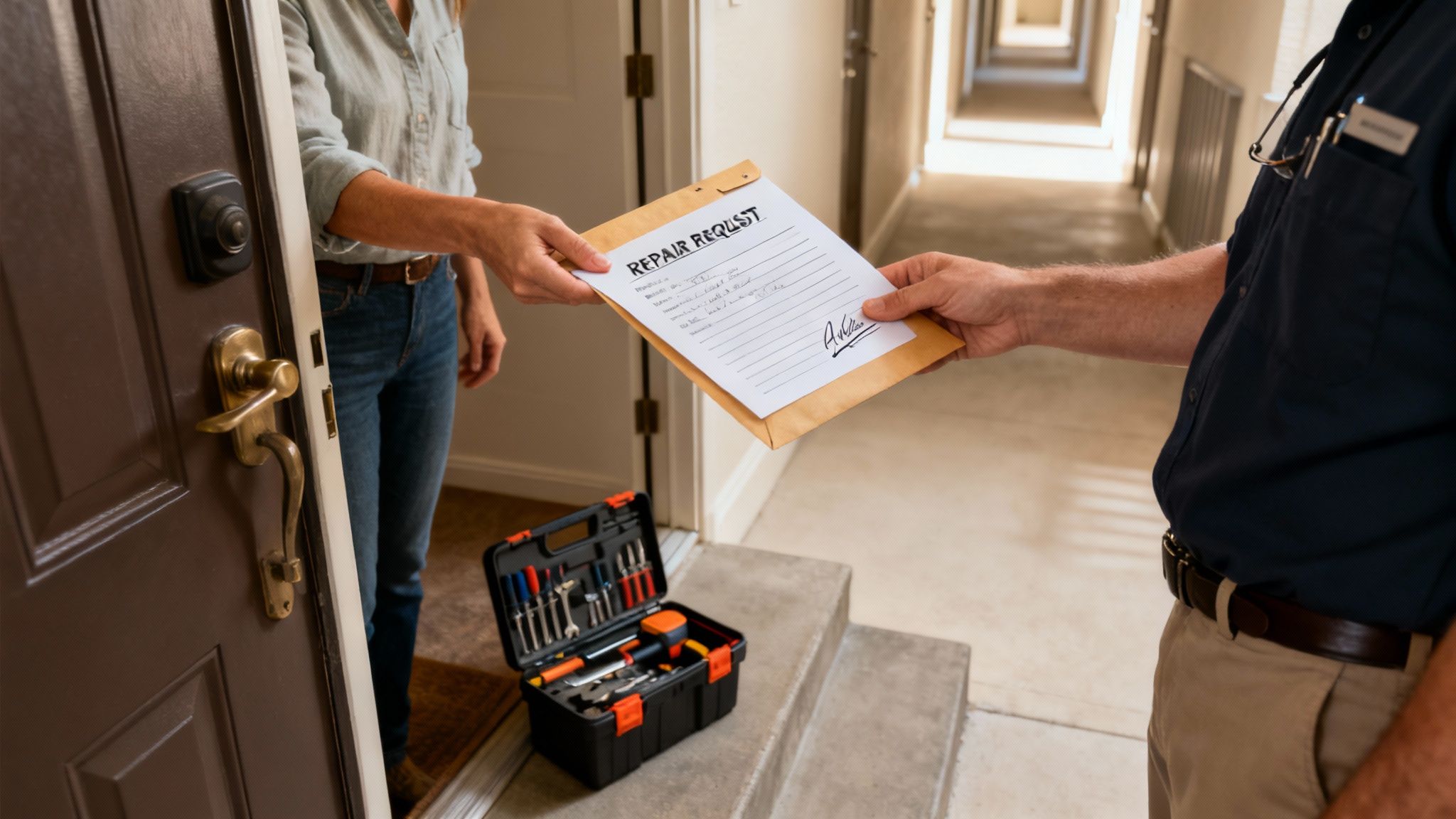
Step-by-Step: Submitting a Formal Repair Request
Getting repairs handled during this transition period means you have to be proactive and meticulous. The process isn't that different from a normal repair request, but there's a much bigger emphasis on formal, written communication.
Follow these steps to make sure your request is properly documented and can't be ignored:
- Find the Right Contact: Use the official information you were given for the executor, administrator, or new property manager. Don't waste your time sending requests to the deceased landlord’s old email or phone number; they won't be seen.
- Put It in Writing: Your best bet is to send your repair request via certified mail with a return receipt requested. You can send an email as a follow-up, but certified mail gives you undeniable proof of delivery. This is crucial if you need to take further action later.
- Be Specific and Clear: Don't just say "the sink is broken." Clearly describe the problem, explain how it makes your home unsafe or unlivable, and include photos or videos as evidence. Note the date you first noticed the issue and formally request a prompt repair.
This written notice isn't just a simple request; it’s a legal step that officially triggers the estate's duty to act.
When Your Repair Requests Are Ignored
So what happens if the estate’s representative gets your formal notice and does nothing? If they fail to make necessary repairs in a reasonable amount of time, the Texas Property Code gives you some powerful options.
You should never stop paying rent, but you may have the right to:
- Terminate your lease agreement and move out.
- Handle the repairs yourself and deduct the cost from your rent (this comes with strict legal limits).
- Sue the estate for damages.
A landlord's death can unfortunately throw property management into chaos, which is why following these legal procedures to the letter is so important. Administrative confusion is common, but it doesn't excuse the estate from its legal duty to maintain the property.
These remedies have strict requirements, and one wrong move could put you in violation of your lease. To get a handle on your options and the specific duties the estate now owes you, it’s a good idea to review this comprehensive guide to landlord responsibilities in Texas.
If you’re facing ignored repair requests and getting nowhere, talking to a Texas landlord-tenant lawyer is the safest way to enforce your right to a livable home.
What Happens When the Lease Is Up or the Property Sells?
Once the dust settles and you know who’s managing things, your mind will naturally turn to the future. What happens when your lease is up? What if the family decides to sell the place?
These are completely normal questions, and the answers will shape your next move. The good news is, your rights are clearly protected.
Your lease agreement is still the most important document in this whole situation. The person managing the estate—or any new owner, for that matter—is legally bound by its terms until the day it expires. But that doesn't mean they have to offer you a new one.
When Your Lease Term Ends
As you get closer to the end of your lease, the estate’s representative has the same rights your original landlord did. They can offer you a new lease, switch you to a month-to-month agreement, or simply decide not to renew at all.
If they choose not to renew, they owe you proper written notice as laid out in Texas law—usually at least 30 days. This isn't an eviction; it's just the legal end of a contract. They don't even have to give you a reason.
If the Property Is Sold
It’s incredibly common for heirs to sell inherited property. If that happens, your lease is your shield.
Crucial Tenant Protection: A new owner buys the property with you and your lease already in it. They legally inherit you as a tenant. They cannot kick you out, jack up the rent, or change the rules until your current lease is officially over.
The sale of the home doesn't cancel out your agreement. The new owner just steps into the shoes of your old landlord. You’ll pay rent to them, and they’ll be the one you call for repairs. Simple as that.
To make it even clearer, let's break down what to expect in these two common situations.
Lease Scenarios After a Landlord's Death
| Scenario | Your Rights and Obligations | Potential Outcomes |
|---|---|---|
| Lease Nears Expiration | The estate must honor your lease until the very last day. You must get proper written notice if they decide not to renew. | You might be offered a new lease, shift to a month-to-month tenancy, or need to plan your move when the term ends. |
| Property is Sold by Estate | The new owner must honor every single term of your current lease until it expires. Your security deposit must be transferred to them. | Life goes on as normal under the new owner. When your current lease ends, it will be up to them whether to offer a renewal. |
Knowing how these situations play out gives you the power to prepare. Whether you're getting ready to negotiate a new lease or starting to look for a new home, you won't be caught off guard.
Key Steps to Protect Your Tenant Rights
Finding out your landlord has passed away is stressful, but taking a few smart, proactive steps can protect you, your home, and your money during this transition.
Here’s a straightforward checklist of what to do to safeguard your rights.
First and foremost, insist on written communication. Whether you’re talking about rent payments, asking for a repair, or just figuring out who’s in charge now, get it all down in writing. Emails and letters create a paper trail, and that documentation becomes your best defense if a dispute pops up later with the estate or a new owner.
Just as important: keep flawless records. Make copies of every rent check you write or save every digital payment receipt. Log every single repair request with the date and a quick note about the issue. This isn't overkill—it's simple, powerful proof that you’ve held up your end of the lease.
Verifying the New Landlord
Be wary of anyone who suddenly contacts you claiming to be the new property owner without offering any proof.
The person legally in charge of the estate—either an executor or an administrator—must be able to show you official court documents, like Letters Testamentary, to prove they have the authority to act as your landlord. Don't hand over a single dollar in rent until you’ve seen that proof and verified their identity.
An unverified claim of ownership is not enough. Demanding legal proof protects you from potential scams and messy family disputes, ensuring your rent payments go to the legally recognized authority responsible for the property.
While these steps can help you navigate the situation, some estate issues get complicated and ugly. If your repair requests are being ignored, you’re getting conflicting demands for rent, or someone slaps an improper eviction notice on your door, it’s time to get professional help.
A Texas landlord-tenant lawyer can step in for you, deal directly with the estate’s attorneys, and make sure your rights under the Texas Property Code are fully protected.
If you need help with an eviction, lease issue, or rental dispute, contact The Law Office of Bryan Fagan, PLLC for a free consultation today.
Common Questions After a Landlord Passes Away
When you're dealing with the unexpected death of a landlord, it's natural to have a lot of specific, personal questions. Even when you know your basic rights, your unique situation can feel confusing. Here are some of the most common things we hear from tenants across Texas.
What Happens to My Security Deposit?
Your security deposit is safe. The Texas Property Code, specifically Section 92.105, makes it clear: whoever acquires the property is now responsible for your security deposit. The landlord’s estate has a legal duty to hand that deposit over when the property changes hands.
You should get a notice with the new owner's name and address. Here's the critical part: the new owner cannot demand another security deposit from you while your current lease is in effect. Your original deposit is good until the lease is up. Just be sure to hang on to your original payment receipt.
Can the Landlord’s Family Kick Me Out to Move In?
Not while your lease is still active. Your lease is a binding contract, and the landlord's heirs or family members are stuck with it, just like the original landlord was. They inherit the property and the lease agreement. They can't just break that contract because they want to live there themselves.
Your right to occupy the home is protected for the entire lease term.
Now, once your lease ends, that's a different story. They don't have to offer you a renewal. If they plan to take over the property, they must give you proper written notice to vacate, which is typically 30 days before your lease expires, as required by Texas law.
What if We Just Had a Verbal Agreement?
This gets a bit more complicated, but you aren't left without rights. If you have a consistent history of paying rent and living at the property, Texas law generally considers you to have a verbal month-to-month tenancy. To end this type of tenancy, the landlord's estate must still follow the law—and that means giving you a formal, written 30-day notice to vacate.
Without a written contract, proving your verbal tenancy is the biggest hurdle. You need to pull together any evidence you can find—bank statements showing rent payments, emails, or even text messages where you and the landlord discussed your residency or rent.
Because proving the terms of an unwritten agreement can be an uphill battle, getting advice from a Texas tenant rights attorney is a smart move. An experienced eviction attorney can help you stand your ground and respond correctly to any moves the estate makes.
If you need help with an eviction, lease issue, or rental dispute, contact The Law Office of Bryan Fagan, PLLC for a free consultation today.

![Graphic design featuring the title "8 Valid Reasons to Break a Lease in Texas [2025 Guide]" with decorative elements like a pen and paper, emphasizing tenant rights and legal guidance in Texas.](https://texastenantlawyers.com/wp-content/uploads/2025/11/featured-image-7ebe2aec-eacb-4e61-8e85-9c298b07ad11.jpg)