
Dealing with a landlord dispute or eviction can be stressful—but understanding your rights under Texas law can make all the difference. When you're caught in a conflict over a lease, security deposit, or repairs, it’s easy to feel backed into a corner. The thought of court dates, legal battles, and runaway costs is enough to overwhelm any landlord or tenant.
But it doesn't have to be that way. Real estate mediation offers a smarter, less confrontational path—a way to find common ground with the help of a neutral third party, long before you ever see the inside of a courtroom. This process puts the power back in your hands, letting you regain control and find a resolution that actually works for your situation.
Settle Landlord-Tenant Disputes Without Going to Court
Dealing with a landlord-tenant dispute in Texas can feel like a high-stakes battle. While going to court might seem like the only way to get a final answer, it's almost always a long, expensive, and public ordeal.
There's a better, more constructive way forward.

This guide is all about real estate mediation, a powerful and surprisingly efficient way to resolve conflicts without the bitterness of a lawsuit. Think of it as a structured, private conversation designed to find a fair and practical agreement that everyone can live with. Instead of a judge handing down a decision, a neutral mediator guides you and the other party through the issues to help you craft your own solution.
Why You Should Consider Mediation First
For most common landlord-tenant issues in Texas, mediation should be your first step. It creates a confidential space where both sides can talk openly and work toward an outcome that makes sense for them. As a tenant, this process can protect your rights and your rental history.
Here’s why it works so well for tenants:
- It’s Cost-Effective: Mediation is almost always far cheaper than litigation. You sidestep the sky-high attorney fees and court costs that can be financially devastating.
- It’s Fast: A dispute can often be settled in a single day or a few short sessions. A lawsuit can drag on for months, leaving you in limbo.
- You Control the Outcome: You and your landlord build the agreement together. A judge might order a standard solution, but mediation lets you negotiate for what you really need, like more time to move or a payment plan for back rent.
- It Preserves Relationships: Because it’s a collaborative process, mediation can help keep a working relationship intact—a huge plus if you want to stay in your home.
So many disagreements start from simple misunderstandings over property conditions or confusing lease terms. In fact, using a detailed rental move-in and move-out inventory can stop many of these disputes before they even begin. But when prevention isn’t enough, mediation gives you a clear path to a solution.
Whether you're a landlord trying to handle lease violations or a tenant trying to protect your rights, mediation provides a framework for finding common ground. It's a pragmatic approach that puts solutions ahead of conflict.
If you need help with an eviction, lease issue, or rental dispute, contact The Law Office of Bryan Fagan, PLLC for a free consultation today.
What is Real Estate Mediation in Texas?
Facing a dispute with your landlord can feel overwhelming. You know court is an option, but the thought of a lawsuit is stressful and expensive. Fortunately, Texas law offers another path: real estate mediation.
Think of it this way: instead of squaring off in a courtroom, you and your landlord sit down with a neutral third party—the mediator—to talk things out. Their job isn’t to pick a winner or loser. It’s to guide the conversation, help you both see the real issues, and find common ground. The mediator is a skilled professional who keeps the discussion productive and confidential. They don't make decisions for you. Instead, they help you and the other party craft your own solution, one that works for everyone involved.
What the Texas Property Code Says About Resolving Disputes
Don't mistake its informal feel for a lack of legal muscle. Mediation in Texas is built on a solid legal foundation designed to produce a final, enforceable outcome. The entire process is governed by the Texas Property Code, which outlines the rights and responsibilities of both landlords and tenants.
When you reach an agreement in mediation, it’s not just a handshake deal. The terms are formally written down in a Mediated Settlement Agreement (MSA).
Once you and the other party sign the MSA, it becomes a legally binding contract. If someone backs out or fails to uphold their end of the bargain, you can take that agreement to court for enforcement. It gives you the power of a court order without the pain of a lawsuit.
This structure is what makes mediation so effective. You get a secure resolution while saving yourself the time, money, and stress of litigation. For example, Texas Property Code § 92.056 gives tenants the right to have unsafe conditions repaired. In mediation, you could negotiate a firm repair schedule and penalties if the landlord fails to comply, all formalized in the MSA.
Being prepared also helps. Understanding things like digital real estate contracts can prevent many disputes from ever starting. Before you walk into mediation, it's smart to get familiar with the Texas Property Code and tenant rights so you can negotiate from a position of strength.
Mediation vs. Litigation: A Quick Comparison for Texas Residents
When you're facing a real estate conflict, it's crucial to understand the two main paths available to you. One is not always better than the other, but they are fundamentally different. Here’s a quick breakdown to help you see which approach might be right for your situation.
| Aspect | Real Estate Mediation | Court Litigation |
|---|---|---|
| Control | You and the other party control the outcome. | A judge or jury makes the final decision. |
| Cost | Generally much less expensive. | Can be very expensive with attorney fees, court costs, etc. |
| Speed | Can be scheduled and resolved in days or weeks. | Can drag on for months or even years. |
| Privacy | Confidential and private process. | Public record. |
| Tone | Collaborative and solution-focused. | Adversarial; one side "wins," the other "loses." |
| Outcome | Creates a custom, mutually agreeable solution. | A legally binding judgment is imposed on the parties. |
While mediation offers a faster, more collaborative route, litigation is sometimes necessary, especially when one party is unwilling to negotiate in good faith or a legal precedent needs to be set. An experienced Texas landlord tenant lawyer can help you decide which path is right for you.
How to Navigate the Texas Mediation Process: A Step-by-Step Guide
The idea of mediation can sound complicated, but the process itself is surprisingly straightforward. It’s designed to be far less intimidating than a courtroom battle. Think of it as a clear roadmap with distinct milestones, where each step brings you closer to a resolution that you get to control.
At its heart, the Texas real estate mediation process is a structured conversation, moving from a general agreement to talk all the way to a specific, legally binding solution.
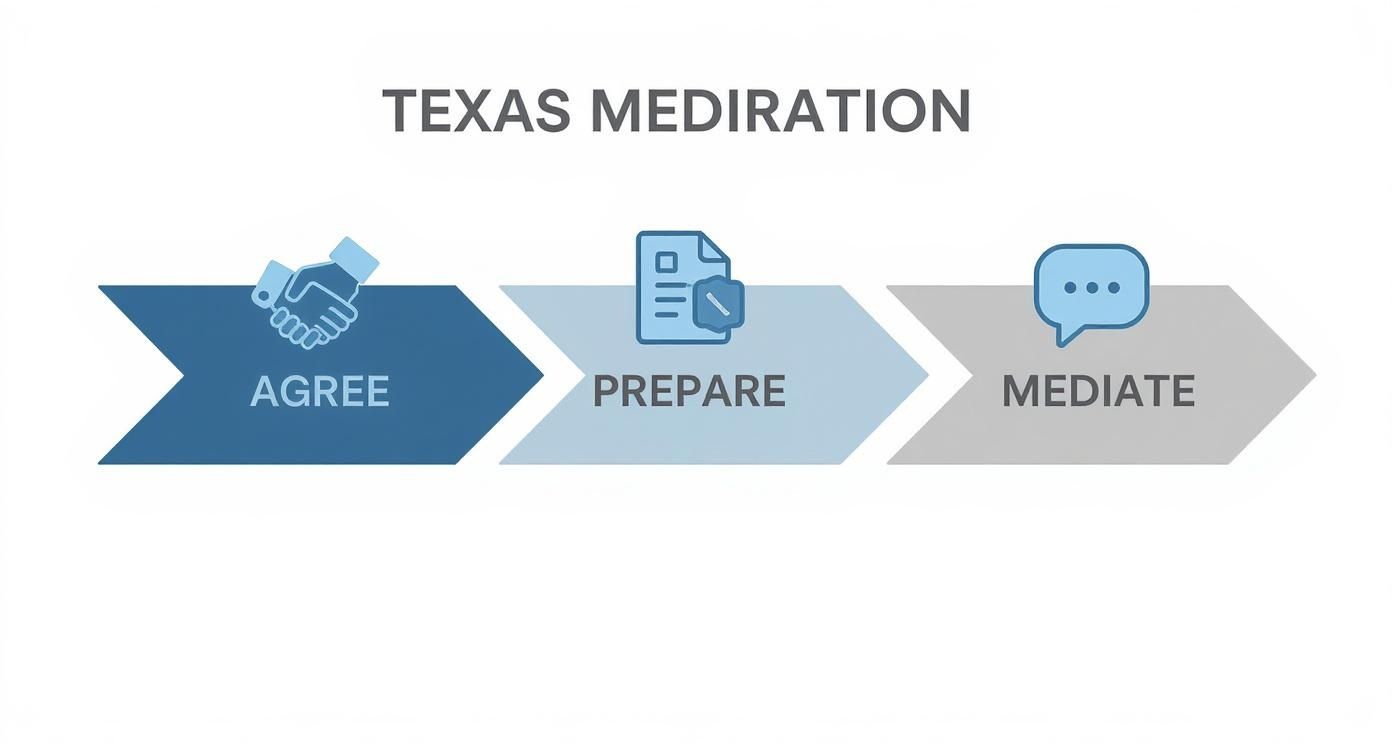
As you can see, the whole thing is built on mutual agreement and communication, moving logically from one step to the next.
Step 1: Agreeing to Mediate and Choosing a Mediator
This first step is the most critical: both you and your landlord have to voluntarily agree to try mediation. One side can’t force the other into it; it has to be a joint decision to find a collaborative solution.
Once you’ve both agreed, the next job is to pick a neutral, third-party mediator together. You’ll want someone who has specific experience in Texas landlord-tenant law. An experienced mediator knows the ins and outs of the Texas Property Code and can steer the conversation much more effectively.
Step 2: Preparing Your Case
This is your homework phase. You need to gather every document and piece of information relevant to your dispute. The goal is to walk into that room with an organized case that clearly supports your position.
Here’s a quick checklist of what you should bring:
- The Lease Agreement: Have a full, signed copy ready.
- Communication Records: Print out every email, text message, and letter you've exchanged.
- Photographs or Videos: Visual evidence is incredibly powerful, especially for disputes over property damage or repairs.
- Financial Records: This includes rent receipts, repair invoices, or security deposit statements.
Getting your documents in order doesn't just help you tell your side of the story—it shows the mediator you’re serious. This is the same kind of critical prep work you’d do when figuring out how to respond to an eviction notice; having your facts straight is everything.
Step 3: The Mediation Session
This is where the real work happens. The session usually starts with everyone in the same room. The mediator will kick things off by explaining the ground rules, stressing confidentiality, and setting a respectful tone. Then, each of you will get a chance to make an opening statement and explain your side of the dispute without being interrupted.
After the opening statements, the mediator will likely separate you into private rooms for individual meetings, which are called caucuses.
A caucus is a private, confidential chat between you and the mediator. It's a safe space to get real about your concerns, what you’re willing to give up, and what your bottom line is. The mediator can't share anything you say in a caucus without your direct permission.
The mediator then acts as a go-between, moving back and forth to relay offers, clarify points, and help you both explore creative solutions.
Step 4: Reaching a Final Agreement
If you find common ground, the final step is to put it all in writing. You’ll draft and sign a Mediated Settlement Agreement (MSA). This document spells out every single detail of the solution you’ve agreed on. It needs to be crystal clear and leave zero room for confusion.
For example, an MSA might state: "The landlord agrees to return $750 of the security deposit to the tenant within 10 business days."
Once everyone signs the MSA, it becomes a legally binding contract. That means if one person doesn't hold up their end of the deal, the other can take the agreement to court and get it enforced. This final step gives mediation its teeth, providing a secure resolution without ever needing a full-blown lawsuit.
Why Mediation is Often Your Best First Move
When a dispute with your landlord or tenant explodes, the first instinct is often to gear up for a fight. But heading straight to the courthouse is like taking the most expensive, frustrating, and time-consuming route possible to solve a problem.
Before you even think about a lawsuit, you need to understand why real estate mediation is almost always the smarter first step. Choosing mediation isn’t about surrender; it’s about choosing a better way to protect your rights. It’s a strategic move that keeps you in the driver’s seat and aims for a real-world solution, not just a drawn-out legal battle.
Save Serious Time and Money
Let’s be blunt: litigation is a financial and emotional drain. The court system is slow, and a case you think is simple can easily drag on for months—or even years. All that time, the legal bills just keep climbing, creating a mountain of stress.
Mediation is the complete opposite. It’s built for speed. Most disputes can be settled in a single day or a few short sessions. By skipping the formal court process, you slash your costs and get a resolution in a fraction of the time.
You Stay in Control of the Outcome
Walk into a courtroom, and you hand over all control to a judge. They will make a final, binding decision that you have to live with, like it or not.
Mediation flips that script entirely.
The single most important principle of mediation is self-determination. You and the other party are the ones calling the shots. The mediator is just a guide; you’re the one who builds the final agreement.
This power is everything. It opens the door to creative solutions a court could never order.
Real-World Scenario: Imagine your landlord is trying to evict you for late rent, but you lost your job and have a new one starting soon. A judge might just sign the eviction order. In mediation, you could negotiate a payment plan to catch up on rent once your new paychecks start, allowing you to stay in your home. This is a practical fix that works for everyone.
Your Dispute Stays Private
Court cases are public. Every document filed, every argument made—it all becomes part of a public record. An eviction lawsuit, even one you win, can follow you around for years and make it harder to rent in the future.
Mediation, on the other hand, is 100% confidential. What’s said in the room stays in the room. This privacy creates a safe space where both sides can be honest and open without worrying their words will be used against them later.
Preserve Relationships and Find Workable Solutions
A lawsuit is designed to create a winner and a loser. It's an adversarial process that almost guarantees any existing relationship will be destroyed. If you're a tenant who wants to stay, or a landlord who needs to protect their reputation, going scorched-earth in court just doesn't make sense.
Mediation is collaborative. It’s about finding a solution both sides can live with, which often helps preserve the landlord-tenant relationship. Globally, alternative dispute resolution is known for bringing stability to real estate markets by avoiding these very conflicts. You can read more about how mediation and arbitration stabilize real estate markets on Meegle.com. The goal isn't just to end a fight; it's to find a fair, sustainable outcome that lets everyone move on.
When You Might Still Need to Go to Court
Mediation is a fantastic tool for resolving real estate disputes in Texas, but it's not a silver bullet. It's smart to know its limits just as well as you know its benefits. Sometimes, even with the best intentions, the only path to a fair outcome is the one that leads straight to the courthouse. Knowing when to switch from negotiation to litigation is how you protect your rights.
When Good Faith Is Off the Table
Mediation only works if everyone shows up ready to cooperate. If the other party flat-out refuses to even consider it, your hands are tied. Worse is when they agree to mediate but aren't being honest. This is called negotiating in "bad faith," and it can look like:
- Stalling tactics: Agreeing to mediate, then endlessly delaying meetings.
- Unreasonable demands: Making offers so ridiculous you know they aren't serious.
- Hiding information: Refusing to share key documents you need to reach a fair settlement.
If you realize the other side is just using mediation to waste time, it’s time to pull the plug. A court can compel them to act in ways a mediator can't.
Dealing with a History of Broken Promises
Trust is everything in mediation. What if you're dealing with a landlord who has a track record of breaking their word? Maybe they've repeatedly failed to make repairs or ignored past agreements.
A Mediated Settlement Agreement is a legally binding contract. But if you have good reason to believe the other party won't follow through, a formal court order packs a bigger punch. A judge's order comes with the threat of contempt of court penalties if violated—a much stronger incentive to comply.
This is especially true when dealing with a pattern of neglect. If you're facing a situation where a landlord breach of lease has become a chronic problem, it might be time to pursue a more forceful legal remedy.
When Urgent Legal Action Is Required
Some problems are just too urgent for the mediation timeline. If you’re facing an immediate and serious threat, you need a judge to step in—now.
For instance, if a landlord illegally locks you out or shuts off your utilities, you can’t wait weeks for a mediation session. Under the Texas Property Code, you have the right to sue for immediate access. You need a judge to issue an immediate order, like a writ of re-entry, to get you back into your home. A skilled tenant rights attorney can help you file for this emergency relief.
The Role of a Lawyer in Your Mediation
Even though mediation feels less formal than a courtroom battle, walking in without an experienced landlord-tenant lawyer is a huge risk. Hiring a skilled attorney isn’t about making things more confrontational. It’s about making sure the final agreement is fair, legally sound, and actually protects your rights. Think of your lawyer as your strategic advisor and legal guardrail.

Strategic Preparation and Advice
Long before you step into the mediation room, your lawyer is already hard at work. They’ll dig into your case, reviewing the lease and every related document to figure out the strengths and weaknesses of your position under the Texas Property Code. This prep work is what builds a winning negotiation strategy.
A seasoned eviction attorney has seen it all. They know the common tactics landlords use and can anticipate what the other side will argue. They’ll work with you to define your goals, set a realistic “bottom line,” and prepare an opening statement that presents your case with confidence.
Guidance During Negotiations
When the mediation session is underway, your lawyer’s role is vital. While you’ll be the one speaking and making the final calls, your attorney is right there to advise you at every turn. They help you understand the real-world legal consequences of any offers on the table and stop you from agreeing to a settlement that works against you.
Your lawyer is your advocate, making sure the negotiation stays on track and productive. They can translate complex legal jargon into plain English and help brainstorm creative solutions that a mediator might not think of.
This guidance is especially critical during private caucuses with the mediator. Your attorney helps you analyze proposals from the other side and craft counter-offers that get you closer to a good outcome without sacrificing your rights. As the Texas real estate market keeps booming, you can explore the full real estate market report for more details on current trends.
Drafting a Rock-Solid Agreement
This might be the most important job your lawyer has: reviewing or drafting the final Mediated Settlement Agreement (MSA). This document is a legally binding contract. If the language isn’t precise and crystal clear, you could be left with loopholes or future misunderstandings. Your attorney will make sure the MSA says exactly what you agreed to, includes all the protections you need, and is fully enforceable under Texas law.
With an experienced Texas landlord tenant lawyer from The Law Office of Bryan Fagan, PLLC, by your side, you can walk into mediation knowing your interests are protected from start to finish.
Common Questions About Real Estate Mediation in Texas
Even after you see the benefits, the idea of sitting down for mediation can bring up some very real, practical questions. Getting clear, straight answers can make all the difference, helping you walk in feeling confident and ready to find a solution. Here are the answers to some of the questions we hear most often.
Is a Mediated Agreement Actually Legally Binding in Texas?
Yes, absolutely. This is one of the most important parts of the whole process. When you reach a deal, the terms are written down into a formal document called a Mediated Settlement Agreement (MSA). Once both parties sign that MSA, it becomes a legally enforceable contract under Texas law. This means if one person fails to hold up their end of the bargain, the other can take that signed agreement straight to a judge to enforce it.
Who Pays for the Mediator?
Typically, the landlord and tenant split the mediator's fee 50/50. This shared cost helps make sure both parties are equally invested in finding a solution. However, this isn't a hard-and-fast rule. You’re free to negotiate a different arrangement as part of the overall settlement.
What Happens If We Can't Reach an Agreement?
It happens. If you can't reach a settlement, the mediation is simply considered unsuccessful. The key thing to remember is that you haven't lost anything by trying.
Everything said during the mediation session remains 100% confidential. It can't be dragged into a future lawsuit or used against you in court. If mediation doesn't work out, your right to file a lawsuit is still fully intact. You’ll walk away with a much clearer picture of the other side's position and the real sticking points of your dispute, which can be valuable information if you do end up in court.
Choosing to mediate is a no-risk first step. More often than not, it leads to a faster, cheaper, and less stressful solution for everyone involved.
If you need help with an eviction, lease issue, or rental dispute, contact The Law Office of Bryan Fagan, PLLC for a free consultation today.

![Graphic design featuring the title "8 Valid Reasons to Break a Lease in Texas [2025 Guide]" with decorative elements like a pen and paper, emphasizing tenant rights and legal guidance in Texas.](https://texastenantlawyers.com/wp-content/uploads/2025/11/featured-image-7ebe2aec-eacb-4e61-8e85-9c298b07ad11.jpg)