
Dealing with a property dispute or a potential eviction can be stressful — but understanding your rights under Texas law can make all the difference. If you find someone living on your Texas property without permission, your first instinct might be to just get them out. But how you do that is strictly governed by the law, and one wrong move could land you in legal trouble.
In Texas, you can't just change the locks, turn off the water, or physically remove someone yourself. You have to go through the formal civil eviction process, which is called a forcible detainer suit. It starts with a written Notice to Vacate, moves to filing a lawsuit, and ends with a judge's order. An experienced Texas landlord tenant lawyer can guide you through every step.
What the Texas Property Code Says About Squatters vs. Tenants

It's a frustrating, stressful situation for any property owner. But the most critical first step you can take is to understand exactly who you're dealing with under Texas law. Your entire legal strategy hangs on one simple question: did they ever have your permission to be there?
The Texas Property Code makes a clear distinction between a tenant and a squatter, and that difference dictates every move you make from here on out.
- Tenant: This is someone who, at some point, had a legal right to live on the property. This is usually through a lease, but even a verbal agreement can count. When their lease expires and they refuse to leave, they become a "holdover tenant," but the law still sees them through the lens of a landlord-tenant relationship.
- Squatter: This person never had permission to be on the property. From day one, they are an unauthorized occupant—a trespasser.
This isn't just legal jargon; it's the fork in the road for your case. Tenants have specific rights and are owed certain procedures. Squatters are not.
The Myth of Adverse Possession
Most property owners have heard horror stories about "squatter's rights," which is really a misunderstood reference to a legal concept called adverse possession. This is a real, but very rare, doctrine where someone can eventually gain legal ownership of property they don't own.
Frankly, the bar for this in Texas is incredibly high. For an adverse possession claim to even have a chance, a squatter would have to prove they've had:
- Continuous and uninterrupted possession for a long time (often between 3 to 10 years).
- "Hostile" possession (meaning it’s against your rights as the owner).
- Open and obvious possession (they aren't hiding their presence).
- Exclusive possession (they are the only ones there).
In nearly every situation, the person you've found on your property has been there for a fraction of that time and has zero grounds for an adverse possession claim. Your immediate problem isn't an ownership battle; it's about getting a trespasser off your land legally and efficiently.
Why This Distinction Is Crucial
Figuring out if you have a tenant or a squatter is the foundation of your entire case. If you treat a holdover tenant like a criminal trespasser, you could get hit with a wrongful eviction lawsuit. On the other hand, if you give a squatter all the notices and considerations meant for a tenant, you're just wasting time and complicating the process.
Real-World Scenario: Imagine you own a rental property. Your tenant’s lease ended, but their cousin, who wasn't on the lease, refuses to leave. The cousin is a squatter because you never gave them permission to live there. Your legal path is a forcible detainer suit, not a standard eviction based on a lease violation.
Your first move is to correctly identify their status. You can get more perspective on this by reviewing resources on understanding tenant rights in California to see how these concepts are handled elsewhere. An experienced Texas eviction attorney can look at the facts and make sure you start off on the right foot. A solid grasp of the Texas Property Code and your rights is absolutely essential before you take any action.
Step-by-Step: How to Legally Remove a Squatter
That rush of anger and disbelief when you find a stranger on your property is completely understandable. Your first instinct might be to change the locks, cut the power, or just tell them to get out.
Stop. Don't do it.
Those actions, what the law calls "self-help" evictions, are illegal in Texas. As satisfying as it might feel in the moment, it can backfire spectacularly, landing you in a legal battle where you're the one getting sued.
You absolutely have your rights as the property owner, but you have to use them the right way. This isn't the time for emotion; it's time for a calm, methodical, by-the-book approach.
Step 1: Criminal Trespass or Civil Eviction?
The first crossroads you'll face is deciding whether to call the police. In a perfect world, if someone broke in and just set up shop, it should be a clear case of criminal trespass.
But be ready for a frustrating reality. The moment that squatter spins a story—any story, like a fake verbal lease from a "friend of the old owner"—the police will likely back off. They're trained to see that as a civil dispute, not a criminal one, and will tell you to handle it in court. It’s a common roadblock that leaves many property owners feeling helpless.
Step 2: Serve a Notice to Vacate
Once it’s clear this is a civil matter, your first move is non-negotiable: you must serve the squatter with a formal Notice to Vacate.
This isn't just a strongly-worded letter. It's a legal document required by Texas Property Code Section 24.005 before you can even think about filing an eviction lawsuit. If you can't prove you delivered this notice correctly, a judge won't even look at your case.
This notice does three critical things:
- It puts the squatter on official, legal notice that they have no right to be there.
- It sets a firm deadline for them to leave.
- It creates the paper trail that proves you’ve followed the law.
Step 3: How to Draft and Deliver the Notice—The Right Way
The Texas Property Code is incredibly specific about how this notice gets delivered. Just taping it to the door and hoping for the best is a recipe for disaster.
Here are your legally valid options:
- In-Person Delivery: Hand it directly to the squatter or anyone on the property who is at least 16 years old.
- Certified Mail: Send it with a return receipt requested. This creates a rock-solid paper trail.
- Post and Mail Combo: Affix the notice to the inside of the main door. If you can't get inside, you can post it on the outside, but you must also mail a copy from a post office in the same county on the very same day.
The notice itself needs specific language, including a clear and absolute demand to leave. While a standard eviction often requires a three-day notice, the rules for squatters (a forcible detainer suit) can be nuanced.
Getting this step wrong is one of the easiest and most expensive mistakes you can make. It can get your case thrown out, forcing you to start all over again while the squatter continues to live on your property, rent-free. A Texas landlord-tenant lawyer can make sure this crucial first step is handled perfectly, setting you up for a successful eviction from the very beginning.
Navigating the Texas Eviction Lawsuit
So, the deadline on your Notice to Vacate has passed, and the squatter is still there. Now what?
It's time to take the next legal step. This means filing a formal eviction lawsuit, which Texas law calls a forcible detainer suit. This action moves your dispute from a simple notice into a formal court proceeding, but it's the only lawful way to reclaim your property.
Filing this suit is how you officially ask a judge to intervene and order the person to leave. It can feel like a daunting step, but with the right preparation, it's a process designed to protect your property rights.
This simple visual breaks down your crucial first responses to discovering a squatter, from what to avoid to the necessary legal actions.
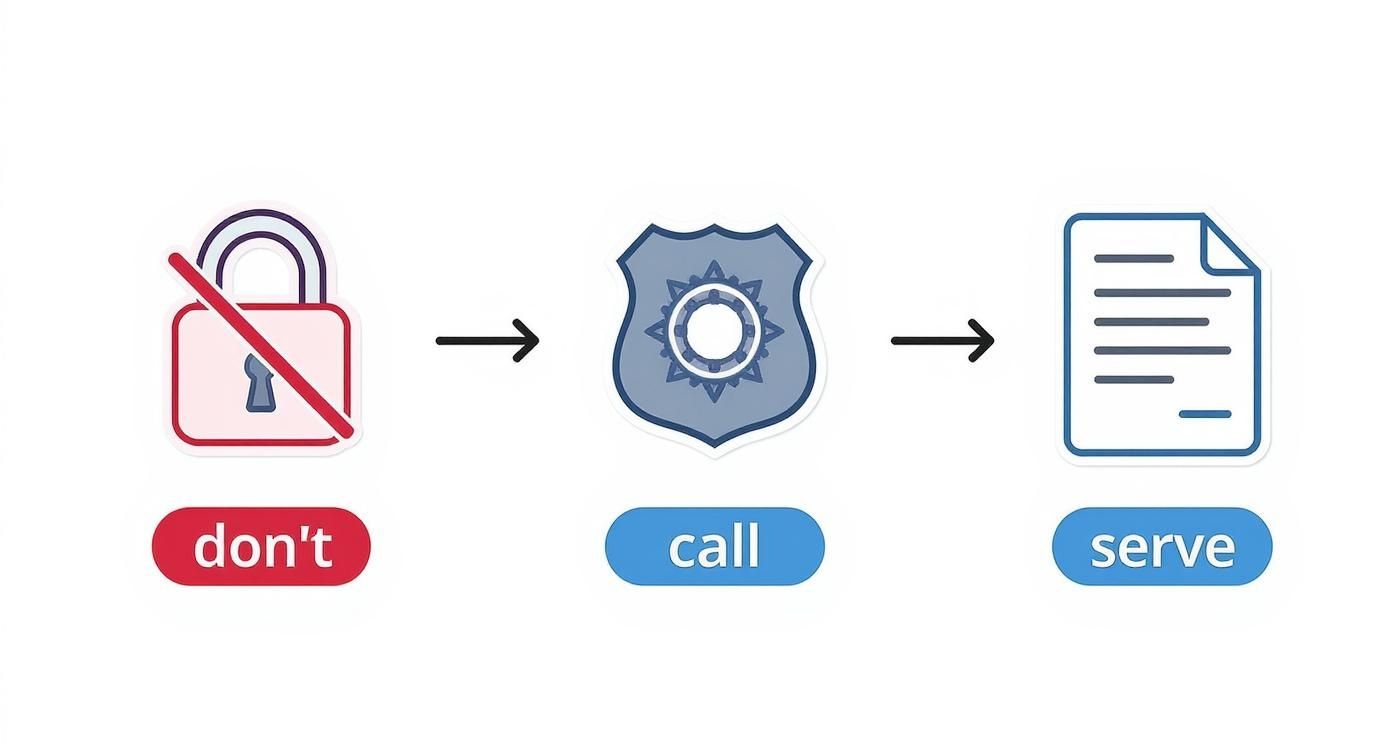
The key takeaway is clear: the legal path, starting with a formal notice, is the only safe and effective way forward.
Filing Your Petition In The Right Court
Your first move is filing the eviction lawsuit in the correct Justice of the Peace (JP) court. This has to be the JP precinct where the property is actually located. Every Texas county is split into several precincts, and filing in the wrong one is a critical mistake.
If you file in the wrong court, your case will be dismissed. You'll lose time, money, and have to start the entire process over.
The document that kicks things off is the Petition for Eviction. This is the formal paperwork that names you as the plaintiff (the owner) and the squatter as the defendant. In it, you'll state your legal right to the property and explain that the defendant is occupying it without permission. The court clerk will have the necessary forms, but it's up to you to fill them out completely and accurately.
Gathering Your Essential Documentation
Walking into court unprepared is the fastest way to lose your case. Before you even think about filing, you need to assemble a complete file of evidence that proves you own the property and that you've followed every legal step to the letter.
Think of it as building an airtight case for the judge. Your file should absolutely include:
- Proof of Ownership: A copy of the deed or another official title document.
- The Notice to Vacate: The exact copy of the notice you served.
- Proof of Delivery: The signed certified mail receipt, a sworn affidavit of service, or whatever documentation proves you delivered the notice according to the Texas Property Code.
- A Detailed Timeline: A log of events—when you found the squatter, when the notice was served, records of any communication.
- Photographic Evidence: Pictures of the property, any "No Trespassing" signs you posted, and photos of any damage caused by the squatter.
This level of organization signals to the court that you're serious and have done your homework.
What Happens After You File
Once your petition is filed and the fees are paid, the court system takes over. The JP court will issue a citation, which is a formal notice informing the squatter they are being sued for eviction. A constable or sheriff's deputy will then serve this citation directly to the person on your property.
This is a key moment. The citation tells the squatter about the lawsuit and gives them a deadline to appear in court. A hearing date will be set shortly after. Thanks to recent changes in Texas law, courts are now required to schedule most eviction trials within 21 days of filing, which helps move things along.
To give you a clearer picture, here’s a look at the typical stages and timelines.
Squatter Eviction Process Key Stages and Timelines in Texas
The formal eviction process in Texas follows a specific legal path governed by the Texas Property Code. While every case is unique, this table outlines the general stages and what to expect.
| Stage of Process | Governing Texas Property Code Section | Typical Timeline | Key Action for Property Owner |
|---|---|---|---|
| Notice to Vacate | Section 24.005 | 3 days (minimum) | Serve a written notice demanding the squatter leave the property. |
| Filing Petition | Section 24.0051 | Immediately after notice expires | File a Petition for Eviction in the correct JP Court. |
| Service of Citation | Rule 510.4 (TX Rules of Civil Procedure) | 3-7 days after filing | The court has a constable or sheriff serve the lawsuit on the squatter. |
| Court Hearing | Rule 510.6 (TX Rules of Civil Procedure) | Within 21 days of filing | Attend the hearing and present evidence to the judge. |
| Writ of Possession | Section 24.0061 | 5 days after judgment (if no appeal) | If you win, file for this writ to have law enforcement remove the squatter. |
Understanding these timelines helps you set realistic expectations and ensures you are prepared for each step of the legal battle. Your final step is preparing for that court hearing. You'll present your evidence and explain to the judge why you are entitled to get your property back. Having a Texas eviction attorney in your corner can make a huge difference, ensuring your case is presented clearly and professionally. For a deeper dive into what to expect in court, explore our guide to the complete eviction process in Texas.
What to Do After You Win Your Eviction Case
Walking out of the courtroom with a judgment for possession is a huge relief. You did everything right, followed the law, and the judge agreed the squatter has no legal right to your property. But as good as that victory feels, the fight might not be over just yet.
Unfortunately, a judge’s order doesn’t magically teleport a squatter off your land. Some will finally see the writing on the wall and leave. Others, however, will dig in their heels, forcing you to take one last legal step to reclaim what’s yours.
The Squatter's Right to Appeal
As soon as the judge bangs the gavel, a new clock starts ticking. The squatter has a five-day window to appeal the eviction judgment under the Texas Property Code. It’s a legal right they have, and it’s something every property owner needs to be ready for.
An appeal can bog the whole process down, sending your case up to a higher court for a second look. If they file one, you need to be on the phone with your attorney immediately to map out the next steps in defending your property rights.
But if those five days come and go with no appeal filed? You're officially in the clear to enforce the court's decision and get them removed for good.
Securing a Writ of Possession
So, you won in court, the appeal deadline has passed, and the squatter still won't leave. Your next move is to go back to the court and request a Writ of Possession. This is the final and most powerful tool in the eviction process.
Think of it as the court's direct order to law enforcement. A Writ of Possession commands a constable or sheriff to physically remove the person and their belongings from your property. It gives them the legal authority to do what you can't: use force to end the occupation.
You'll need to file a request at the same JP court that granted your eviction. There’s a small fee involved, but it's the last piece of the legal puzzle. You can get a deeper understanding of this critical document in our guide on the Writ of Possession in Texas.
The Final Removal by Law Enforcement
Once the court issues the writ, a constable will post a 24-hour notice on the property. This is a final, official warning to the squatter: leave now, or be forcibly removed. It's their last chance to exit on their own terms.
If they're still there after 24 hours, the constable returns to execute the writ and physically carry out the eviction. This keeps you out of it, ensuring the final removal is handled by trained officers and avoiding any dangerous confrontations.
It's worth noting that squatting is often tied to a much bigger, global affordable housing crisis. The number of people in informal housing has jumped by 165 million in the last two decades, now totaling nearly 1.1 billion worldwide. These individuals often live without secure land rights, constantly facing eviction threats. You can read more about this global housing issue on weforum.org.
While that global context doesn't change your legal rights as a Texas property owner, it does highlight why following the legal process to the letter is so critical. The Writ of Possession ensures the end of a long, stressful journey is handled professionally and lawfully.
Proactive Ways to Prevent Squatters
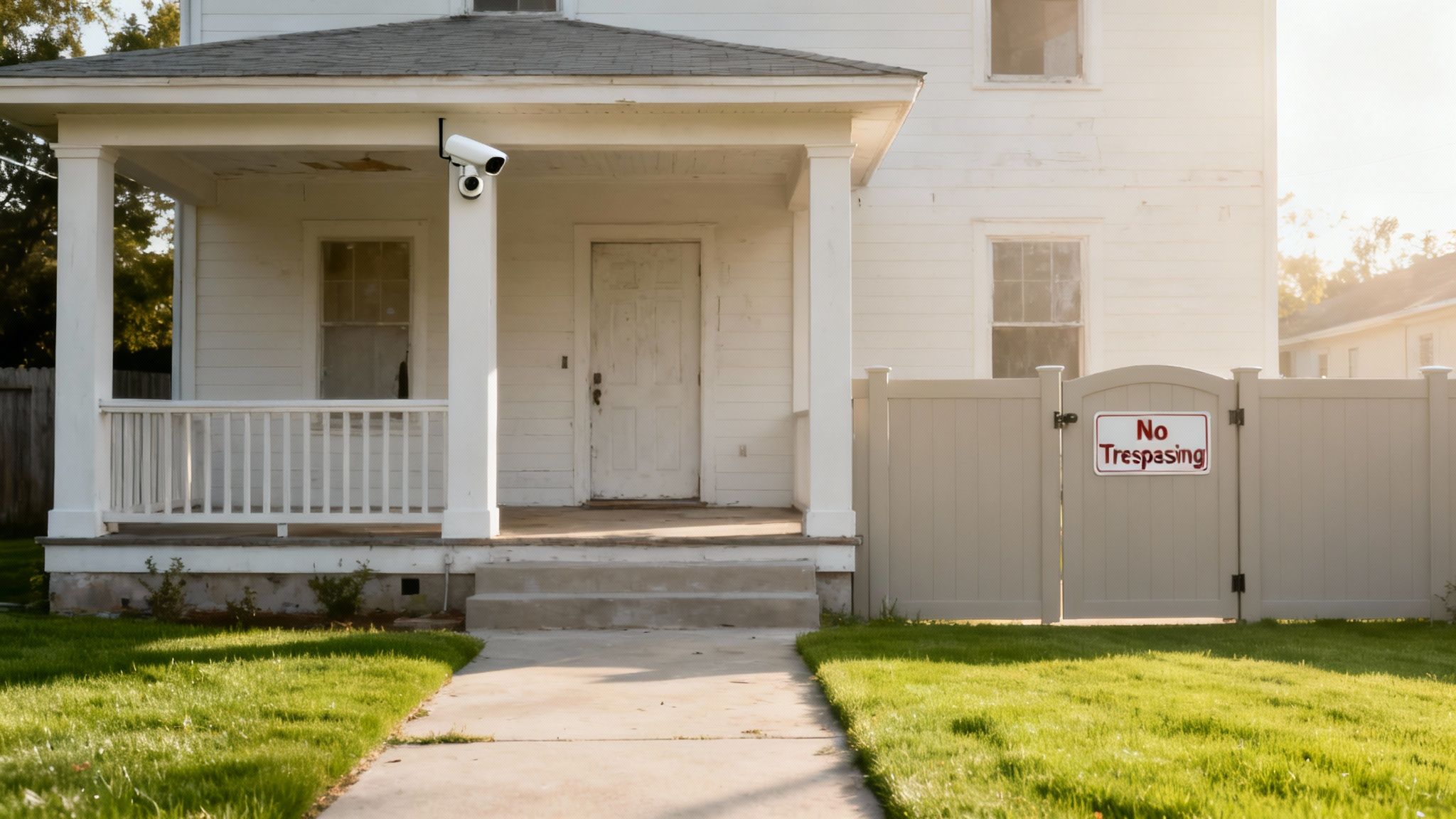
While it’s critical to know the legal steps for removing a squatter, the best way to deal with one is to never have one in the first place. Prevention is far less stressful and expensive than any eviction lawsuit. A few proactive measures can send a clear signal that your property is watched over, secure, and absolutely not an easy target.
Vacant properties are magnets for this kind of trouble, so taking a few practical steps can make all the difference. The goal is to make the property look occupied and cared for—a powerful deterrent against anyone looking for a place to illegally settle in.
Creating an Appearance of Occupancy
A house that looks abandoned is an open invitation. You want to make any vacant home look lived-in, even when it’s completely empty. The most effective way to do this is with simple, consistent maintenance.
Think about creating a quick checklist for your vacant properties:
- Maintain the Yard: Keep the lawn mowed and the shrubs trimmed. An overgrown yard is the number one sign of neglect.
- Deal with Mail: Stop mail delivery or have it forwarded. Make a point to regularly remove any flyers, newspapers, or packages left on the porch. A pile-up is a dead giveaway that nobody is home.
- Use Light Timers: A few cheap timers can turn interior lights on and off in the evenings, creating a convincing illusion that someone is inside.
These small efforts add up. Together, they create a strong visual message that the property is actively managed and not a safe bet for a would-be squatter.
Securing the Property Physically and Legally
Your first line of defense is physical security. This is about more than just locking the front door; it means doing a full walk-through and checking every possible entry point to make sure the property is sealed tight. A secure property is a much harder target.
Good locks on all doors and windows are non-negotiable. I always recommend upgrading to deadbolts and adding secondary locks or bars to ground-floor windows, especially those out of public view. For a more comprehensive approach, understanding general home security best practices can make a huge difference in deterring unwanted entry.
Beyond the physical barriers, don’t forget the legal ones. Posting "No Trespassing" or "Private Property" signs at the edges of your land sounds basic, but this simple act completely eliminates any claim that an intruder thought the property was abandoned or open to the public. It strengthens your position immensely if you need to get law enforcement involved.
Building a Neighborhood Watch Network
Your neighbors can be your most valuable asset when it comes to protecting a vacant property. A friendly relationship with the people living nearby creates an informal surveillance network that’s often more effective than any camera.
Take a few minutes to introduce yourself and let them know the property will be vacant. Give them your phone number and ask them to call you if they spot anything unusual. Most people are happy to help keep their neighborhood safe and will gladly be an extra set of eyes and ears for you.
This community approach ensures someone is paying attention, even when you can’t be there. And while Texas law provides a clear path for removal, it’s worth noting that the trend across the country is shifting to give property owners more tools. In 2024, states like Florida, Georgia, and New York passed new laws to speed up the removal of unauthorized occupants—a clear sign that lawmakers are finally recognizing the scale of the problem.
Ultimately, prevention is about making your property as unappealing as possible to squatters. By combining physical security, regular maintenance, and a little help from the neighbors, you can dramatically reduce your risk and protect your investment.
Your Questions Answered: Dealing with Texas Squatters
When you discover someone is on your property without permission, your mind races. It's a stressful, confusing situation, and you need answers fast. Let's tackle some of the most urgent questions Texas property owners have when they're staring down a squatter problem.
Getting a handle on the law is the first step toward getting your property back.
Can I Just Shut Off the Utilities to Get Them to Leave?
Absolutely not. We can't stress this enough. It might seem like a quick and logical solution, but cutting off the water, electricity, or gas is what the law calls an illegal "self-help" eviction.
Under the Texas Property Code, this move can get you sued. A judge will see it as an attempt to force someone out unlawfully, which could lead to fines and seriously derail your actual, legal eviction case. You have to use the court system—shortcuts like this will only end up hurting your rights.
How Long Is This Going to Take? The Texas Squatter Eviction Timeline
There's no single, set timeline, but you should prepare for the process to take anywhere from a few weeks to a couple of months. The good news is that Texas law now requires courts to schedule most eviction trials within 21 days of filing the case, which has helped speed things up significantly.
But a few things can still slow it all down:
- Serving the Papers: The constable might have a tough time finding the squatter to officially serve them the lawsuit.
- Court Dockets: Some Justice of the Peace courts are busier than others, and their schedule can affect how quickly your hearing is set.
- Appeals: After a judgment, a squatter has five days to appeal. If they do, it adds a whole new layer and a lot more time to the process.
Following the process correctly is far more important than trying to rush it.
Do I Really Need to Hire an Eviction Lawyer for This?
Legally, you are not required to have an attorney to file an eviction in a Texas JP court. But is it a good idea? Absolutely.
The eviction process is a minefield of procedural rules. One tiny mistake on your Notice to Vacate or an error in how you file the petition can get your entire case thrown out. That means you're back to square one, all while the squatter continues to occupy your property.
An experienced Texas landlord-tenant lawyer knows exactly how to navigate this process. They make sure every form is correct, every deadline is met, and you have a solid case in front of the judge. It’s not just about winning—it’s about saving you time, money, and a massive amount of stress. Protecting your property rights is the goal, and professional legal help is the most reliable way to get there.
If you need help with an eviction, lease issue, or rental dispute, contact The Law Office of Bryan Fagan, PLLC for a free consultation today.




![Graphic design featuring the title "8 Valid Reasons to Break a Lease in Texas [2025 Guide]" with decorative elements like a pen and paper, emphasizing tenant rights and legal guidance in Texas.](https://texastenantlawyers.com/wp-content/uploads/2025/11/featured-image-7ebe2aec-eacb-4e61-8e85-9c298b07ad11.jpg)