
Dealing with a landlord dispute or eviction can be stressful — but understanding your rights under Texas law can make all the difference. That piece of paper on your door—the eviction notice—can feel like a final judgment. It’s designed to. But it's actually just the first shot in a longer legal process.
An eviction lawyer in Houston, TX, can tell you this notice isn't an order to pack your bags. It’s a legal warning shot, giving you a specific window to either fix the problem or prepare your defense. Whether you're a tenant facing removal or a landlord needing to reclaim your property, knowing the rules is the first step toward a fair outcome.
What To Do When You Receive an Eviction Notice
That "Notice to Vacate" isn't just a simple letter; it's a legal document governed by very strict rules under the Texas Property Code. If your landlord messes up even one of those rules, it can become a powerful part of your case. What you do in the moments after finding that notice is critical.
And in Houston, the stakes are higher than ever. Landlords are filing evictions at a staggering rate. In February 2025 alone, a shocking 6,536 eviction cases were filed in Houston—a figure that’s 53% higher than before the pandemic. This isn't just a statistic; it's a warning that you need to act fast and smart. You can see more details about these eviction trends on marketplacehomes.com.
Your Immediate Action Plan
Panic is a normal reaction when you get a Notice to Vacate. But a clear, methodical plan will serve you much better. Do not ignore the notice or just hope the deadline passes. Take these steps immediately to protect your legal standing.
When that notice appears, it's easy to feel overwhelmed. But this is the moment to be strategic. The table below outlines the critical first steps you should take to protect yourself.
Your First Steps After Receiving an Eviction Notice
| Step | Action to Take | Why It Is Important |
|---|---|---|
| 1. Read the Notice Carefully | Check the reason for eviction (e.g., non-payment, lease violation) and the deadline. | The Texas Property Code has strict requirements. Any error or missing information can make the notice legally invalid. |
| 2. Document Everything | Take clear photos of the notice and where it was posted. Save all emails, texts, and letters with your landlord. | This documentation is your evidence. It can be used in court to prove your side of the story or show landlord misconduct. |
| 3. Do Not Move Out Immediately | The notice is not a court order from a judge. You have the right to stay until a court rules on the case. | Moving out can be seen as abandoning the property, which could weaken your legal position, especially if the eviction is unfair. |
| 4. Consult an Attorney | Contact an experienced eviction attorney in Houston right away. | A lawyer can spot legal mistakes in the notice, explain your rights, and start building your defense strategy immediately. |
This isn't just a checklist; it's your roadmap for taking back control. By following these steps, you shift from reacting to the landlord's move to proactively defending your home.
The biggest mistake a tenant can make is to ignore the notice. The clock starts ticking the second you get it, and taking immediate action is your strongest weapon.
You can learn more about how to respond to an eviction notice by checking out our comprehensive guide on the topic.
This initial phase sets the tone for the entire legal fight ahead. By staying calm, gathering your facts, and getting professional advice, you're no longer just a target—you're preparing a powerful, strategic response.
Navigating the Texas Eviction Process
The Texas eviction process isn't just a landlord telling you to leave. It's a formal, step-by-step legal timeline where every single detail is critical. To protect your rights, you first have to understand the roadmap laid out by the Texas Property Code.
Think of it as a series of legal hurdles the landlord must clear. If they stumble at any point—miss a deadline, use the wrong form, deliver a notice incorrectly—their entire case can fall apart. This is why having an experienced eviction lawyer in Houston, TX, on your side is so important. They make sure the landlord is held accountable to the letter of the law.
Step 1: What the Texas Property Code Says About the Notice to Vacate
It all starts with a piece of paper: the Notice to Vacate. This isn't just a friendly reminder or a casual request. It’s the official starting gun for a potential lawsuit.
Under Texas Property Code Section 24.005, this notice has to be delivered in a very specific way and contain precise legal language. If the eviction is for unpaid rent, the landlord usually has to give you at least three days’ notice to move out, unless your lease says otherwise.
The notice must be in writing, and it can be delivered by:
- Hand-delivering it to you or anyone in your home who is over 16.
- Mailing it (certified, registered, or even regular mail).
- Posting it on the inside of your front door.
A landlord simply taping it to the outside of your door or texting you a picture of it may not be legally sufficient. A mistake here is often the first and best defense a tenant has.
This infographic breaks down the crucial first steps to take the moment you receive an eviction notice. Staying calm and acting strategically is key.
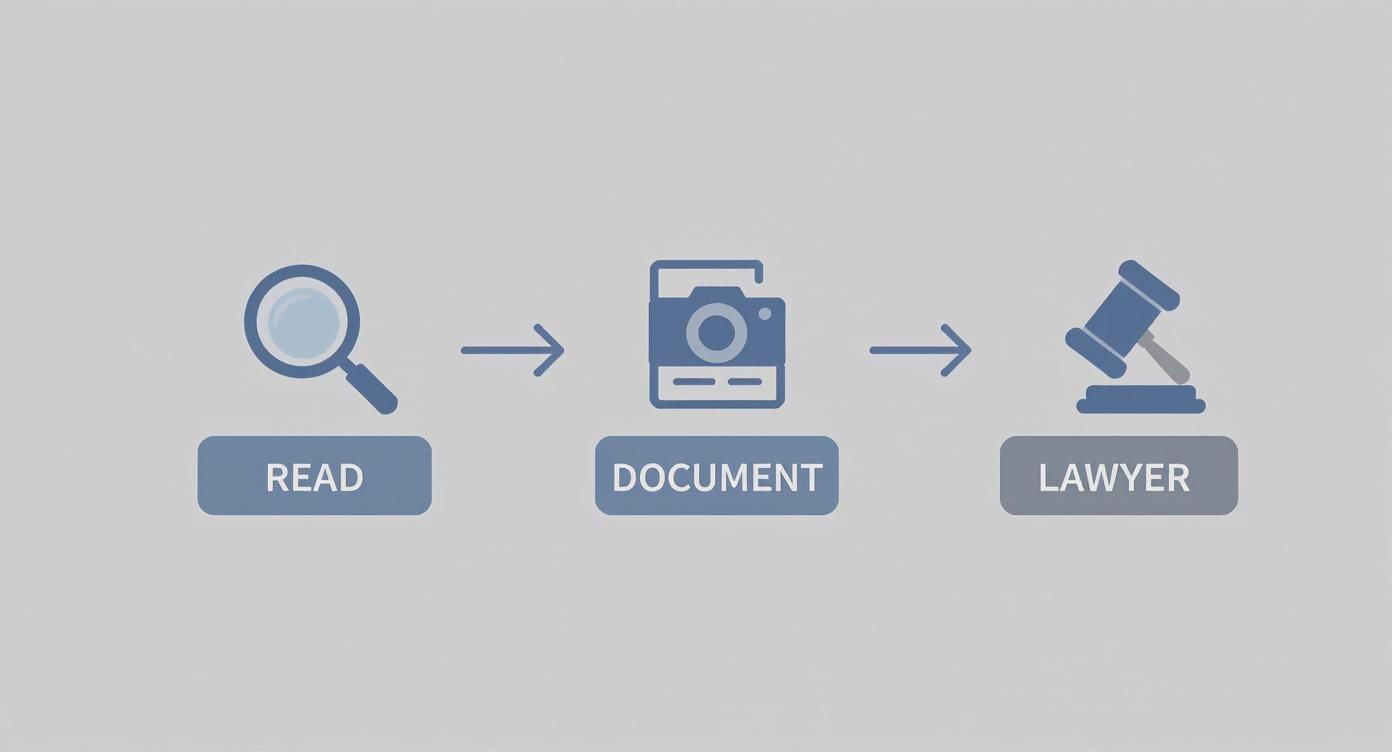
As the guide shows, what you do right after getting that notice—reading it carefully, gathering your documents, and calling an attorney—can set the stage for your entire defense.
Step 2: Filing the Forcible Detainer Lawsuit
If you haven't moved out by the deadline on the notice, the landlord can’t just change the locks. Their next legal move is to file a lawsuit against you. It’s officially called a Forcible Detainer suit, but it is more commonly known as an eviction lawsuit.
The landlord files this case with the local Justice of the Peace (JP) court. After that, a constable or sheriff will formally "serve" you with a citation. This is the official court document letting you know you're being sued and telling you exactly when and where to show up for your hearing. The timeline is usually very short, so you have to act fast.
Crucial Point: Being served with a lawsuit isn't the end. It's your official invitation to tell your side of the story in court. If you ignore it, you lose by default.
Step 3: What Happens at the Eviction Hearing
The eviction hearing happens in a Justice of the Peace court, which is less formal than other courts. You and your landlord (or their lawyer) will each get a chance to present your case to the judge. This is where your preparation really pays off.
All the evidence you've gathered becomes your ammunition. This can include:
- Your signed lease agreement.
- Proof of rent payments, like receipts or bank statements.
- Photos and videos showing the property's condition (especially if repairs are an issue).
- Copies of emails, texts, or letters between you and the landlord.
The judge listens to both sides and makes a decision right then and there. If the judge sides with the landlord, they'll issue a judgment giving them possession of the property. From that point, you have five days to either move out or file an appeal. To see how these steps fit into the bigger picture, check out our complete guide on the eviction process in Texas.
The Final Step: The Writ of Possession
If you lose in court and don't file an appeal within the five-day window, the landlord can request a Writ of Possession. This is the final, most serious stage.
A Writ of Possession is a court order giving a constable or sheriff the authority to physically remove you and your belongings from the home. Before they do, the constable must post a 24-hour warning notice on your door. Once that 24-hour period is up, they can legally force you to leave.
This is why you can't wait to get help. An eviction lawyer can step in long before it gets to this point, either by fighting the judgment on appeal or negotiating with the landlord to give you more time and avoid a forcible removal.
Understanding Your Tenant Rights in Texas
When you're a tenant in Texas, you're not just living in someone else's property—you have specific rights protected by the Texas Property Code. Your landlord has legal obligations they must follow, period.
Facing a dispute with a landlord is incredibly stressful. But knowing your rights is your best defense. It empowers you to spot when a landlord is crossing a line and gives you the confidence to take the right steps to protect your home.
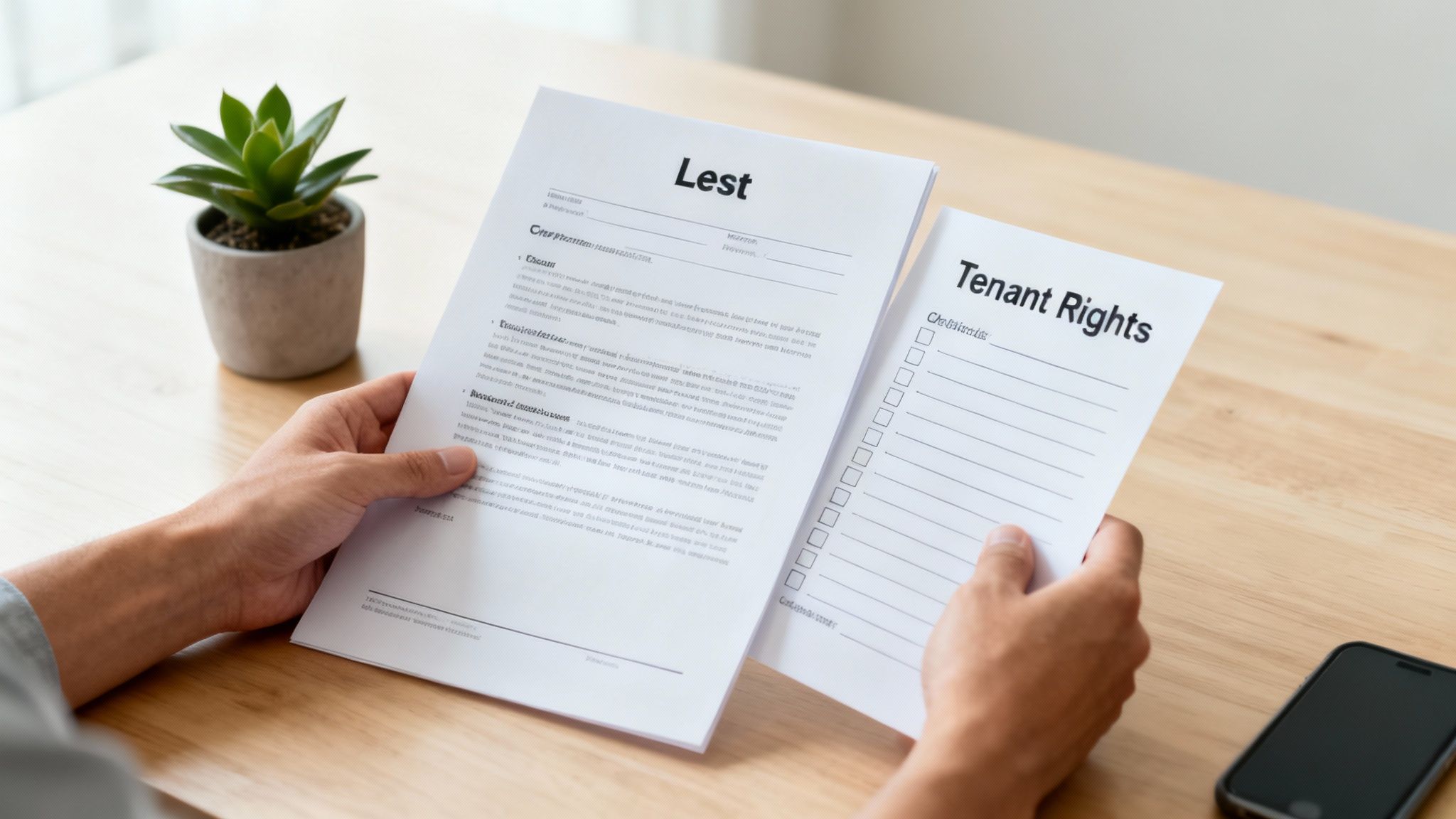
This isn't just an abstract legal issue; housing instability is a massive problem right here in our community. In 2024 alone, landlords in Harris County filed a staggering 76,321 eviction cases. That's roughly one in every ten renter households facing the threat of losing their home. In some neighborhoods, like Houston's District B, the eviction filing rate jumped to 13%.
You can dig into the numbers yourself by exploring the data on Harris County evictions from Texas Housers. These statistics aren't just data points—they represent families and individuals whose lives are being turned upside down, highlighting the urgent need for tenants to understand their legal protections.
The Right to a Safe and Livable Home
Texas law guarantees you the right to a home that is safe, sanitary, and structurally sound. It's often called the "warranty of habitability," and it's not a suggestion—it's a legal duty. Your landlord must repair any condition that "materially affects the physical health or safety of an ordinary tenant."
This goes far beyond minor annoyances. We're talking about serious problems that make a home unlivable:
- No hot water
- A broken heater during a freeze or no A/C in the Houston summer
- Dangerous electrical wiring or plumbing issues
- Serious pest infestations, like roaches or rats
- Significant mold growth that impacts air quality
If your rental has a serious issue, you must notify your landlord in writing. This is a critical step that triggers their legal obligation to make repairs. A phone call or a casual conversation won't cut it when it comes to protecting your rights.
Your Security Deposit Is Not Your Landlord's Money
That security deposit you paid? It’s your money, not a bonus for your landlord. The Texas Property Code lays out very strict rules for how it must be handled.
Once you move out and provide a forwarding address, your landlord has 30 days to do one of two things: return your full deposit or provide a written, itemized list of deductions. They can legally deduct for damages beyond "normal wear and tear," but they can't charge you for routine things like a standard paint job or carpet cleaning unless you caused excessive damage.
Key Takeaway: If your landlord misses that 30-day deadline or fails to provide an itemized list, they could be acting in "bad faith." This means they may owe you three times the amount of the deposit, plus your attorney's fees.
Protections Against Landlord Retaliation
It is flat-out illegal for a landlord to punish you for exercising your legal rights. For instance, they cannot try to evict you, hike up your rent, or cut off services just because you requested a necessary repair or reported a code violation to the city.
This isn't just unfair; it's prohibited under Texas Property Code Section 92.331. If you suspect your landlord is retaliating, start documenting everything. Save every email, text, and letter. This paper trail can become powerful evidence and your strongest defense in an eviction lawsuit. An experienced eviction lawyer in Houston, TX, can use this documentation to prove retaliation in court.
Illegal "Self-Help" Evictions Are Prohibited
Under no circumstances can a landlord take matters into their own hands to force you out. These actions are called "self-help" evictions, and they are completely illegal in Texas.
This includes things like:
- Changing the locks while you're out.
- Removing your furniture or belongings from the property.
- Shutting off your water, electricity, or gas.
If your landlord does any of these things, you have the right to sue them. You can recover a penalty, any actual damages you suffered, court costs, and attorney's fees. If this happens, your first call should be to a tenant rights attorney who can help you regain access to your home and hold the landlord accountable.
Your rights are your shield, but you have to know how to use them.
How A Houston Eviction Lawyer Can Defend You
Trying to fight an eviction lawsuit by yourself is like walking into a courtroom with one hand tied behind your back. The whole process is built for speed, and you can bet the landlord has an experienced legal team ready to go. Bringing in an experienced eviction lawyer in Houston, TX, completely levels the playing field. It changes you from a vulnerable defendant into a real opponent.
Your attorney becomes your champion. They make sure your side of the story is not only heard but presented in a way that actually matters to the court. These lawyers live and breathe the Texas Property Code and know exactly where landlords tend to cut corners or make critical mistakes. This kind of professional help can take what feels like a lost cause and turn it into a winnable case.

Scrutinizing The Landlord's Case For Errors
The Texas eviction process is incredibly rigid. Every single step—from the first "Notice to Vacate" to the final paperwork filed with the court—has to follow the law to the letter. A single mistake by the landlord can be enough to get their entire case thrown out.
One of the first things your attorney will do is put your landlord’s actions under a microscope. They’ll dig into critical questions you probably wouldn't even think to ask:
- Was the Notice to Vacate legally sound? Did it give you the right amount of time? Did it include the legally required language?
- Was it delivered correctly? Just taping a notice to your door doesn't always count.
- Did the landlord sue you in the right court precinct? Filing in the wrong jurisdiction is a fatal flaw.
- Is their evidence even accurate? Are they claiming you owe rent that you can prove you already paid?
These aren't just minor details—they're the foundation of a legal eviction. A good lawyer spots these errors and uses them to dismantle the landlord's case from the very start.
A landlord's mistake is your opportunity. An eviction case is often won or lost on technicalities and procedural rules, which is where an attorney's expertise is absolutely priceless.
Building A Powerful Legal Defense
Beyond just hunting for procedural flaws, your lawyer will build a defense strategy based on the reality of your situation. They'll listen to your story and find the legal arguments that will resonate with a judge.
Some of the most common—and powerful—defenses we see are:
- Improper Eviction Retaliation: The law is clear: your landlord cannot evict you simply because you legally asked for essential repairs or reported a code violation. Proving this is a game-changer.
- Breach of the Warranty of Habitability: Landlords have a duty to provide a safe and livable home. If they failed to do so, you might have grounds to fight back, especially if you followed the right steps to notify them.
- Waiver: Did your landlord accept a partial rent payment after sending you an eviction notice? If so, they may have legally "waived" their right to move forward with that specific eviction.
It's your attorney's job to collect the proof—photos, emails, text messages, rent receipts—and weave it into a legal argument a judge can't ignore. To learn more, check out our guide on how to find an eviction attorney near you who knows how to build these defenses.
Negotiating Alternatives To Eviction
Sometimes the best victory isn't winning in court but avoiding a judgment altogether. An eviction on your record is a black mark that can make it incredibly hard to rent another home for years. An experienced lawyer can often open a dialogue with the landlord's attorney to find a better way out.
This could look like:
- A "Cash for Keys" Agreement: The landlord gives you money to move out by a set date, and in exchange, they drop the lawsuit completely.
- More Time to Move: Simply negotiating a later move-out date can give you the breathing room you need to find a new place without the panic of a formal eviction.
- A Full Dismissal: In some cases, a lawyer can get the case dismissed entirely, leaving your rental history clean.
Having an expert in your corner can dramatically change the outcome. The table below illustrates the stark difference between going it alone and having professional legal help.
Facing Eviction With vs Without A Lawyer
| Action Stage | Without a Lawyer | With an Eviction Lawyer |
|---|---|---|
| Notice to Vacate | You might miss critical errors in the notice, weakening your future case. | An attorney immediately scrutinizes the notice for any legal flaws that could get the case dismissed. |
| Court Filing | You have to figure out how to respond and gather evidence on your own, under a tight deadline. | Your lawyer files a professional answer, raises legal defenses, and handles all communication with the court. |
| Court Hearing | You must argue your case against the landlord's lawyer, often without knowing the rules of evidence. | Your attorney presents a structured legal argument, cross-examines the landlord, and protects your rights in court. |
| Negotiation | You're negotiating from a position of weakness, often leading to unfavorable terms. | Your lawyer negotiates from a position of strength, aiming for a dismissal, more move-out time, or a clean record. |
| Final Outcome | High risk of an eviction judgment, damaged credit, and difficulty finding future housing. | Higher chance of case dismissal, a favorable settlement, or having the eviction record sealed, protecting your future. |
The demand for legal help in Houston has skyrocketed. By February 2022, one legal aid group had already helped over 10,000 tenants, with an incredible 96% success rate in preventing an eviction judgment. Yet, eviction filings in Houston remain dangerously high, partly because Texas law can lean in the landlord's favor. As detailed in a report on the fight against Texas evictions on english.elpais.com, these numbers prove just how critical it is to have professional legal representation on your side.
A Landlord's Guide to Legal Evictions in Houston
Facing a landlord-tenant dispute is one of the most stressful parts of owning a rental property. But knowing your rights and—just as importantly—your obligations under Texas law can make all the difference. When it comes to eviction, you have to get it right.
Navigating the process correctly protects your investment and saves you from incredibly costly legal mistakes. A single procedural error isn't a minor setback; it can get your entire case thrown out, forcing you to start from square one. That means more lost rent, more legal fees, and more headaches.
Following the legal process isn't just a good idea—it's the only way. An experienced eviction lawyer in Houston, TX, can be your guide through these tricky steps, making sure every action you take is fully compliant and protects your property rights.
It All Starts with a Legally Sound Lease
Your first and best line of defense is a strong, clear, and legally compliant lease agreement. Think of it as the foundation for your entire landlord-tenant relationship. A well-written lease sets crystal-clear expectations and gives you a solid legal footing if a dispute ever arises. It needs to spell out everything from rent payment rules to maintenance duties and the exact consequences of a violation.
A vague or outdated lease is an open invitation for trouble. It creates loopholes that a tenant's attorney will know exactly how to exploit. For example, if your lease is fuzzy on the rent's due date or the penalties for paying late, it can seriously weaken an eviction case for non-payment. Spending a little upfront to have a Texas landlord tenant lawyer draft or review your lease is one of the smartest investments you can make.
How to Legally Evict a Tenant: Step-by-Step
When a tenant breaks the lease—whether it's by failing to pay rent or some other violation—you can't just change the locks. You can't turn off the utilities. And you certainly can't remove their belongings. The Texas Property Code lays out a strict, mandatory process you have to follow to the letter.
Serve a Written "Notice to Vacate": This is the non-negotiable first step. For non-payment of rent, a 3-day notice is the standard, unless your lease specifically calls for a different timeframe. The notice has to be in writing and delivered in a legally approved way, like in person, by mail, or by posting it on the inside of the tenant's front door.
File an Eviction Suit: If the tenant doesn't move out after the notice period ends, your next move is to file a forcible detainer suit—that's the official term for an eviction lawsuit—with the right Justice of the Peace court. Accuracy here is critical. Filing in the wrong precinct is a rookie mistake that will get your case dismissed.
Attend the Court Hearing: This is your day in court. You'll need to present your case to the judge, armed with evidence like the signed lease, payment records, and copies of every notice you sent. This is where your careful documentation becomes your most powerful weapon.
A landlord’s case is often won or lost based on the quality of their records. Every communication, notice, and payment log must be documented meticulously to build an undeniable case in court.
The Importance of Meticulous Documentation
From the second that lease is signed, document everything. You are creating a paper trail that will back up your claims if you ever find yourself in front of a judge.
Your file for each tenant should include:
- A copy of the signed lease agreement.
- Records of all rent payments, showing dates and amounts.
- Written correspondence with the tenant, especially about lease violations or repair requests.
- Photos or videos of the property's condition before move-in and after any damages are reported.
- A copy of the Notice to Vacate and proof of how and when it was delivered.
Staying on top of local Houston real estate market developments is also smart for landlords and property managers, as it provides valuable context for rental trends and management strategies in the area.
Exploring Alternatives to Formal Eviction
Let's be honest: an eviction lawsuit can be a long, expensive headache. Sometimes, looking at other options is the more practical move. A negotiated move-out agreement, often called a "cash for keys" deal, can be a much faster and less confrontational way to get your property back.
Here’s how it works: you offer the tenant a financial incentive to leave by a set date and leave the property in good shape. It might feel counterintuitive to pay a tenant to leave, but it can easily save you more than it costs in court fees, attorney bills, and the stress of a trial. An attorney can help you draft a bulletproof agreement that protects your interests and makes sure the tenancy ends cleanly.
If you need help with an eviction, lease issue, or rental dispute, contact The Law Office of Bryan Fagan, PLLC for a free consultation today.
Common Questions About Houston Evictions
Facing an eviction is overwhelming. It’s stressful, confusing, and it feels like the clock is ticking against you. But knowledge is power, and understanding your rights under Texas law is the first step toward protecting yourself.
The eviction process is a legal minefield, full of strict rules and deadlines that both landlords and tenants have to follow. To help you see things a little more clearly, we’ve put together answers to the questions we hear most often from clients right here in Houston. These aren't just textbook definitions—they're straightforward answers you can actually use.
How Much Notice Does a Landlord Have to Give Before an Eviction in Texas?
When it comes to evictions for non-payment of rent, Texas law doesn't leave room for guesswork. The landlord is required to give you a written 3-day "Notice to Vacate" before they can even think about filing an eviction lawsuit.
This isn't a friendly suggestion; it's a hard-and-fast legal requirement under the Texas Property Code. The notice has to be delivered in a specific way—either handed to you (or someone over 16 at your home) or posted on the inside of your front door. It also needs to include specific legal language to be valid. If your landlord gets any of this wrong, an eviction lawyer in Houston, TX can challenge the notice and potentially stop the eviction in its tracks.
Can I Really Be Evicted for Being One Day Late on Rent?
Yes, technically, you can. It sounds harsh, but if your lease doesn't specify a grace period, your rent is legally due on the day it says in the contract. If you're even a single day late, you have breached the lease.
That breach is all the landlord needs to start the process with a "Notice to Vacate." This is why it’s absolutely critical to read your lease agreement for any clauses about late fees or grace periods—those terms dictate everything. If you find yourself in this situation, talking to an attorney is a smart move. They can help you figure out your options and maybe even negotiate with the landlord on your behalf.
What Happens If I Lose My Eviction Lawsuit?
If the judge rules against you, an eviction judgment goes on your record. This is a serious problem, but you haven't run out of road just yet. You generally have five days to file an appeal, which buys you more time and gives you another shot at fighting the case.
If you don’t appeal or move out in those five days, the landlord can get what’s called a "Writ of Possession." This is the final order from the court that allows a constable to physically remove you. The constable will post a 24-hour warning on your door, and after that, they can legally remove you and your belongings from the property. An eviction judgment can wreck your credit and make it nearly impossible to rent again, which is why fighting the case from the very beginning is so important.
An eviction judgment is more than just an order to leave; it's a long-term mark on your rental history. Fighting the lawsuit is the only way to protect your record and your future housing stability.
Can My Landlord Lock Me Out or Shut Off My Utilities?
Absolutely not. In Texas, it is illegal for a landlord to resort to "self-help" tactics to get you out. That means they can't change the locks, throw your things out on the curb, or shut off essential utilities like water, gas, or electricity to force you to leave.
These actions are explicitly forbidden by the Texas Property Code. If your landlord pulls an illegal lockout or cuts your utilities, you have the right to sue them for some serious damages. We're talking about a financial penalty, the cost of your actual damages, court costs, and your attorney's fees. If you're facing this kind of illegal pressure, you need to call an eviction attorney immediately to defend your rights and get back into your home.
If you need help with an eviction, lease issue, or rental dispute, contact The Law Office of Bryan Fagan, PLLC for a free consultation today. Our team of experienced Texas landlord-tenant lawyers is here to give you the clear, practical guidance you need to protect your rights. Schedule your free consultation with us now.

![Graphic design featuring the title "8 Valid Reasons to Break a Lease in Texas [2025 Guide]" with decorative elements like a pen and paper, emphasizing tenant rights and legal guidance in Texas.](https://texastenantlawyers.com/wp-content/uploads/2025/11/featured-image-7ebe2aec-eacb-4e61-8e85-9c298b07ad11.jpg)