
Dealing with the Texas real estate market can be stressful — but understanding your rights under Texas law can make all the difference. A lease-purchase contract, often called a "rent-to-own" agreement, can be a unique path to homeownership, but it comes with specific rules and risks you need to understand.
This isn't your standard rental agreement. It’s a hybrid contract that lets you rent a home for a set period with the option, or sometimes the obligation, to buy it before the lease ends. It’s part rental lease, part real estate purchase contract, rolled into one.
Your Path to Homeownership with a Lease Purchase
The Texas real estate market can feel like an uphill battle. For many Texans, saving up a large down payment or getting approved for a traditional mortgage isn't always possible right away.
That’s where a lease-purchase agreement comes in. It acts as a bridge, helping you move from renting to owning when the direct route is blocked.
This type of agreement can be a win-win. For you, the potential buyer, it gives you time. Time to improve your credit, save more money, and "test drive" the house and neighborhood before you commit to buying. For a landlord, it attracts serious, motivated tenants who are more likely to treat the property as if it were their own.
How Common Are These Agreements?
While not as common as a standard sale, these agreements fill a critical gap in the market. In the U.S., for instance, about 2.1% of homebuyers in 2021 used a lease-purchase agreement to get into their homes. It’s an alternative path, but a meaningful one for people who can't get traditional financing right away. You can always dig into more market trends and leasing statistics to see the bigger picture.
This guide will walk you through exactly how a lease-purchase contract works under Texas law. We will explain:
- The key parts of the agreement you must understand.
- Your rights and the protections you have as a tenant-buyer under the Texas Property Code.
- The critical difference between a "lease purchase" and a "lease option."
Getting these details right from the start is the only way to protect your money and your future home.
How a Lease Purchase Agreement Actually Works
So, what exactly is a lease purchase contract, and how does it play out in a real-world scenario?
Imagine you’ve found the perfect home. It’s in a great neighborhood, the schools are top-notch, but your credit score isn’t quite ready for a traditional mortgage. This is where a lease-purchase agreement opens a door that might otherwise be closed.
The process begins with a negotiation. Before you move in, you and the landlord (the seller) will agree on the terms that define your path to ownership.
- The Purchase Price: You lock in the home's sale price now. This is a huge advantage, protecting you if home values in the area increase over the next few years.
- The Option Fee: This is an upfront, non-refundable payment you give the seller. Think of it as a deposit on your right to buy the home later. It shows you’re serious and have a financial stake in the deal.
- The Lease Term: You'll agree on how long you have to rent the home before you’re obligated to buy it. This is typically between one to three years, giving you time to get your finances in order.
- Rent Credits: This is one of the most powerful features. A portion of your monthly rent is set aside and credited toward your future down payment or closing costs. For example, if your rent is $2,000 a month, you might agree that $300 of it gets banked as a rent credit.
This setup isn't just a rental agreement; it's a strategic plan for homeownership.
As you can see, every rent check you write does double duty—it covers your housing for the month while building your stake in the property. You're turning a monthly expense into future equity.
From Tenant to Homeowner
During the lease period, you live in the home just like any other renter, but with a critical mission: improve your financial health so you can qualify for a mortgage.
This creates a different dynamic than a standard rental. You're not just a temporary occupant; you're an owner-in-training. This is a far cry from typical rental situations, which you can learn more about by exploring our guide on sublease rights and responsibilities for tenants.
Once the lease term is up, it's time to act. You exercise your option to buy, applying for a mortgage using the purchase price you locked in years ago. Your upfront option fee and all the rent credits you've saved are then applied to your down payment, which can make a huge difference in affordability.
Lease Purchase vs. Lease Option: A Critical Difference in Texas Law
In Texas real estate, small details can have big consequences. "Lease purchase" and "lease option" are perfect examples. They sound similar, but they carry completely different legal weight.
Confusing them can lock you into a massive financial commitment you weren't ready for. Understanding what sets them apart is the first step in protecting your rights.
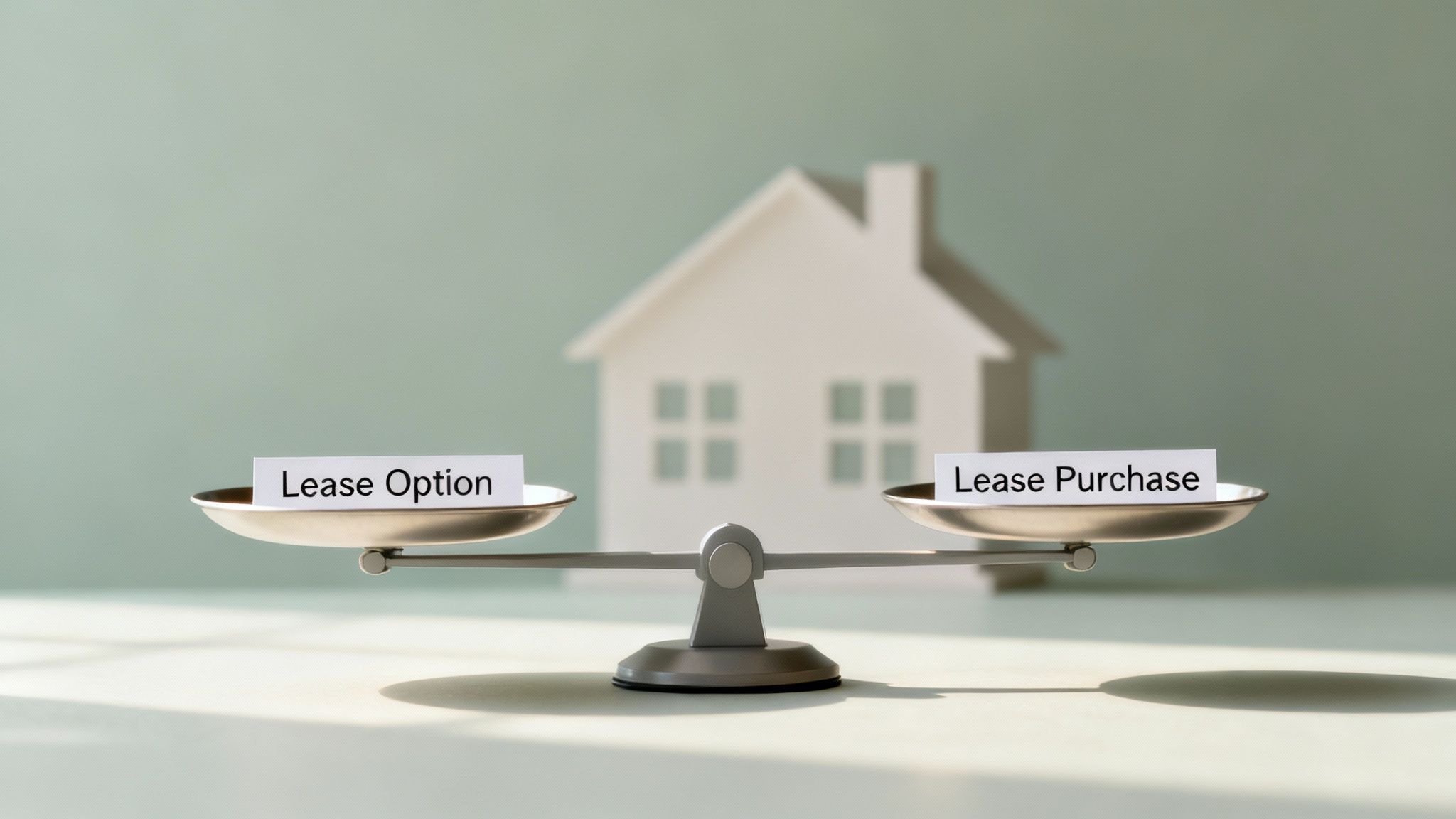
A lease option agreement gives you the right to buy the property—but not the obligation.
Think of it like putting an item on hold at a store. You’ve paid a fee for the exclusive chance to buy it later at a locked-in price. But if you change your mind, you can walk away.
The Power of Choice
With a lease option, the main thing you risk losing is the non-refundable option fee you paid upfront. This setup gives you flexibility, which is perfect if you are not 100% sure about your long-term plans or whether you'll qualify for a mortgage. It’s your chance to "test drive" the house and the neighborhood without being legally forced to buy it.
On the other hand, a lease purchase agreement is a much more serious commitment. This contract legally obligates you to buy the home when the lease is up. There’s no backing out without facing potentially severe legal and financial consequences.
This is the single most important detail in any rent-to-own contract. An "option" is a choice. A "purchase" is a promise you have to keep.
Understanding Your Commitment
A lease purchase is more like a layaway plan you have already committed to finishing. Both you and the seller are legally bound to complete the sale. If you, as the buyer, cannot get a mortgage and fail to buy the home, the seller could take you to court for breach of contract.
This is exactly why you need a Texas landlord-tenant lawyer to review any agreement before you sign. A skilled eviction attorney can tell you in plain English whether you’re signing an option or an obligation and ensure the contract fits your goals and protects your rights.
What the Texas Property Code Says About Lease Purchases
In Texas, a lease-purchase contract isn't just a rental agreement with extra steps. The law views it differently, giving you—the tenant-buyer—special protections that you don't get with a standard lease.
The moment you sign the contract, it becomes what's known as an executory contract. This is defined under Subchapter D of the Texas Property Code, and that legal term is your shield. It creates a set of strict, non-negotiable rules for sellers and gives you powerful rights.
Key Protections Under Texas Law
So, what does this mean for you? It means the Texas Property Code treats you more like a homebuyer than a renter. A landlord can't just slap an eviction notice on your door if you miss a payment. They must follow a much more formal process that looks more like a foreclosure.
Here are some of the most critical protections this law gives you:
- The Right to Full Disclosure: Before you sign, the seller is legally required to give you a recent property survey, copies of any liens or deed restrictions, and a detailed notice explaining the property's condition. No secrets allowed.
- Proof of Clear Title: The seller must prove they own the property free and clear. They must show it doesn't have outstanding loans that could put your future ownership at risk.
- The Right to "Cure" a Default: If you fall behind on payments, the seller can’t just kick you out. They must send you a formal notice and give you a 30-day window to catch up (or "cure" the default) before they can take further action. This is a crucial safeguard that prevents you from losing your entire investment over a single late payment.
These rules were put in place to stop predatory sellers from taking advantage of hopeful buyers who are investing their hard-earned money into a future home.
Why Legal Compliance Is Non-Negotiable
For sellers, ignoring these rules comes with serious consequences. Failing to comply can lead to severe penalties, including giving you the right to cancel the contract and demand a full refund of every penny you've paid.
This highlights how important it is to have an ironclad agreement that meets all state requirements. The complexity here is also why a deep understanding of Texas lease agreement laws is so vital for both sides of the deal.
Executory contract laws in Texas exist to balance the power between a seller and a buyer. They ensure that your path to homeownership is transparent and fair, not a gamble where you could lose everything over one late payment.
Evaluating the Pros and Cons for Buyers and Sellers
A lease-purchase contract can be a brilliant tool, but it's not the right move for every situation. To truly understand what a lease-purchase contract is, you have to weigh its unique advantages against its real risks.
For both parties, walking into this arrangement with your eyes wide open is the only way to avoid future disputes, legal fights, and financial pain. This isn't your standard rental agreement—the stakes are much higher.
For the Buyer: A Pathway or a Pitfall?
For a potential buyer, the biggest advantage is time. You get to live in the home you want to buy while you get your finances in order—whether that’s boosting your credit score or saving up a bigger down payment.
Key Pros for Buyers:
- Locking in the Price: You agree on the home's purchase price today. If home values in the area increase, you’ve saved yourself money.
- Test Driving the Home: Think of it as the ultimate try-before-you-buy. Living there gives you a real feel for the house, the neighbors, and any hidden problems before you're locked in.
- Building Equity: A portion of your monthly rent is often set aside as a "rent credit." That rent check isn't just an expense; it's an investment in your future down payment.
But this path has risks. The biggest danger is the non-refundable option fee. If you can't get a mortgage when the lease ends or simply change your mind, you will likely lose that entire upfront payment.
On top of that, your monthly rent will probably be higher than the market rate to cover those rent credits. And you might be responsible for repairs a normal tenant would never have to worry about.
For the Seller: A Secure Sale or a Costly Delay?
For sellers, a lease-purchase agreement can open the door to a larger pool of buyers. You’re attracting people who are serious about owning but aren't ready for a traditional mortgage.
Key Pros for Sellers:
- Steady Income Stream: You collect consistent rent checks, often at a premium, while waiting for the sale to close.
- A Higher-Quality Tenant: A tenant-buyer has a financial stake in the property. They are far more likely to treat it like their own, which means less wear and tear.
- A Locked-in Sale: You have a committed buyer and a set sales price, which brings certainty to the selling process.
The main risk? The deal falls through. If your buyer can't secure financing at the end of the term, your property has been tied up for years, and you’re back at square one. You may have missed out on a hot market and a higher sales price in the meantime.
There's also the risk of a landlord breach of lease, which can land you in serious legal trouble if you don't hold up your end of the bargain. A skilled Texas landlord-tenant lawyer can help structure the agreement to protect both sides and minimize these risks from the start.
To make sense of it all, it helps to see the benefits and drawbacks side-by-side. This is a long-term commitment with major implications for everyone involved.
Lease Purchase Agreements: A Balanced View
| Party | Pros (Advantages) | Cons (Disadvantages) |
|---|---|---|
| Tenant (Buyer) | Locks in purchase price, "test drives" the home, and builds equity through rent credits. | Risks losing the non-refundable option fee, pays higher-than-market rent, and may be responsible for repairs. |
| Landlord (Seller) | Earns steady income, attracts serious buyers, and often gets a committed, higher-quality tenant. | Risks the deal falling through, tying up the property for years, and potentially missing out on market appreciation. |
Ultimately, a lease-purchase agreement demands a clear understanding of what you're gaining and what you're putting on the line.
Step-by-Step: What to Do Before You Sign
Signing a lease-purchase contract is a massive financial commitment. The decisions you make before you sign can protect you from years of heartache and financial ruin.
Treat this process like a traditional home purchase. That means you need to slow down, do your homework, and have professionals vet both the property and the paperwork.

Your Pre-Signing Checklist
Before you commit, you must complete your due diligence. Skipping any of these steps is a high-stakes gamble that directly impacts your rights under Texas law.
Here is your non-negotiable checklist:
- Professional Home Inspection: Hire a licensed inspector. You need someone to uncover hidden problems with the foundation, roof, plumbing, or electrical systems. What you don't know will hurt you, especially if the contract shifts the responsibility for repairs onto you.
- Independent Title Search: A title company needs to confirm that the seller owns the property free and clear. You must be certain there are no outstanding liens or judgments that could stop you from taking legal ownership later.
- Thorough Contract Review: Read every single word. Pay special attention to the default clauses. You must understand exactly what happens if you miss a payment or if the seller doesn’t hold up their end of the bargain.
The Single Most Important Step
Above all else, the most critical move you can make is to have an experienced Texas landlord tenant lawyer review the agreement. A DIY contract or a generic online template is an invitation for disaster.
An attorney will ensure the contract is fair, legally sound, and complies with the strict executory contract rules in the Texas Property Code. They will protect your tenant rights and your future as a homeowner.
This legal review isn't an expense—it's an investment in your future. It is the single best way to protect your rights and the significant financial stake you're putting into this property.
If you need help making sense of a lease-purchase contract, contact The Law Office of Bryan Fagan, PLLC for a free consultation today.
Lease Purchase Questions We Hear All the Time
A lease-purchase contract is a big commitment, and it's natural to have questions. Knowing the answers before you sign is the only way to protect your rights and your investment.
Here are a few of the most common questions our Texas landlord-tenant lawyers get from clients navigating these agreements.
What if I Can't Get a Mortgage at the End?
This is the number one fear for most tenant-buyers. If your lease term is up and you can't get a bank to approve your home loan, what happens next is dictated entirely by your contract.
In a real-world scenario, you would likely lose your non-refundable option fee. You would also forfeit all the rent credits you've built up. Sometimes, a seller might agree to an extension, but they have no legal obligation to do so. This is why you need a rock-solid plan to improve your credit and savings during the lease period.
Who's on the Hook for Repairs and Maintenance?
This is where lease-purchase deals get tricky. In a standard rental, the landlord is almost always responsible for major repairs. But a lease-purchase isn't a standard rental.
Your agreement must clearly state who handles routine upkeep versus major issues like a broken A/C unit or a roof leak. Many contracts shift most, or even all, of the repair burden onto you, the tenant-buyer. The logic is that you’re an "owner-in-training." Leaving this undefined is asking for a dispute.
In Texas, the written agreement is king. If the language on repairs is vague, you're setting yourself up for a costly dispute. Clarity is your best friend here.
Can My Landlord Just Evict Me if I Miss a Payment?
Yes, but it's not the same eviction process as in a typical rental. The Texas Property Code views a lease-purchase as an executory contract, which means a default is treated more like a foreclosure than a simple eviction.
If you get behind on payments, the seller can’t just change the locks. They are legally required to give you a formal notice and a 30-day "right to cure" the default. This gives you a critical window to catch up on what you owe and save your investment—a protection that most standard tenants simply don't have. An eviction attorney can help you navigate this process if you face this issue.
If you need help with an eviction, lease issue, or rental dispute, contact The Law Office of Bryan Fagan, PLLC for a free consultation today.

![Graphic design featuring the title "8 Valid Reasons to Break a Lease in Texas [2025 Guide]" with decorative elements like a pen and paper, emphasizing tenant rights and legal guidance in Texas.](https://texastenantlawyers.com/wp-content/uploads/2025/11/featured-image-7ebe2aec-eacb-4e61-8e85-9c298b07ad11.jpg)